 Miya Bholat
Jan 14, 2026
14-Hour Rule Explained: What Truck Drivers Need to Know
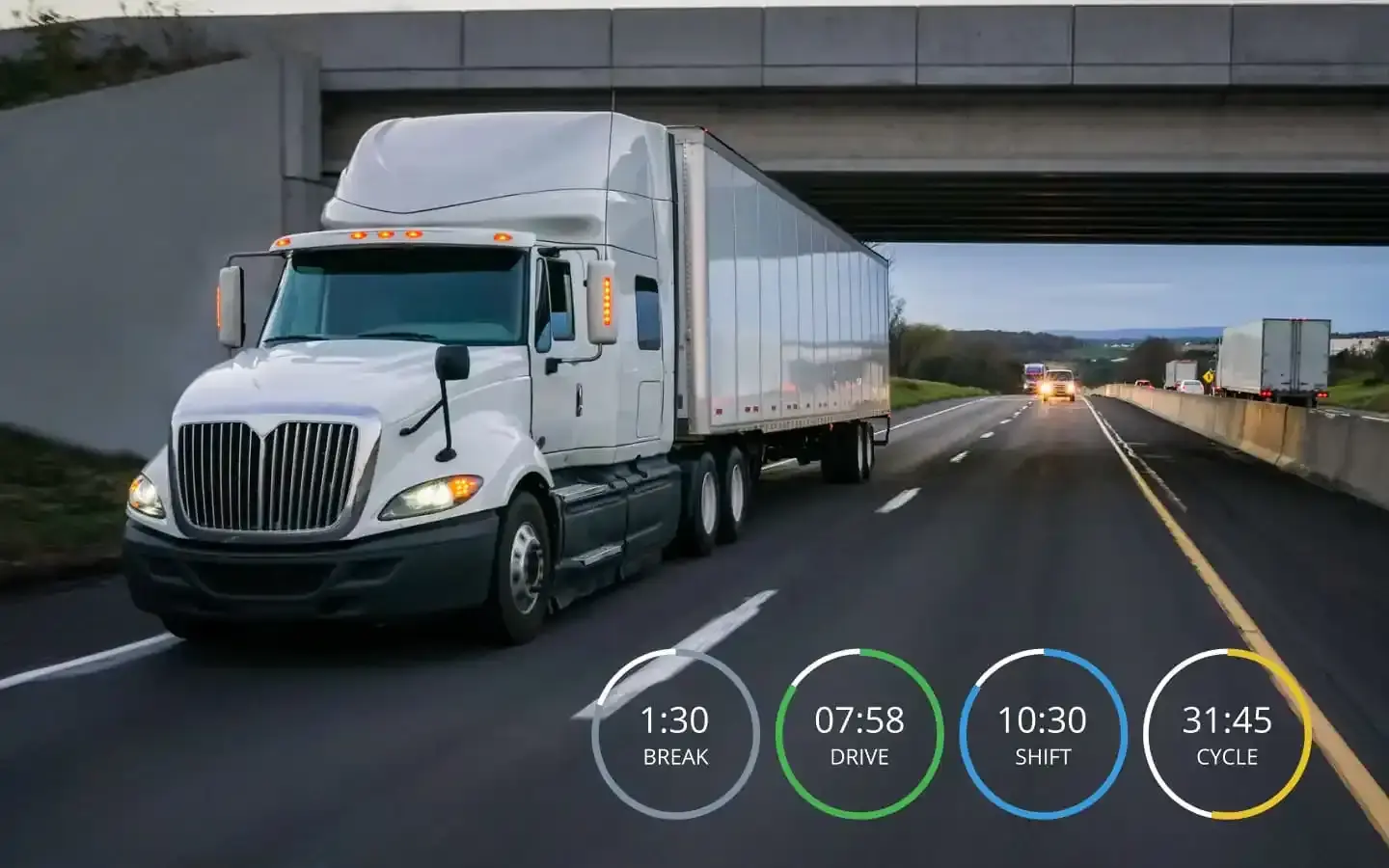
For truck drivers and fleet managers alike, Hours of Service (HOS) compliance isn't just about avoiding fines—it's about safety, planning, and keeping operations running smoothly. One of the most misunderstood rules is the 14-hour rule, which can quietly end a driver's day even when they still feel capable of driving. Mismanaging it leads to late deliveries, violations, and frustrated drivers.
This guide breaks the 14-hour rule down in plain language, with real examples and practical tips fleets can actually use.
Key Takeaways: Staying Compliant with the 14-Hour Rule
-
The 14-hour clock starts with the first on-duty activity.
Once it starts, it runs continuously and cannot be paused. -
Driving must fit inside the 14-hour window.
Even unused driving hours disappear when the window closes. -
On-duty delays are the biggest hidden risk.
Loading, waiting, and paperwork quietly consume available time. -
Violations affect drivers and fleets.
From CSA points to insurance costs, the impact is real and lasting. -
Planning and visibility are your best defenses.
Accurate data, realistic scheduling, and clear communication keep drivers compliant and operations predictable.
What Is the 14-Hour Rule for Truck Drivers?
The 14-hour rule is part of the Hours of Service regulations enforced by the Federal Motor Carrier Safety Administration (FMCSA). It limits how long a property-carrying driver can be on duty in a single workday.
Here's the core rule in simple terms:
Once a driver starts their workday, they have 14 consecutive hours to complete all driving. After the 14th hour, no more driving is allowed, even if the driver hasn’t reached their 11-hour driving limit.
Key points to understand upfront:
- The 14-hour clock starts when a driver begins any on-duty activity
- The clock runs continuously—it does not stop for breaks, meals, or delays
- Off-duty or sleeper berth time does not extend the 14-hour window (with limited exceptions)
This rule exists to prevent excessively long workdays that lead to fatigue-related accidents.
Breaking Down the 14-Hour Window: A Timeline Example
To really understand the rule, it helps to walk through a realistic day.
Imagine a driver starts their day at 6:00 a.m.
- 6:00 a.m. (Hour 0): Driver begins on-duty status for pre-trip inspection
- 6:30 a.m. (Hour 0.5): Starts driving
- 10:30 a.m. (Hour 4.5): Stops for fueling and paperwork
- 11:00 a.m. (Hour 5): Back on the road
- 2:00 p.m. (Hour 8): Takes a 30-minute break (required after 8 driving hours)
- 2:30 p.m. (Hour 8.5): Resumes driving
- 5:30 p.m. (Hour 11.5): Finishes driving for the day
- 8:00 p.m. (Hour 14): End of on-duty window
Even if the driver only drove 9 or 10 total hours, driving after 8:00 p.m. would be a violation. The 14-hour window has closed.
This is where many drivers get caught off guard—especially after long loading delays or traffic issues.
What Counts Against Your 14-Hour Clock?
Not all time is equal under HOS rules. Knowing what does—and doesn't—count is critical.
Driving Time
Driving time is the most obvious component. Every minute the vehicle is in motion and the driver is behind the wheel counts against the 14-hour window.
Important reminder:
- Driving time is capped at 11 hours, but those 11 hours must fit inside the 14-hour window.
On-Duty Non-Driving Activities
Many drivers lose hours here without realizing it. On-duty, non-driving time includes:
Before listing them, remember this rule: if you're working for the carrier, it counts.
- Pre-trip and post-trip inspections
- Loading and unloading freight
- Fueling the vehicle
- Completing paperwork or electronic logs
- Waiting time at docks (unless logged correctly as off-duty)
- Roadside inspections
- Yard moves and positioning trailers
All of this time pushes the 14-hour clock forward—even if the truck isn't moving.
What Doesn't Count
Some time does not count against the 14-hour window:
- Off-duty time (properly logged)
- Sleeper berth time
- Personal conveyance (when used correctly and legally)
However, a critical clarification:
Off-duty or sleeper berth time does NOT pause or reset the 14-hour clock.
The main exception is the split sleeper berth provision, which allows drivers to split required rest periods in specific ways. Even then, it's complex and easy to misapply—many violations happen here.
Common Misconceptions About the 14-Hour Rule
Despite being a long-standing regulation, confusion is widespread. Let's clear up the biggest myths.
No, you cannot pause the 14-hour clock.
Once it starts, it keeps running—regardless of breaks or delays.
Off-duty time does not extend your day.
Taking two hours off-duty mid-day doesn't give you two extra driving hours later.
Shipper delays still count.
Waiting at a dock while logged on-duty consumes valuable time, even if the delay isn't the driver's fault.
Feeling alert doesn't override the rule.
Compliance is based on time, not how rested a driver feels.
Understanding these points helps fleets plan realistically instead of hoping the clock will work itself out.
How the 14-Hour Rule Differs from the 11-Hour Driving Rule
These two rules work together—but they're not the same.
- 11-Hour Rule: Limits how much total driving a driver can do
- 14-Hour Rule: Limits the total workday in which that driving must occur
Think of it this way:
The 11-hour rule controls how long you can drive.
The 14-hour rule controls how long your workday lasts.
A driver must manage both simultaneously. Running out of either one ends the driving day.
This is why accurate time tracking and planning are essential for dispatchers and drivers alike.
Consequences of Violating the 14-Hour Rule
Violations affect more than just the driver.
For DriversNon-compliance can lead to:
- Fines issued during roadside inspections
- CSA score increases
- Negative inspection records
- Possible out-of-service orders
- Long-term impact on driving career
Even a single violation can follow a driver for years.
Fleet OperatorsFor fleets, the risk multiplies:
- Company-level fines and penalties
- Higher insurance premiums
- Increased liability after accidents
- Poor safety ratings and audits
- Lost trust with customers and regulators
Many fleets underestimate how quickly compliance issues escalate once patterns emerge.
Strategies for Managing the 14-Hour Window Effectively
Good compliance starts with good planning. Here are proven strategies fleets use to protect driver hours.
Before listing them, it's important to note that small operational improvements can save hours each day.
- Start days earlier when possible to avoid late-day cutoffs
- Minimize on-duty delays through better dock coordination
- Plan fuel stops and inspections efficiently
- Communicate realistic ETAs with dispatch
- Use accurate mileage and trip data for routing decisions
Tools like trip and mileage tracking help fleets forecast whether a route is even feasible within a driver's available window. This kind of visibility supports smarter dispatch decisions and fewer violations. For example, consistent mileage tracking ties directly into better planning and compliance (Trip Log and Mileage Tracking).
How Fleet Management Software Helps with HOS Compliance
While ELDs handle the legal logging of HOS data, fleet management software plays a critical supporting role.
Modern platforms help fleets:
- Monitor driver activity in near real time
- Spot risk patterns before violations occur
- Align maintenance, routing, and dispatch decisions
- Generate reports for audits and internal reviews
AUTOsist supports compliance workflows by giving fleet managers a centralized view of vehicles, drivers, mileage, and operational data. Features like fleet reports and dashboards help managers identify inefficiencies that eat into available hours.
When maintenance, inspections, and trip data live in one place, it becomes easier to plan routes that respect both the 11-hour and 14-hour limits—without scrambling at the end of the day.
For fleets managing inspections and documentation alongside HOS, integrating digital workflows can further reduce on-duty time (Digital Vehicle Inspection App).
By understanding how the 14-hour rule really works—and planning around it—fleets protect their drivers, their businesses, and the people sharing the road.