 Miya Bholat
Mar 23, 2026
Common DOT Audit Failures and How Fleets Can Avoid Them
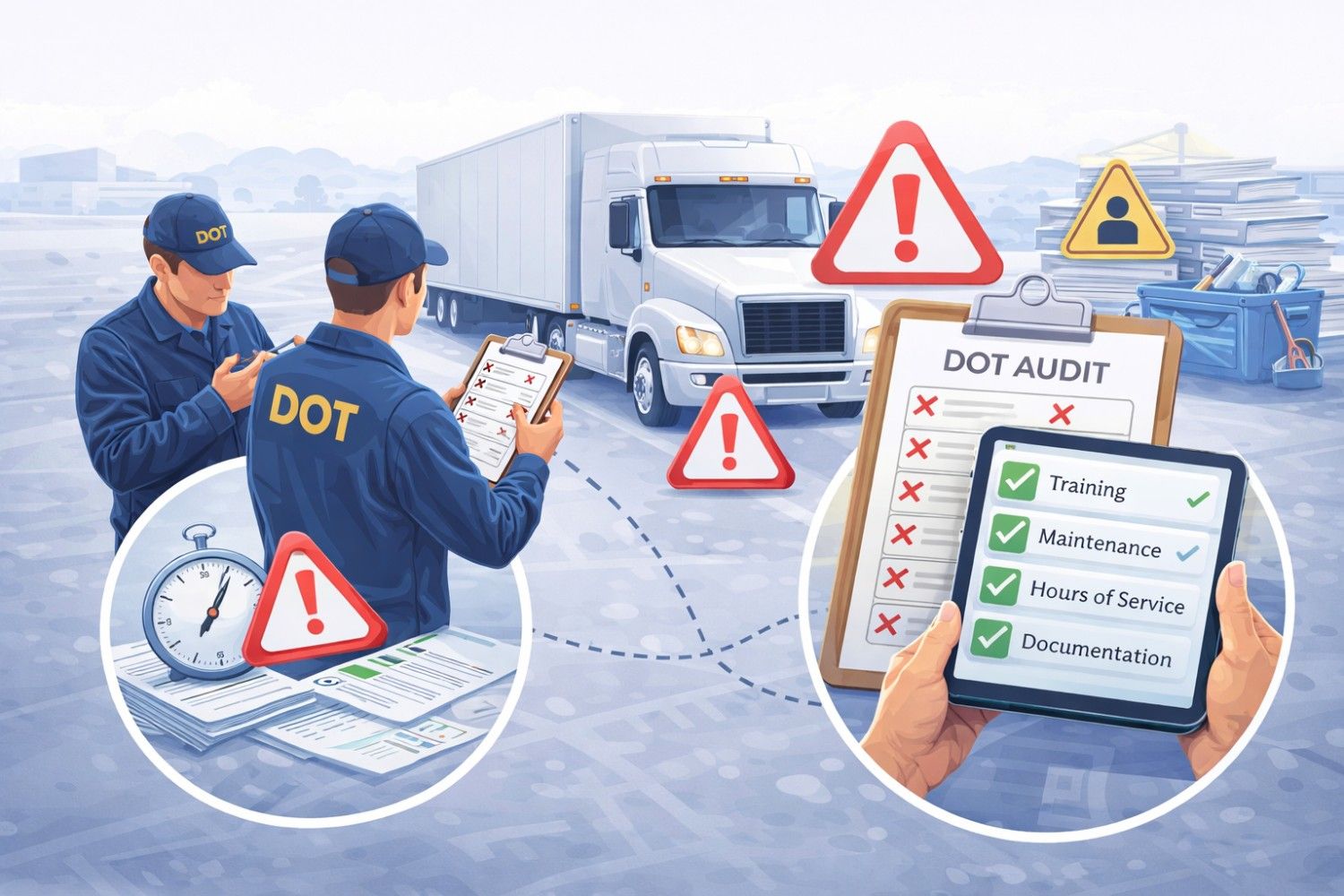
Key Takeaways: Passing DOT Audits Starts Long Before the Auditor Arrives
- Documentation matters as much as operations
Even if your fleet is running safely, missing or incomplete records will fail an audit. - Most failures are predictable and preventable
HOS violations, DQ file gaps, and maintenance records are the most common issues across fleets. - Compliance is a system, not a checklist One-time fixes don't work. You need ongoing processes that maintain accuracy and consistency.
- Digital systems reduce audit risk significantly Centralized tools eliminate missing paperwork, improve visibility, and simplify compliance tracking.
- Preparation should be continuous, not reactive If you wait until an audit is scheduled, you're already behind.
What's Actually at Stake When the DOT Comes Knocking
A DOT audit isn't just paperwork it's a direct evaluation of whether your fleet is allowed to keep operating.
Failing an audit can trigger:
- Civil penalties up to $16,000+ per violation, depending on severity
- Out-of-service orders, immediately grounding vehicles or drivers
- CSA score increases, making your fleet a higher-risk carrier
- Loss of operating authority, effectively shutting down your business
Even minor documentation gaps can escalate quickly. Auditors don't give partial credit if a required record is missing or incomplete, it counts as a failure. For many fleets, audits don't fail because of unsafe operations they fail because of poor documentation.
How DOT Audits Work and What Triggers One
Many fleet managers assume audits are random. They're not.
Audits are often triggered by patterns in your data, including:
- High CSA scores in specific categories
- Frequent roadside inspection violations
- Crash history or complaints
- New entrant status (first 12–18 months of operation)
- Targeted enforcement initiatives
New Entrant Audits vs. Compliance Reviews
There are multiple audit types, but two matter most:
- New Entrant Safety Audit
Conducted within the first 12 months of operation. Focuses on basic compliance systems (HOS, driver files, drug/alcohol testing). - Compliance Review (Full Audit)
A deep dive into your entire operation. This includes maintenance, driver qualification, safety management, and documentation practices.
A failed new entrant audit can revoke your authority quickly. A failed compliance review can lead to conditional or unsatisfactory ratings.
What Inspectors Actually Look For
DOT audits are structured around the FMCSA Safety Measurement System (SMS), which evaluates carriers across six key categories:
- Unsafe driving
- Hours of service compliance
- Driver fitness
- Controlled substances/alcohol
- Vehicle maintenance
- Crash indicators
Each category ties directly to specific documentation. If your records don't support compliance in these areas, you're exposed.
The Most Common DOT Audit Failures (and Why They Keep Happening)
Most audit failures come down to one issue: fleets are doing the work but not documenting it properly.
Here's where things typically break.
Hours of Service Violations
This is the #1 failure area in DOT audits.
Common issues include:
- Missing or incomplete ELD logs
- Unassigned driving time not reviewed
- Falsified logs or log edits without annotation
- Misuse of exemptions (short-haul, personal conveyance)
Auditors expect consistency. If logs don't align with fuel receipts, GPS data, or dispatch records, it raises red flags immediately.
Driver Qualification File Gaps
Driver Qualification (DQ) files are one of the most frequently cited violations.
Typical gaps include:
- Missing Motor Vehicle Records (MVRs)
- Expired medical certificates
- Incomplete employment history (past 3 years minimum)
- Missing annual driver reviews
- No documentation of drug/alcohol test results
A DQ file isn't optional—it must be complete, current, and auditable at any time.
Vehicle Maintenance Records
Maintenance documentation is where many fleets underestimate audit expectations.
Auditors expect to see:
- Driver Vehicle Inspection Reports (DVIRs) completed daily
- Documented repairs tied to DVIR defects
- Preventive maintenance schedules and completion records
- Full service history per vehicle
If you're still relying on spreadsheets or paper logs, gaps are almost guaranteed. This is where tools like fleet maintenance software can centralize records and eliminate missing data.
Drug and Alcohol Program Non-Compliance
This is one of the most serious violation categories.
Common failures include:
- Missing pre-employment drug tests
- No record of random testing participation (minimum 50% drugs / 10% alcohol annually)
- Lack of supervisor training documentation
- Not being enrolled in a testing consortium
Auditors don't just check if you test, they check if you can prove compliance with every required step.
Accident Register and Incident Documentation
Many fleets either don't maintain an accident register or don't know what qualifies as a recordable accident.
DOT requires documentation for accidents involving:
- Fatalities
- Injuries requiring medical treatment away from the scene
- Vehicles requiring towing
Your accident register must include dates, locations, driver names, injuries, fatalities, and hazardous material releases (if applicable).
A Pre-Audit Checklist: How to Know If You're Actually Ready
Before an auditor ever shows up, you should be able to run a self-check.
Here's a practical checklist to assess your readiness:
- All driver qualification files are complete and up to date
- ELD logs are consistent, reviewed, and annotated when needed
- Preventive maintenance schedules are documented and followed
- DVIRs are completed daily and tied to repair records
- Drug and alcohol testing records are current and accessible
- Accident register is maintained and accurate
If you can't confidently check every box, you're not audit-ready.
For a deeper operational breakdown, this DOT fleet maintenance requirements guide provides a structured framework fleets can use to align their processes.
Building a Compliance System That Holds Up Under Scrutiny
Passing a DOT audit isn't about scrambling before inspection it's about building systems that maintain compliance continuously.
Strong compliance operations include:
- Defined document retention policies (e.g., HOS logs retained for 6 months)
- Scheduled reviews of driver and maintenance records
- Standardized inspection workflows
- Centralized document storage
This is where modern systems replace manual processes. Platforms like AUTOsist help fleets manage inspection logs, service records, and compliance documentation in one place reducing the risk of missing records during audits.
Setting Up Maintenance Schedules That Satisfy Auditors
Maintenance must be both performed and documented.
Auditors expect:
- Scheduled intervals based on mileage, hours, or OEM guidelines
- Completed work orders for each service
- Clear repair history tied to each vehicle
Using structured systems like fleet preventive maintenance schedules ensures every service is tracked and recorded properly something spreadsheets struggle to maintain over time.
Keeping Driver Qualification Files Current
DQ files are not "set and forget."
You need systems to track:
- CDL expiration dates
- Medical certificate renewals
- Annual driver reviews
- Updated MVR checks
Manual tracking leads to missed deadlines. Digital systems simplify this by automating alerts and maintaining centralized records.
What to Do If You Receive an Unsatisfactory Rating
Even well-run fleets can face issues.
If you receive an unsatisfactory rating, you'll need to act quickly:
- Develop a Corrective Action Plan (CAP)
- Address all cited violations with documented fixes
- Submit evidence within FMCSA timelines
- Request a follow-up review or rating upgrade
Time matters here. Delays can extend restrictions on your operations.
This is also where reviewing resources like the DOT audit preparation guide can help structure your response and remediation efforts.
DOT audits aren't random disruptions they're predictable events based on your data and compliance patterns. Fleets that treat compliance as a daily operation not a periodic task consistently pass audits and avoid costly penalties.
The difference isn't effort. It's systems.