 Miya Bholat
Feb 13, 2026
What Happens When You Delay Fleet Maintenance 30 Days: Hidden Costs, Risks, and How to Recover
Key Takeaways
- A 30-day delay rarely feels dangerous — but damage accumulates silently. Mechanical wear doesn’t pause when schedules slip.
- Small service costs turn into major repair bills quickly. Oil changes, tire rotations, and brake checks are far cheaper than replacements.
- Documentation gaps create compliance and legal exposure. Missing records can be as risky as mechanical faults.
- One deferred vehicle often triggers fleet-wide backlog. Delays normalize and snowball without intervention.
- Recovery requires prioritization, not shutdowns. Phased scheduling restores order without crippling operations.
- Preventive habits supported by software keep fleets on track. Automated reminders and centralized records reduce human error.
The 30-Day Delay Is More Common Than You Think
It usually starts with a reasonable decision.
A fleet manager looks at the calendar and sees a service interval due this week. The vehicles are fully booked. The shop is backed up. Drivers are already stretched thin. “Let’s push it two or three weeks,” they say. Nothing seems urgent. The vehicle is still running fine.
That two-to-three-week push often turns into a full 30 days.
This isn’t rare or reckless behavior. It’s operational pressure. Fleets deal with seasonal spikes, staffing shortages, budget approvals, and unexpected downtime. When utilization climbs, preventive maintenance is often the first thing to slide because it doesn’t feel immediately urgent.
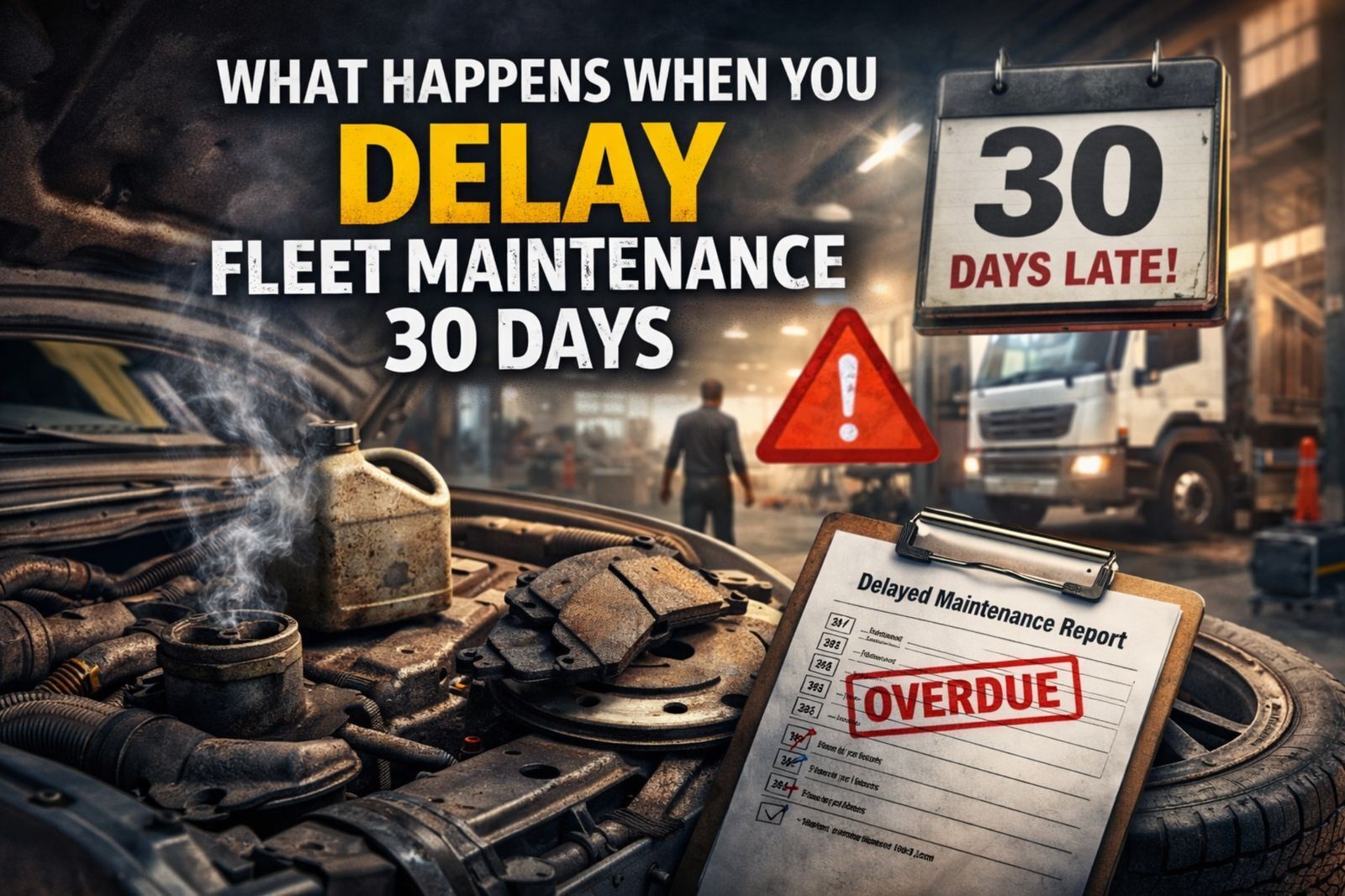
The problem is that vehicles don’t pause their wear just because the schedule moves. Engines keep cycling, brakes keep grinding, tires keep heating and cooling, and fluids keep degrading. A 30-day delay doesn’t just postpone service — it accelerates invisible deterioration that quietly compounds cost and risk.
What’s Actually Happening Inside Your Vehicles During That Month
When maintenance gets skipped, nothing dramatic happens on day one. There’s no smoke, no warning lights in most cases, no sudden breakdown. That’s why the delay feels safe.
But under the hood, several small processes start stacking up.
Engine and Lubrication Breakdown
Motor oil doesn’t simply “get dirty.” It loses viscosity, breaks down under heat, and becomes less effective at lubricating engine components. Modern engines run hotter and tighter than older ones, which means degraded oil causes metal-to-metal friction much sooner than many managers expect.
A 30-day delay may push oil past its effective range. That leads to:
- Increased internal engine wear
- Sludge buildup
- Reduced fuel efficiency
- Higher long-term rebuild risk
The damage is cumulative and rarely visible until repair bills spike.
Brake and Tire Wear Acceleration
Brake pads have a predictable wear curve. Once they cross their safe thickness threshold, the wear rate accelerates. A vehicle that was “almost due” at its service date can easily tip into rotor damage territory within a month.
Tires behave similarly. Skipping rotation increases uneven wear, which reduces tread life and raises blowout risk. In commercial fleets, a tire pushed 30 days beyond rotation can lose thousands of miles of usable life.
What begins as a minor postponement can quickly convert manageable wear into full replacement.
Fluid Degradation and Component Stress
Coolant, transmission fluid, and power steering fluid all protect critical systems from heat and friction. When they degrade, temperatures rise and seals, hoses, and internal components experience more stress.
Routine maintenance catches early signs like:
- Minor leaks
- Discoloration
- Burnt fluid smell
- Seal fatigue
Without that checkpoint, small issues quietly evolve into multi-thousand-dollar repairs.
The Real Cost of a 30-Day Delay — By the Numbers
The financial impact becomes clearer when you compare routine service costs to deferred-maintenance repairs. These are approximate industry estimates, but they reflect common fleet realities.
Oil Service vs. Engine Repair
- Routine oil change: $60–$120
- Engine rebuild or major repair: $3,000–$8,000
Brake Pad Replacement vs. Rotor & Caliper Damage
- Brake pad replacement: $200–$350 per axle
- Rotor + caliper repair: $800–$1,500
Tire Rotation vs. Premature Tire Replacement
- Tire rotation: $25–$50
- New commercial tire: $250–$450 each
Now scale that to a 25-vehicle fleet where just 5 vehicles cross critical wear thresholds in a 30-day delay. The difference can easily exceed $10,000 in unplanned expense within a quarter.
Deferred maintenance doesn’t save money. It shifts small predictable costs into large unpredictable ones.
Compliance and Liability Exposure You May Not Have Considered
Mechanical wear is only part of the risk. The administrative side can be just as costly.
When maintenance is delayed, documentation often becomes inconsistent or incomplete. That missing paper trail becomes a liability issue during audits, inspections, or accident investigations.
For commercial fleets subject to DOT and FMCSA oversight, gaps in maintenance history can lead to:
- Failed roadside inspections
- Fines and citations
- Insurance complications
- Legal exposure after accidents
Guides like Fleet Compliance Guide and How Long to Keep Fleet Maintenance Records highlight how record gaps, not just mechanical faults, create risk.
Delayed maintenance doesn’t just affect vehicles — it affects defensibility.
How a 30-Day Slip Turns Into a 90-Day Backlog
One deferred service rarely stays isolated.
When a vehicle gets pushed back, the shop schedule adjusts. Another vehicle moves forward. Drivers start assuming flexibility. Soon, multiple vehicles are running beyond intervals.
The snowball effect usually follows this pattern:
- One vehicle defers service
- Shop capacity compresses
- Drivers normalize delay
- Multiple vehicles miss intervals
- Maintenance becomes reactive instead of preventive
Within three months, the fleet isn’t “a little behind.” It’s structurally behind. Catch-up becomes harder because every service now competes with urgent repairs.
Warning Signs Your Fleet Is Already in Deferred Maintenance Mode
Most fleets don’t realize they’ve slipped until costs rise. There are operational and administrative clues that signal trouble.
Here are common warning indicators to watch for:
- Vehicles flagged for service remain in active rotation
- Service intervals vary wildly across similar vehicles
- Drivers report minor issues that never get logged
- Maintenance records show long unexplained gaps
- Shop schedules constantly shift due to “urgent” repairs
- Vehicles lack complete service history files
If several of these signs appear simultaneously, the fleet is likely operating in deferred mode rather than preventive mode.
How to Recover Without Shutting Down Operations
Catching up doesn’t require parking half the fleet overnight. The goal is controlled recovery, not disruption.
A practical recovery approach usually includes:
- Prioritizing vehicles by risk
- Phasing service appointments
- Documenting every completed task
- Aligning shop capacity with vehicle availability
Tools such as a Digital Vehicle Inspection App and structured maintenance tracking systems help fleets regain visibility quickly without overwhelming operations.
Triage Your Fleet by Risk Level
Start by ranking vehicles based on urgency. Focus first on those most likely to cause safety or cost problems.
Key triage factors include:
- Mileage since last service
- Vehicle age and condition
- Reported driver issues
- Service interval overages
- Heavy-use or high-load assignments
This ensures resources address true risk rather than simple scheduling order.
Build a Realistic Catch-Up Schedule
Avoid the temptation to clear the backlog in one push. Phased scheduling maintains operational continuity while gradually restoring compliance.
A realistic plan usually:
- Limits vehicles pulled per week
- Aligns maintenance with low-utilization days
- Uses preventive reminders instead of reactive fixes
- Tracks progress through dashboards such as Fleet Reports and Dashboard
The objective is steady improvement, not perfection in week one.
Building the Habits That Prevent a 30-Day Slip in the First Place
Prevention isn’t about discipline alone — it’s about systems and routines that make adherence easy.
Fleets that stay on schedule typically adopt a few consistent habits:
- Set service reminders before intervals are due, not at them
- Involve drivers in reporting and logging issues immediately
- Maintain centralized digital service histories
- Use automated scheduling and inspection tools
- Review maintenance dashboards weekly
Platforms that combine scheduling, inspection tracking, and service history — such as AUTOsist’s preventive maintenance and work order features — reduce reliance on memory and spreadsheets. The system becomes the reminder instead of the manager carrying everything mentally.
Habits supported by software tend to stick because they remove friction.