 Miya Bholat
May 07, 2026
How to Manage Fleet Drivers Without Losing Control?
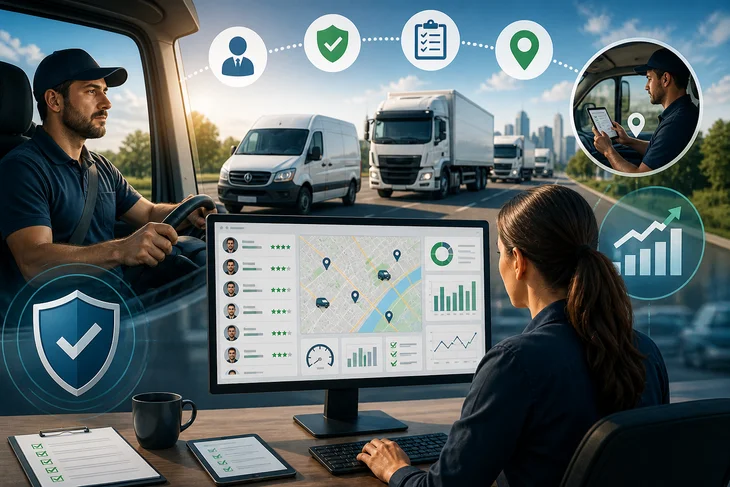
You manage fleet drivers without losing control by building a system that gives you real time visibility into driver activity, sets clear expectations, and tracks performance consistently.
Key Takeaways
- You manage fleet drivers by creating visibility, accountability, and systems
The fastest way to stay in control is to track driver activity, set clear expectations, and use centralized tools instead of manual processes. - Lack of oversight leads to hidden costs quickly
Poor driver management increases accidents, maintenance costs, fuel waste, and compliance risks. - Driver level tracking reveals problems early
Monitoring behavior per driver helps identify risky patterns before they turn into expensive issues. - Compliance is not optional in driver management
Missing licenses, inspections, or documentation can lead to fines, downtime, and liability exposure. - Systems reduce the need for micromanagement
With the right tools, fleet managers can control operations without constantly chasing drivers for updates.
Why Fleet Driver Management Gets Out of Hand Fast
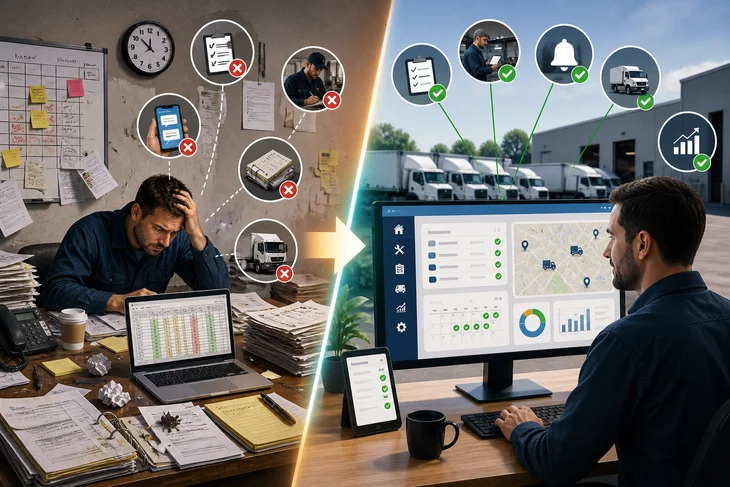
Most fleets lose control because they rely on scattered communication and manual tracking instead of a centralized system like a modern fleet management software.
The problem usually does not appear overnight. It builds gradually as operations grow and complexity increases.
In most fleets, this is how things start breaking down:
- Drivers report issues late or inconsistently
- Managers rely on calls and messages instead of real time data
- Compliance tracking is scattered across documents
- Driver performance is not measured consistently
- Problems are addressed only after they cause downtime
This creates a reactive system where small issues turn into major operational problems.
The True Cost of Poor Driver Oversight
Hidden Costs Beyond Fuel and Repairs
Most fleets focus on fuel and maintenance costs, but driver related costs often go unnoticed until they become significant.
A single preventable accident can cost between 15000 and 70000 dollars. Repeated incidents can increase insurance premiums by 20 percent or more.
Poor driver oversight also leads to:
- Increased accident frequency and repair costs
- Higher insurance premiums due to risk exposure
- Compliance fines from missed inspections or expired licenses
- Downtime caused by preventable breakdowns
- Higher driver turnover due to inconsistent processes
These hidden costs are explained in detail in this fleet management software cost breakdown guide , which shows how inefficiencies impact your overall budget.
How Driver Behavior Impacts Vehicle Lifespan
Driver behavior has a direct impact on how long your vehicles last and how often they require maintenance.
For example, one aggressive driver who frequently accelerates hard and brakes suddenly can:
- Reduce brake life by up to 50 percent
- Increase tire wear significantly
- Cause engine strain leading to early failure
- Increase fuel consumption by 10 to 20 percent
Over time, this can add thousands in unnecessary maintenance costs for a single vehicle.
Using tools like GPS tracking and telematics for driver behavior insights helps identify these patterns early so corrective action can be taken.
Building a Driver Accountability Framework That Actually Works
Setting Clear Expectations from Day One
Driver management starts with clarity. Without defined expectations, each driver operates differently, leading to inconsistency across the fleet.
A strong onboarding framework should include:
- Documented driver policies and safety standards
- Defined performance metrics such as fuel usage and idle time
- Clear inspection and reporting requirements
- Accountability for compliance and documentation
- Training on tools and reporting workflows
Following structured processes aligned with proven fleet management best practices ensures consistency across operations.
Creating a Culture of Responsibility, Not Surveillance
Drivers are more likely to adopt systems when they understand their purpose.
Instead of presenting tracking as monitoring, position it as:
- A safety tool that protects drivers
- A system that simplifies reporting and reduces confusion
- A fair way to evaluate performance
- A method to prevent miscommunication and disputes
When drivers see value, adoption improves and resistance decreases.
Key Metrics Every Fleet Manager Should Track Per Driver
Tracking driver level metrics gives you insights that vehicle level data cannot provide.
Here are the most important KPIs to monitor:
- Miles driven per driver
- Fuel efficiency trends by driver
- Idle time and engine usage patterns
- Harsh braking and acceleration events
- Maintenance triggering behavior
- Incident and safety reports
- On time performance
These metrics become far more actionable when analyzed through a fleet reports dashboard for driver performance tracking .
Tools and Systems That Give You Real Time Fleet Visibility
Fleet Management Software vs Spreadsheets
Spreadsheets may work for very small fleets, but they quickly become inefficient as operations grow.
Managing 20 drivers manually often involves:
- Tracking inspections across multiple sheets
- Logging fuel and mileage manually
- Following up through calls and messages
- Trying to identify trends without real time data
This is why many fleets transition after experiencing inefficiencies highlighted in this comparison of spreadsheets versus fleet management software.
Centralized systems simplify management and reduce administrative workload.
Driver Profiles, Logs, and Inspection Reports
A structured system creates detailed driver profiles that connect activity directly to performance.
With tools like a fleet user and driver management system for tracking drivers , fleet managers can:
- Assign vehicles to specific drivers
- Track trip and mileage data accurately
- Monitor inspections using a digital vehicle inspection app for driver reporting
- Link maintenance issues to driver behavior
- Maintain a complete history of driver activity
This level of visibility improves accountability and simplifies audits.
Compliance, Licensing, and Documentation You Cant Afford to Ignore
Compliance is a critical part of fleet driver management and cannot be overlooked.
Fleet managers must track:
- Driver license renewals
- Insurance documentation
- Driver vehicle inspection reports
- Maintenance compliance records
- Hours of service where applicable
Missing any of these can lead to fines, legal risks, or downtime.
Using a vehicle document management system for fleet compliance ensures all records are organized and up to date.
Practical Steps to Regain Control of Your Fleet Drivers Today
You do not need a full system overhaul to regain control. Start with focused improvements.
Here are practical steps you can take immediately:
- Identify your top driver related issues
- Define measurable performance metrics
- Standardize inspection and reporting processes
- Assign accountability to each driver
- Introduce a centralized tracking system
- Review performance on a weekly basis
Many fleets reach this stage after realizing their fleet management operations are becoming difficult to manage manually.
Fleet driver management is not about constant supervision. It is about building systems that create visibility, accountability, and consistency.
When you have:
- Clear expectations
- Structured accountability
- Real time visibility
- Centralized data
- Automated compliance tracking
You stay in control without micromanaging.
The fleets that succeed are the ones that rely on systems instead of reactive management.
Frequently Asked Questions
-
How do I manage fleet drivers without losing control
You manage fleet drivers by creating visibility, setting clear expectations, and tracking performance using centralized systems. This ensures consistent oversight and reduces operational risks. -
What is the best way to track fleet drivers
The most effective way is to use fleet management software that connects driver behavior, vehicle data, and reporting into one platform for complete visibility. -
How can I improve driver accountability in my fleet
Set clear performance standards, track driver metrics, and review data regularly. Accountability improves when performance is measurable and transparent. -
Why does driver behavior matter in fleet operations
Driver behavior directly impacts fuel usage, maintenance costs, safety, and compliance. Poor habits increase operational expenses over time. -
When should I switch from spreadsheets to fleet software
If manual tracking becomes inconsistent or time consuming, especially with more than 15 vehicles, it is time to move to a centralized system for better control and efficiency.