 Miya Bholat
Mar 09, 2026
Driver Safety Cameras for Fleet Management: Benefits, Features, and How to Choose the Right System
Fleet managers face a constant balancing act: keeping drivers safe, protecting company vehicles, and controlling operating costs. In recent years, driver safety cameras have become one of the most effective tools for improving fleet safety while reducing liability.
Accidents, insurance claims, and fraudulent lawsuits can quickly erode fleet profitability. A single commercial vehicle accident can cost tens of thousands of dollars, and severe incidents often exceed $100,000 when legal and insurance costs are included. Because of these risks, more fleet operators are installing driver safety cameras and dashcams to protect drivers, document incidents, and create a safer driving culture.
In this guide, we'll break down how driver safety cameras work, why fleets are adopting them, and what fleet managers should look for when choosing the right camera system.
Key Takeaways: What Fleet Managers Should Do Next
- Driver safety cameras reduce liability risk. Video footage provides objective evidence during accidents and helps fleets defend against fraudulent claims.
- Dashcams improve driver safety through coaching. Fleets that use camera footage for driver training often see measurable reductions in risky driving behavior.
- Camera systems vary widely in capability. Fleet managers should evaluate forward-facing, dual-facing, and AI-enabled cameras based on operational needs.
- Integration with fleet management software increases value. Connecting camera data with maintenance records, inspections, and driver profiles creates a complete operational safety system.
- Insurance companies increasingly support camera adoption. Fleets using safety technology may qualify for lower premiums and faster claim resolution.
- Driver communication is critical for successful deployment. Transparent policies and a coaching-based approach help build driver trust and encourage adoption.
- Safety technology is becoming standard for modern fleets. Fleets that invest in driver monitoring systems today are better positioned to control risk, improve safety culture, and reduce long-term operational costs.
What Are Driver Safety Cameras — and Why Fleet Managers Are Prioritizing Them
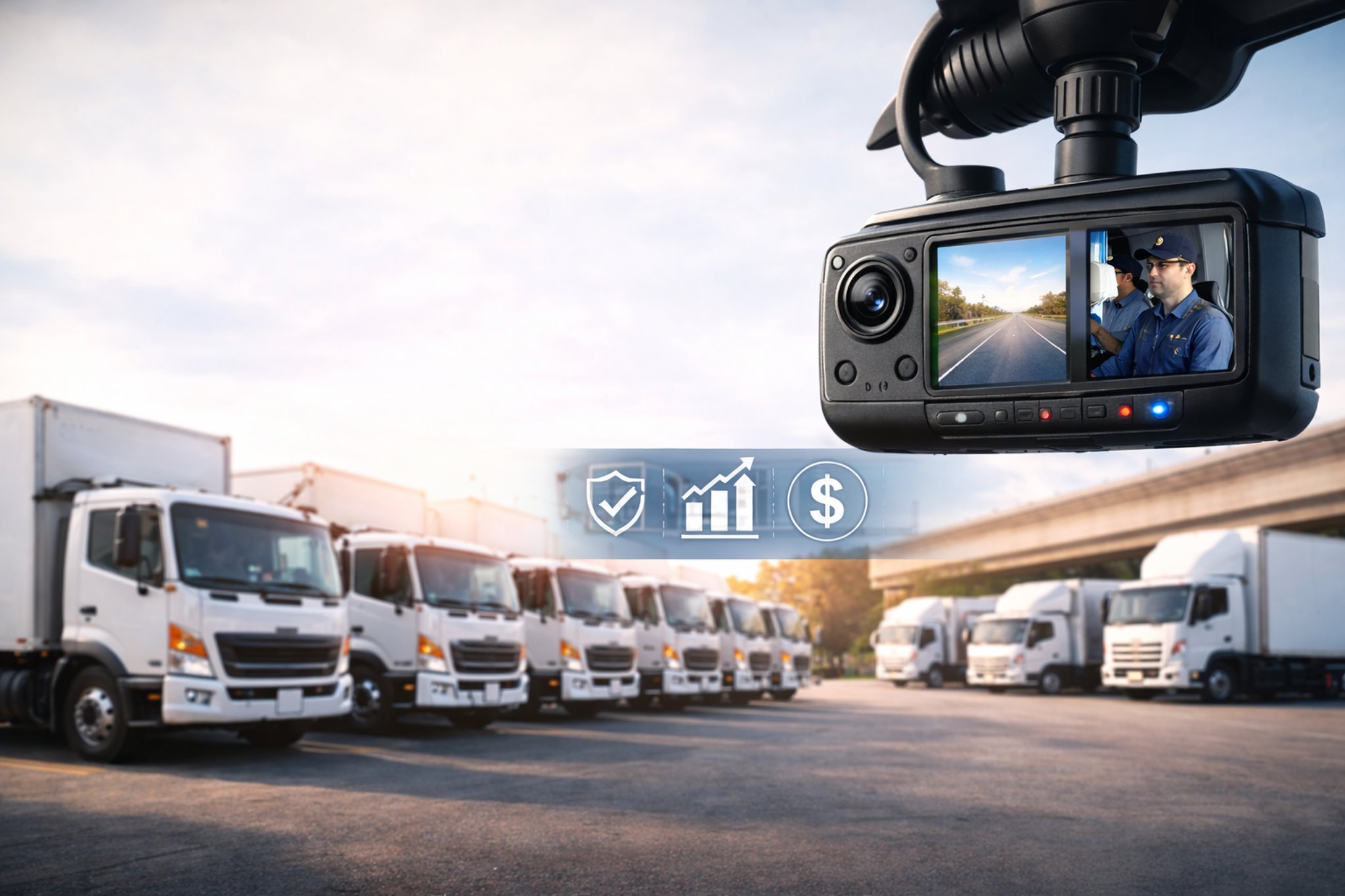
Driver safety cameras are vehicle-mounted cameras designed to record driving events, monitor driver behavior, and provide video evidence when incidents occur. Unlike basic dashcams used in personal vehicles, fleet camera systems often include cloud connectivity, telematics integration, and AI-based event detection.
Today's fleet camera systems typically include several configurations:
- Forward-facing cameras that capture road conditions and collisions
- Dual-facing cameras that record both the road and driver behavior
- AI-enabled cameras that detect risky driving events in real time
- Integrated telematics systems that combine video with GPS and vehicle data
Fleet adoption is accelerating across industries such as logistics, construction, utilities, and field service. Several factors are driving this trend:
- Rising insurance costs for commercial fleets
- Increasing accident-related litigation
- Fraudulent accident claims targeting commercial vehicles
- The need for improved driver training and accountability
- The growth of connected fleet technologies
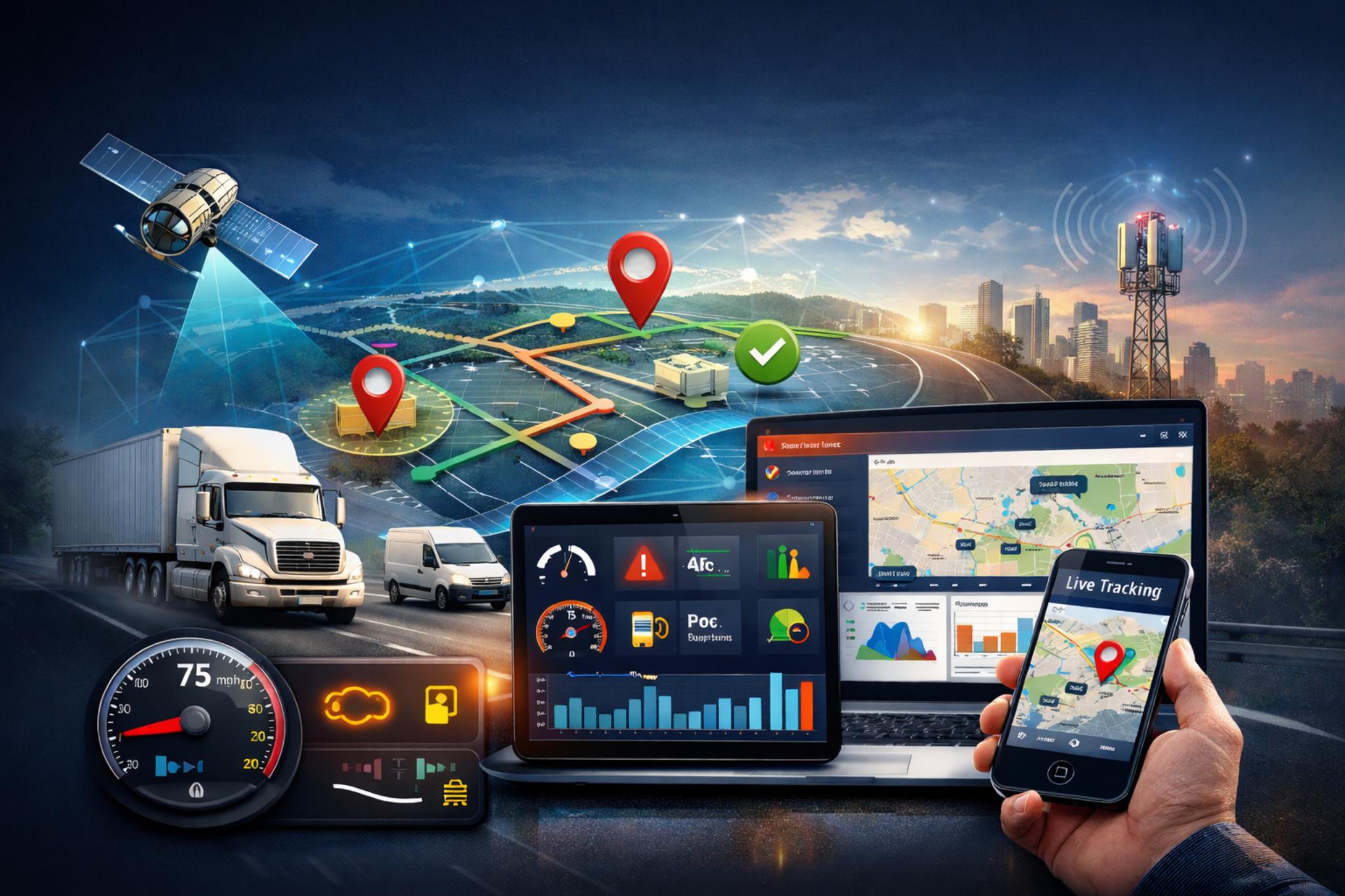
Many fleets also combine camera systems with GPS and telematics platforms to create a complete operational view of vehicles and drivers. Solutions like GPS fleet tracking and telematics help fleet managers connect location data, vehicle diagnostics, and video footage into a single operational dashboard.
The Real Cost of Not Having Cameras in Your Fleet
For many fleet operators, installing safety cameras is no longer optional—it's becoming a financial necessity. The cost of accidents, lawsuits, and insurance claims continues to rise across the transportation industry.
According to the Federal Motor Carrier Safety Administration (FMCSA), the average cost of a commercial truck crash involving injuries exceeds $200,000, while fatal accidents can exceed $3.6 million in total costs when legal settlements and operational disruption are included.
Without video evidence, fleets often struggle to defend themselves against claims—even when their driver was not at fault.
Several major costs emerge when fleets lack camera systems:
- Legal liability exposure from disputed accident claims
- Insurance premium increases after incidents
- Driver turnover following unresolved accident disputes
- Operational disruption caused by accident investigations
- Reputation damage after publicized incidents
For many fleets, a camera system pays for itself after preventing or resolving just one accident claim.
Accident Liability and False Claims
Commercial vehicles are frequent targets for staged accidents and exaggerated injury claims. Without video footage, determining fault becomes difficult, leaving fleets vulnerable to expensive settlements.
Driver safety cameras provide:
- Objective evidence showing what actually happened
- Protection against staged accidents
- Documentation for insurance investigations
- Proof when drivers are not at fault
Fleet managers frequently report that camera footage helps close accident claims faster and prevents unnecessary litigation.
Insurance Premiums and What Carriers Are Offering
Insurance providers are increasingly recognizing the value of fleet camera systems. Some carriers now offer insurance incentives or premium reductions when fleets deploy verified safety technology.
Common insurer responses include:
- Lower premiums for fleets using driver monitoring technology
- Reduced claim investigation time due to video evidence
- Risk management programs tied to driver behavior monitoring
- Mandatory camera installation for high-risk fleets
Insurance providers also increasingly encourage fleets to integrate cameras with telematics platforms to provide additional operational data.
Types of Driver Safety Cameras: Choosing the Right Fit for Your Fleet
Not every fleet needs the same type of camera system. The best choice depends on operational risk, driver coaching goals, and regulatory requirements.
Forward-Facing Dashcams
Forward-facing cameras record the road ahead of the vehicle. These cameras provide critical evidence for collisions, traffic incidents, and hazardous road conditions.
They are typically the simplest and most cost-effective option.
Forward-facing cameras work best for fleets that need:
- Basic accident documentation
- Protection against liability claims
- Evidence for insurance investigations
- Road condition monitoring
However, they do not capture driver behavior inside the vehicle.
Dual-Facing (Cab + Road) Cameras
Dual-facing cameras record both the road and the driver. These systems are widely used in fleets focused on driver safety improvement and coaching programs.
Dual-facing cameras help fleets identify risky behaviors such as:
- Distracted driving
- Phone usage while driving
- Seatbelt violations
- Fatigue or drowsiness
These cameras allow managers to review incidents and coach drivers using real-world footage.
Many fleets combine dual-facing cameras with driver data from platforms such as fleet user and driver management systems to track driver performance over time.
AI-Powered Event Detection Cameras
Modern camera systems increasingly include AI-based event detection. These cameras analyze video footage in real time and automatically flag risky events.
AI-powered systems commonly detect:
- Hard braking
- Rapid acceleration
- Tailgating
- Lane departure
- Distracted driving
These alerts help fleet managers identify risky behavior quickly and intervene before accidents occur.
AI-enabled camera systems are becoming the standard for large fleets because they allow managers to monitor safety without reviewing hours of footage manually.
Key Features to Look for When Evaluating Camera Systems
Not all camera systems deliver the same value. Fleet managers evaluating safety camera platforms should focus on features that improve safety, usability, and operational integration.
The most important features include:
- High-definition video quality to clearly capture incidents
- Cloud-based storage for easy video retrieval
- GPS integration linking video footage to location data
- Real-time event alerts for risky driving behavior
- Tamper-resistant hardware that prevents driver interference
- Easy installation across multiple vehicle types
Integration with fleet software also plays an important role. When camera systems connect with broader fleet management platforms, managers can combine video footage with maintenance records, inspections, and driver profiles.
How Driver Cameras Improve Safety and Driver Behavior Over Time
Driver cameras are often misunderstood as purely surveillance tools. In reality, the most successful fleets use camera footage as a driver coaching and safety improvement tool.
Instead of punishing drivers, fleets use camera data to identify patterns, improve training programs, and prevent repeat incidents.
Some safety improvements fleets typically observe after camera deployment include:
- Reduced distracted driving incidents
- Lower collision rates
- Improved driver accountability
- Faster incident investigation and resolution
- Higher overall fleet safety scores
Using Footage for Driver Coaching Programs
The most effective fleets use camera footage during driver coaching sessions. Rather than criticizing drivers, managers review incidents together and discuss safer alternatives.
Driver coaching programs typically follow a simple process:
- Identify risky driving events using camera alerts
- Review footage with the driver involved
- Explain safer driving strategies
- Track driver improvement over time
This approach builds trust and encourages drivers to view cameras as tools for protection rather than punishment.
Metrics That Show Safety Improvements
Fleet managers should measure the effectiveness of camera systems using clear safety metrics.
Key safety indicators include:
- Hard braking incidents per 1,000 miles
- Speeding violations
- Near-miss events
- Accident frequency rates
- Insurance claims per vehicle
Many fleets monitor these metrics using dashboards and reporting tools such as fleet reports and dashboards that track safety performance across vehicles and drivers.
Integrating Safety Cameras with Your Fleet Management Software
Driver cameras are far more effective when integrated into a broader fleet management ecosystem. Video data becomes significantly more valuable when it connects with other operational systems.
A modern fleet platform should connect safety cameras with:
- Driver profiles and performance data
- Vehicle inspection records
- Incident reporting logs
- Maintenance history
- GPS tracking and route data
Fleet management platforms like AUTOsist allow fleets to centralize these operational insights in one place. With systems that track maintenance, inspections, and vehicle performance—such as vehicle service history tools—fleet managers gain a complete operational picture of their vehicles and drivers.
This integration improves incident investigations, safety audits, and compliance reporting.
Fleet operators can also pair safety camera footage with preventive maintenance programs using systems like fleet preventive maintenance schedules to ensure vehicles remain safe and reliable.
When safety cameras, telematics, and maintenance software work together, fleets gain a comprehensive operational intelligence platform rather than disconnected tools.
Addressing Driver Pushback: Building Buy-In Across Your Team
One of the biggest challenges when implementing driver safety cameras is driver acceptance. Many drivers initially view cameras as surveillance tools rather than safety technology.
Successful fleets address this concern through clear communication and transparency.
Best practices for building driver buy-in include:
- Clearly explaining why cameras are being installed
- Emphasizing driver protection from false claims
- Sharing examples of footage that helped drivers avoid blame
- Establishing clear policies about how footage is used
- Avoiding micromanagement or constant monitoring
When drivers understand that cameras protect them as well as the company, adoption becomes significantly easier.
Many fleets even find that experienced drivers support cameras once they see how video evidence protects them from liability.