 Miya Bholat
Feb 27, 2026
Fleet Management Trends for 2026: What Smart Fleet Leaders Are Prioritizing Now
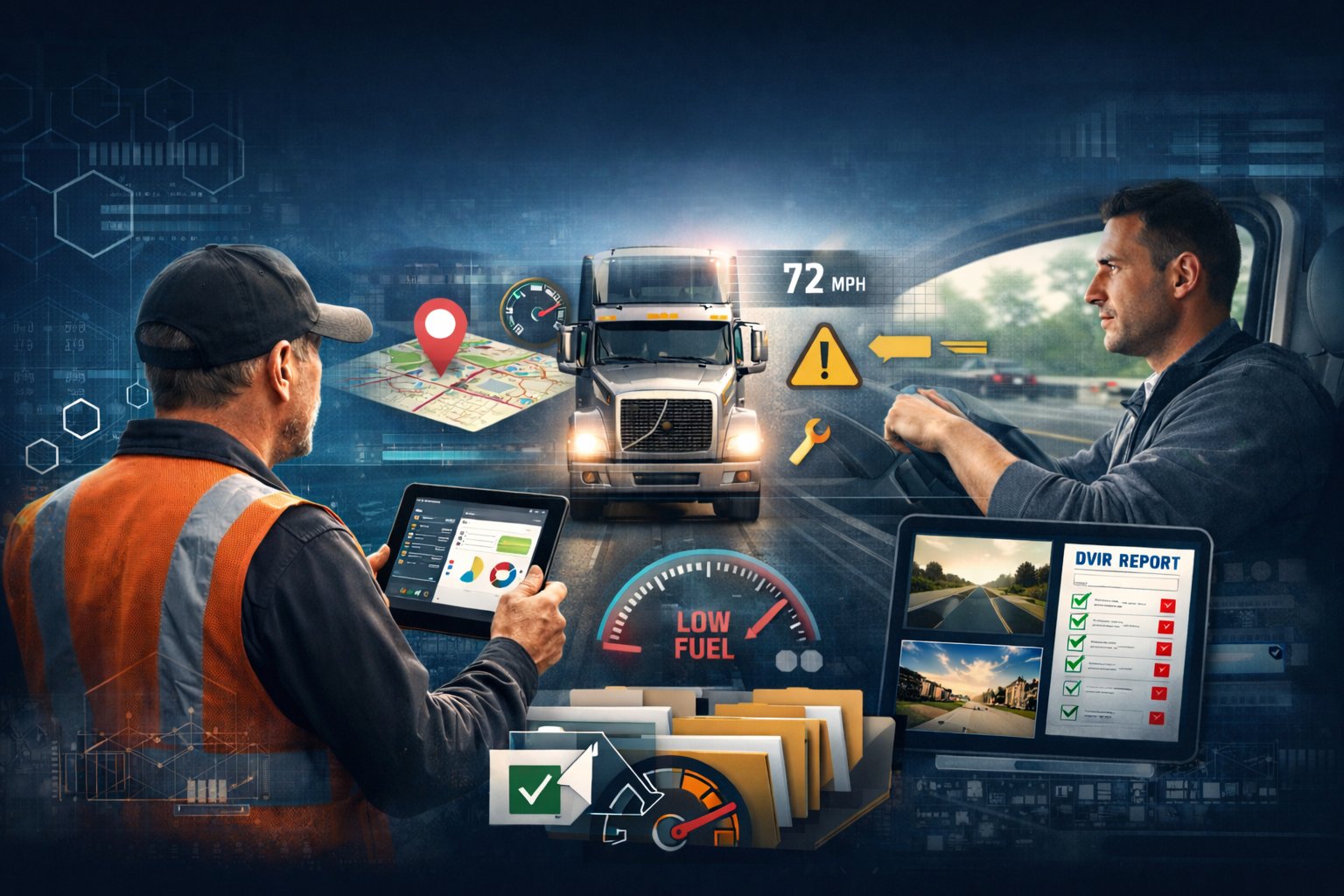
Fleet management is changing faster than most operations teams can comfortably absorb. In 2026, the pressure isn't coming from one direction — it's coming from all of them at once.
Fuel prices remain volatile. Insurance premiums are rising. Emissions regulations are tightening. Driver shortages haven't disappeared. At the same time, telematics, EV adoption, and AI-powered analytics are moving from early adoption to mainstream expectation.
The fleets that treat 2026 as a transition year will struggle. The fleets that treat it as a strategic reset will gain a structural advantage.
Here's what that shift looks like.
Key Takeaways: What Fleet Managers Should Prioritize in 2026
-
Predictive maintenance is becoming the baseline, not a premium feature.
If you're still operating primarily on reactive models, you're absorbing unnecessary downtime and repair costs. Condition-based triggers and telematics integration should now be standard. -
Mixed EV and ICE fleets demand unified management systems.
Running separate workflows for different vehicle types increases administrative burden and hides total cost visibility. Centralized oversight is critical. -
Driver behavior directly impacts maintenance and insurance costs.
Monitoring and coaching drivers reduces fuel waste, brake wear, and liability exposure. Safety data is operational data. -
Digital compliance protects your fleet from financial and regulatory risk.
Inspection records, service logs, and audit trails must be instantly accessible. Paper systems don't scale under regulatory pressure. -
Integration beats accumulation.
Owning multiple disconnected tools creates blind spots. The fleets leading in 2026 are building connected, data-driven ecosystems that turn insight into action.
Why 2026 Is a Pivotal Year for Fleet Management
The decisions fleet managers make this year will influence cost structures and operational risk for the next five to ten years.
Three forces are converging:
- Stricter regulatory enforcement and audit scrutiny
- Rapid EV expansion across commercial segments
- Technology expectations from executives demanding measurable ROI
Fleet operations are no longer evaluated only on uptime. They're evaluated on data maturity, cost transparency, safety performance, and environmental accountability.
If your systems can't produce real-time visibility into vehicle health, driver behavior, cost per mile, and compliance status, you're operating at a disadvantage. In 2026, manual processes and spreadsheet-driven maintenance tracking simply don't scale.
The fleets pulling ahead are standardizing workflows, centralizing data, and building integrated tech stacks — not patchwork solutions.
The Rise of Predictive Maintenance (and the Decline of the Old "Fix It When It Breaks" Model)
Reactive maintenance is expensive. Preventive maintenance is better. Predictive maintenance is becoming the standard.
Unplanned breakdowns cost significantly more than scheduled service — not just in repair costs, but in:
- Lost revenue from vehicle downtime
- Emergency roadside labor rates
- Secondary damage from component failure
- Driver productivity loss
- Customer service disruption
Industry studies consistently show that unplanned repairs can cost 3–5 times more than scheduled maintenance. A failed transmission on the road doesn't just cost $6,000–$8,000 in repair — it can trigger cascading operational losses.
Predictive maintenance uses telematics and vehicle data to intervene earlier. Instead of servicing strictly on mileage intervals, fleets are using condition-based triggers such as fault codes, engine hours, idle patterns, and usage intensity.
If you're still relying on static PM intervals without data validation, you're either overservicing or underservicing.
Both are expensive.
How Telematics Data Is Driving Smarter Maintenance Decisions
Telematics systems now provide real-time vehicle health data that feeds directly into maintenance workflows.
The data points that matter most in 2026 include:
- Engine hours versus miles (critical for mixed-use fleets)
- Diagnostic Trouble Codes (DTCs)
- Idle time patterns
- Fuel consumption anomalies
- Harsh acceleration or braking patterns
Modern systems integrate this data into platforms like fleet maintenance software so that alerts trigger work orders automatically.
For example, when a fault code appears, it can generate a digital service request inside a centralized fleet maintenance work order software system instead of relying on a driver to report it days later.
That shift alone can reduce breakdown-related downtime significantly.
What Fleet Managers Should Look for in a Predictive Maintenance Tool
Not all predictive systems are equal. If you're evaluating tools in 2026, prioritize platforms that provide:
- Automated maintenance alerts tied to real vehicle data
- Flexible service intervals based on hours or mileage
- Integrated inspection workflows
- Centralized service history records
- Clear reporting dashboards for KPI tracking
Predictive maintenance only works if it connects to execution. Alerts without scheduling integration create noise. A strong system closes the loop from data signal → maintenance task → documented completion.
Platforms that integrate OEM schedules with real-time vehicle data — such as factory-based service tracking combined with live telematics — are becoming baseline expectations rather than premium features.
EV Fleet Integration Is No Longer Optional
Electric vehicles are entering commercial fleets at scale. In 2026, many operations are managing hybrid fleets that include both internal combustion engine (ICE) vehicles and EVs.
EVs change maintenance dynamics:
- Fewer oil changes and fluid services
- Greater emphasis on battery health monitoring
- Software updates and firmware management
- Charging infrastructure coordination
- Range management planning
However, EVs don't eliminate maintenance — they redistribute it.
Battery degradation, regenerative braking system wear, and charging inefficiencies introduce new monitoring priorities. Fleet managers need visibility into battery performance just as clearly as they once tracked engine hours.
Mixed fleets introduce complexity. Managing two maintenance philosophies in separate systems doubles administrative overhead.
Maintaining Mixed Fleets Without Doubling Your Workload
The key is unification.
Fleet managers should use one centralized platform capable of handling:
- Different PM intervals for EV and ICE vehicles
- Vehicle-specific service templates
- Unified reporting across the entire fleet
- Centralized digital service histories
A solution like AUTOsist allows teams to manage OEM-based maintenance schedules, inspection workflows, and service documentation in one system — regardless of fuel type.
When EV and ICE data live in separate silos, leadership loses visibility into total fleet cost per mile and lifecycle trends. In 2026, integrated oversight is the advantage.
Driver Behavior Monitoring Is Becoming a Core Fleet KPI
Driver behavior is no longer just a safety discussion. It's a financial discussion.
Harsh braking increases brake wear. Aggressive acceleration increases fuel consumption. Excessive idling increases engine wear and emissions. Speeding increases liability and insurance exposure.
Fleets are increasingly using:
- GPS tracking and telematics
- Dual-facing dash cameras
- Driver scorecards
- Automated safety alerts
Integrated driver monitoring tools — such as fleet GPS tracking software combined with behavior reporting dashboards — allow managers to connect safety trends directly to maintenance costs.
When driver data integrates with fleet reports and dashboard, patterns emerge:
- High idle drivers correlate with higher fuel spend
- Aggressive drivers correlate with brake replacement frequency
- Speed violations correlate with higher insurance risk
In 2026, driver accountability and maintenance strategy are inseparable.
Compliance and Regulatory Pressure Is Intensifying
DOT enforcement isn't loosening. It's tightening.
Fleet managers are facing increasing scrutiny around:
- DVIR completion
- Maintenance documentation
- CSA scores
- Emissions compliance
- Hours-of-service reporting
Non-compliance creates direct financial risk. Fines, failed audits, and out-of-service violations are expensive. But reputational risk and insurance premium increases can be even more damaging.
Digital recordkeeping is no longer optional.
If your documentation exists in paper binders, scattered spreadsheets, or disconnected systems, you're exposed.
How Digital Inspection and Record-Keeping Reduces Compliance Risk
Digital inspection systems create an auditable, timestamped trail of compliance activity.
Using a digital vehicle inspection app ensures:
- Drivers complete DVIRs consistently
- Defects trigger documented repair workflows
- Inspection histories remain searchable
- Maintenance logs stay centralized
In a roadside DOT inspection or audit, being able to instantly produce service history and inspection records reduces friction and demonstrates operational control.
The fleets that pass audits with confidence in 2026 are the fleets that digitized early.
Fleet Cost Control Strategies That Are Actually Working in 2026
Cost control in 2026 isn't about cutting maintenance. It's about managing it precisely.
Fleet managers are focusing on four primary levers:
- Fuel management optimization
- Parts inventory control
- Lifecycle replacement timing
- Administrative automation
Fuel alone can represent 20–30% of total operating cost. Integrating telematics with fuel card data through fleet fuel management and tracking software gives visibility into anomalies and misuse.
Lifecycle cost analysis is another critical strategy. Calculating cost per mile requires:
- Total maintenance cost
- Fuel cost
- Depreciation
- Downtime impact
If a vehicle's cost per mile exceeds replacement thresholds, extending its life may cost more than replacing it.
Smart fleets are also using parts inventory tracking to avoid emergency purchases and downtime caused by stockouts. Centralized reporting dashboards allow leadership to identify outliers and adjust before costs spiral.
The Technology Stack Powering Modern Fleets
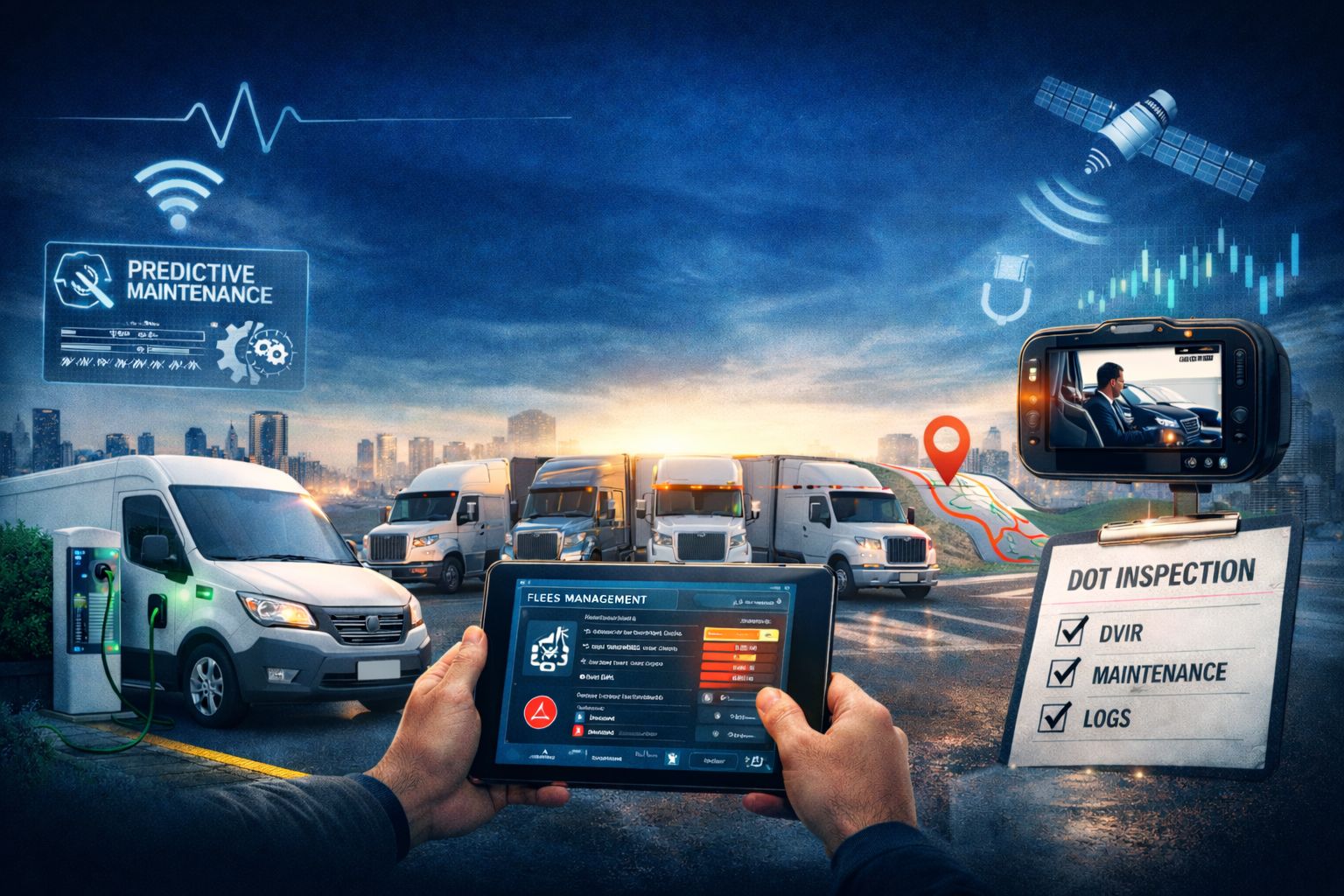
In 2026, a modern fleet technology stack typically includes:
- Telematics platform
- Fleet maintenance software
- Fuel card integration
- ELD system
- Dash cameras
- Centralized reporting dashboard
The competitive advantage doesn't come from owning each tool. It comes from integration.
Disconnected systems create data silos. Siloed data slows decisions.
When telematics integrates with maintenance scheduling, inspections integrate with compliance tracking, and fuel data integrates with cost reporting, managers operate proactively rather than reactively.
AUTOsist's integrated ecosystem — from preventive maintenance scheduling to reporting dashboards — reflects this shift toward centralized operational intelligence.
Fleet management in 2026 isn't about chasing trends. It's about operational discipline powered by better data.
The fleets that win will be the ones that see maintenance, safety, compliance, and cost control not as separate functions — but as one integrated strategy.