 AUTOsist Team
Feb 12, 2026
Fleet Monitoring Guide: How to Track Vehicles, Drivers, and Costs in Real Time
Key Takeaways: Making Fleet Monitoring Work for Your Operation
- Fleet monitoring is broader than GPS. It combines location, safety, fuel, maintenance, and compliance data into one operational view.
- Hardware and software must work together. Devices collect information, but platforms turn it into decisions.
- Driver behavior directly affects costs. Monitoring habits reduces accidents, fuel waste, and insurance premiums.
- Preventive maintenance depends on data. Real-time diagnostics prevent expensive breakdowns.
- Fuel savings deliver the fastest ROI. Small efficiency gains multiply quickly across fleets.
- Transparency improves adoption. Clear communication reduces privacy concerns and resistance.
- Integrated platforms outperform standalone tools. Combining monitoring with maintenance and reporting creates long-term operational efficiency.
What Is Fleet Monitoring? (And Why It's More Than Just GPS Tracking)
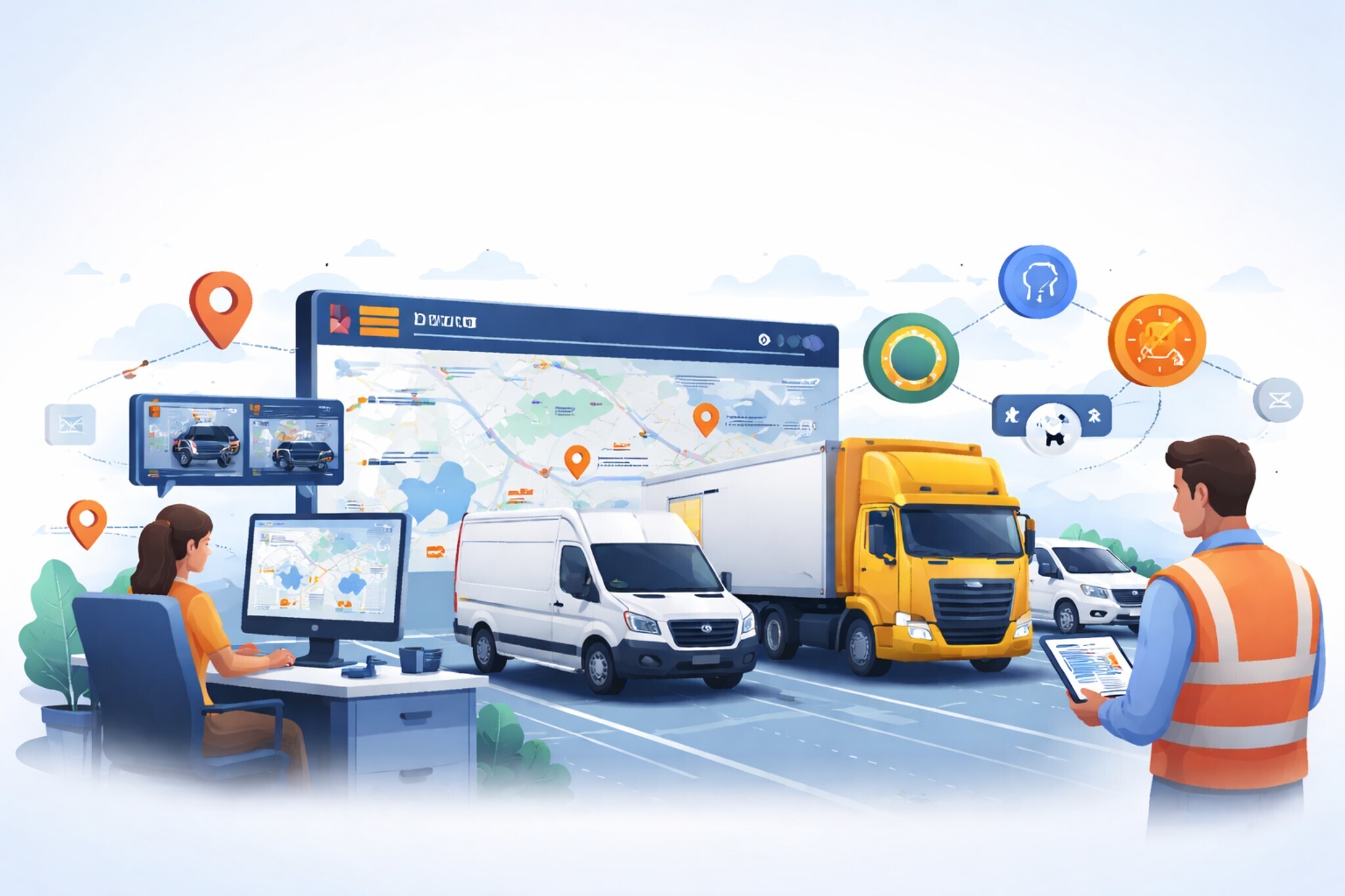
Fleet monitoring is the continuous process of tracking, analyzing, and managing every moving part of a vehicle operation — not just where vehicles are located, but how they are driven, how much fuel they consume, when they need maintenance, and whether they comply with regulations. Many people confuse fleet monitoring with simple GPS tracking, but GPS is only one slice of the larger picture.
A true monitoring system combines location data with vehicle diagnostics, driver behavior analytics, maintenance schedules, and operational reporting. Instead of only answering “Where is my truck?”, fleet monitoring answers deeper operational questions such as:
- Are drivers idling too long?
- Which vehicles cost the most per mile?
- Are maintenance schedules being followed?
- Are routes optimized or wasting fuel?
- Are compliance logs up to date?
For example, two delivery vans might follow the same route daily. GPS alone shows both arrive on time. Monitoring reveals one van burns 18% more fuel and requires more repairs due to harsh driving and missed service intervals. That insight transforms management decisions.
Fleet monitoring is about visibility, accountability, and optimization, not just dots on a map.
The Core Components of an Effective Fleet Monitoring System
A complete monitoring system blends hardware installed in vehicles with software platforms that process and visualize data. Removing either side weakens the system. Hardware collects raw information, while software turns that information into decisions.
Telematics Hardware and Sensors
Telematics hardware acts as the data collector inside each vehicle. These devices connect to vehicle systems and sensors to capture real-time information. Modern fleets use a mix of technologies depending on their needs and budgets.
Common hardware tools include:
- GPS tracking devices for location and route data
- OBD-II readers that access engine diagnostics
- Dash cameras for safety monitoring and liability protection
- Fuel sensors to detect usage patterns or theft
- Tire pressure and temperature sensors for heavy vehicles
A single GPS device provides location. A telematics ecosystem provides vehicle health, driver habits, and fuel analytics. That distinction determines whether a fleet merely tracks vehicles or actively improves performance.
Fleet Management Software Platforms
Hardware alone produces data overload. Software platforms convert raw signals into dashboards, reports, and alerts. This is where fleet managers gain actionable insights instead of spreadsheets filled with numbers.
Platforms like AUTOsist’s maintenance and reporting tools help fleets:
- Track service schedules automatically
- Generate cost-per-mile analytics
- Monitor inspections and compliance logs
- Visualize trends through dashboards
- Assign and track work orders
These capabilities are central to understanding why vehicles perform the way they do, not just what happened. Many of these platform features are outlined across AUTOsist’s ecosystem.
Real-Time Data Collection and Alerts
Continuous monitoring allows fleets to react before small issues become expensive problems. Real-time alerts notify managers when vehicles exceed speed limits, cross geofenced boundaries, or trigger fault codes.
Without alerts, fleets operate reactively. With alerts, fleets operate proactively, reducing breakdowns and safety risks. The difference often determines whether maintenance costs stay predictable or spiral out of control.
Key Metrics Fleet Monitoring Tracks (And What They Tell You)
Fleet monitoring becomes powerful when managers understand the meaning behind each metric. Data without interpretation leads to confusion. Data with context leads to savings and safety improvements.
Vehicle Location and Route Optimization
Location tracking goes beyond finding lost vehicles. It reveals inefficiencies and opportunities. Managers can identify congested routes, reduce unnecessary mileage, and ensure drivers stay within assigned territories.
Benefits of route monitoring include:
- Reduced fuel consumption from shorter routes
- Faster delivery times and improved customer satisfaction
- Geofencing alerts for unauthorized vehicle use
- Better dispatch decisions during peak demand
A fleet that trims just 5 miles per vehicle per day across 40 vehicles saves over 73,000 miles annually, translating into thousands of dollars in fuel and maintenance reductions.
Driver Behavior and Safety Metrics
Driver habits significantly influence fuel efficiency, accident rates, and repair costs. Monitoring reveals patterns such as harsh braking, rapid acceleration, and excessive idling.
Key behavior metrics include:
- Speed violations
- Sudden braking incidents
- Hard cornering
- Idle time percentages
- Seatbelt usage
Fleets using behavior monitoring often report 20–30% accident reductions within a year. Lower accident frequency reduces insurance premiums and legal exposure.
Fuel Consumption and Costs
Fuel remains one of the highest fleet expenses. Monitoring MPG trends and identifying inefficient vehicles or routes delivers immediate ROI. Fuel sensors also help detect unauthorized fueling or theft.
A 50-vehicle fleet driving 25,000 miles annually per vehicle that improves fuel efficiency by just 8% can save $18,000–$30,000 per year, depending on fuel prices.
Maintenance and Vehicle Health
Engine diagnostics, odometer tracking, and fault code alerts help fleets prevent breakdowns. Preventive maintenance scheduling ensures service occurs before costly failures.
Using systems discussed in resources like Fleet Vehicle Maintenance: The Complete Guide to Maximizing Uptime and Minimizing Costs enables fleets to link monitoring data directly with service planning.
How Fleet Monitoring Reduces Operating Costs
Fleet monitoring impacts nearly every cost category. The most measurable savings come from fuel, maintenance, insurance, and downtime.
A practical cost-reduction breakdown looks like this:
- Fuel Savings: Reduced idling and optimized routes lower consumption.
- Maintenance Savings: Early fault detection prevents catastrophic repairs.
- Insurance Savings: Safer driving reduces claim frequency.
- Downtime Reduction: Predictive maintenance keeps vehicles on the road.
Consider a mid-size fleet of 30 service vans. If monitoring reduces idle time by 12 minutes per vehicle per day, the fleet saves approximately 1,800 fuel hours annually. At $4 per gallon, savings easily exceed $9,000–$12,000 yearly — before factoring in maintenance or insurance reductions.
Improving Fleet Safety and Compliance Through Monitoring
Safety improvements extend beyond accident prevention. Monitoring supports regulatory compliance, inspection logging, and liability management.
Key compliance advantages include:
- Digital DVIR tracking
- Hours of Service awareness
- Inspection reminders
- Dash cam footage for incident verification
- Maintenance record accuracy
Fleets using structured inspection and compliance workflows often reference resources like Vehicle Inspection Checklist for Fleets: 20 Things Drivers Should Check Every Day to standardize procedures.
Monitoring also encourages driver accountability. Drivers aware of performance tracking tend to adopt safer habits, reducing accident severity and frequency.
Common Fleet Monitoring Challenges (And How to Overcome Them)
Despite its benefits, fleet monitoring introduces challenges. Addressing these early improves adoption and long-term success.
Common obstacles include:
- Driver privacy concerns
- Data overload from excessive metrics
- Integration issues with existing systems
- Resistance to behavioral accountability
- Training gaps among managers
Solutions focus on transparency and education. Explain why monitoring exists, emphasize safety benefits, and restrict data access to necessary personnel. Simplifying dashboards and integrating maintenance systems also reduces friction.
Implementing Fleet Monitoring: What to Look for in a Solution
Choosing the right solution determines whether monitoring delivers ROI or frustration. Fleets should evaluate platforms based on usability, scalability, and integration strength.
Important evaluation factors include:
- Ease of onboarding and driver adoption
- Mobile accessibility for field teams
- Reporting and dashboard clarity
- Integration with maintenance and inspection systems
- Customer support responsiveness
- Data security and privacy controls
Platforms that connect monitoring with maintenance scheduling, reporting, and inspections provide more value than isolated GPS tools. AUTOsist’s integrated approach to maintenance, reporting, and telematics alignment is frequently highlighted across its product ecosystem.