 Miya Bholat
June 13, 2025
Using Fleet Parts Inventory Management Software to Prevent Stockouts
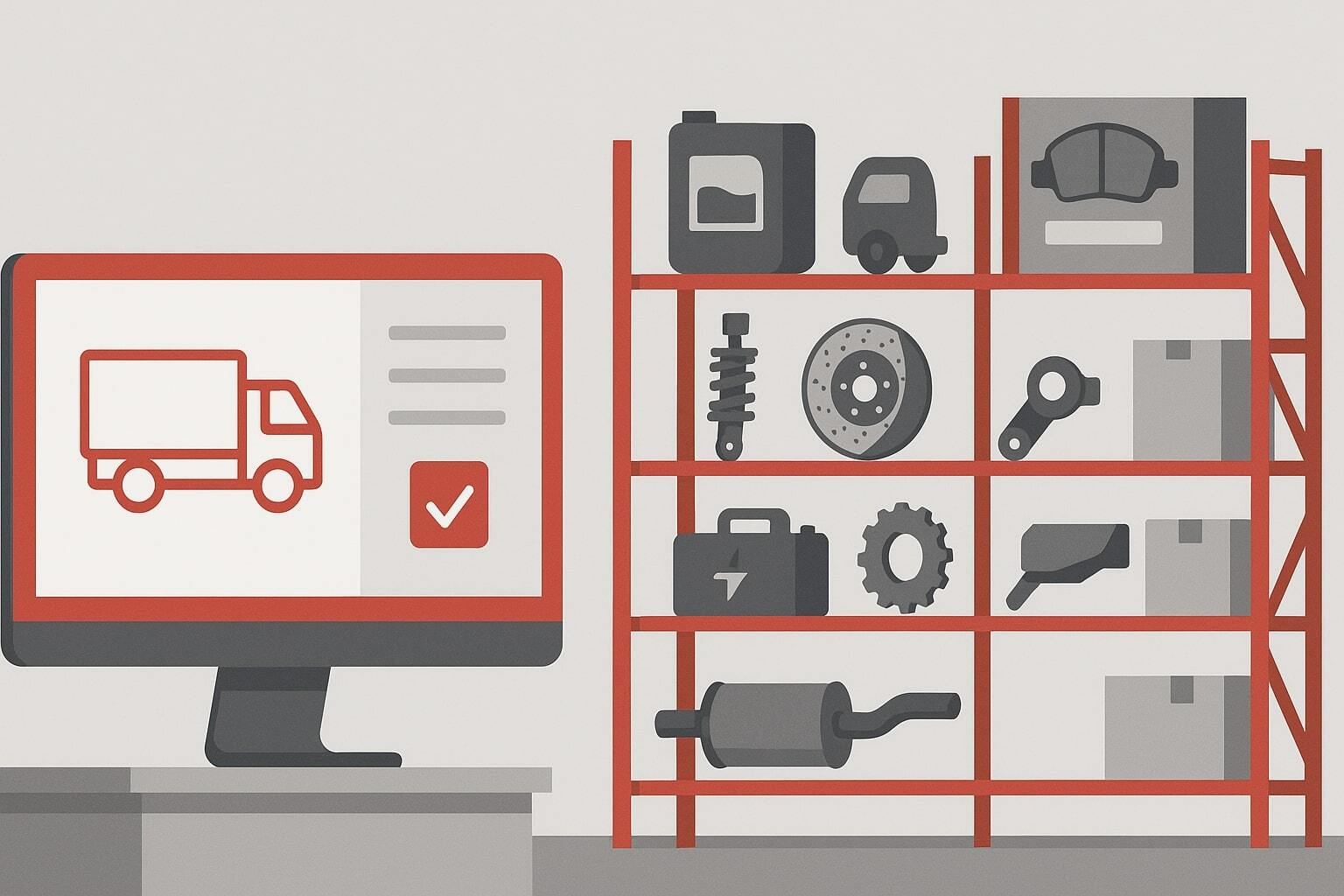
What Exactly Is Fleet Parts Inventory Management?
At it's core, fleet parts inventory management is the systematic approach to tracking, ordering, storing, and utilizing the parts needed to maintain your vehicle fleet. It's the difference between reactive scrambling and proactive planning.
Effective parts inventory management means having the right parts, in the right quantities, at the right locations—without tying up excessive capital in unused inventory. It's a delicate balancing act that requires both strategy and software to execute.
The Hidden Costs of Poor Parts Inventory Management
Managing fleet parts inventory is one of the most critical aspects determining whether your operation runs like a well-oiled machine or hemorrhages money daily.
Imagine one of your delivery trucks breaks down on a busy route. Your maintenance team identifies the issue as electrical related and requires a new battery and sensor. While the parts themselves may be a couple hundred dollars, the lost time if you don’t have the parts readily available is exponentially greater. Potentially thousands in lost revenue, emergency shipping fees, and the ripple effects of unhappy customers.
Today's fleet management pros leverage fleet management software solutions and proven strategies to keep their operations humming without breaking the bank. Having one place to manage maintenance, fuel costs, GPS tracking, and inventory makes it far easier to be proactive and save your fleet from costly downtime.
How Fleet Maintenance Software Can Help Inventory Management
Fleet maintenance software, like AUTOsist, offers an easy-to-use dashboard to manage your fleet parts inventory. It tracks everything from part numbers and bin locations to vendor details, and you can set alerts for reorder thresholds. This allows fleet managers to get the insights the need and know what part is being used for what maintenance work order, and how many are readily available.
How Inventory Management Connects to Preventive Maintenance Execution
Inventory issues rarely happen in isolation. Most stockouts are a direct result of weak alignment between parts availability and a structured preventive maintenance program . When maintenance schedules are predictable but inventory isn’t, fleets end up delaying service or improvising repairs.
A well-connected system ensures that every maintenance schedule is supported by the right parts at the right time. For example, if brake replacements are due across multiple vehicles, the system should forecast required inventory based on upcoming service intervals. Without this visibility, teams either overstock (tying up capital) or understock (causing delays).
This is where integrating inventory with fleet preventive maintenance schedules becomes critical. Instead of reacting to shortages, fleets can align purchasing decisions with upcoming service needs. Over time, this reduces last-minute orders, rush shipping costs, and service delays.
Another key factor is tracking how parts are consumed across jobs. When inventory is tied directly to fleet maintenance work order software, every part used is automatically logged and deducted. This creates a continuous feedback loop where usage patterns inform future inventory planning.
Fleets that take this approach move away from reactive stocking and toward a predictable, controlled maintenance operation—where parts availability supports uptime instead of limiting it.
Key features of AUTOsist’s inventory management module include:
-
Real-time inventory tracking. Know exactly how many filters, hoses, and spark plugs you have—across all locations.
-
Integrated maintenance scheduling. Connect parts usage to work orders and service logs.
-
Multi-location support. Manage inventory across garages or depots without the guesswork.
-
Vendor and purchase order history. Make smarter procurement decisions with visibility into supplier details
Reducing Fleet Downtime Through Better Parts Visibility and Tracking
One of the biggest hidden costs of poor inventory management is unplanned fleet downtime . Even when technicians are ready and vehicles are scheduled, missing parts can bring operations to a halt.
Real-time visibility into inventory levels changes this completely. When managers can see exactly what’s in stock, what’s reserved for upcoming jobs, and what needs reordering, they can proactively avoid disruptions. This is especially important for high-turnover parts like filters, tires, and brake components.
Beyond visibility, historical tracking plays a major role. Maintaining accurate vehicle service history helps identify which parts are used most frequently and when replacements typically occur. This data allows fleets to forecast demand with much greater accuracy.
Fleets that lack this integration often fall into reactive maintenance, where parts are ordered only after a failure occurs. This leads to longer repair cycles, higher costs, and inconsistent vehicle availability.
By combining inventory tracking with maintenance data, fleets can shift toward planned operations where parts availability supports faster repairs, shorter service cycles, and reduced downtime across the entire fleet.
The Real-World Impact on Your Bottom Line
Let's talk about the financial implications of proper inventory management for your fleet and business at large. Studies show that efficient parts inventory management can:
-
Reduce vehicle downtime significantly
-
Decrease emergency parts orders
-
Cut overall parts expenses
-
Improve technician productivity
When vehicles are your business's lifeblood, these aren't just statistics, they're game-changers that directly impact potential profitability.
5 Signs Your Parts Management Process Needs an Overhaul
Still wondering if your current system needs work. Watch for these red flags:
-
Frequent stockouts of critical parts causing extended vehicle downtime
-
Emergency shipping costs appear regularly on expense reports
-
Excessive overstocking of certain items while others are consistently unavailable
-
Technicians wasting time hunting for parts or waiting for deliveries
-
Difficulty tracking parts usage patterns across your fleet
If you're nodding your head to any of these, it's time to consider a more sophisticated approach.
The Building Blocks of Modern Fleet Parts Management
The cornerstone of effective parts management in 2025 is specialized software designed for fleet operations. These systems go far beyond basic inventory tracking, offering:
-
Real-time visibility across multiple locations
-
Predictive analytics that forecast parts needs before they arise
-
Automated reordering based on customizable thresholds
-
Integration with maintenance systems for seamless workflow
-
Mobile accessibility for technicians and managers in the field
-
Vendor management tools to optimize supplier relationships
-
Reporting features that identify cost-saving opportunities
Smart Storage Solutions: Organization Matters
Even with cutting-edge software, physical organization remains crucial. Modern parts rooms utilize:
-
Barcode or RFID tagging systems
-
Strategic placement based on usage frequency
-
Climate controls for sensitive parts
-
Security systems to prevent unauthorized access or "borrowing"
-
Clear labeling and categorization
Just-In-Time vs. Just-In-Case: Finding Your Sweet Spot
While just-in-time inventory might work for manufacturing, fleet operations often require a more nuanced approach. The key is identifying:
-
Which parts are truly critical (requiring on-hand inventory)
-
Which have predictable failure rates (schedulable ordering)
-
Which can be sourced quickly when needed (minimal stock)
-
Which can be shared across similar vehicles in your fleet
Implementation: Making the Transition Without the Headache
Ready to upgrade your parts management approach? Follow these steps for a smoother transition:
-
Audit your current inventory to establish a baseline
-
Analyze parts usage data from the past 12-24 months
-
Categorize parts by criticality and usage patterns
-
Implement AUTOsist’s software to match your operation's needs
-
Clean and organize physical storage spaces before implementation
-
Train staff thoroughly on new systems and procedures
-
Establish KPIs to measure success
Cross-Fleet and Location Standardization
Whenever possible, standardize components across your fleet to reduce parts variety and increase interchangeability. This seemingly simple strategy can dramatically reduce inventory requirements.
Your maintenance team works with parts daily—make them part of the inventory planning process. Their insights on quality issues, usage patterns, and preferences can prevent costly mistakes.
Don’t Let Inventory Management Constrain Your Fleet’s Uptime
Remember, effective parts inventory management isn't just about having parts on shelves—it's about having the right parts, in the right place, at the right time, for the right price. Master this balancing act, and you'll gain a competitive advantage that keeps your fleet moving when others are stuck in the garage.
Your vehicles are investments—protect them with inventory management practices that match their importance to your operation.
Managing fleet parts inventory doesn’t have to be a daily fire drill. With the right software, clear processes, and smart tracking, you can go from “where the heck is that part?” to “already stocked and ready to roll.”
It’s about peace of mind—and better performance across your entire fleet.
If you’re ready to bring order to the chaos, start with a software solution that aligns with your goals, and build habits around accurate tracking and data-backed decisions.
Because the best-run fleets don’t just manage vehicles—they master the processes necessary to keep them running.
Frequently Asked Questions
-
What is fleet parts inventory management software?
Fleet parts inventory management software helps track, manage, and optimize spare parts across fleet operations to prevent stockouts and reduce downtime. -
How does inventory management reduce fleet downtime?
By ensuring critical parts are always available when maintenance is scheduled, inventory management prevents delays and keeps vehicles operational. -
What causes parts stockouts in fleet operations?
Stockouts typically happen due to poor forecasting, lack of real-time visibility, and disconnect between maintenance schedules and inventory planning. -
How does inventory connect with preventive maintenance?
Inventory should align with upcoming service schedules so required parts are available before maintenance begins, avoiding delays. -
What is the difference between reactive and preventive inventory management?
Reactive inventory responds to breakdowns after they happen, while preventive inventory anticipates parts demand based on scheduled maintenance and usage trends.