 Miya Bholat
Feb 16, 2026
Fleet Scheduled Maintenance: Best Practices for Reliable, Cost-Efficient Operations

Fleet managers don’t lose money because of one big failure — they lose it through dozens of small preventable issues that snowball into breakdowns, missed deliveries, and frustrated drivers. Reactive “fix-it-when-it-breaks” maintenance feels cheaper in the moment, but it quietly drains budgets through emergency repairs, overtime labor, towing, and lost productivity. A structured scheduled maintenance program flips that equation: fewer surprises, predictable costs, and vehicles that stay on the road earning revenue instead of sitting in a shop.
Key Takeaways: Building a Smarter Fleet Maintenance Program
- Treat Maintenance as an Operational System, Not a Task Consistency matters more than intensity. A predictable schedule prevents cascading failures and stabilizes budgets.
- Customize Intervals Based on Real Usage OEM guidelines are the baseline. Mileage, terrain, load weight, and idle time determine the real service frequency.
- Use the Right Triggers for the Right Vehicles Time, mileage, and engine hours each tell a different story. Combining triggers protects both high-use and low-use assets.
- Centralize Tracking With Digital Tools Manual logs fail at scale. Digital systems with alerts, history, and reporting prevent missed service windows and improve accountability.
- Schedule Maintenance Strategically to Avoid Downtime Stagger services, use off-peak hours, and keep buffer vehicles so operations continue smoothly.
- Preventive Costs Are Small — Reactive Costs Are Massive A $100 inspection today can prevent a five-figure repair tomorrow. Preventive maintenance is one of the highest-ROI actions a fleet manager can take.
Why Scheduled Maintenance Is the Foundation of Fleet Reliability
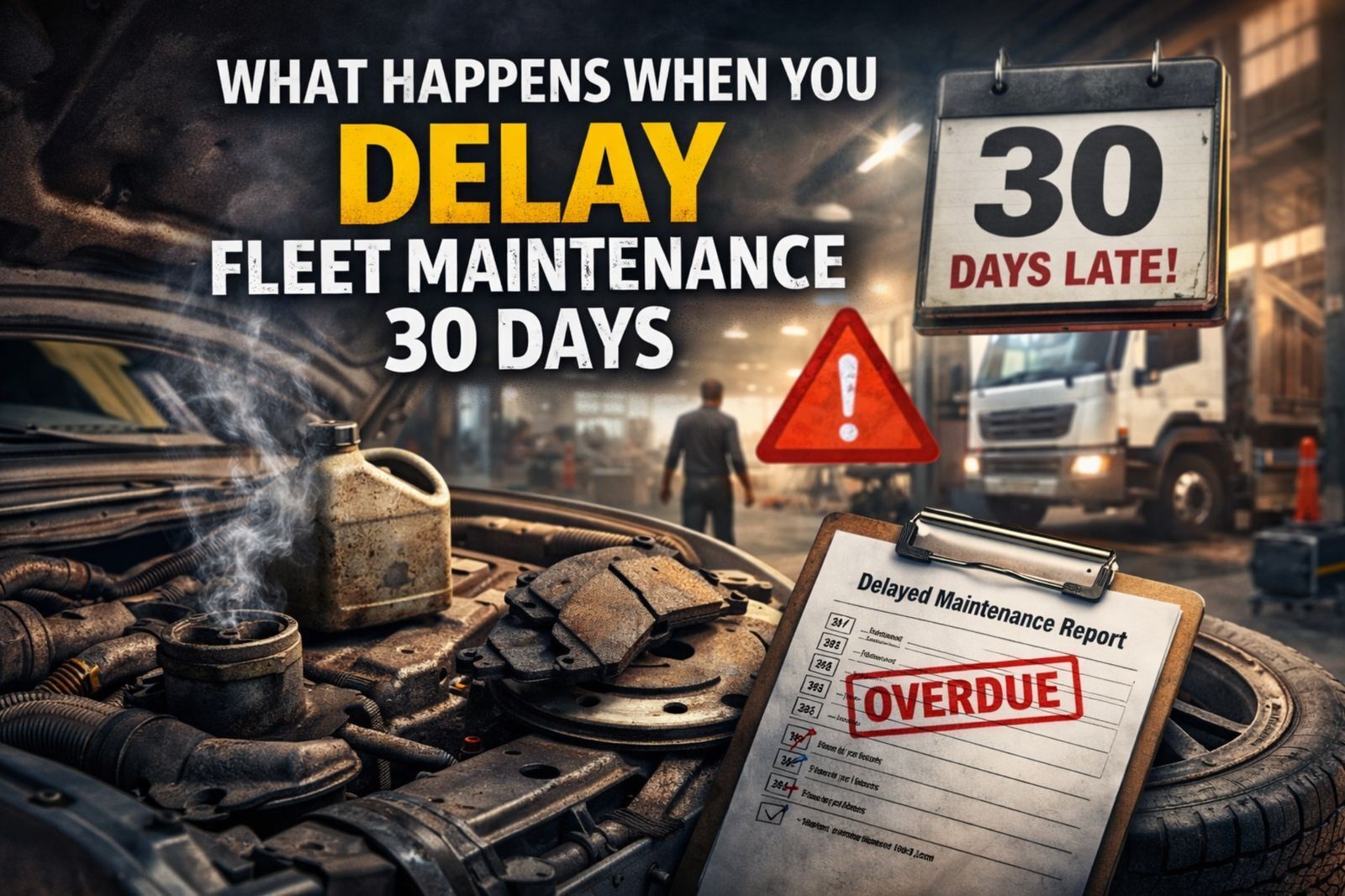
Scheduled maintenance isn’t just a technical best practice — it’s an operational control system. When fleets ignore service intervals, the consequences ripple far beyond the repair bay. A single unexpected breakdown can force route reshuffling, delay customer deliveries, and trigger compliance risks if inspection or safety requirements get missed.
The hidden problem is cascade failure. One missed oil change leads to engine wear, which leads to overheating, which leads to a major repair. The same pattern shows up with tires, brakes, filters, and suspension components. Scheduled maintenance interrupts that chain before it starts.
Fleet managers who commit to proactive maintenance typically see improvements in:
- Vehicle uptime and route consistency
- Driver satisfaction and retention
- Safety and inspection pass rates
- Fuel efficiency and operating costs
- Asset lifespan and resale value
Reliability isn’t an accident. It’s the result of consistent, repeatable service actions applied across every vehicle, every month.
How to Build a Fleet Maintenance Schedule That Actually Works
A maintenance schedule only works if it reflects how your vehicles actually operate — not just what a manual suggests. The strongest programs combine manufacturer guidance with real-world usage data.
Start With Manufacturer Guidelines, Then Adapt
Original Equipment Manufacturer (OEM) intervals provide the baseline. They’re engineered for average conditions, but fleets rarely operate in “average” environments. High mileage routes, extreme temperatures, heavy loads, and long idle times all accelerate wear.
Adjust service frequency based on real usage. For example:
- Vehicles operating in dusty or construction zones may need more frequent air filter replacements
- Stop-and-go urban routes often demand earlier brake inspections
- High-temperature regions may require shorter coolant and oil change cycles
- Vehicles towing trailers or hauling heavy loads need earlier transmission checks
Treat OEM guidance as a starting point, not a rigid rule.
Prioritize by Vehicle Type and Usage
A one-size-fits-all schedule wastes time on low-use vehicles and neglects high-stress assets. Segment the fleet so each group receives appropriate care. Common segmentation approaches include:
- Light-duty vans vs. heavy-duty trucks
- High-mileage highway vehicles vs. local service vehicles
- Equipment with long idle hours vs. constant motion vehicles
- Seasonal vehicles vs. year-round assets
Once segmented, assign intervals that match actual wear patterns instead of spreading maintenance evenly across the board.
Choose Your Trigger: Time, Mileage, or Engine Hours
The trigger determines when service occurs. Selecting the right one prevents both over-servicing and under-servicing.
- Time-based triggers work well for low-use or seasonal vehicles that may sit idle for weeks
- Mileage-based triggers suit delivery and logistics fleets that operate predictable routes
- Engine-hour triggers are ideal for equipment or vehicles with heavy idle time where mileage underestimates wear
Many fleets combine triggers. For example: “Every 5,000 miles or 90 days, whichever comes first.” That dual threshold protects both high-use and low-use vehicles.
How to Choose the Right Maintenance Intervals for Your Fleet
One of the most overlooked parts of a strong maintenance schedule is choosing the right service intervals. Many fleets rely on generic timelines, but real-world operations vary based on vehicle type, load, routes, and usage patterns. A rigid, one-size-fits-all schedule often leads to either over-maintenance or unexpected failures.
The most effective fleets align their intervals with a mix of OEM recommendations and actual usage data. For example, vehicles operating in stop-and-go urban routes may require more frequent servicing compared to long-haul units. This is where understanding preventive maintenance program structure becomes critical — intervals should reflect how your fleet actually operates, not just manufacturer defaults.
Fleets managing mixed assets often benefit from combining mileage-based and hour-based triggers. A well-defined system ensures no vehicle falls through the cracks, especially when usage varies significantly across the fleet.
Fleet Maintenance Software make this easier by automatically adjusting schedules and tracking compliance across assets. With structured systems in place, fleets can avoid both unnecessary servicing and costly breakdowns caused by delayed maintenance.
The Core Maintenance Tasks Every Fleet Schedule Should Include
Preventive maintenance isn’t just oil changes. It’s a system of recurring inspections and replacements that keep every mechanical and safety component in working order. Across a fleet, small inefficiencies multiply quickly.
Key tasks that belong in every schedule include:
- Oil and fluid changes to prevent engine wear and overheating
- Tire pressure checks and rotations to improve fuel efficiency and extend tire life
- Brake inspections to maintain stopping power and reduce accident risk
- Filter replacements (air, fuel, cabin) to protect engine performance and driver comfort
- Battery testing to avoid unexpected no-start situations
- Belts and hose inspections to prevent sudden mechanical failures
Consider the math: underinflated tires can reduce fuel efficiency by 1–3%. Across 50 vehicles driving 25,000 miles annually, that inefficiency can translate into thousands of dollars in extra fuel spend each year. Preventive tasks protect both safety and budgets simultaneously.
Tracking and Managing Fleet Maintenance Without Dropping the Ball
Creating a schedule is only half the battle. The real challenge is consistent tracking and execution — especially as fleets grow.
The Problem With Paper Logs and Spreadsheets
Manual tracking systems fail quietly. They rely on memory, scattered notes, and inconsistent updates. Common breakdown points include:
- Missed service dates due to human error
- No centralized visibility across multiple locations
- Difficulty tracking historical service records
- Lack of automatic reminders or alerts
- Limited accountability among team members
Spreadsheets may work for five vehicles. They become risky at fifteen and chaotic at fifty. Even small delays compound into compliance and safety risks.
What Good Maintenance Tracking Looks Like
Effective maintenance tracking systems automate the reminders and centralize the data. Fleet managers should look for capabilities such as:
- Automated service alerts tied to mileage, time, or engine hours
- Digital service histories per vehicle
- Multi-user access for technicians and managers
- Reporting dashboards for cost and performance analysis
- Document storage for inspections, invoices, and compliance records
This is where software platforms like AUTOsist naturally fit. Tools designed for fleets help managers move from reactive spreadsheets to structured scheduling, reminders, and analytics. Guides like How to Track Fleet Maintenance (Step-by-Step) provide a practical framework for transitioning from manual systems to digital ones.
Scheduling Maintenance Without Disrupting Fleet Operations
The biggest hesitation fleet managers have isn’t whether maintenance is necessary — it’s how to perform it without taking vehicles out of service at the wrong time. Smart scheduling balances service needs with operational continuity.
Strategies that reduce disruption include:
- Staggering service windows so only a small percentage of vehicles are offline at once
- Using off-peak hours or overnight service appointments
- Coordinating with drivers to align service with route gaps
- Maintaining one or two buffer vehicles for emergencies
- Partnering with mobile or on-site service providers to reduce travel downtime
Planning ahead transforms maintenance from a disruption into a predictable routine. Fleets that treat service like a scheduled business process — not a surprise repair — experience far fewer operational shocks.
The Real Cost of Skipping Scheduled Maintenance (With Numbers)
Preventive maintenance feels like an expense. Reactive maintenance is a financial hit. Industry estimates show the average roadside breakdown for a commercial vehicle can cost $400–$800 when factoring towing, emergency repairs, and lost labor. Major engine failures can exceed $10,000–$20,000, often sidelining a vehicle for weeks.
Compare that with preventive costs:
- Oil change: $60–$120
- Tire rotation and inspection: $40–$80
- Brake inspection: $50–$100
- Filter replacement: $30–$70
If a $90 oil change prevents a $12,000 engine rebuild, the return on preventive action is obvious. Fleet managers who adopt structured schedules consistently report lower cost-per-mile metrics and longer asset lifecycles. Resources such as the Preventative Maintenance Guide for Fleet Operations outline the long-term savings model clearly.
Beyond repair costs, downtime also impacts revenue. A delivery vehicle out of service for two days can mean missed contracts, late fees, or customer churn — losses that rarely appear on a repair invoice but hurt the bottom line.
A disciplined fleet scheduled maintenance program doesn’t just keep vehicles running — it protects profitability, compliance, and operational confidence.
How to Reduce Reactive Maintenance and Improve Fleet Uptime
Even with a defined maintenance schedule, many fleets still fall into reactive patterns. Missed services, incomplete inspections, and poor tracking can quickly shift operations from preventive to reactive maintenance, increasing costs and downtime.
The key difference between high-performing fleets and struggling ones is execution. A structured preventive maintenance program only works if it’s consistently followed. This means having clear workflows, accountability, and visibility into what’s been completed versus what’s overdue.
One of the biggest drivers of fleet downtime is lack of real-time tracking. When service records are scattered or manually updated, small issues often go unnoticed until they turn into major failures. This is why centralized tracking and complete service history are critical for maintaining uptime.
Fleets that actively monitor trends — such as recurring repairs or rising costs — can take corrective action early. Over time, this reduces breakdowns, improves asset reliability, and keeps operations running smoothly.
Adopting structured systems and eliminating gaps in execution is what ultimately shifts fleets away from reactive operations toward predictable, controlled maintenance performance.
Frequently Asked Questions
-
What is scheduled maintenance in fleet management?
Scheduled maintenance is a structured approach to servicing vehicles at predefined intervals based on mileage, engine hours, or time to prevent breakdowns and extend asset life. -
How often should fleet vehicles be serviced?
Service frequency depends on vehicle type, usage conditions, and OEM guidelines. Fleets often use a mix of mileage-based and hour-based intervals for better accuracy. -
What is the difference between preventive and reactive maintenance?
Preventive maintenance is planned and scheduled in advance, while reactive maintenance happens after a failure or breakdown occurs. -
Why do fleets still experience breakdowns with scheduled maintenance?
Breakdowns can still happen due to missed services, poor tracking, inconsistent execution, or incorrect maintenance intervals that don’t match real usage. -
How can fleet maintenance software improve scheduled maintenance?
Fleet maintenance software helps automate scheduling, track service history, ensure compliance, and provide real-time visibility into maintenance activities across the fleet.