 Miya Bholat
Jan 15, 2026
How Often Do You Need a Smog Test in California?
Key Takeaways
- Most gasoline fleet vehicles need smog tests every two years once they exceed the 8-year exemption
- Not all vehicles require testing, but exemptions depend on fuel type, weight, and age
- Missed smog tests can block registration, causing downtime and legal risk
- Failed tests require repairs and retesting, which should be budgeted for
- Proactive scheduling reduces disruption by aligning smog checks with maintenance
- Centralized fleet software simplifies compliance by tracking deadlines, records, and vehicle history
Why California Smog Tests Matter for Fleet Managers
California has some of the strictest air quality regulations in the country, and smog checks are a core part of how the state enforces them. The California Smog Check Program exists to reduce harmful vehicle emissions, improve public health, and keep pollution levels within federal and state limits. For fleet managers, this isn’t just an environmental issue—it’s a compliance and operational one.
If a fleet vehicle misses a required smog test, registration renewal can be blocked. That means vehicles can’t legally operate, deliveries get delayed, jobs stall, and your fleet risks citations or penalties. For organizations running dozens—or hundreds—of vehicles, even a small compliance gap can quickly turn into downtime and lost revenue.
Fleet managers also face a unique challenge: smog requirements don’t apply evenly across all vehicles. Age, fuel type, weight class, and registration status all affect whether and when testing is required. Understanding these rules helps you avoid surprises and plan maintenance proactively instead of reacting at the last minute.
California Smog Test Frequency: The Standard Requirements
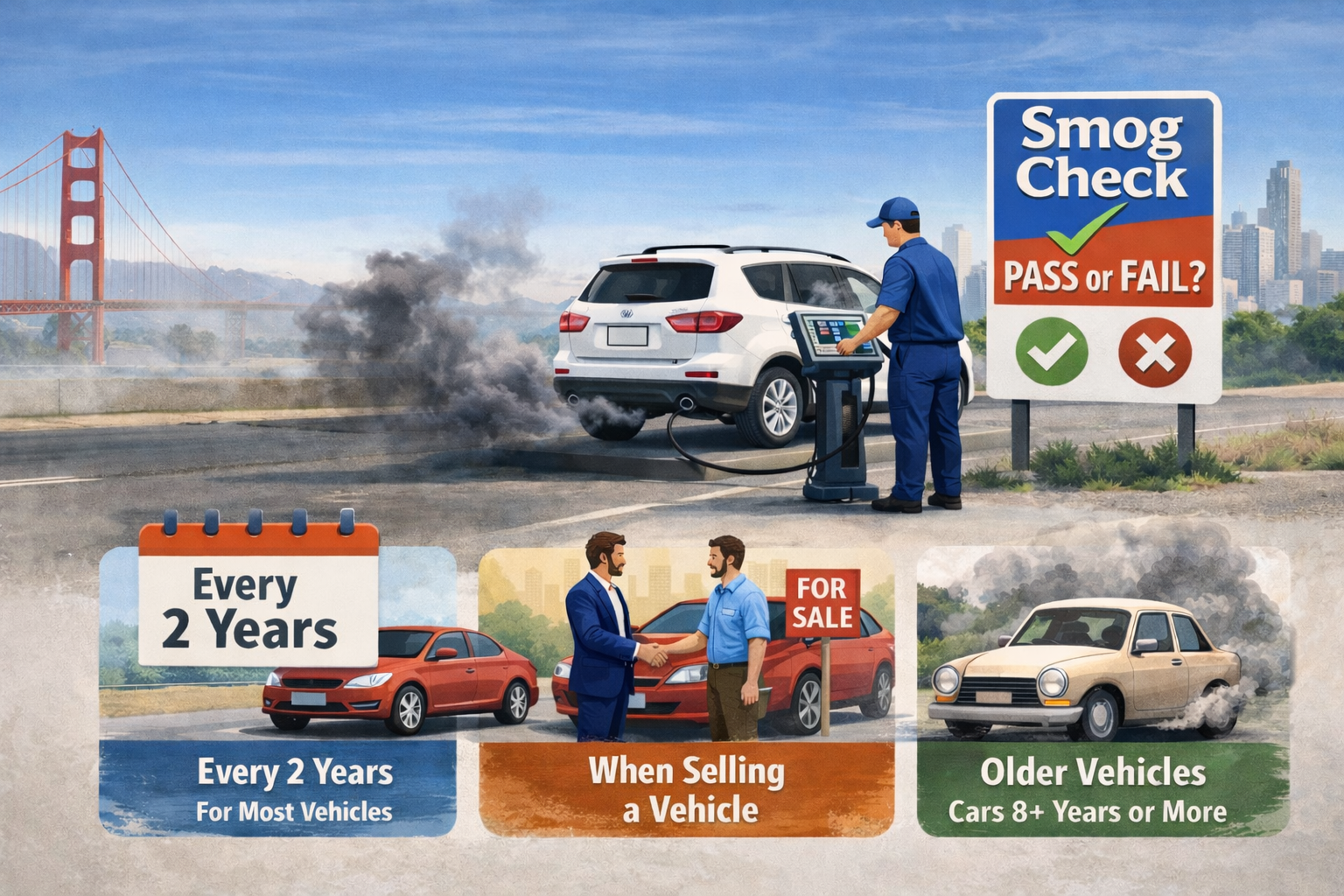
For most gasoline-powered fleet vehicles in California, smog tests follow a predictable cycle. Once a vehicle reaches a certain age, it generally needs a smog inspection every two years as part of the registration renewal process.
Here's how the standard rule works in practice:
- Gasoline vehicles 8 model years or older typically require a smog check every two years
- Smog certification is required before DMV registration renewal can be completed
- The test must be completed at a licensed California smog inspection station
For fleets, this usually means roughly half your eligible vehicles are due for smog testing each year. For example, a fleet of 50 light-duty gasoline vehicles might have 25 vehicles due in one year and 25 the next—assuming even age distribution.
This predictable cycle is helpful, but only if you’re actively tracking it. Without a centralized system, smog deadlines can slip through the cracks, especially when vehicles rotate between drivers or job sites.
New Vehicles and the 8-Year Exemption
California provides an exemption for newer vehicles to encourage cleaner, more efficient technology on the road. Gasoline-powered vehicles are exempt from smog checks for their first eight model years.
A few important details fleet managers should understand:
- The exemption is based on model year, not purchase date
- The clock starts with the model year, even if the vehicle was purchased later
- During the exemption period, vehicles still pay a smog abatement fee during registration
Once a vehicle ages out of the eight-year exemption, it immediately enters the standard biennial smog testing cycle. For fleets that replace vehicles on a rolling basis, this can create a steady stream of new smog obligations each year.
Commercial Vehicles and Special Rules
Commercial fleets often operate a mix of vehicle classes, and smog requirements vary accordingly. Weight ratings and fuel type play a major role in determining testing obligations.
In general:
- Gasoline commercial vehicles under 14,000 lbs follow standard smog rules
- Diesel vehicles over 14,000 lbs are exempt from traditional smog checks
- Certain diesel vehicles fall under separate CARB emissions programs, not the standard smog system
This is where fleet compliance becomes more complex. Even if a vehicle is exempt from smog testing, it may still be subject to other emissions regulations or reporting requirements. Fleet managers need visibility into both smog obligations and broader compliance responsibilities.
Smog Check Requirements by Vehicle Type
Fleet vehicles don’t all follow the same emissions rules. Understanding how smog requirements apply by category helps you plan testing and avoid unnecessary inspections.
Here's a breakdown fleet managers commonly deal with:
- Light-duty gasoline vehicles: Smog tests every two years after the 8-year exemption ends
- Medium-duty gasoline trucks: Often follow the same rules as light-duty vehicles
- Heavy-duty diesel trucks: Generally exempt from smog checks if over 14,000 lbs
- Diesel vehicles under 14,000 lbs: May still require smog testing depending on model year
- Hybrid vehicles: Typically require smog checks once they exceed the exemption period
- Electric vehicles: Fully exempt from smog testing
Even within a single fleet, it’s common to have vehicles that require testing alongside others that never will. Keeping this information organized is essential for accurate planning.
When You Don't Need a Smog Test in California
Smog testing isn’t universal. California provides several clear exemptions, but misconceptions are common—especially in mixed fleets.
You generally do not need a smog test if the vehicle falls into one of these categories:
- Fully electric vehicles
- Motorcycles
- Gasoline vehicles newer than 8 model years
- Diesel vehicles with a GVWR over 14,000 lbs
- Certain agricultural or off-road vehicles
One frequent misconception is that all diesel vehicles are exempt. In reality, weight and model year matter. Another common mistake is assuming hybrids never need testing—they usually do once the exemption period ends.
Clear documentation and accurate vehicle data prevent unnecessary tests while ensuring required ones aren’t missed.
Managing Smog Test Schedules Across Your Fleet
Tracking smog tests manually becomes difficult as fleets grow. Sticky notes, spreadsheets, and calendar reminders don’t scale well when vehicles are added, replaced, or reassigned.
Effective fleet managers use a system that:
- Tracks vehicle age, fuel type, and weight class
- Flags upcoming smog deadlines well before registration is due
- Stores completed smog certificates and inspection history
- Aligns smog testing with preventive maintenance to reduce downtime
For example, scheduling a smog test during a planned oil change or inspection minimizes disruptions. With proper planning, vehicles can complete emissions testing without impacting daily operations.
This is where tools like AUTOsist become especially valuable. By centralizing vehicle records and maintenance schedules, fleets can monitor compliance timelines alongside service reminders instead of managing smog tests in isolation. Features like Fleet Preventive Maintenance Schedules and Reminders help ensure compliance tasks don’t get overlooked.
What Happens If Your Fleet Vehicle Fails a Smog Test?
A failed smog test doesn’t mean the vehicle is permanently out of service, but it does trigger a specific process. Understanding what happens next helps fleet managers respond quickly and control costs.
When a vehicle fails:
- The test station provides a report showing which emissions components failed
- Repairs must be completed before registration renewal
- A retest is required to certify compliance
Repair costs vary widely. A minor sensor replacement may cost under $200, while more complex emissions system repairs can exceed $1,000. For fleets, these costs add up quickly if multiple vehicles fail around the same time.
California's Consumer Assistance Program (CAP) may offer financial assistance for qualifying vehicles, though eligibility depends on income thresholds and vehicle ownership details. While CAP is more commonly used by individual owners, some small fleet operators may qualify.
Keeping detailed service histories—such as those stored in a Vehicle Service History System—makes it easier to diagnose recurring issues and prevent repeat failures.
Smog Test Costs and Budgeting for Fleet Operations
Smog test costs in California vary by region and test type. Most standard inspections fall between $30 and $70, but STAR-certified tests may cost more depending on location.
Fleet budgeting should account for:
- Biennial testing costs across eligible vehicles
- Higher-priced STAR inspections if required
- Potential repair expenses following failed tests
- Administrative time spent managing compliance
For example, a fleet with 40 smog-eligible vehicles might spend $2,000–$3,000 per year on testing alone—before repairs. Budgeting ahead prevents unexpected expenses from disrupting cash flow.
Staying Compliant: Tips for California Fleet Managers
Smog compliance is easier when it’s treated as part of routine fleet management rather than a once-every-two-years scramble.
Best practices include:
- Keeping vehicle records up to date with accurate model year and fuel data
- Aligning smog tests with scheduled maintenance
- Reviewing upcoming registration renewals monthly
- Storing digital copies of smog certificates and repair receipts
- Using fleet software to automate reminders and reporting
Modern fleet managers rely on centralized dashboards to monitor compliance across all vehicles. Tools like AUTOsist’s Fleet Reports and Dashboard make it easier to see which vehicles are compliant, which are coming due, and which need attention—without digging through paperwork.