 Miya Bholat
Mar 27, 2026
How Real-Time GPS Data Improves Fleet Dispatch and Routing Decisions
Key Takeaways
- Real-time GPS eliminates guesswork in dispatching — Live visibility allows dispatchers to assign jobs based on actual conditions, not outdated assumptions.
- Even small delays in location data create costly inefficiencies — A few minutes of lag can lead to wrong assignments, longer routes, and wasted fuel.
- Dynamic routing outperforms static planning — Routes that adapt to real-world conditions consistently reduce delays and improve service delivery.
- Fuel savings come from better decisions, not just better vehicles — Optimized routing and reduced idle time have a direct, measurable impact on fuel costs.
- GPS data plays a critical role in maintenance planning — Driving behavior and usage patterns help predict wear and schedule maintenance more effectively.
- The best systems integrate dispatch, tracking, and maintenance — Fleets that connect these functions operate more efficiently and make better long-term decisions.
Why Dispatch Decisions Fall Apart Without Real-Time Visibility
Most dispatch problems don't start with bad planning—they start with bad information.
When dispatchers rely on delayed updates, driver check-ins, or static route plans, they're essentially guessing. A driver might be stuck in traffic, idling at a job site, or already closer to a new assignment—but without real-time visibility, none of that is factored into decisions.
The result is a cascade of inefficiencies:
- Drivers get assigned jobs that aren't actually closest to them
- Dispatchers spend time calling drivers instead of coordinating operations
- Routes become outdated the moment conditions change
- Customers receive inaccurate ETAs
In many fleets, this leads to reactive operations. Dispatch becomes a constant loop of fixing problems instead of preventing them. And over time, those small inefficiencies add up—wasted fuel, missed service windows, and frustrated drivers.
Real-time GPS data changes that equation by replacing assumptions with live, actionable insight.
What Real-Time GPS Data Actually Gives You
"Real-time" isn't just a buzzword—it's a specific operational advantage.
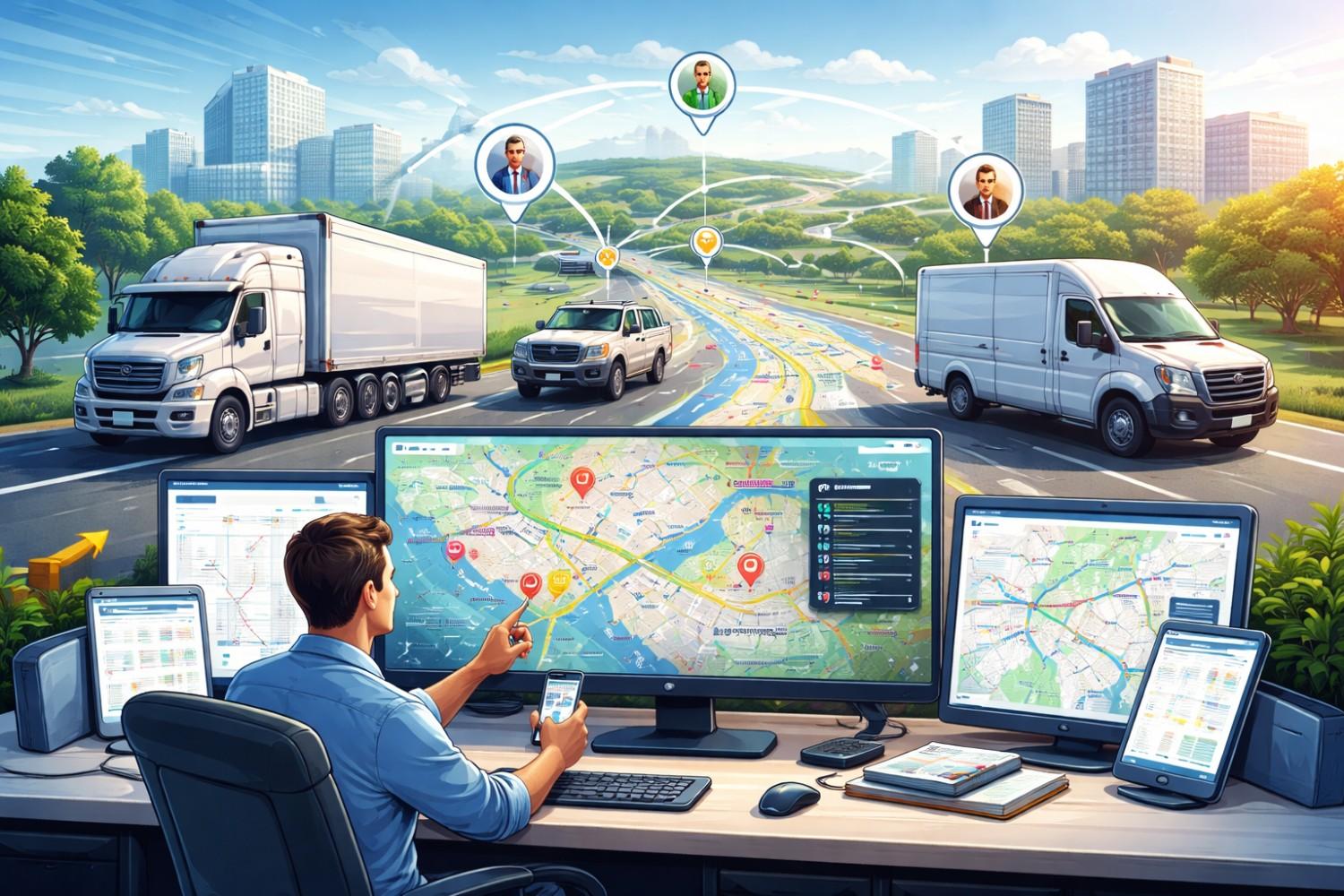
In practical terms, real-time GPS tracking means location updates every few seconds or minutes, displayed on a live map with continuously refreshed data. This is very different from systems that log trips and only update at the end of the day.
With real-time visibility, dispatchers can see:
- Exact vehicle locations at any moment
- Movement direction and route progress
- Idle vs. active status
- Estimated arrival times based on live conditions
Solutions like GPS tracking telematics provide this level of visibility and integrate it directly into fleet workflows.
Live Location vs. Last Known Location — Why the Difference Matters
A 5–10 minute delay in location data might not sound significant, but in dispatching, it's the difference between efficiency and confusion.
Imagine this scenario:
A dispatcher assigns a job to Driver A because the system shows them as the closest vehicle. But that data is already 10 minutes old. In reality, Driver A has moved further away, while Driver B—who wasn't selected—is now much closer.
That single decision creates:
- Longer travel time
- Increased fuel usage
- Delayed service
Multiply that across dozens of jobs per day, and the cost impact becomes significant.
Data Points Beyond Just Position
Real-time GPS isn't just about "where the vehicle is." It's about understanding what the vehicle is doing.
A complete data set includes:
- Speed (to detect delays or unsafe driving)
- Idle time (to identify inefficiencies)
- Route adherence (planned vs. actual path)
- Stop durations (job time vs. delays)
This richer dataset allows dispatchers to make informed decisions instead of relying on incomplete snapshots.
How GPS Data Directly Improves Dispatch Accuracy
When dispatchers have real-time data, decision-making becomes faster and more precise.
Instead of guessing, they can assign jobs based on actual conditions. This leads to measurable improvements across operations.
Here's how dispatch accuracy improves in practice:
- Faster job assignment — No need to call drivers for updates
- Better driver-to-job matching — Assign based on proximity and availability
- Reduced empty miles — Avoid unnecessary travel between jobs
- Fewer communication delays — Less back-and-forth between dispatch and drivers
For example, in a 20-vehicle fleet handling 100 daily jobs, even a 5% improvement in routing efficiency can eliminate dozens of unnecessary miles per day.
Over a year, that translates into:
- Lower fuel costs
- Reduced vehicle wear
- Higher job completion rates
Real-time dispatching isn't just about speed—it's about precision at scale.
Smarter Routing Decisions in the Field
Static routes work fine on paper. But in real-world operations, conditions change constantly.
Traffic builds. Jobs run long. New service requests come in. Without real-time data, routes quickly become outdated.
With GPS tracking, routing becomes dynamic.
Dispatchers can adjust routes on the fly based on:
- Traffic conditions
- Vehicle availability
- Job priority changes
- Unexpected delays
This flexibility allows fleets to stay efficient even when plans change.
Handling Last-Minute Job Additions
Last-minute jobs are where most dispatch systems break down.
Without real-time visibility, adding a job often disrupts the entire schedule. Dispatchers either:
- Overload a driver
- Send someone too far away
- Delay existing commitments
With real-time GPS, dispatchers can instantly identify the best available vehicle.
A practical approach includes:
- Checking which driver is closest to the new job
- Reviewing their current workload
- Inserting the job with minimal disruption
This makes it possible to handle urgent requests without sacrificing efficiency.
Reducing Fuel Costs Through Better Route Optimization
Routing decisions directly impact fuel consumption.
Even small inefficiencies—extra turns, backtracking, or poor sequencing—add up quickly.
Here's a simple back-of-the-napkin calculation:
If each vehicle drives just 5 extra unnecessary miles per day:
- 20 vehicles = 100 extra miles daily
- At ₹80 per liter and ~10 km/l efficiency, that's significant monthly cost leakage
Better routing reduces:
- Distance traveled
- Idle time in traffic
- Stop-and-go driving patterns
Fleets that actively optimize routes using GPS data consistently see lower fuel spend over time.
The Downstream Effect on Fleet Maintenance
Dispatch and routing don't just impact operations—they directly affect maintenance.
Driving behavior captured through GPS data influences vehicle wear and tear.
For example:
- Excessive idling increases engine stress
- Harsh braking accelerates brake wear
- Speeding increases tire degradation
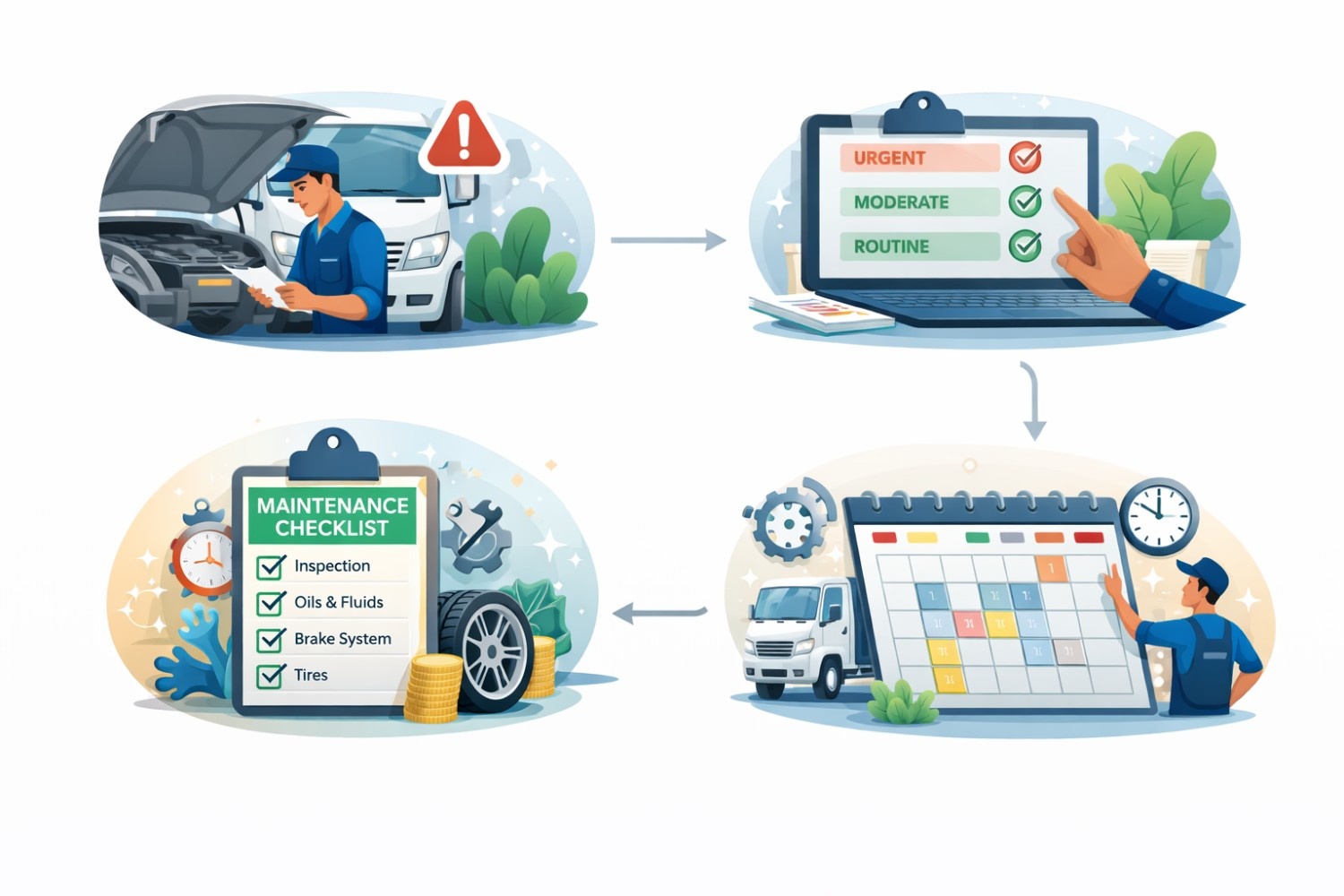
When this data is tracked and connected to maintenance systems, fleets can shift from reactive to proactive maintenance.
Using platforms like fleet maintenance software allows teams to connect GPS insights with service schedules.
That enables:
- Maintenance triggered by actual vehicle usage
- Early detection of risky driving patterns
- Better lifecycle planning for assets
You can also tie this into preventive strategies outlined in resources like preventive maintenance checklists and schedules to reduce breakdown risk.
This is where dispatch, routing, and maintenance stop being separate functions—and start working as a connected system.
What to Look for When Evaluating GPS and Dispatch Tools
Not all GPS systems deliver the same level of value.
When evaluating tools, it's important to focus on operational impact—not just features.
Start by looking at update frequency. If location data isn't refreshed frequently, it won't support real-time decision-making.
Then consider how well the system integrates with broader fleet operations. Tools that connect with maintenance, inspections, and reporting systems create far more value.
Platforms that combine tracking with features like fleet reports dashboard provide better visibility into performance trends.
Key evaluation criteria include:
- Update frequency — Sub-minute updates are ideal
- Ease of use — Dispatchers should not struggle with the interface
- Integration capabilities — Connect with maintenance and reporting systems
- Data accuracy — Reliable GPS signals and minimal lag
- Reporting depth — Insights beyond just location tracking
A tool that checks all these boxes doesn't just track vehicles—it improves how your entire fleet operates.