 Miya Bholat
Mar 11, 2026
Fuel Management System: How Fleet Managers Control Fuel Costs and Prevent Waste
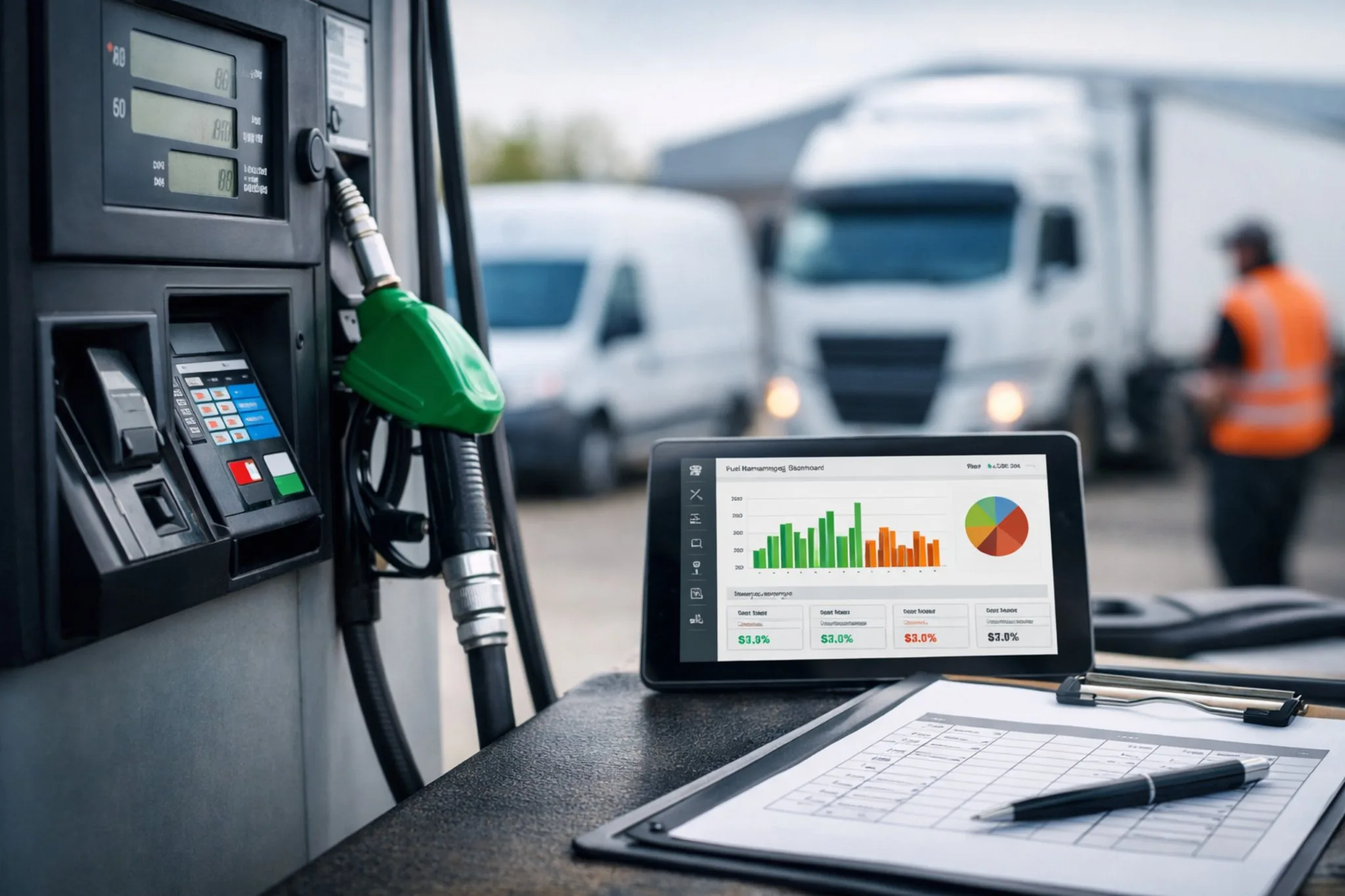
An online fuel management system helps fleets reduce fuel waste by tracking fuel transactions, monitoring driver fueling behavior, identifying unauthorized purchases, and connecting fuel activity with vehicle operations in real time. Most fleets use these systems to improve fuel visibility, control operating costs, and detect abnormal fuel activity before it creates larger budget problems across the fleet.
A modern fleet fuel management system becomes much more effective when fuel tracking connects with maintenance history, GPS activity, mileage reporting, and driver behavior. Fleets operating without centralized fuel visibility often struggle to detect excessive idling, fuel card misuse, declining MPG trends, and after hours fueling activity until fuel costs have already increased significantly.
Key Takeaways
- Fuel is one of the largest controllable fleet expenses. For many fleets, fuel represents 25–40% of operating costs, making it a major opportunity for cost savings.
- Fuel management systems provide visibility that manual tracking cannot. Real-time monitoring reveals fuel usage trends, inefficiencies, and anomalies across the fleet.
- Fuel theft and fraud are significant risks without monitoring. Digital fuel tracking creates accountability and prevents unauthorized fuel purchases.
- Fuel data helps detect vehicle maintenance problems early. Changes in fuel efficiency often signal mechanical issues before they become expensive repairs.
- Driver behavior plays a major role in fuel efficiency. Monitoring idling, driving patterns, and routing can significantly reduce fuel consumption.
- Fuel management systems typically deliver strong ROI. Many fleets achieve 10–15% fuel savings while also improving operational efficiency.
- Integrated fleet platforms provide the most value. Combining fuel tracking, maintenance management, and reporting tools creates a complete view of fleet performance.
What Is a Fuel Management System (and Why Fleet Managers Can't Ignore It)
A fuel management system is a combination of software, fuel card data, telematics, and reporting tools used to monitor, analyze, and control fuel consumption across a fleet. It provides fleet managers with visibility into where fuel is going, how efficiently vehicles are operating, and whether abnormal activity—such as theft or excessive idling—is occurring.
For most fleets, fuel is one of the largest operational expenses. Without accurate tracking and analysis, it becomes difficult to understand whether costs are rising because of fuel prices, inefficient vehicles, or poor driver behavior.
A modern fuel management system turns fuel data into actionable insights. Instead of relying on receipts or monthly expense reports, fleet managers can see consumption trends in real time and identify problems early.
Common challenges that fuel management systems address include:
- Fuel theft or unauthorized fill-ups
- Drivers idling vehicles excessively
- Vehicles with declining fuel efficiency
- Budget overruns caused by poor visibility
- Administrative time spent reconciling fuel expenses
Platforms like AUTOsist integrate fuel data with broader fleet operations. Features such as fleet fuel management and tracking software allow fleet managers to monitor fuel consumption alongside maintenance records, driver behavior, and vehicle health.
How Much Is Fuel Actually Costing Your Fleet?
Fuel expenses typically account for 25–40% of total fleet operating costs, making them one of the most controllable cost categories in fleet management.
Consider a simple example.
Imagine a fleet with 20 vehicles, each driving about 2,000 miles per month and averaging 15 MPG.
Monthly fuel consumption per vehicle:
2,000 miles ÷ 15 MPG = 133 gallons
Across the fleet:
133 gallons × 20 vehicles = 2,660 gallons per month
If fuel costs $3.75 per gallon, the monthly fuel spend becomes:
2,660 × $3.75 = $9,975 per month
That translates to nearly $120,000 per year in fuel expenses.
Even small efficiency improvements can have a major impact. If a fleet reduces fuel consumption by just 10%, that same fleet could save roughly $12,000 annually.
This is why fuel management systems have become essential tools for fleet managers focused on cost control and operational efficiency.
Hidden Fuel Costs Most Fleets Overlook
Fuel waste rarely comes from one major operational failure. Most fleets lose fuel gradually through small daily inefficiencies that remain hidden without centralized reporting and transaction monitoring.
Common operational fuel waste patterns include:
- excessive idling during inactive job time
- unauthorized fuel purchases outside approved operating hours
- route inefficiencies creating unnecessary mileage
- disconnected mileage reporting between drivers and vehicles
- unresolved maintenance issues reducing fuel efficiency
- repeated fueling anomalies across specific vehicles or drivers
Many fleets initially focus only on fuel prices instead of operational behavior. However, poor visibility is often the larger problem. When fuel data stays separated across spreadsheets, receipts, fuel card portals, and driver logs, managers struggle to identify where fuel waste is actually happening.
Fleets using fleet reports and dashboard tools can monitor fuel trends by vehicle, driver, route, and department while identifying recurring anomalies much faster than manual reporting workflows.
Fuel costs also increase when unresolved maintenance problems reduce engine efficiency. Connecting fuel monitoring with fleet preventive maintenance schedules helps managers identify vehicles consuming abnormal amounts of fuel due to delayed service activity.
Key Features to Look for in a Fuel Management System
Not all fuel management systems provide the same level of insight. The best solutions integrate data from multiple sources and provide actionable reporting that helps fleet managers improve efficiency.
When evaluating a system, fleet managers should prioritize features that deliver visibility, automation, and accountability.
Real-Time Fuel Tracking and Reporting
Real-time fuel monitoring allows fleet managers to track consumption by vehicle, driver, and route. Instead of waiting for monthly fuel statements, managers can quickly identify abnormal patterns.
Modern systems provide dashboards that reveal:
- Fuel consumption trends across the fleet
- MPG performance by vehicle
- Driver-specific fuel usage patterns
- Cost-per-mile calculations
- Alerts when fuel usage exceeds normal thresholds
Reporting tools like AUTOsist's fleet reports and dashboard help fleet managers visualize fuel costs and identify operational improvements.
Fuel Card Integration
Fuel card integration becomes significantly more valuable when fleets use it for operational monitoring instead of simple transaction recording.
A connected fuel management system allows fleet managers to compare fuel purchases against vehicle activity, route behavior, mileage logs, operating schedules, and tank capacity data. This helps identify suspicious transactions that manual fuel reviews often miss.
Common warning signs include:
- fuel purchases exceeding expected tank capacity
- transactions outside approved operating hours
- repeated fueling at unexpected locations
- multiple purchases within short time periods
- fuel activity linked to inactive vehicles
- mileage readings inconsistent with fuel usage
When fuel card data connects with GPS fleet tracking and telematics, managers can verify whether fuel purchases align with actual vehicle movement and operating routes. This creates stronger accountability while helping fleets reduce unauthorized purchases and fuel fraud.
Fleets operating across distributed job sites, service territories, or construction projects often require stronger transaction visibility because vehicles fuel at multiple locations throughout the day. This is especially important in construction fleet operations where equipment and vehicles operate across changing project environments.
Alerts and Anomaly Detection
Automated alerts help fleet managers investigate fuel problems immediately instead of discovering issues weeks later during manual reporting reviews.
Modern fuel management systems continuously monitor transaction activity, fuel efficiency trends, idling behavior, mileage consistency, and route activity to identify operational anomalies automatically.
The most useful fuel alerts typically include:
- fuel purchases exceeding tank capacity
- sudden MPG declines
- excessive idle time
- repeated after hours fueling
- fuel transactions outside approved geographic areas
- unusual fueling frequency patterns
These alerts help managers investigate operational problems before fuel waste spreads across the fleet.
For example, recurring MPG declines may reveal unresolved maintenance problems, while repeated after hours transactions may indicate unauthorized purchases or fuel card misuse. Without automated monitoring, these patterns often remain hidden across large fleets with high daily vehicle activity.
Fuel visibility becomes even stronger when alerts connect with trip mileage tracking tools because managers can compare fuel usage against actual route activity and mileage behavior.
Fuel Theft and Fraud — A Bigger Problem Than Most Fleets Realize
Fuel theft usually develops through recurring operational inconsistencies rather than isolated large incidents. Because fuel expenses are distributed across multiple vehicles, drivers, and locations, suspicious activity often remains hidden without centralized monitoring.
Common fuel fraud patterns include:
- drivers fueling personal vehicles using company fuel cards
- repeated low volume purchases across multiple locations
- fuel transactions during inactive vehicle periods
- manipulated receipts or mileage entries
- fuel purchases disconnected from actual route activity
A fuel management system creates a digital audit trail for every fuel transaction. Managers can compare fuel purchases against vehicle location, mileage history, operating schedules, and fueling frequency to identify suspicious behavior much faster than manual reconciliation processes.
Combining fuel tracking with GPS fleet tracking and telematics improves accountability even further because managers can verify whether fuel purchases match actual vehicle movement and operational activity.
Fleets operating decentralized service routes, delivery networks, or public operations often require stronger fuel visibility because vehicles operate across multiple fueling locations daily. Centralized monitoring becomes especially important in transportation fleet management operations where fuel activity scales quickly across large vehicle networks.
The Role of Fuel Data in Preventive Maintenance
Fuel consumption patterns often reveal early warning signs of mechanical issues. When a vehicle's fuel efficiency drops unexpectedly, it may indicate underlying maintenance problems.
A sudden decline in MPG can signal issues such as:
- Dirty air filters
- Clogged fuel injectors
- Worn spark plugs
- Improper tire pressure
- Engine performance problems
By monitoring fuel efficiency trends, fleet managers can detect these issues early and schedule maintenance before they escalate into costly repairs.
Fuel data becomes even more valuable when integrated with preventive maintenance systems. Platforms that combine fuel monitoring with fleet preventive maintenance schedules allow fleet managers to correlate fuel efficiency changes with maintenance history.
This data-driven approach helps fleets maintain vehicles more proactively and avoid unexpected breakdowns.
How Manual Fuel Tracking Creates Reporting Blind Spots
Many fleets still rely on spreadsheets, paper receipts, and disconnected fuel card portals to manage fuel activity. While this may appear manageable initially, manual tracking usually creates reporting delays, inconsistent data entry, and limited operational visibility.
Manual fuel processes make it difficult to:
- compare fuel efficiency across vehicles
- investigate unauthorized purchases quickly
- verify mileage accuracy
- identify recurring fuel anomalies
- monitor driver fueling behavior consistently
- measure operational KPIs in real time
As fleets grow, these reporting gaps become more expensive because managers spend more time reconciling transactions instead of analyzing operational performance.
Centralized fuel management systems automate transaction tracking, reporting workflows, anomaly detection, and fuel visibility across the fleet. Fleets managing high daily vehicle utilization often depend on centralized reporting workflows to maintain consistent fuel oversight across multiple operating locations.
How to Implement a Fuel Management System Across Your Fleet
Successful fuel management implementation requires operational consistency across drivers, managers, maintenance teams, and reporting workflows. Fleets that treat fuel management as a simple software rollout usually struggle with incomplete data and inconsistent adoption.
A structured implementation process should include:
- auditing current fuel spending patterns and recurring anomalies
- establishing baseline fuel efficiency KPIs
- integrating fuel cards, telematics, and mileage reporting
- defining fuel policies and exception management procedures
- assigning accountability for fuel monitoring and reporting reviews
- training drivers on fueling expectations and reporting accuracy
Fuel visibility improves significantly when fleets centralize fuel tracking alongside maintenance history, inspections, and operational reporting instead of managing separate disconnected systems.
Platforms connecting fuel tracking with vehicle service history records help managers investigate whether fuel efficiency changes are linked to maintenance conditions, recurring repairs, or vehicle aging trends.
Getting Driver Buy-In Without Resistance
Drivers may initially feel uncomfortable with new tracking systems. The key is framing fuel monitoring as a tool for fairness and operational improvement, not surveillance.
Managers can encourage driver buy-in by:
- Explaining how fuel efficiency improves vehicle reliability
- Sharing data insights that help drivers improve performance
- Recognizing drivers with strong efficiency records
- Using fuel data for coaching rather than punishment
When drivers understand that fuel management helps reduce costs and improve fleet reliability, resistance typically decreases.
Measuring ROI: What Results Should You Expect?
Most fleets measure fuel management ROI through operational improvements instead of fuel savings alone.
The strongest results usually come from:
- reducing unauthorized fuel purchases
- improving driver accountability
- lowering excessive idle time
- identifying maintenance related fuel inefficiencies earlier
- reducing manual reporting workload
- improving route efficiency visibility
- forecasting fuel budgets more accurately
Many fleets reduce fuel costs by roughly 10% to 15% after improving transaction visibility and operational reporting consistency.
Fuel management systems also improve long term decision making. Managers gain clearer visibility into vehicle replacement timing, driver performance trends, route inefficiencies, and recurring operational cost patterns that are difficult to detect through manual fuel tracking alone.
Fleets using centralized reporting systems can measure fuel performance across departments, locations, vehicle classes, and operating periods much more accurately than fleets relying on spreadsheets or disconnected fuel card portals.
Frequently Asked Questions
-
What does an online fuel management system actually do?
An online fuel management system tracks fuel transactions, monitors fuel usage patterns, identifies unauthorized purchases, and helps fleets reduce fuel waste through centralized reporting and operational visibility. -
How do fuel management systems reduce fuel waste?
Fuel management systems reduce fuel waste by monitoring idling behavior, tracking fuel efficiency trends, identifying route inefficiencies, detecting suspicious transactions, and improving driver accountability. -
What features are most important in a fuel management system?
The most important features usually include fuel card integration, automated alerts, MPG tracking, anomaly detection, GPS integration, reporting dashboards, and driver level fuel monitoring. -
Can fuel management systems prevent unauthorized purchases?
Yes. Fuel management systems compare transactions against vehicle location, mileage history, operating schedules, and tank capacity to identify suspicious fuel purchases and unusual fueling behavior. -
Why should fuel data connect with maintenance records?
Fuel efficiency changes often reveal maintenance problems early. Connecting fuel tracking with maintenance history helps fleets identify unresolved mechanical issues before they become larger repair expenses.