 Miya Bholat
Apr 28, 2026
How to Track Fleet Costs Without Guesswork?
Key Takeaways
- You cannot control what you cannot measure
Most fleet cost issues come from incomplete or delayed data rather than actual overspending. - Separating cost categories reveals the real problem areas
Mixing fuel, maintenance, and depreciation hides where money is actually being lost. - Cost per mile is more powerful than total spend
Total numbers look big, but cost per mile shows true efficiency across vehicles. - Hidden costs quietly drain your budget
Downtime, missed maintenance, and admin inefficiencies often cost more than repairs themselves. - Per vehicle tracking exposes underperforming assets
Fleet averages can hide problem vehicles that inflate overall costs. - Trends matter more than one time numbers
Tracking changes over time helps identify issues before they become expensive failures. - Centralized systems eliminate guesswork
A single source of truth replaces spreadsheets and manual tracking with real time visibility.
Why Fleet Cost Tracking Breaks Down And What It Costs You
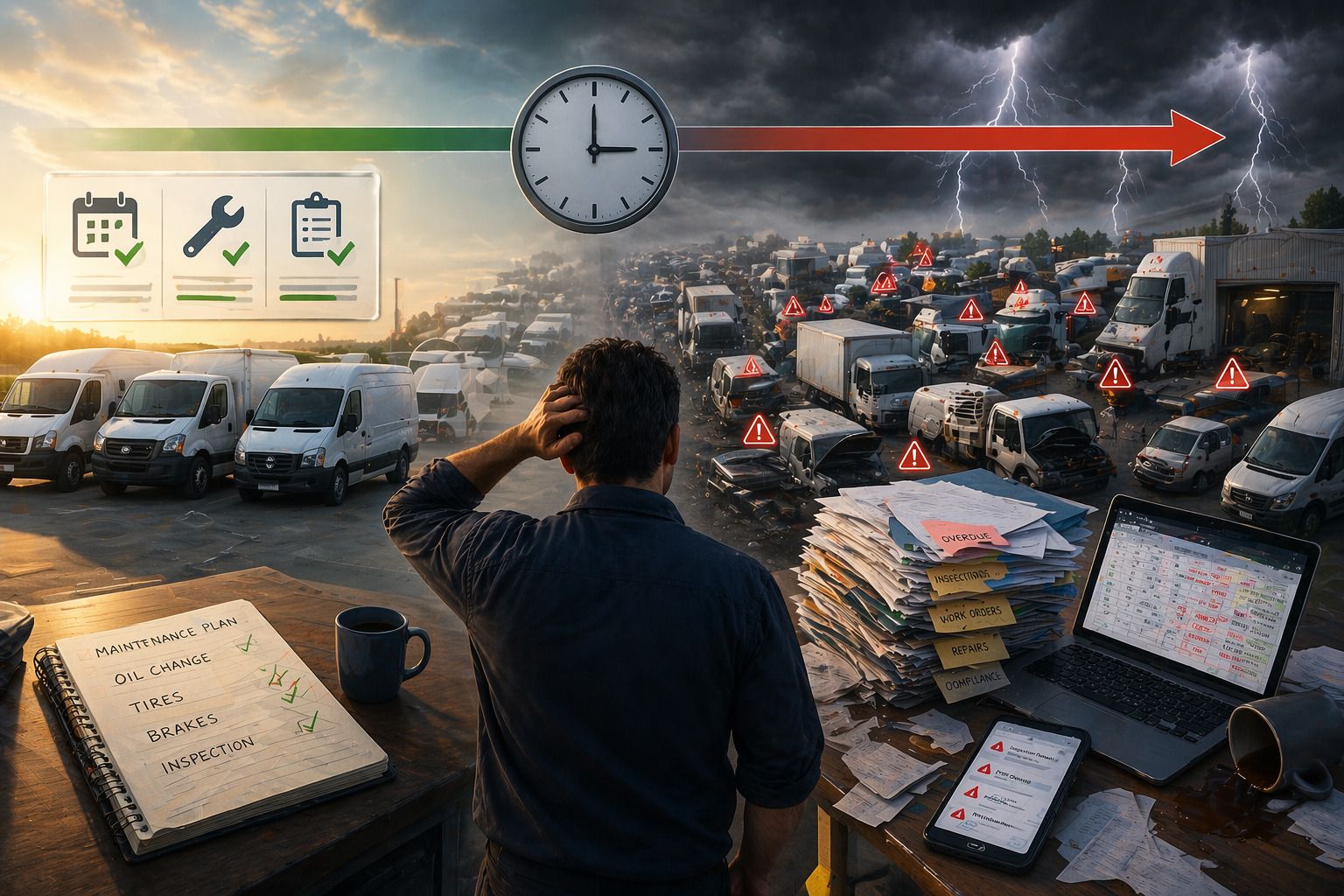
Most fleet managers are not short on data, they are short on clarity. Costs are scattered across fuel receipts, maintenance logs, and spreadsheets, making it difficult to see where money is actually going. Without a structured approach like a proper fleet cost management, decisions end up based on estimates instead of real numbers, and that is where costs quietly start to spiral.
Costs are often scattered across spreadsheets, fuel receipts, maintenance invoices, and driver notes. Some of it lives in emails. Some of it never gets recorded at all. What you end up with is a fragmented picture that forces you to rely on estimates instead of facts.
This is exactly how budgets spiral out of control.
A missed preventive service turns into a breakdown. That breakdown creates downtime. Downtime leads to missed jobs or rental replacements. Suddenly, a small oversight becomes a major cost event.
If you look deeper into the hidden costs of managing a fleet without software , you will notice that most losses do not come from obvious expenses. They come from delays, inefficiencies, and lack of visibility.
And when you do not have visibility, you start guessing.
The Fleet Cost Categories You Need to Track Separately
Fixed Costs vs Variable Costs
Not all costs behave the same way. Mixing them together creates confusion.
Here is how they break down:
- Fixed costs stay relatively stable regardless of usage Depreciation, insurance, registration, financing
- Variable costs change based on usage Fuel, repairs, tires, maintenance labor
If you combine these into one number, you lose the ability to understand what is actually driving your expenses. A rise in total cost might not be a problem if it comes from increased utilization.
Direct Costs vs Hidden Costs
Direct costs are easy to track. Hidden costs are where most fleets lose money.
Examples include:
- Vehicle downtime that delays operations
- Missed preventive maintenance that leads to major repairs
- Administrative time spent chasing data
- Inefficient routing increasing fuel usage
A breakdown might cost you one thousand dollars in repairs, but the lost productivity could double that impact. This is why understanding how to calculate fleet downtime cost is critical.
Per Vehicle vs Fleet Wide Cost View
Looking at fleet averages can be misleading.
One vehicle with extremely high maintenance costs can distort your overall numbers. At the same time, a high mileage vehicle with low cost per mile might be your most valuable asset.
You need both views:
- Fleet level for budgeting and planning
- Vehicle level for performance analysis
This is also where understanding fleet vehicles total cost of ownership becomes important for long term decision making.
What Guesswork Actually Looks Like in Fleet Operations
Guesswork does not feel like guesswork when you are in the middle of it. It feels like normal operations.
You have probably seen situations like these:
- Estimating fuel costs based on monthly credit card statements
- Calling drivers to ask for mileage updates
- Discovering a missed service only after a breakdown
- Pulling reports only when a problem occurs
In many cases, fleet managers rely on outdated data or incomplete logs. Over time, these small gaps create large blind spots.
That is why many fleets struggle with rising costs, as explained in rising fleet maintenance costs and smart strategies .
Guesswork is not a lack of effort. It is a lack of systems.
The Data Points That Eliminate Guesswork
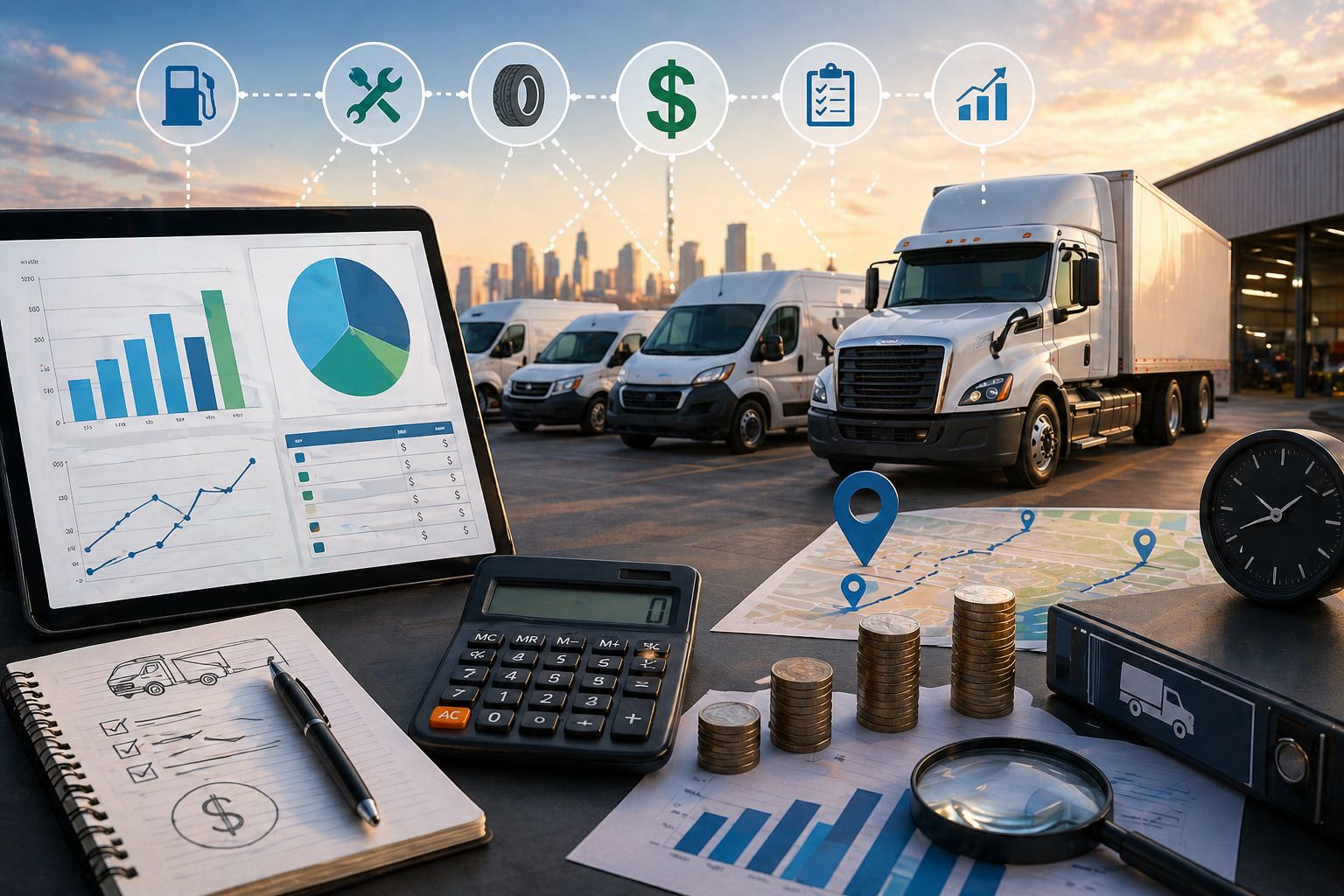
To replace guesswork, you need to focus on a few high impact metrics.
Fuel Cost Per Mile
Total fuel spend does not tell you much. You need context.
If you spend ten thousand dollars on fuel, is that good or bad? It depends on how many miles you covered.
Fuel cost per mile is calculated as:
Fuel Cost Per Mile equals total fuel spend divided by total miles driven
This metric helps you compare vehicles, routes, and driver behavior.
With tools like fleet fuel management software , you can track this automatically without manual calculations.
Cost Per Mile by Vehicle
This is one of the most important metrics in fleet management.
Cost Per Mile equals total operating cost divided by total miles
It includes fuel, maintenance, tires, and other operating expenses.
This number helps you:
- Identify underperforming vehicles
- Compare older and newer assets
- Make replacement decisions
You can also combine this with insights from fleet management cost and expense analysis to better understand cost drivers.
Maintenance Cost Trends Over Time
A single repair invoice does not tell you much. Patterns do.
If a vehicle consistently costs two hundred dollars per month and suddenly jumps to twelve hundred, that signals a deeper issue.
Tracking maintenance trends helps you:
- Predict failures
- Plan replacements
- Avoid reactive repairs
Using tools like vehicle service history tracking gives you a clear timeline of every repair and service event.
Unplanned vs Planned Maintenance Ratio
This is a simple but powerful benchmark.
Planned maintenance includes scheduled services.
Unplanned maintenance includes breakdowns and emergency repairs.
Healthy fleets aim for a higher percentage of planned maintenance. A common target is seventy percent planned and thirty percent unplanned.
If your unplanned repairs are higher, you are operating reactively, which increases costs significantly. This aligns closely with strategies outlined in fleet maintenance cost reduction strategies.
How to Build a Fleet Cost Tracking System That Actually Works
Centralize All Cost Data in One Place
The biggest problem in fleet cost tracking is fragmentation.
When data lives in multiple places, you cannot trust your numbers.
A centralized system ensures:
- Every expense is logged consistently
- Data is accessible in real time
- Reports are accurate and complete
This is why many fleets move away from spreadsheets toward structured systems, as explained in fleet management software cost breakdown guide .
Automate Data Entry Where Possible
Manual entry creates errors and delays.
Automation reduces both.
Examples include:
- Fuel card integrations for automatic fuel tracking
- Telematics for mileage and usage data
- Digital inspections for maintenance records
Set Cost Alerts and Thresholds
Data alone is not enough. You need action triggers.
Set alerts for:
- Vehicles exceeding cost per mile thresholds
- Missed preventive maintenance
- Unusual spikes in fuel or repair costs
This turns your system from passive tracking into active cost control.
Using Fleet Management Software to Track Costs in Real Time
A good system does more than store data. It helps you make decisions.
When evaluating tools, look for features that:
- Track expenses per vehicle
- Maintain complete service history
- Provide reporting dashboards
- Support preventive maintenance scheduling
Solutions like AUTOsist combine these capabilities to create a single source of truth for your fleet. Instead of chasing numbers, you can focus on optimizing them.
Common Fleet Cost Tracking Mistakes And How to Fix Them
Even with the right tools, mistakes can still happen. Recognizing them early can save significant costs.
Here are some of the most common ones:
- Tracking total spend instead of per vehicle performance
- Ignoring downtime and opportunity costs
- Reviewing reports only after problems occur
- Not separating planned and unplanned maintenance
- Relying on driver reported data without validation
Fixing these issues often starts with better systems and clearer processes. You can also learn how fleet costs impact company profits .
Frequently Asked Questions
-
How do I track fleet costs in real time?
Track costs by centralizing fuel, maintenance, mileage, and downtime data in one system. Using fleet management software helps automate data capture and gives you live visibility into cost trends without relying on manual updates. -
What is cost per mile for a fleet vehicle?
Cost per mile is calculated by dividing total operating costs by total miles driven. It helps you compare vehicle performance and identify which assets are costing more than they should. -
What is the best way to calculate total fleet cost?
The best approach is to combine fixed costs like insurance and depreciation with variable costs like fuel and maintenance. Tracking total cost of ownership per vehicle gives a complete financial picture. -
How do I know if a fleet vehicle is too expensive to maintain?
If a vehicle shows rising maintenance costs, increasing downtime, or a higher cost per mile than similar assets, it may be more cost effective to replace it rather than continue repairs. -
What should I track in fleet management software to control costs?
You should track fuel usage, maintenance expenses, mileage, downtime, and cost per mile. These metrics help identify inefficiencies and reduce unnecessary spending.