 Miya Bholat
Feb 18, 2026
Why Vehicles Still Break Down Even With Preventive Maintenance
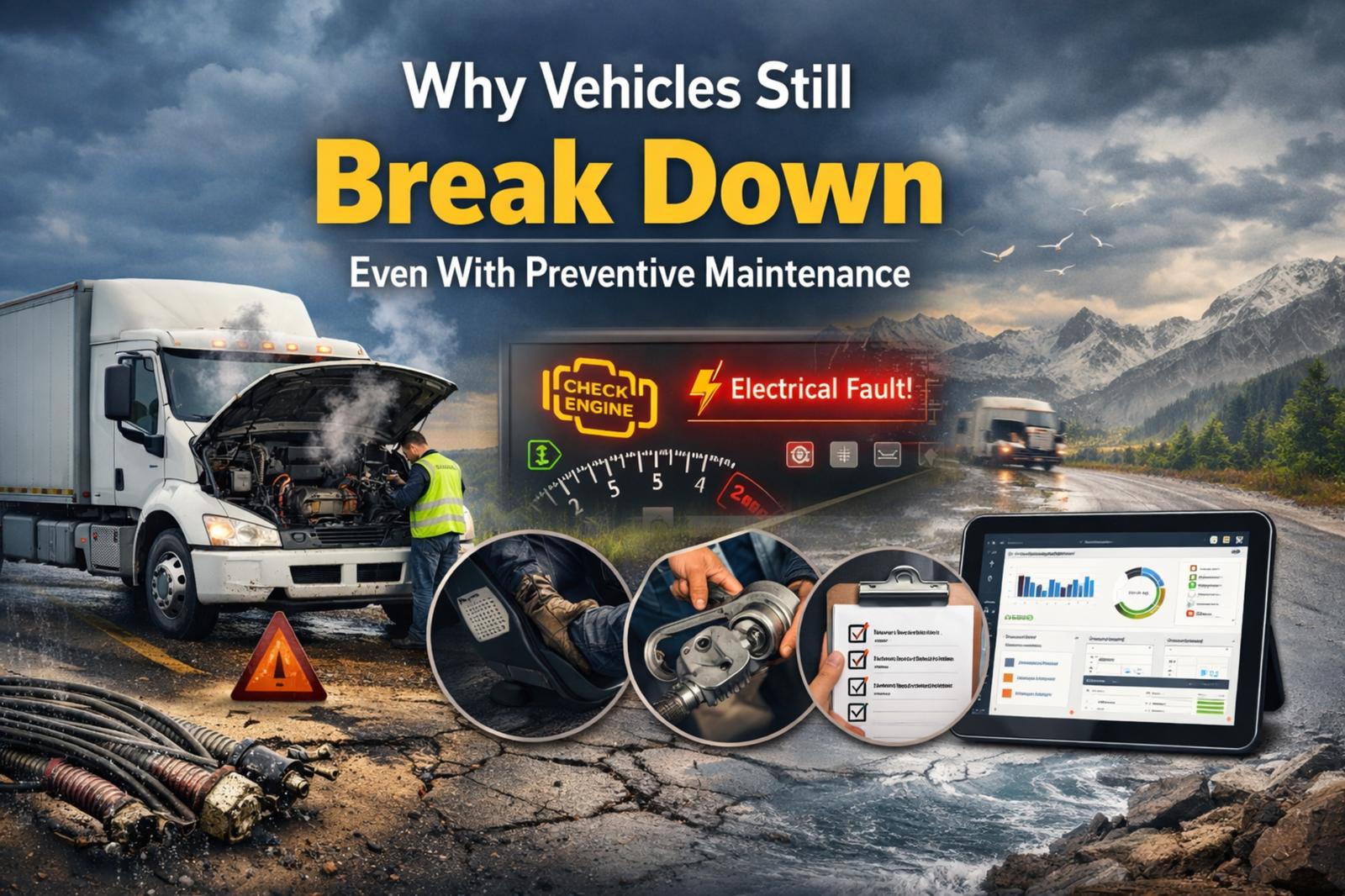
You’ve probably lived this scenario: a truck comes in for its scheduled oil change, filters get swapped, tires rotated, inspection signed off — and two weeks later it’s on the shoulder of the highway with a dead alternator or electrical failure. On paper, everything was “up to date.” In reality, the vehicle still failed.
For fleet managers, this is one of the most frustrating moments in operations. You invest in preventive maintenance (PM), build schedules, and hold technicians accountable — yet breakdowns still happen. The uncomfortable truth is that preventive maintenance is necessary, but it isn’t a guarantee. Hidden factors often work outside the boundaries of scheduled service intervals, quietly building toward failure.
Understanding those hidden factors is what separates fleets that simply maintain vehicles from fleets that truly manage risk and uptime.
Key Takeaways
- Preventive maintenance reduces failures — but doesn’t eliminate them. PM addresses time-based wear, not hidden or condition-based issues.
- Electrical and interaction failures often bypass schedules. These problems don’t follow mileage rules and appear suddenly.
- Driver behavior influences vehicle health more than many fleets realize. Aggressive use between services accelerates wear dramatically.
- Inspection frequency and quality matter as much as replacement schedules. Observing conditions catches issues before parts fail.
- Centralized digital records reveal patterns paper logs hide. Visibility turns reactive repairs into predictive action.
- Strong fleet maintenance is layered, not singular. Scheduling, inspections, driver input, and data analytics together create real uptime control.
Preventive Maintenance Does Its Job — But Only Part of It
Preventive maintenance absolutely reduces breakdowns. Oil changes, fluid checks, filter replacements, tire rotations, and belt inspections extend vehicle life and prevent predictable wear-and-tear failures. A fleet that ignores PM will almost always suffer higher downtime, higher repair costs, and shorter asset lifespan.
But PM works best against known, time-based deterioration. It doesn’t fully address:
- Condition-based degradation that varies by vehicle
- Failures caused by sudden stress or usage spikes
- Environmental damage that accelerates corrosion
- Human behavior between service intervals
- Systemic or interaction-based mechanical issues
Industry estimates often place the average cost of unexpected fleet downtime between $400–$800 per vehicle per day when lost productivity, rental replacements, and missed deliveries are included. What surprises many managers is that a meaningful percentage of these failures occur even in fleets with active PM schedules. The schedule wasn’t wrong — it just wasn’t complete.
The Hidden Culprits Behind Unexpected Breakdowns
Intermittent Electrical Faults
Electrical problems rarely follow mileage charts. Corroded connectors, failing sensors, weakened grounds, and degrading wiring harnesses often operate inconsistently for months before a full failure occurs. Warning lights don’t always trigger, and when they do, they may disappear before a technician sees them.
These issues slip past routine PM because:
- Visual inspections don’t always reveal internal corrosion
- Faults can be temperature-dependent
- Vibration temporarily restores contact
- Sensors may fail intermittently before dying completely
Electrical “gremlins” are notorious for stranding vehicles that were mechanically sound just days earlier.
Driver Behavior Between Service Intervals
A vehicle can be perfectly maintained and still be harshly driven. Aggressive acceleration, heavy braking, rapid gear shifts, constant idling, or overloading stresses components faster than maintenance intervals assume. Even something small — like ignoring a mild vibration — can snowball into a transmission or suspension issue.
Common driver behaviors that accelerate wear include:
- Hard braking and rapid starts
- Frequent overloading beyond recommended capacity
- Ignoring dashboard alerts
- Running low on fuel or fluids
- Delaying minor issue reporting
A 90-day service window cannot undo 90 days of misuse. Maintenance logs may show compliance, but real-world usage tells a different story.
Component Interaction Failures
Mechanical systems rarely fail in isolation. One aging component often places extra strain on others. For example, a slightly worn water pump bearing might cause belt misalignment, which reduces alternator output, which slowly drains the battery. None of those parts were technically “due” for replacement — but their interaction created failure.
These cascading issues occur because:
- Load distribution changes over time
- Vibration shifts alignment gradually
- Heat cycles weaken nearby components
- Small tolerances compound under stress
PM schedules replace parts based on expected lifespan, not how those parts behave together under real operating conditions.
Environmental and Route-Specific Wear
Maintenance intervals are built around averages. Real fleets rarely operate under average conditions. A delivery van in coastal humidity corrodes faster than the same van in a dry inland climate. A truck running mountainous terrain burns brakes and transmissions faster than one driving flat highways.
Environmental and route factors that accelerate degradation include:
- Salt air and coastal moisture
- Extreme heat or freezing cycles
- Steep terrain and heavy braking
- Dust and off-road exposure
- Stop-and-go urban traffic
When fleets follow generic schedules without adjusting for environment, hidden wear accumulates quietly.
Deferred or Missed Inspections
Even strong PM programs develop gaps. Vehicles get pulled back into service early. Inspections get rushed at the end of a shift. Technicians skip checks due to time pressure. A maintenance record might look complete while the physical inspection wasn’t.
Typical inspection gaps happen when:
- Vehicles must return to service quickly
- Shops operate understaffed
- Checklists become routine and rushed
- Communication between shifts breaks down
A single missed inspection can allow a small issue to grow into a roadside failure.
Why Maintenance Logs Alone Can’t Tell the Whole Story
Paper logs, scattered spreadsheets, and memory-based record-keeping hide patterns instead of revealing them. If one vehicle has three alternator-related issues across 18 months, that trend is easy to miss when records live in different places.
Centralized digital systems allow fleets to:
- View full service history instantly
- Identify recurring faults by vehicle or component
- Compare maintenance frequency across assets
- Track downtime trends and repair costs
- Connect inspection data with repair outcomes
This is where tools like vehicle service history tracking become powerful. When every repair, inspection, and driver report lives in one timeline, patterns surface early — before they become breakdowns.
The Role of Inspection Frequency and Quality
Scheduled maintenance replaces parts. Inspections observe conditions. The two serve different purposes, and fleets often under-invest in the second.
A quality inspection cadence might include:
- Daily driver pre-trip checks
- Post-trip condition notes
- Weekly technician walk-arounds
- Monthly deeper mechanical inspections
- Quarterly performance trend reviews
Digital inspection workflows, such as a digital vehicle inspection app, increase consistency and accountability. They ensure inspections happen, are documented, and trigger follow-up actions when needed.
How Fleet Managers Can Close the Gap
Build Driver Reporting Into Your Workflow
Drivers experience the earliest symptoms — subtle noises, sluggish starts, faint vibrations. Making it easy for them to report issues creates an early warning system no schedule can replicate. Short digital check-ins or mobile forms outperform verbal reports that get forgotten.
Effective driver reporting systems usually include:
- Simple mobile forms
- Recurring reminders
- Photo attachment options
- Automatic routing to maintenance teams
- Quick acknowledgment feedback loops
Use Data to Spot Patterns Before They Become Failures
Repair data isn’t just historical — it’s predictive. Tracking fault codes, inspection notes, and service frequency reveals which vehicles or routes generate recurring issues. Over time, reactive data becomes preventative intelligence.
Fleet dashboards and analytics tools such as fleet reports and dashboards allow managers to identify trends before breakdowns escalate.
Revisit Your Intervals Based on Actual Conditions
Manufacturer intervals assume ideal usage. Real fleets operate in real environments. Adjusting service frequency based on terrain, load, climate, and usage patterns dramatically reduces unexpected failures.
Indicators that intervals need revision include:
- Repeated failures before scheduled replacement
- Consistent brake or tire wear ahead of schedule
- Increased downtime on specific routes
- Environmental exposure changes
- New driver behavior trends
What “Good” Fleet Maintenance Actually Looks Like in Practice
Strong fleet maintenance programs combine multiple layers instead of relying on one. Scheduled PM prevents predictable wear. Inspections catch emerging issues. Driver communication reveals symptoms. Centralized records expose trends. Data analytics guide decisions.
In practice, this often means using platforms that support:
- Preventive maintenance scheduling
- Inspection tracking and photo documentation
- Driver issue reporting
- Centralized service records
- Work orders and parts inventory
- Real-time reporting and dashboards
Software such as fleet preventive maintenance schedules and integrated inspection tools doesn’t eliminate breakdowns entirely, but it dramatically reduces surprise failures by increasing visibility and accountability across the fleet lifecycle.
The goal isn’t perfection. The goal is predictability.