 Miya Bholat
Oct 29, 2026
Warehouse Fleet Costs: Where Software Saves Money
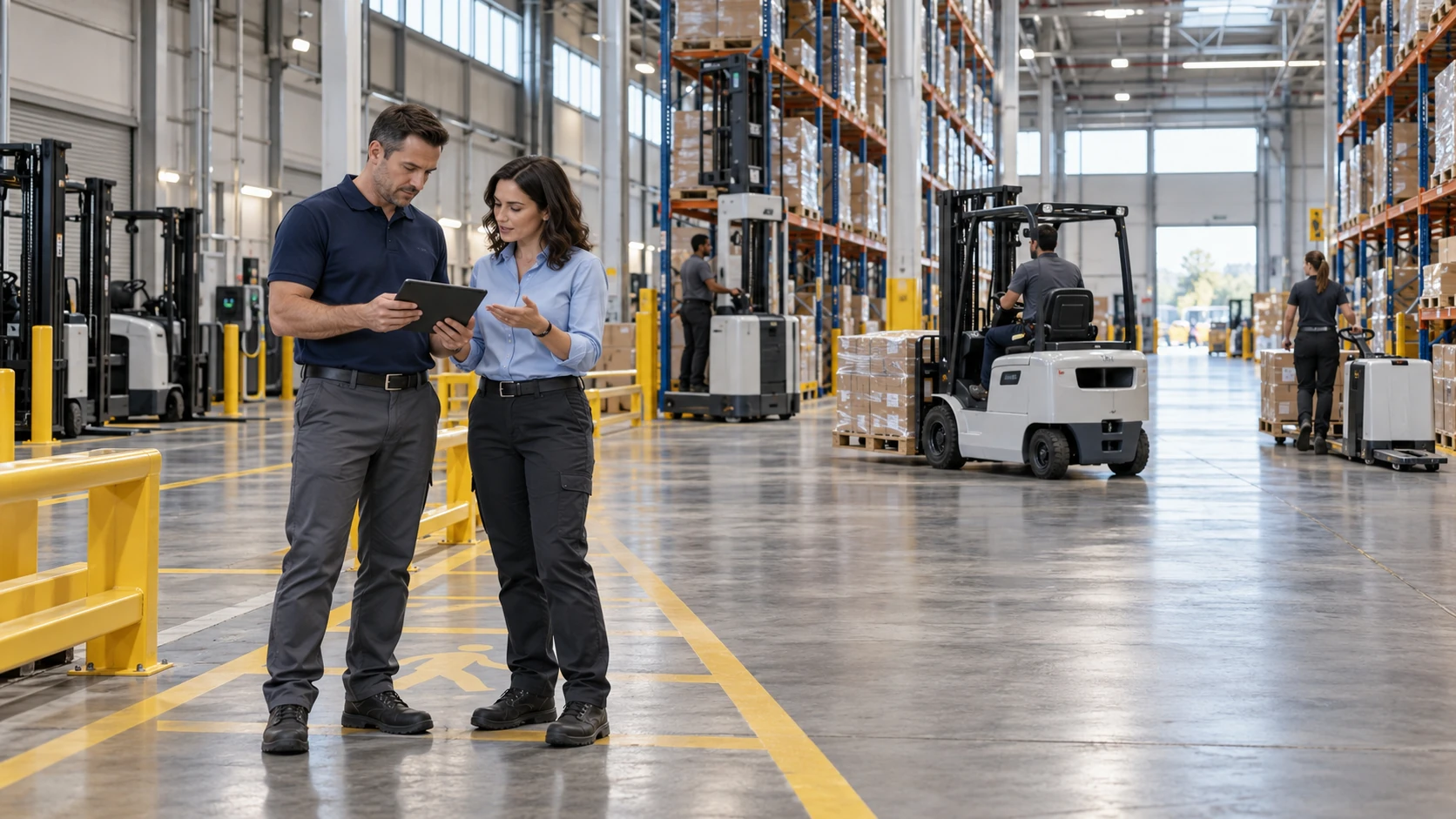
Warehouse fleet software saves money by reducing preventable forklift breakdowns, unnecessary equipment rentals, repeat repairs, inspection administration, and unplanned downtime. It connects operating hours, maintenance expenses, inspection results, and equipment availability so managers can identify costly assets and prevent avoidable spending. The purpose of fleet management software in a warehouse is to lower the cost per productive operating hour while maintaining equipment reliability, workplace safety, and operational efficiency.
Unlike road vehicles, warehouse equipment operates primarily indoors, often across multiple shifts, with maintenance requirements driven by operating hours rather than mileage. Forklifts, reach trucks, pallet jacks, and order pickers also create expenses associated with battery charging, facility damage, and interrupted material movement. Distribution centers managing both indoor equipment and yard vehicles must account for these differences while coordinating broader trucking and logistics fleet operations.
Key Takeaways
- Measure costs by operating hours: Calculate maintenance and operating expenses per hour rather than relying on mileage to compare warehouse equipment fairly.
- Prevent expensive equipment failures: Schedule preventive maintenance according to usage, manufacturer recommendations, and operating conditions to reduce unexpected breakdowns.
- Connect inspections with repairs: Use digital inspections, work orders, and maintenance records to identify problems early and avoid recurring repair expenses.
- Control rental and ownership costs: Compare equipment utilization, downtime, and seasonal demand before renting or purchasing additional forklifts.
- Track hidden warehouse expenses: Include battery charging, facility damage, operator delays, and administrative work when evaluating total fleet costs.
What Counts as a Warehouse Fleet, and Why Its Costs Behave Differently
A warehouse fleet includes forklifts, reach trucks, powered pallet jacks, order pickers, tow tractors, and yard or spotter trucks. Manual pallet jacks may also be included in the equipment inventory, although they are not classified as powered industrial trucks.
These assets support receiving, storage, order picking, replenishment, and shipping. Their operating expenses depend on equipment workload, lifting activity, operating conditions, and shift schedules.
Using equipment maintenance software helps managers organize maintenance records and monitor equipment condition across different asset types.
Hour Based Assets, Not Mileage Based
A forklift can experience substantial wear without traveling significant distances. Repeated lifting, hydraulic movements, heavy loads, and continuous operation affect its components.
Consider two identical forklifts. One operates 1,800 hours annually while another operates only 500 hours. Their maintenance needs will differ even if both belong to the same warehouse.
Managers should compare operating hours, maintenance expenses, repair frequency, and equipment availability to understand actual costs.
Several Equipment Classes Under One Roof
OSHA identifies different classes of powered industrial trucks. The five classes most relevant to typical warehouse operations include:
- Class I: Electric motor rider trucks used for general material handling.
- Class II: Electric narrow aisle trucks, including many reach trucks and order pickers.
- Class III: Electric hand trucks and rider pallet trucks.
- Class IV: Internal combustion forklifts with cushion tires.
- Class V: Internal combustion forklifts with pneumatic tires.
Each class has different maintenance, energy, and operating requirements.
Comparing equipment within similar classes and workloads provides more meaningful cost benchmarks.
The Real Cost Structure of a Warehouse Fleet
The purchase price represents only part of warehouse equipment ownership.
Managers also pay for preventive maintenance, emergency repairs, battery charging, replacement parts, rental equipment, operator delays, and inspections. A forklift breakdown can interrupt several warehouse activities simultaneously, increasing its financial impact beyond the repair invoice.
The following breakdown identifies major warehouse fleet cost categories and where software can help reduce unnecessary expenses.
| Cost Category | What Drives It | Where Software Removes Cost |
|---|---|---|
| Acquisition and ownership | Purchase price, financing, depreciation, insurance | Identifies underused units and supports replacement decisions |
| Maintenance and repair | Service labor, hydraulic repairs, worn components | Tracks service schedules and recurring repairs |
| Unplanned downtime | Mechanical failures and unavailable equipment | Identifies overdue maintenance and repeat failures |
| Labor tied to downtime | Idle operators, overtime, delayed picking | Tracks downtime and improves repair coordination |
| Equipment rental | Seasonal demand, overflow work, extended rental periods | Reveals unnecessary rentals and available owned equipment |
| Impact, rack, and building damage | Collisions, damaged racks, doors, and equipment | Records incidents and associated repair expenses |
| Battery and energy | Electricity, charging, battery degradation, replacements | Organizes battery maintenance and energy cost records |
| Compliance and recordkeeping | Inspections, documentation, corrective actions | Centralizes records and reduces administrative work |
Software does not automatically eliminate these costs. It provides the information needed to identify where spending can be reduced.
Where Fleet Software Removes Cost, Line by Line
Most warehouse equipment requires maintenance according to operating hours, manufacturer recommendations, and working conditions.
For example, a forklift requiring service every 250 operating hours may reach that threshold quickly during peak season but take considerably longer during quieter periods.
With AUTOsist preventive maintenance scheduling, managers can organize equipment service plans and reminders instead of relying on spreadsheets or technician memory.
Consistently recording hour meter readings helps maintenance teams identify upcoming service requirements and plan repairs around operating schedules.
Planned maintenance also gives managers more control over technician availability, spare parts, and equipment downtime.
Digital Pre Shift Inspections and OSHA 1910.178 Compliance
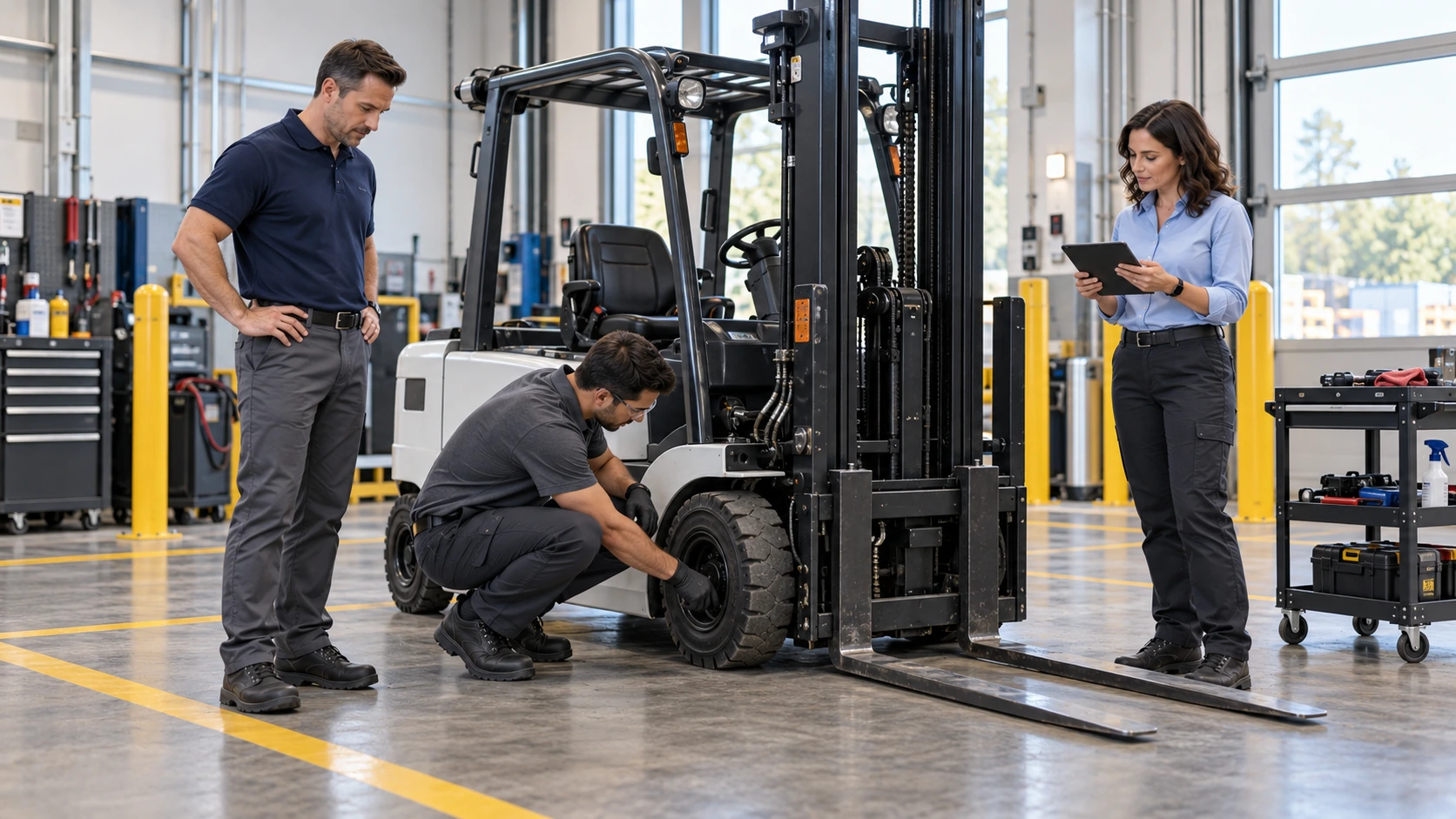
Forklift inspections help identify equipment defects before they develop into serious failures or safety hazards.
Under OSHA 29 CFR 1910.178(q)(7), powered industrial trucks must be examined before entering service, at least daily. Equipment operating continuously must be examined after each shift.
Unsafe equipment must be removed from service until the problem is corrected.
A practical forklift inspection should cover:
- Forks, mast, hydraulic components, tires, and visible damage.
- Brakes, steering, controls, warning devices, and fluid leaks.
- Battery condition, charging connections, or applicable fuel system concerns.
Although OSHA does not generally require written records of these examinations, maintaining them supports internal accountability and followup.
Configurable digital equipment inspections allow operators to report defects, attach photographs, and notify maintenance teams.
The National Safety Council reported 84 workplace fatalities involving forklifts as the source in 2024. Digital inspections cannot prevent every incident, but consistent defect reporting and corrective action support safer equipment operation.
Work Orders, Parts Inventory, and Repair Cost Visibility
Identifying a defect is only the beginning. The maintenance team must also determine what needs repair, who will complete the work, and when the equipment can return to service.
For example, when an operator reports a hydraulic leak, the manager needs a clear record of the affected forklift, repair priority, technician assignment, and required parts.
A centralized fleet maintenance work order system keeps these activities organized and preserves the repair history.
Historical repair records also help managers identify forklifts that repeatedly experience the same problem.
Parts availability creates another important cost consideration.
A missing replacement hose or hydraulic component may keep a repairable forklift unavailable for several days, potentially increasing overtime or rental expenses.
Tracking frequently used components through parts inventory management helps maintenance teams avoid shortages without maintaining excessive inventory.
The Warehouse Fleet Costs Managers Miss
Some of the most expensive warehouse fleet problems never appear directly in the maintenance budget.
A forklift breakdown might require emergency rentals, overtime, expedited parts delivery, and additional equipment movement. Looking only at the repair invoice hides these secondary costs.
Managers should regularly investigate the following expenses:
- Peak season rental creep: Rental forklifts remain on site even after demand returns to normal.
- Unnecessary equipment purchases: Managers purchase additional units because the warehouse appears busy, despite low actual utilization.
- Battery charging inefficiency: Poor charging schedules increase electricity costs or reduce equipment availability.
- Facility damage: Repeated forklift impacts damage racks, dock equipment, doors, and floors.
Incomplete records make these expenses difficult to identify. Reviewing costly fleet management blind spots helps managers understand where missing information can lead to unnecessary spending.
Deferred maintenance creates another financial problem.
A minor hydraulic leak or worn component can develop into a major failure if equipment continues operating without corrective action. Repair costs may increase while the forklift remains unavailable for longer.
This relationship between demanding workloads, service delays, and premature deterioration also explains why fleet assets age faster than expected.
Workplace incidents introduce additional financial exposure.
OSHA's Severe Injury Reports for 2022 and 2023 recorded 1,190 forklift related severe injuries. Transportation and warehousing accounted for 285 reports, approximately 26% of the total.
Beyond direct repair and medical costs, incidents can cause investigations, replacement labor, operational interruptions, and facility damage.
How to Find Where Your Warehouse Fleet Leaks Money
The most useful cost analysis begins with individual equipment records rather than the total monthly maintenance budget.
Managers need to understand how much each forklift costs, how frequently it operates, and how often it becomes unavailable.
A fleet reporting dashboard can help organize maintenance expenses, service activity, and asset records. Combine this information with accurate operating hours, rental expenses, and warehouse labor costs.
Seven Step Warehouse Fleet Cost Review
Example: Calculating Forklift Operating Cost
Suppose a warehouse forklift records the following annual expenses:
| Expense | Annual Cost |
|---|---|
| Planned maintenance | $7,200 |
| Unplanned repairs | $6,400 |
| Battery and energy costs | $2,400 |
| Total recorded operating expenses | $16,000 |
If the forklift operates for 1,600 hours annually:
Cost per operating hour = $16,000 ÷ 1,600 = $10
This calculation provides a partial operating cost. A complete ownership calculation should also account for depreciation, insurance, relevant labor, and attributable downtime expenses.
Compare similar forklifts to identify unusually expensive equipment.
Managers can then use the fleet maintenance ROI calculator to estimate potential maintenance and administrative savings. Validate those estimates against actual warehouse operating expenses.
Electric Forklifts Are Changing the Cost Equation
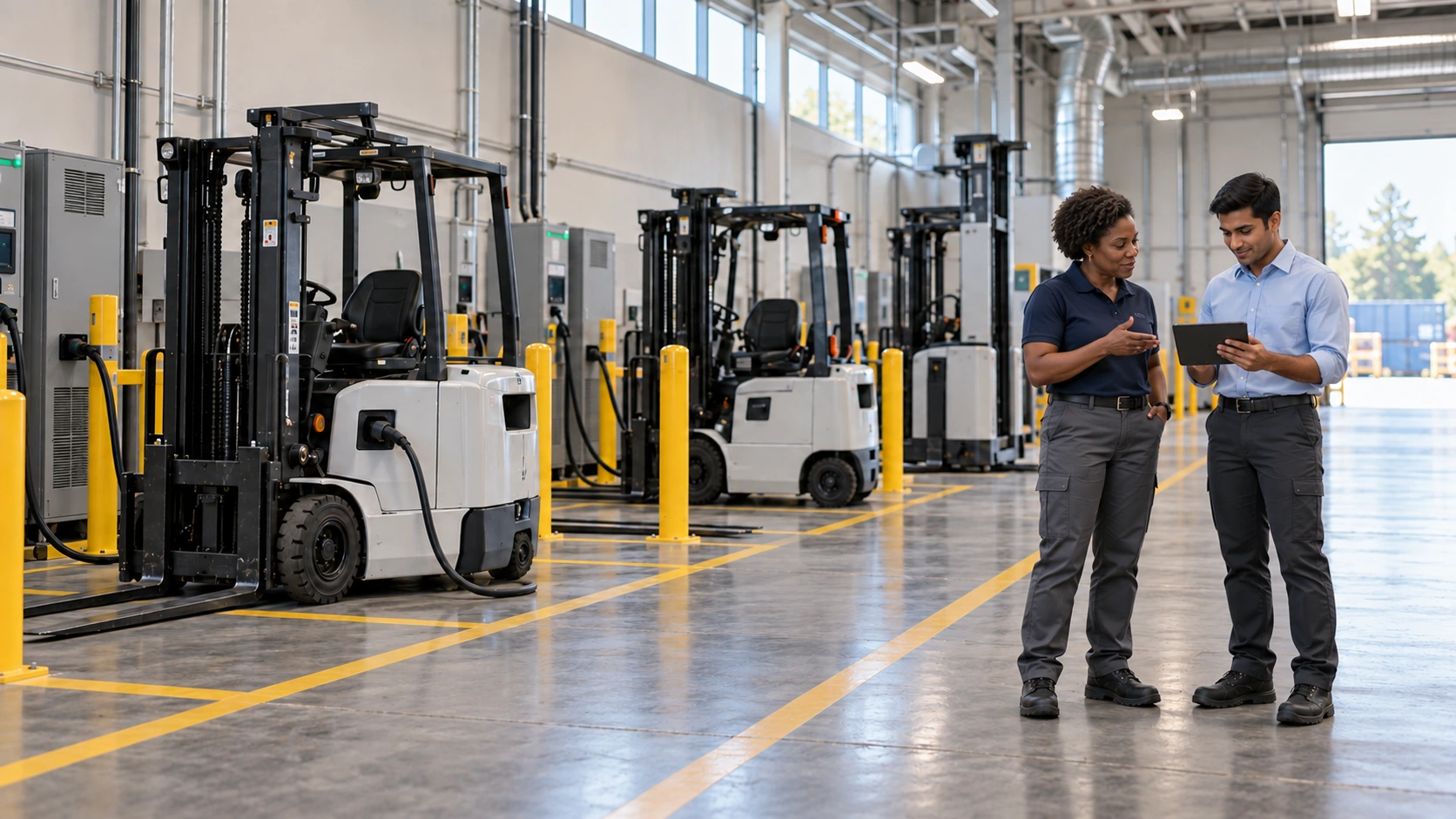
Electric forklifts are becoming increasingly important to warehouse equipment planning.
According to Industrial Truck Association market information published in January 2026, electric trucks represented approximately 72% of North American forklift sales through November 2025.
Electric equipment can reduce certain fuel and engine maintenance expenses, but batteries, charging infrastructure, electricity consumption, and charging downtime create different ownership costs.
Warehouse managers should monitor:
- Charging expenses: Electricity consumption, demand charges, and charging schedules.
- Battery condition: Maintenance history, replacement expenses, and declining usable capacity.
- Equipment availability: Charging downtime, spare battery requirements, and shift readiness.
California's Zero Emission Forklift Regulation introduces additional planning considerations.
Adopted in 2024, the regulation includes requirements beginning in 2026 and phased replacement schedules from 2028 through 2038 for covered Class IV and Class V large spark ignition forklifts.
However, CARB currently states that it will not enforce the regulation against privately owned or operated fleets unless the necessary federal authorization is granted or determined unnecessary. State and local government fleets remain subject to the regulation.
Warehouse managers should verify applicable requirements while comparing equipment acquisition, charging infrastructure, battery maintenance, and long term operating costs.
The Bottom Line
Warehouse fleet savings depend on understanding what each forklift costs, how frequently it operates, and what happens when it becomes unavailable. Maintenance scheduling, inspection records, repair visibility, and utilization reporting help managers prevent unnecessary expenses and make informed equipment decisions. The greatest savings often come from identifying recurring problems before they disrupt warehouse operations.
Frequently Asked Questions
-
How many forklifts does my warehouse actually need?
Your warehouse needs enough forklifts to handle peak shift demand without excessive idle equipment. Review operating hours, utilization, workload, and maintenance availability before adding more units. -
When should I replace a forklift instead of repairing it?
Consider replacing a forklift when recurring repairs, downtime, and expected future maintenance make keeping it more expensive than a reliable replacement. Compare its repair history, cost per operating hour, condition, and replacement price. -
Is it cheaper to rent forklifts during peak season or buy more?
Renting is usually more practical for temporary seasonal demand. If additional forklifts are needed throughout most of the year, compare the total rental expense against purchasing or leasing. -
Does OSHA require written forklift inspection records?
No. Federal OSHA requires forklift examinations before use but does not generally require written inspection records under 1910.178(q)(7). Digital records are still useful for accountability and tracking defects. -
How often should electric forklift batteries be charged?
Charging frequency depends on battery chemistry, equipment usage, and manufacturer recommendations. Follow the recommended charging procedure and plan charging around shifts to maintain battery life and equipment availability.