Best Fleet Management Software (2026 Comparison Guide)
Fleet management software centralizes maintenance, compliance, tracking, reporting, and cost control into a structured operating system. In 2026, selecting the right platform is less about feature volume and more about operational fit, data integrity, and long-term scalability.

2026 Fleet Software Shortlist Scorecard
| Evaluation Area | What to Verify | Evidence to Request | Operational Risk if Missing |
|---|---|---|---|
| Maintenance Control | PM automation & service history | Sample PM workflow | Reactive repairs increase |
| Compliance & Inspections | Digital inspection workflows | Completed inspection report | Audit exposure rises |
| Reporting & Analytics | Customizable dashboards | Live report demo | Poor decision visibility |
| Integrations | Telematics & fuel sync | Integration confirmation | Data silos persist |
| User Controls | Roles & driver assignment | Admin permission demo | Accountability gaps |
All-in-One Platforms vs Best-of-Breed Stack

All-in-One Platform
- Single system of record for assets, drivers, and work orders
- Centralized reporting and audit trails
- Reduced integration complexity
- Easier multi-location standardization

Best-of-Breed Stack
- Specialized depth in specific functions
- Flexible vendor selection
- Potentially stronger niche telematics features
- Requires integration management and oversight
Define Your Requirements Before Comparing Vendors
Selecting the best fleet management software begins with operational clarity. Without defined outcomes, feature comparisons become subjective and inconsistent.
Before evaluating vendors, document:
- Fleet size, asset types, and location structure
- Preventive maintenance intervals and compliance requirements
- Reporting requirements for leadership
- Current breakdown frequency and downtime trends
- Integration requirements (fuel cards, telematics, accounting)
For teams formalizing their process, a structured approach such as the fleet manager guide can help align leadership and maintenance teams before purchase decisions.
Operational outcome:
- Clear buying criteria
- Reduced internal disagreement
- Faster vendor shortlisting

Core Capabilities to Evaluate in Fleet Management Software
In 2026, effective fleet software must unify maintenance, inspections, tracking, and reporting. Capabilities should support uptime, compliance, and cost control simultaneously.
Core evaluation areas include:
- Automated preventive maintenance scheduling
- Digital inspections with timestamped records
- Work order management with parts tracking
- Fuel usage and cost tracking visibility
- Real-time reporting dashboards
Teams focused on maintenance structure should reference a preventative maintenance guide for fleet operations to benchmark scheduling maturity before selecting a system.
Operational outcome:
- Improved PM compliance rates
- Fewer surprise breakdowns
- Standardized maintenance documentation
Implementation, Integrations, and Data Considerations
Software selection is only the first phase. Implementation determines whether the system improves operations or becomes underutilized.
Key evaluation questions:
- Does the system integrate with existing telematics providers?
- Can historical maintenance data be migrated cleanly?
- Are user permissions configurable by role?
- Is mobile access available for drivers and technicians?
- Can inspection workflows replace paper processes?
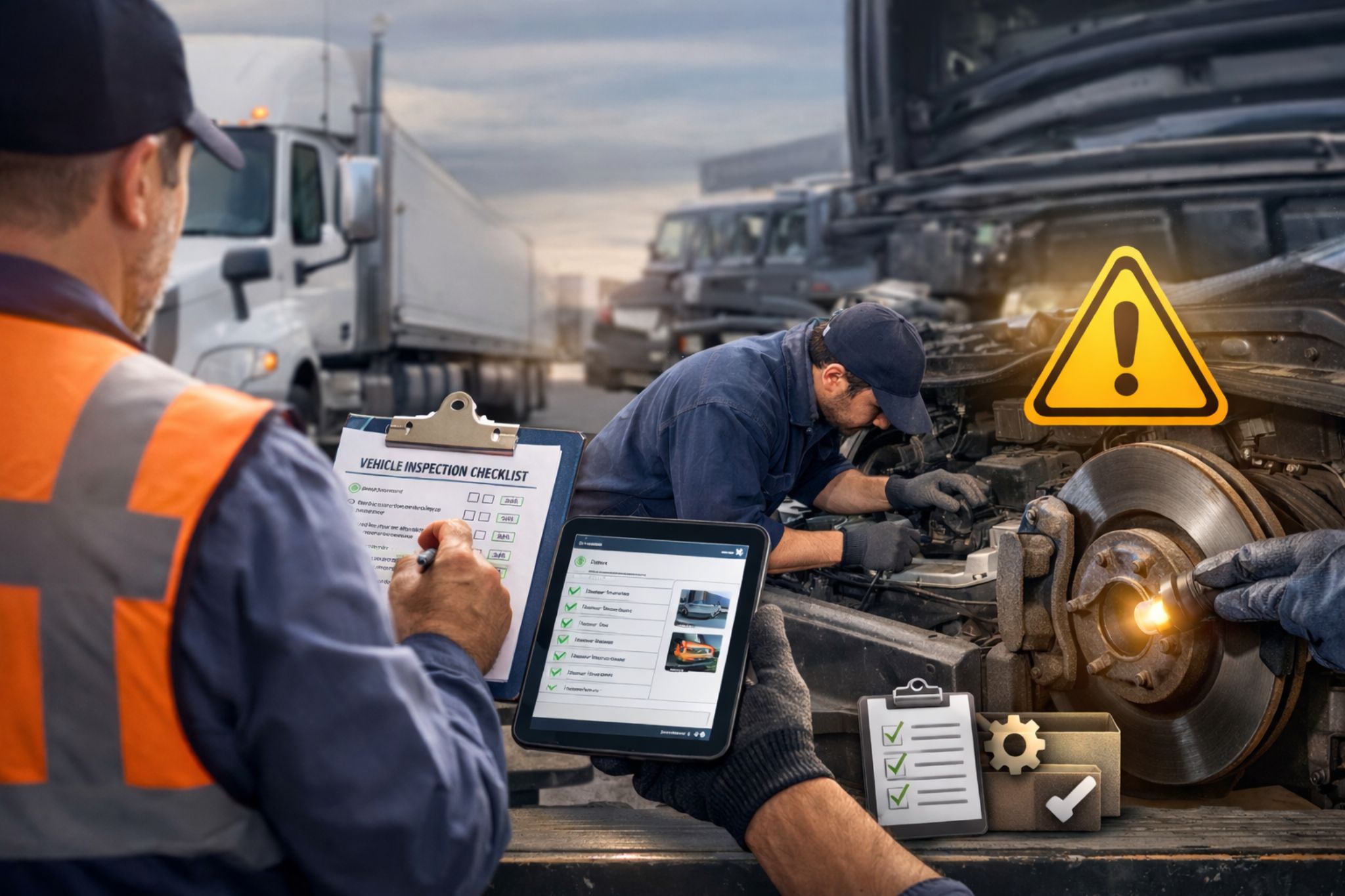
Fleets transitioning from paper or spreadsheets often use a structured vehicle inspection checklist to standardize inspections before digitization.
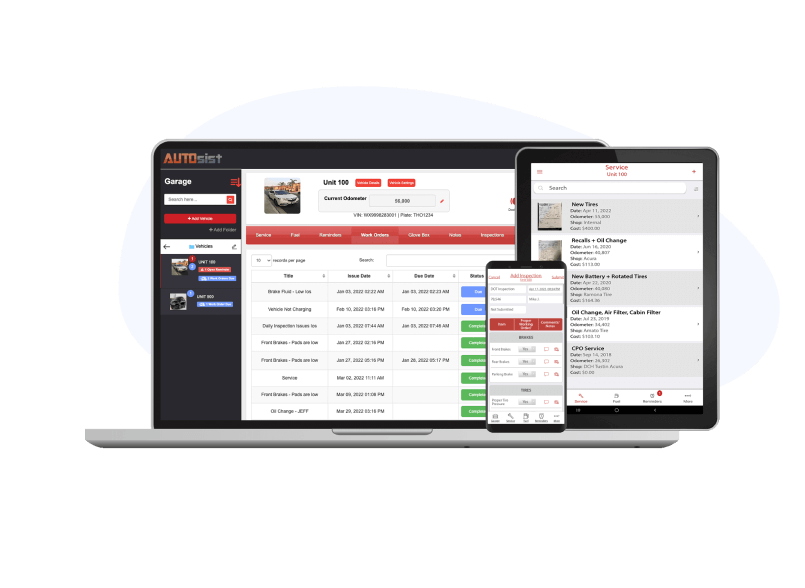
Subtle but important is whether the vendor provides a unified platform for both maintenance and fleet visibility, such as a dedicated fleet management software platform that centralizes reporting, work orders, inspections, and asset history in one system.
Operational outcome:
- Higher user adoption
- Reliable inspection audit trails
- Reduced duplicate data entry


Pricing, Total Cost, and How to Validate ROI
Comparing subscription pricing alone can be misleading. Total cost of ownership includes downtime reduction, labor efficiency, compliance risk mitigation, and parts inventory control.
When evaluating pricing:
- Compare per-asset vs per-user pricing models
- Calculate avoided downtime costs
- Estimate labor hours saved from digital workflows
- Measure inspection compliance improvement
- Review scalability costs as fleet grows
Software should demonstrate measurable return through reduced breakdown frequency, improved PM completion rates, and clearer cost reporting.
Operational outcome:
- Defensible budget justification
- Predictable cost forecasting
- Long-term scalability
Final Takeaways
The best fleet management software in 2026 is the one that aligns with operational structure, not just feature lists. Decision-makers should evaluate systems based on maintenance control, compliance visibility, integration capability, and reporting clarity.
Key considerations:
- Define operational requirements before vendor comparison.
- Prioritize maintenance automation and inspection compliance.
- Evaluate integration readiness early.
- Measure ROI beyond subscription cost.
- Standardize data and reporting across locations.
AUTOsist Fleet Management Resources

Fleet Manager Guide
Preventative Maintenance Guide for Fleet Operations
Vehicle Inspection Checklist
Fleet Management Software