Fleet Driver Performance Monitoring and Safety
Fleet driver performance monitoring and safety focuses on tracking driver behavior, identifying risk patterns, and improving operational safety outcomes through structured data, processes, and oversight systems.
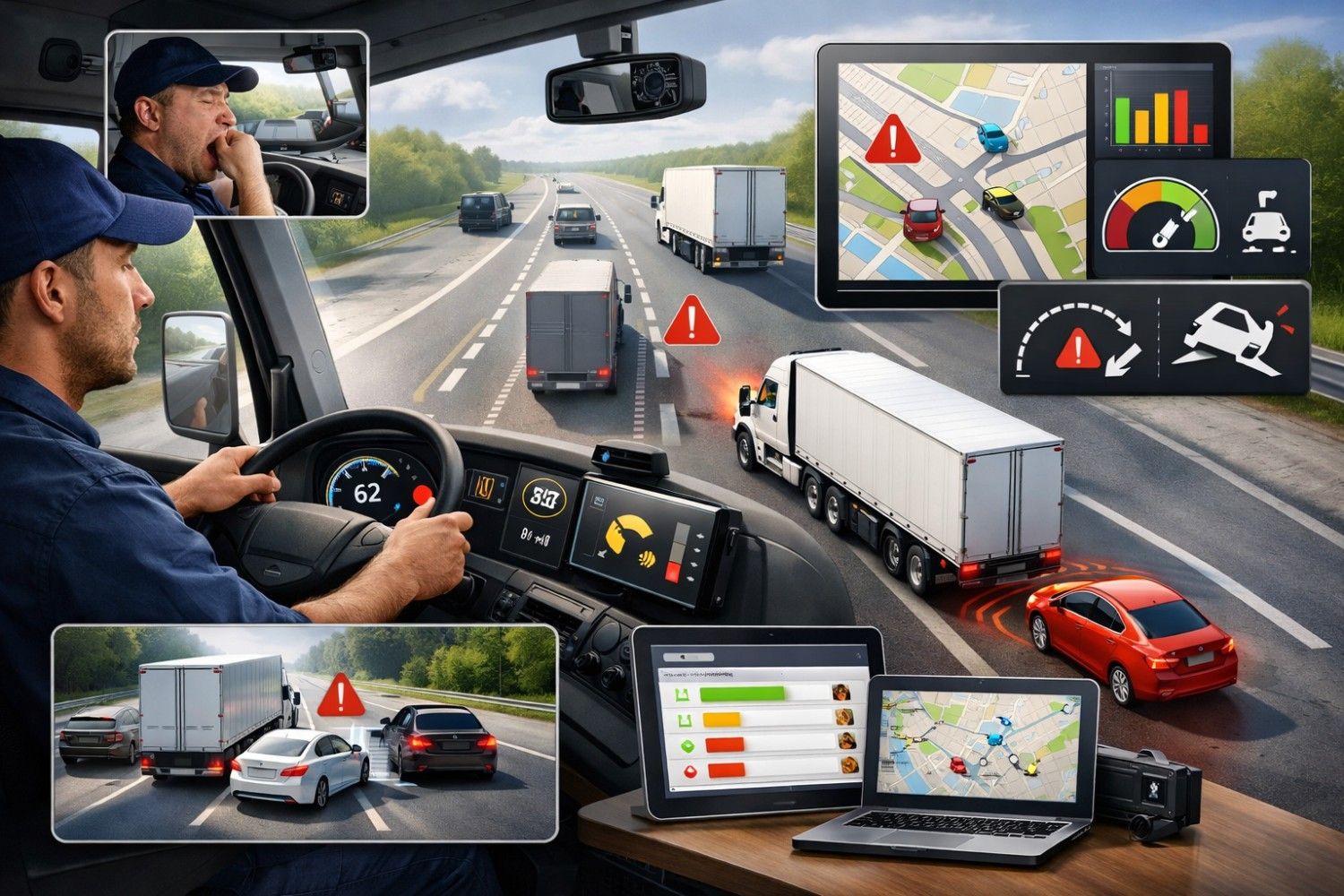
Driver Risk Levels and Recommended Actions
| Risk Level | Behavior Indicators | Risk Impact | Recommended Action |
|---|---|---|---|
| Low Risk | Consistent driving, no violations | Minimal safety exposure | Maintain performance monitoring |
| Moderate Risk | Occasional speeding or harsh events | Increased incident probability | Coaching and targeted feedback |
| High Risk | Frequent violations, unsafe patterns | Elevated accident risk | Formal intervention and retraining |
| Critical Risk | Repeated severe violations | High liability and compliance risk | Immediate corrective action or suspension |
Real-Time Monitoring vs Historical Performance Analysis

Real-Time Monitoring
- Enables instant alerts for unsafe driving events
- Supports rapid intervention and risk mitigation
- Improves responsiveness to critical incidents
- Requires continuous data connectivity

Historical Performance Analysis
- Identifies recurring behavior issues over time
- Supports structured driver scoring and benchmarking
- Enables targeted coaching programs
- Helps evaluate program effectiveness and improvements
Core Metrics for Driver Performance Monitoring
Driver performance monitoring relies on measurable indicators that reflect safety, compliance, and operational efficiency. These metrics form the foundation for evaluating driver behavior across the fleet.
- Speeding events and duration above thresholds
- Harsh braking, acceleration, and cornering incidents
- Idle time and unnecessary engine usage
- Seatbelt usage and compliance tracking
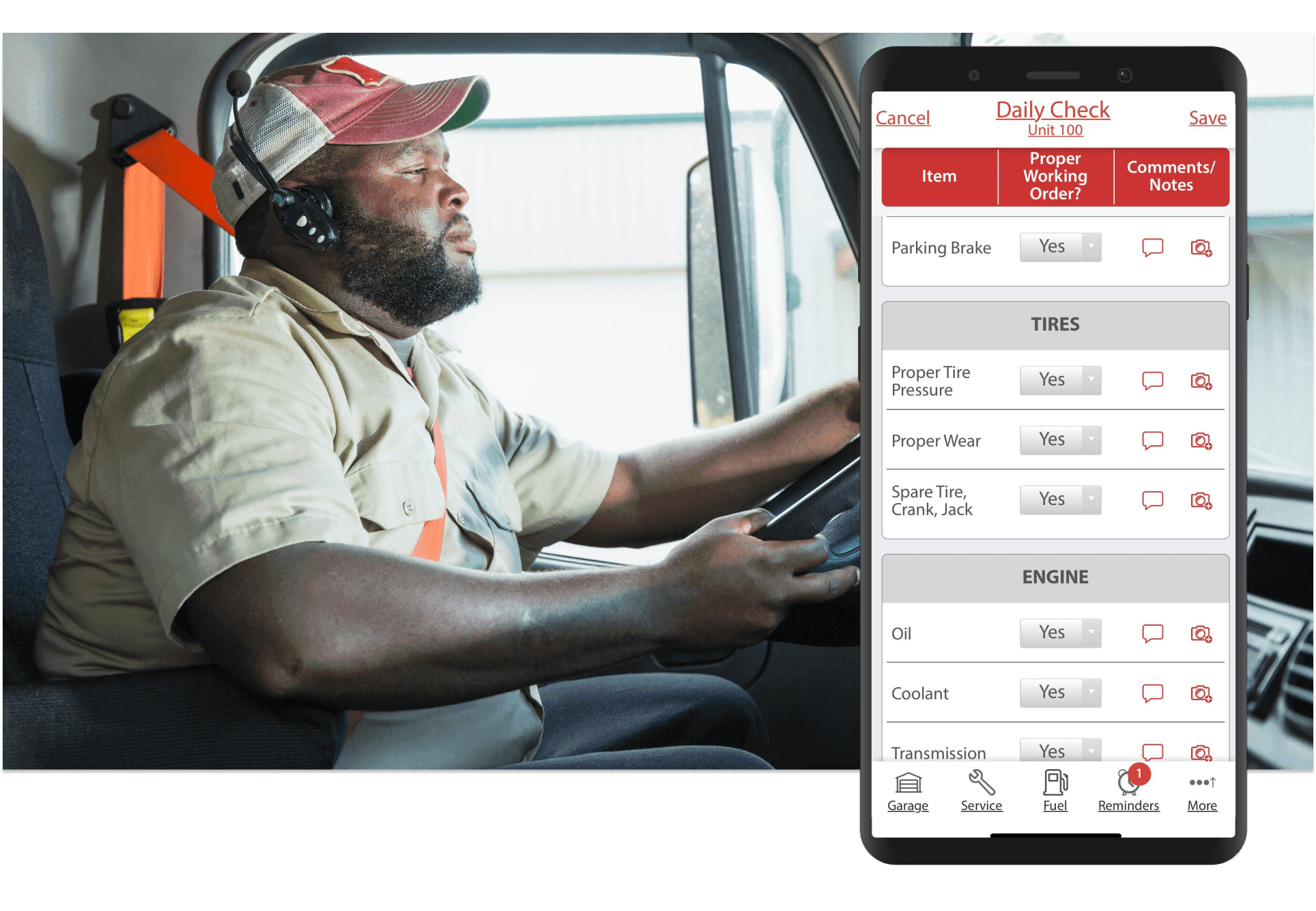
- Inspection compliance and reporting accuracy
Outcome:
- Clear visibility into driver behavior
- Standardized performance benchmarks
- Data-driven safety decisions
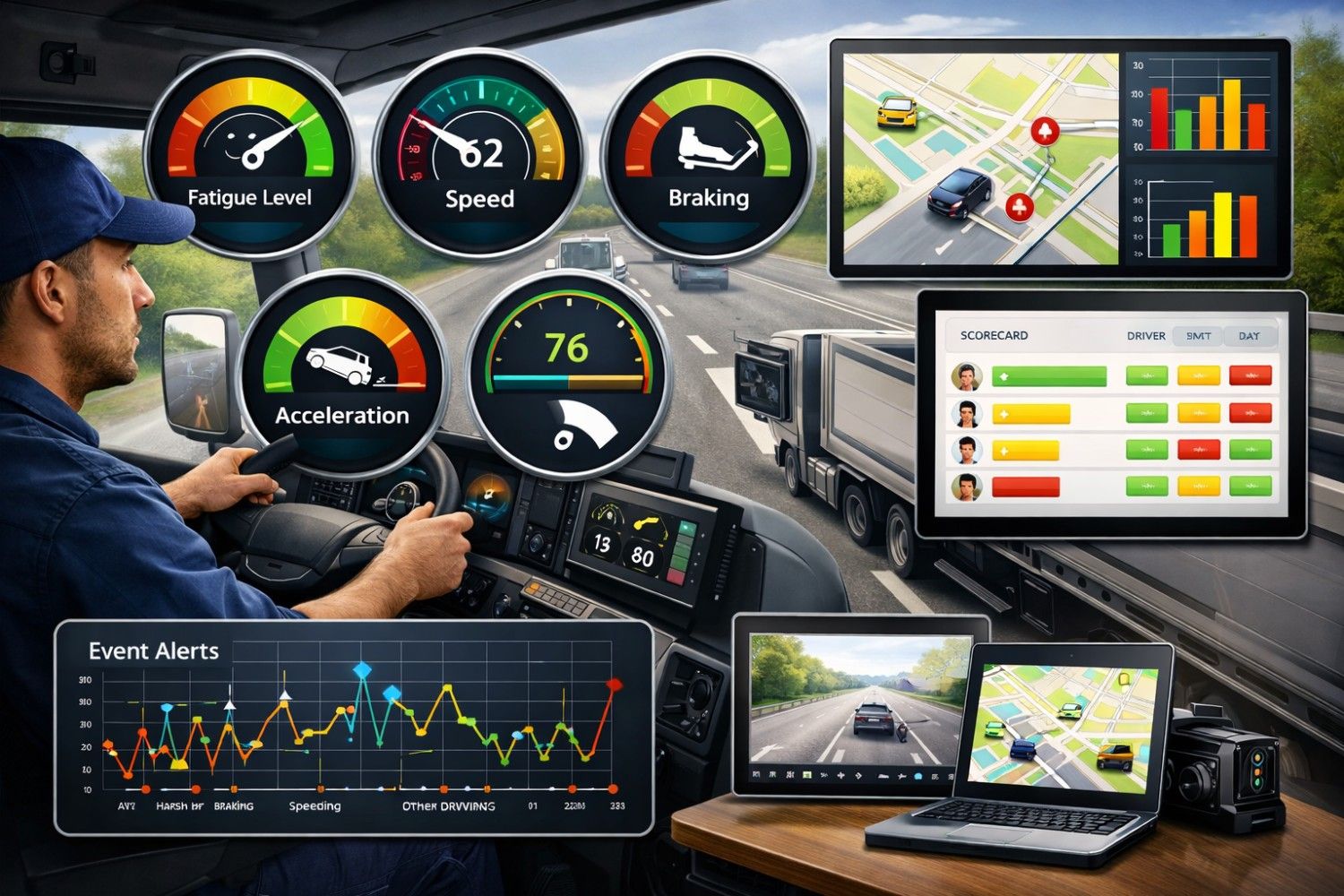
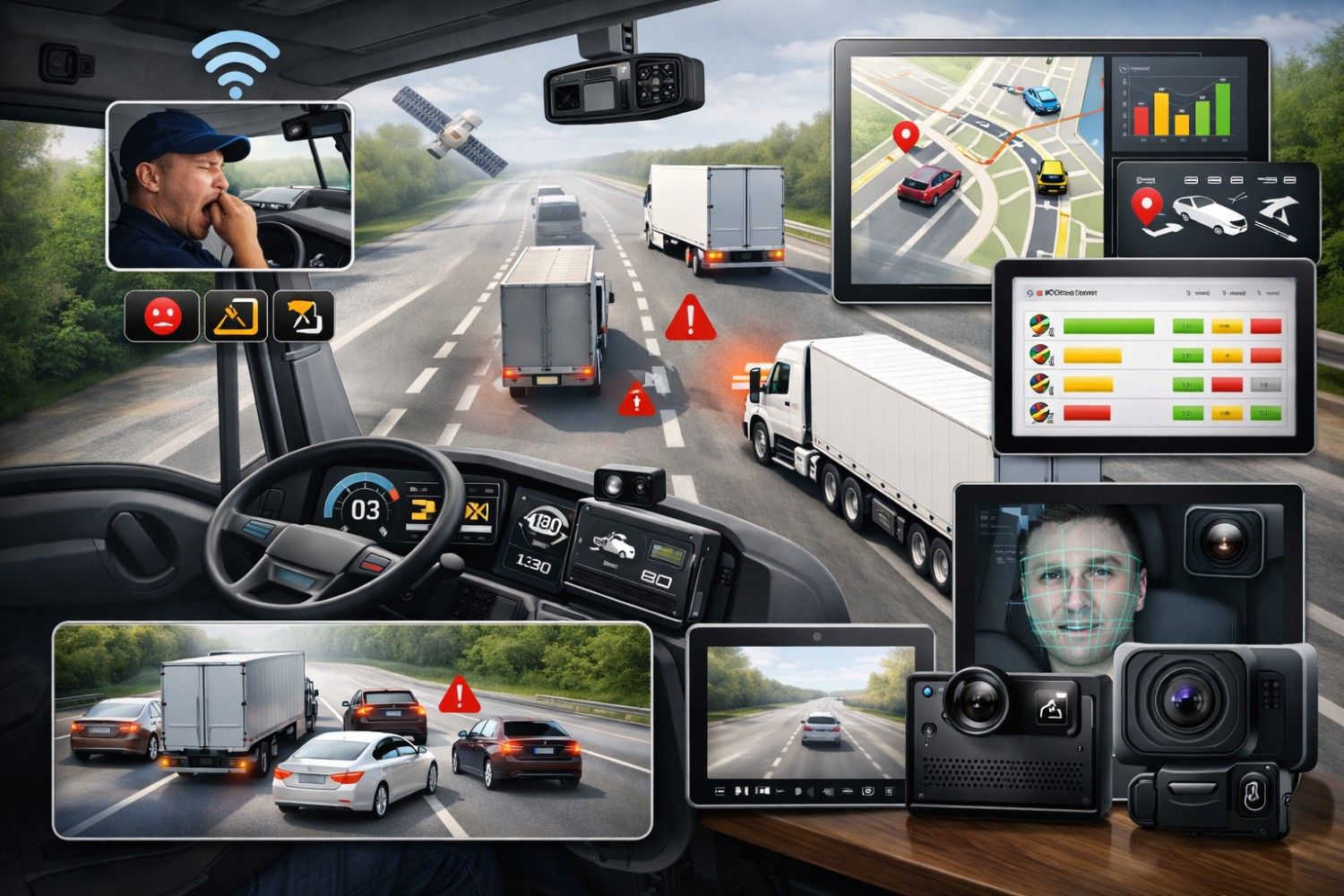
Driver Safety Monitoring Systems and Technologies
Driver monitoring programs depend on integrated systems that capture and process behavioral and operational data. These systems provide both real-time insights and historical reporting.
- Telematics systems for behavior tracking and vehicle data
- GPS tracking for route monitoring and location context
- Dash cameras for visual evidence and incident review
- Mobile inspection tools for compliance and reporting
- Driver scorecards for performance evaluation
Outcome:
- Centralized data collection across the fleet
- Improved accuracy in safety monitoring
- Stronger accountability and documentation
Driver Performance Management Process
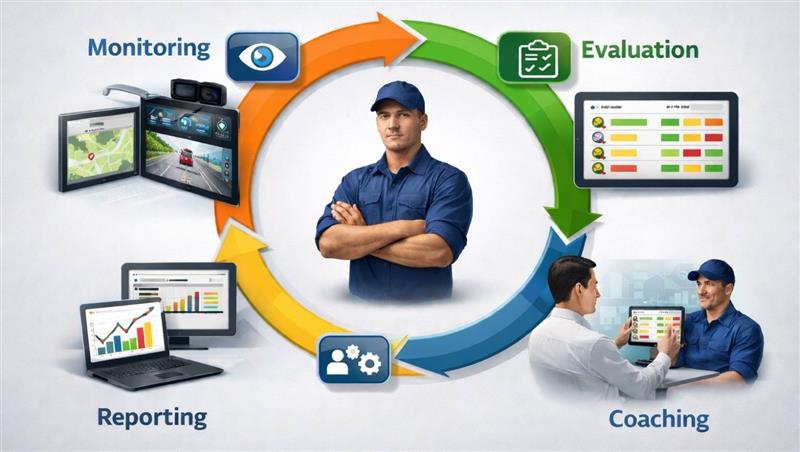
Monitoring alone does not improve safety; fleets must translate data into structured processes that guide driver behavior and operational decisions.
- Establish driver performance standards and thresholds
- Monitor behavior using real-time and historical data
- Identify high-risk drivers based on defined criteria
- Implement coaching, training, or corrective actions
- Track improvements and adjust policies over time
Outcome:
- Consistent enforcement of safety standards
- Measurable improvement in driver behavior
- Reduced incidents and operational risk
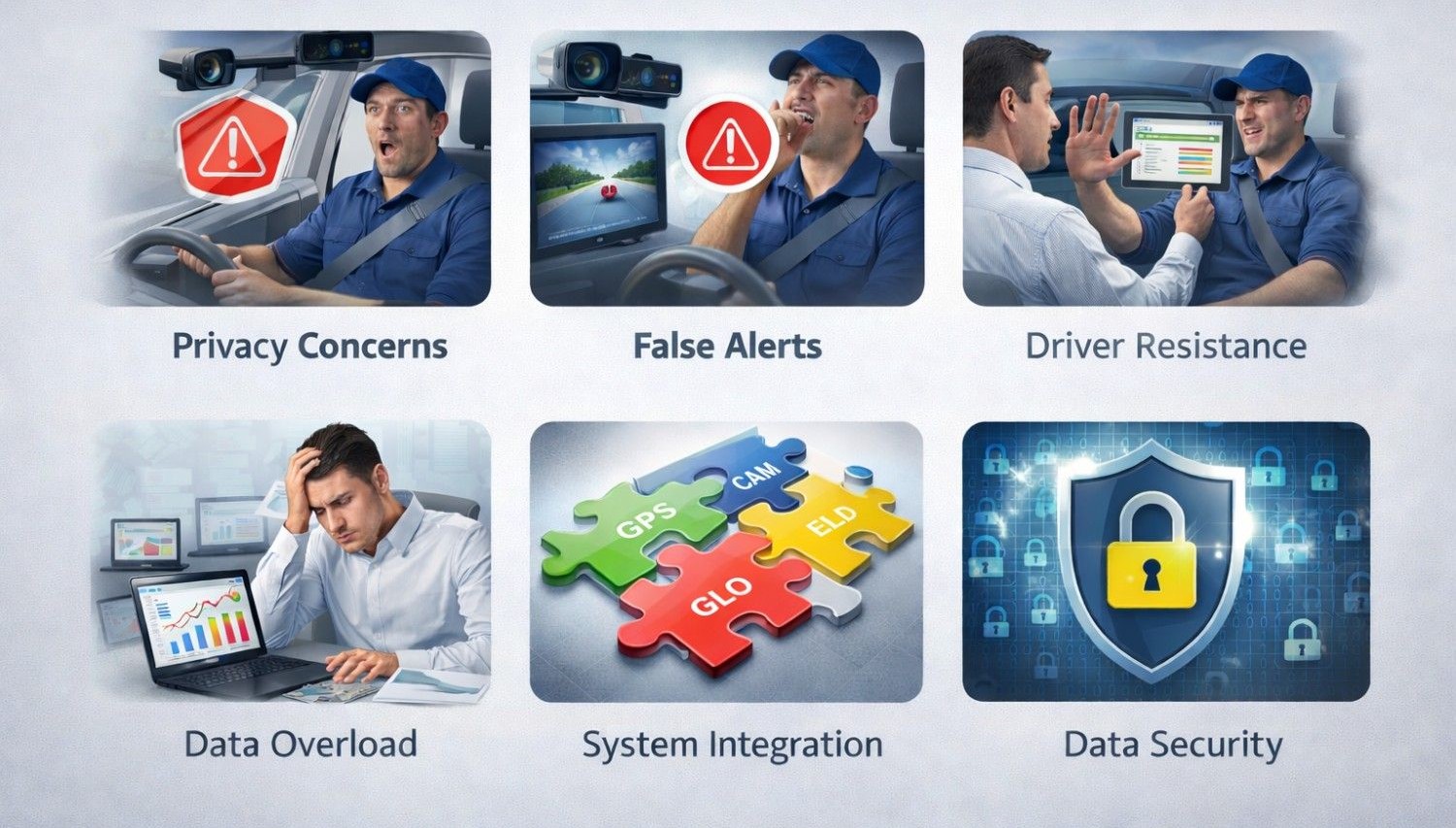
Common Risks and Challenges in Driver Monitoring
Implementing driver monitoring systems introduces operational, technical, and organizational challenges that must be addressed to ensure effectiveness.
- Resistance from drivers due to perceived surveillance
- Inconsistent data quality across systems
- Difficulty interpreting large volumes of data
- Lack of standardized performance benchmarks
- Gaps between monitoring insights and action
Outcome:
- Need for clear policies and communication
- Importance of system integration and data accuracy
- Requirement for structured management processes
Final Takeaways
Effective driver performance monitoring requires a combination of real-time visibility, structured analysis, and operational follow-through.
- Define clear driver performance metrics and risk thresholds
- Combine real-time monitoring with historical trend analysis
- Use technology systems to centralize and standardize data
- Translate insights into coaching and corrective actions
- Continuously refine processes to improve safety outcomes
AUTOsist Fleet Management Resources
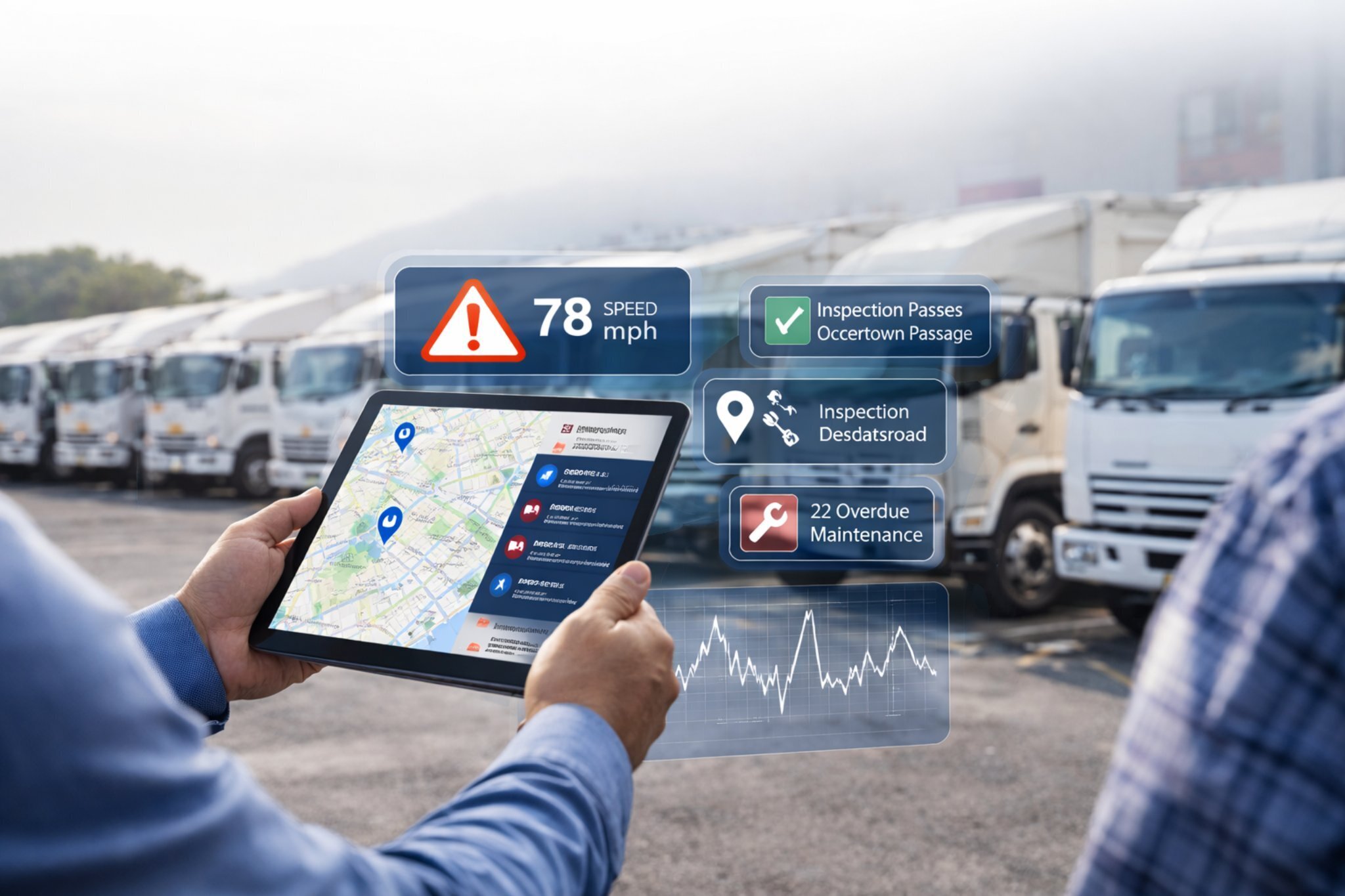
Fleet Safety Monitoring Guide
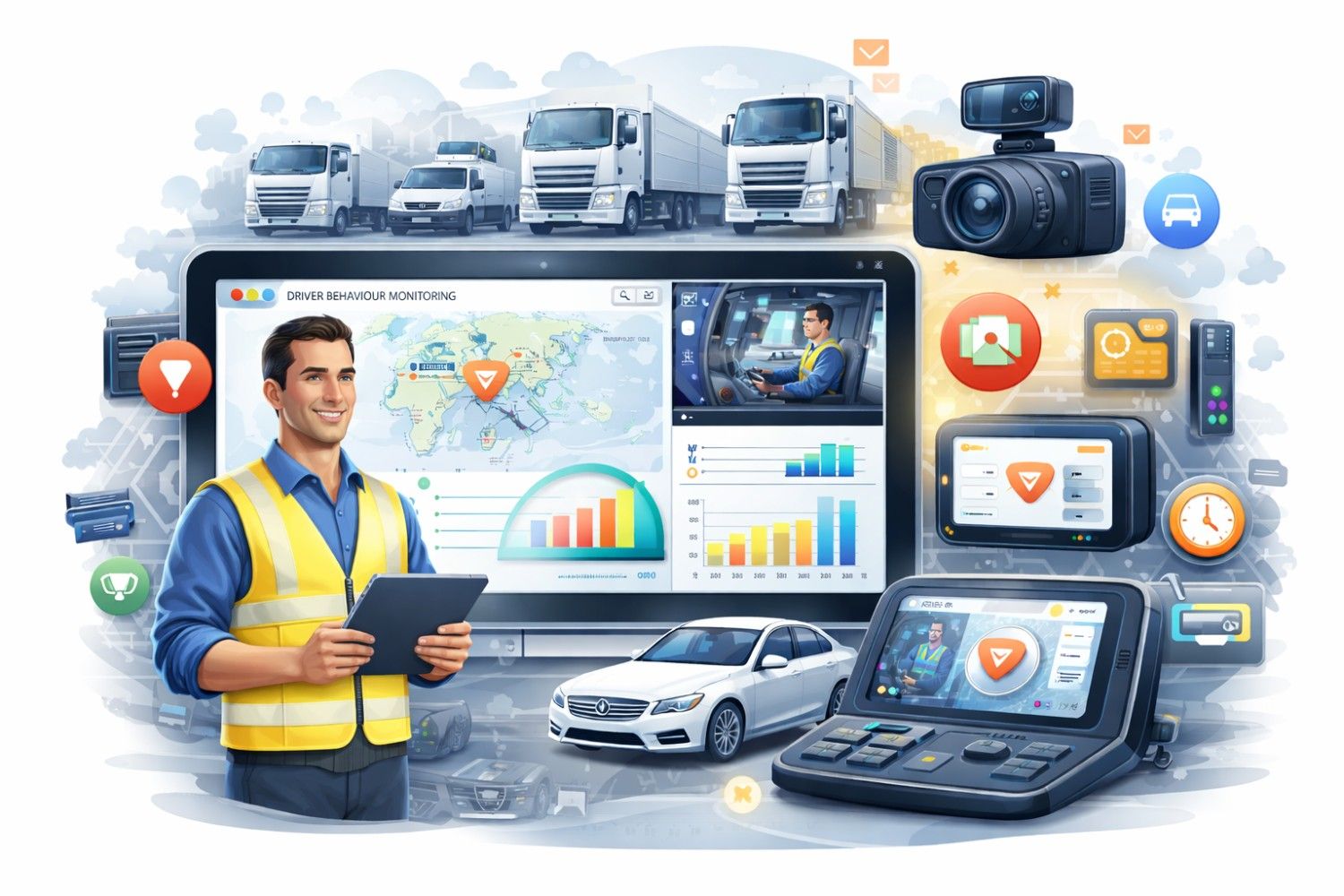
Driver Behaviour Monitoring Guide
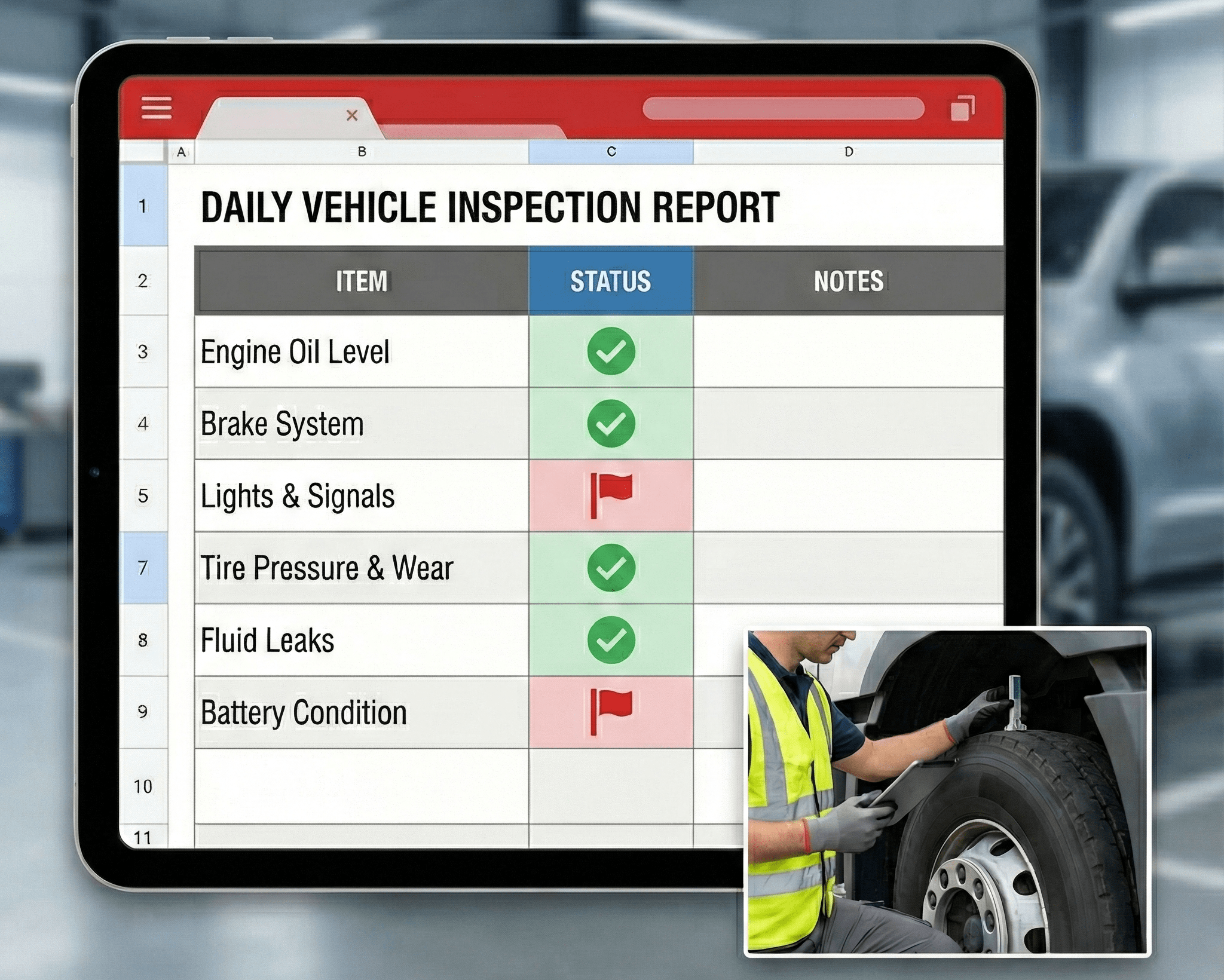
Vehicle Inspection Form
Fleet User Driver Management