Fleet Telematics Explained: Complete Integration Guide
Fleet telematics refers to the combined use of GPS devices, vehicle sensors, and data platforms to capture real-time and historical information about vehicles, drivers, and assets. In fleet operations, telematics matters because it turns raw movement and engine data into maintenance triggers, safety signals, utilization metrics, and compliance records that influence day-to-day decisions.
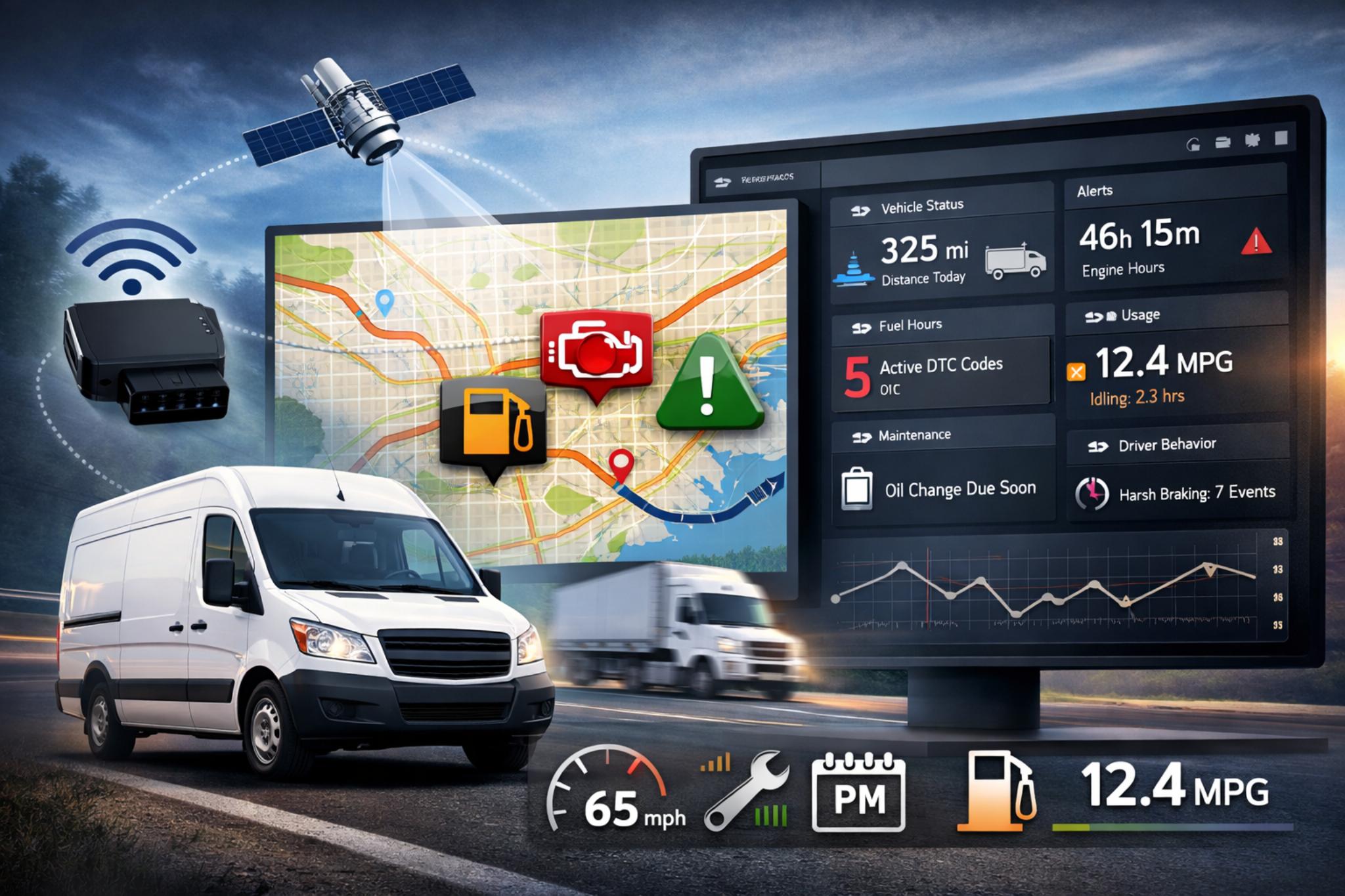
Telematics Data → Fleet Action
| Data Signal | What It Indicates | Ops Action | Example Metric |
|---|---|---|---|
| GPS Location | Vehicle position and route | Dispatch adjustment | Route deviation % |
| Odometer / Miles | Distance traveled | PM service trigger | Miles since last service |
| Engine Hours | Equipment usage intensity | Service interval check | Hours since oil change |
| Fault Codes (DTCs) | Mechanical or emission issues | Work order creation | Active fault count |
| Idle Time | Fuel waste and wear | Driver coaching | Idle minutes per trip |
| Harsh Events | Driving risk behavior | Safety review | Harsh brake events / 100 mi |
Real-Time Alerts vs Scheduled Sync for Operations

Real-Time Alerts
- Immediate notification of fault codes, collisions, or geofence breaches
- Supports urgent safety or breakdown prevention decisions
- Higher data frequency, higher notification volume
- Best for critical risk and uptime scenarios

Scheduled Sync
- Periodic data updates for mileage, hours, and utilization
- Suitable for maintenance planning and reporting cycles
- Lower system load and notification fatigue
- Best for structured PM and weekly/monthly reviews
Fleet Telematics Fundamentals for Fleet Operations
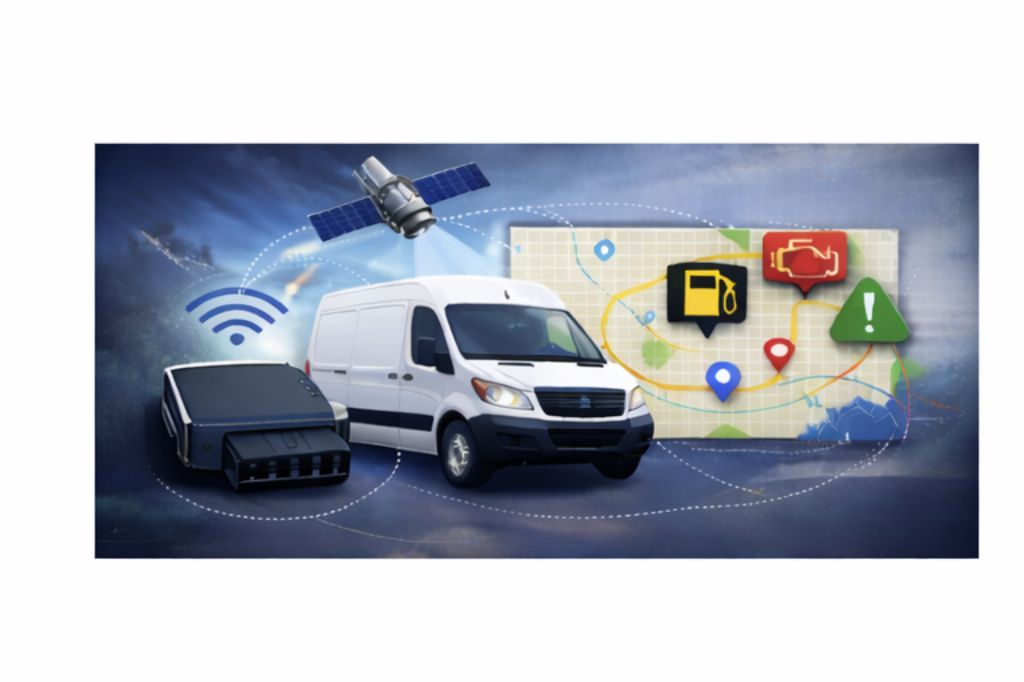
Telematics systems combine in-vehicle hardware with cloud software to collect, transmit, and interpret vehicle and driver data. The objective is not only tracking, but converting data into repeatable operational actions across maintenance, safety, and compliance workflows.
- GPS coordinates establish vehicle location, route history, and geofence activity
- Odometer and engine hour data determine preventive maintenance timing
- Diagnostic trouble codes (DTCs) reveal early mechanical or emissions issues
- Driver behavior signals (speeding, braking, cornering) inform safety programs
- Asset and trailer sensors extend visibility beyond powered vehicles
Operational outcome
- Consistent service intervals
- Reduced unplanned downtime
- Evidence-based safety reviews
Integration Use Cases That Matter Operationally
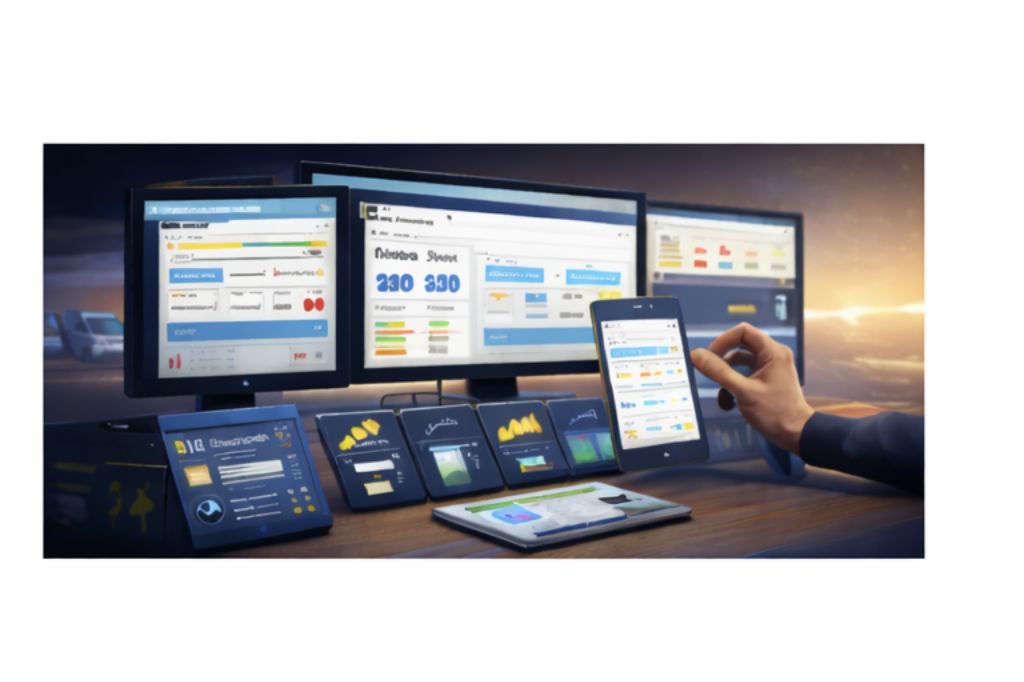
When telematics data is connected to a fleet maintenance or management platform, the value shifts from observation to automation. Integration allows raw signals to initiate standardized workflows rather than manual interpretation.
- Automatic PM triggers based on miles or engine hours
- Digital inspection scheduling tied to utilization or location
- Fuel and idle analytics linked to cost control measures
- Compliance documentation populated with trip and mileage logs
- Utilization reports guiding right-sizing or redeployment decisions
Operational outcome
- Fewer missed services
- Lower fuel waste
- Clear audit trails
Integration Architecture and Data Flow
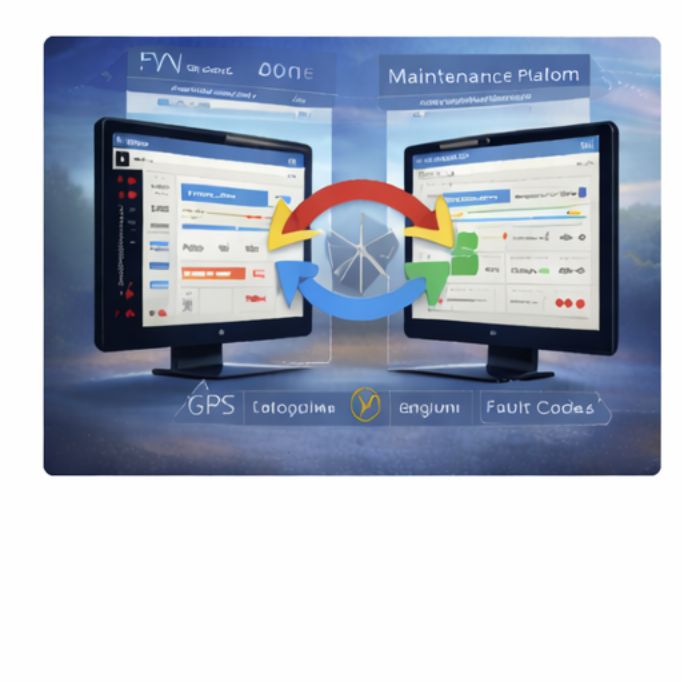
A telematics integration requires clear definition of system roles, data ownership, and synchronization rules. Without field mapping and validation logic, fleets may experience duplicate records, missed triggers, or inconsistent reporting.
- Define the “source of truth” for vehicles, drivers, and asset IDs
- Map core fields: vehicle ID, VIN, odometer, engine hours, fault codes
- Establish sync frequency based on operational need (real-time vs periodic)
- Validate incoming data ranges to prevent erroneous PM triggers
- Separate alert data (events) from reporting data (aggregates)
Operational outcome
- Accurate maintenance intervals
- Reliable dashboards
- Fewer reconciliation tasks

Implementation Steps and Operational Rollout
A structured rollout reduces disruption and exposes configuration issues before full deployment. Pilot phases allow fleets to validate hardware reliability, data accuracy, and staff readiness.
- Clean and standardize fleet records before device installation
- Install devices in a representative pilot group of vehicles or assets
- Verify odometer, engine hour, and location accuracy against manual checks
- Train maintenance and operations teams on alert handling and dashboards
- Expand deployment in phases with validation checkpoints
Operational outcome
- Lower implementation risk
- Faster user adoption
- Predictable scaling
Ongoing Operations, Governance, and Troubleshooting
After deployment, telematics integration requires periodic governance to maintain data quality and workflow reliability. Device swaps, vehicle replacements, and driver changes can introduce inconsistencies if not monitored.
- Audit vehicle and device pairings after maintenance or replacements
- Monitor missing or duplicated mileage and engine hour records
- Review alert thresholds to avoid notification overload
- Maintain retention policies for trip logs and inspection records
- Track KPIs such as downtime rate, PM compliance, and idle percentage
Operational outcome
- Stable long-term data accuracy
- Reduced manual corrections
- Continuous performance improvement
Final Takeaways
Fleet telematics integration is most effective when data signals are directly tied to repeatable operational actions rather than passive monitoring.
- Define system roles and data ownership before connecting platforms.
- Use mileage and engine hours as primary PM triggers.
- Separate urgent real-time alerts from scheduled reporting data.
- Validate field mappings to prevent duplicate or missed records.
- Review KPIs regularly to ensure the integration continues to deliver value.
AUTOsist Fleet Management Resources
What Is Fleet Maintenance Software
GPS Tracking for Fleets: OBD vs Wired Installation Guide
Daily DVIR Vehicle Inspection Checklist PDF

GPS Fleet Tracking