Fleet Utilization Analysis and Benchmarking
Fleet utilization analysis measures how effectively vehicles and assets are being used relative to their available capacity, while benchmarking compares that performance against internal targets or industry standards to identify gaps and improvement opportunities.
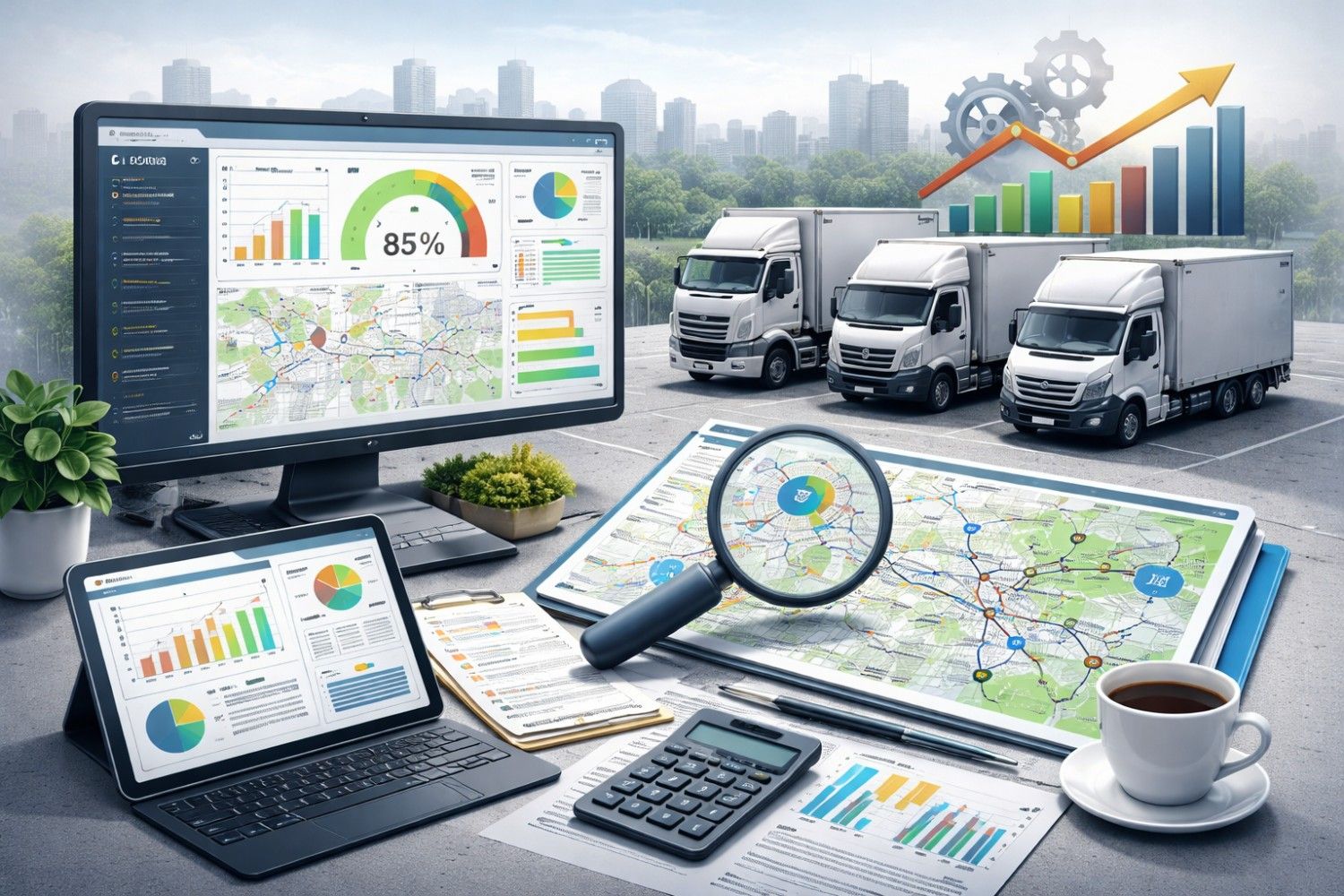
Data Sources for Utilization Analysis
| Data Source | What It Tracks | Contribution to Utilization | Example Use |
|---|---|---|---|
| Telematics systems | Vehicle movement and engine activity | Measures actual usage time and idle time | Identify underused vehicles |
| Maintenance logs | Downtime and service events | Tracks availability impact | Analyze downtime patterns |
| Driver reports | Trip activity and assignments | Captures operational usage context | Validate utilization data |
| Fuel data | Consumption patterns | Indicates active vs idle usage | Detect inefficiencies |
| Mileage tracking | Distance traveled | Core utilization metric | Compare asset productivity |
High Utilization vs Low Utilization Fleets

High Utilization Fleets
- Assets are consistently assigned and actively used
- Lower cost per mile due to better asset efficiency
- Maintenance is scheduled proactively to avoid downtime
- Fleet size is optimized with minimal idle assets

Low Utilization Fleets
- Vehicles spend significant time idle or unused
- Higher operating costs due to underutilized assets
- Reactive maintenance leads to unpredictable availability
- Excess vehicles increase capital and holding costs
Understanding Fleet Utilization Metrics
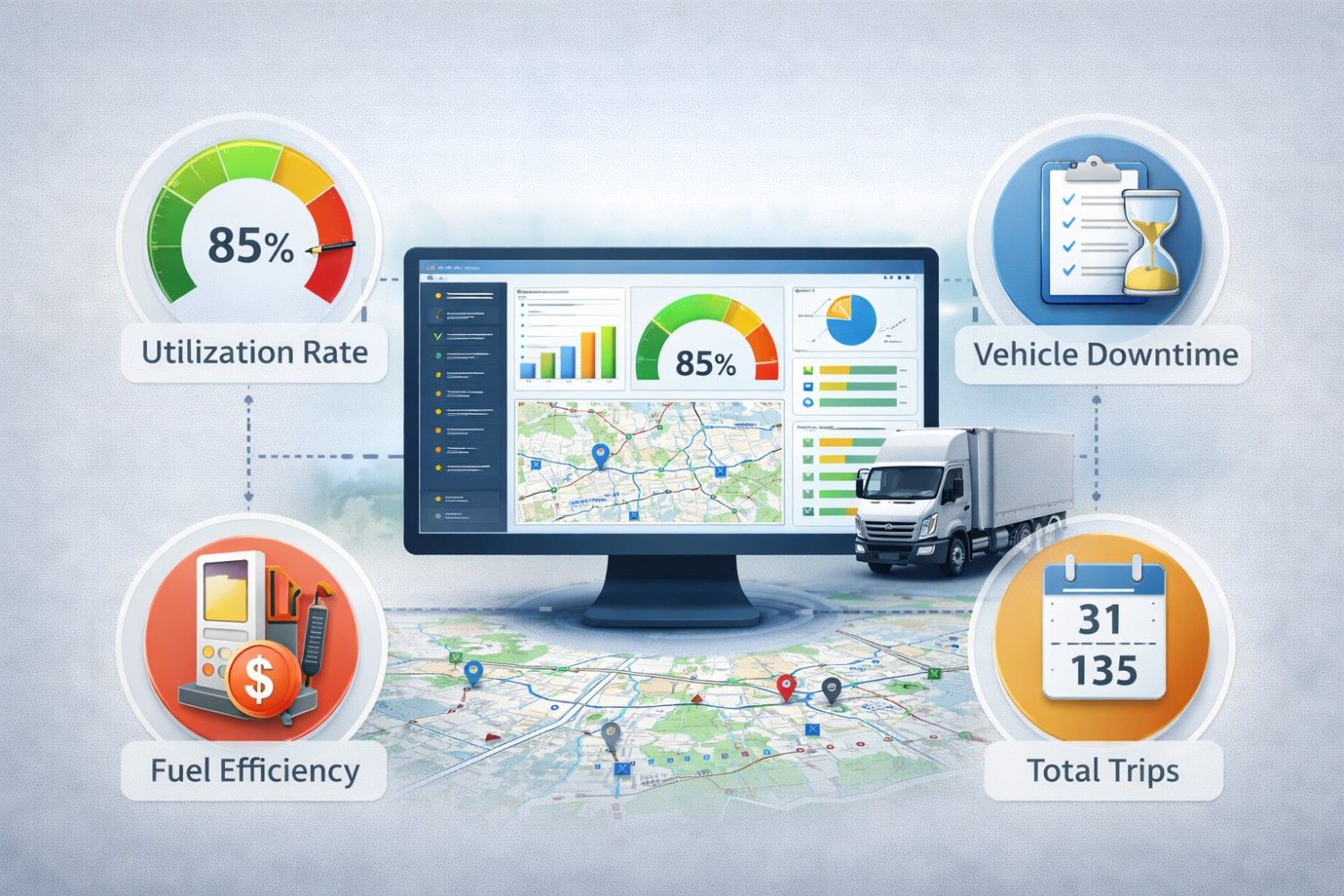
Fleet utilization is measured using a combination of time-based and activity-based metrics that reflect how assets are used in real operations. These metrics help determine whether vehicles are productive, idle, or unavailable.
Key metrics commonly used include:
- Utilization rate (active time vs total available time)
- Downtime percentage (maintenance and breakdown time)
- Idle time (engine running but not moving)
- Mileage or hours of operation per asset
- Asset availability (ready-for-use percentage)
These metrics should be interpreted together rather than in isolation.
Benchmarking Fleet Utilization
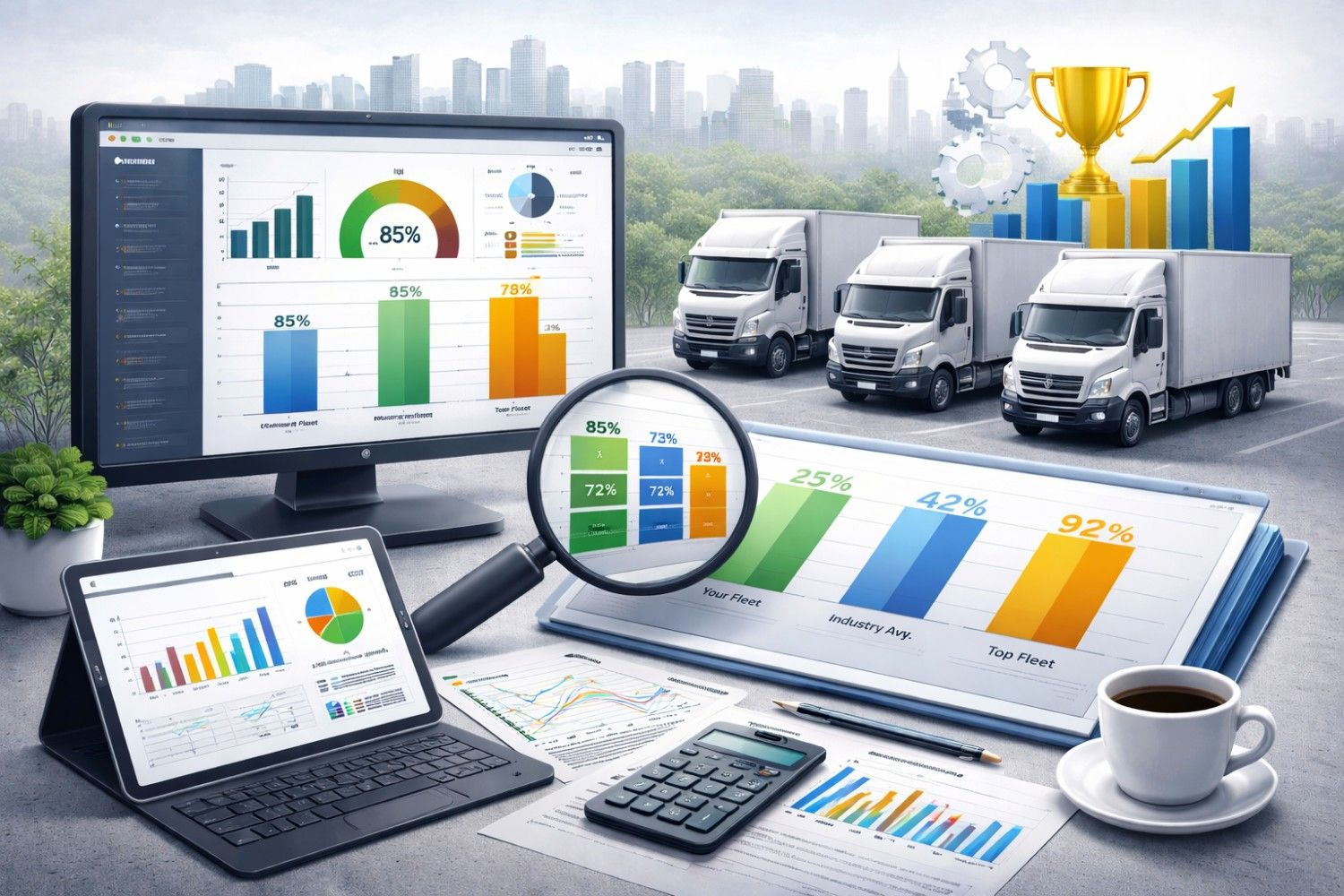
Benchmarking provides context for utilization performance by comparing current data against historical trends or external standards. This helps identify whether performance is improving or lagging.
Common benchmarking approaches include:
- Internal benchmarking across time periods or locations
- Cross-asset comparison within the same fleet
- Industry benchmarking using similar fleet types
- Comparing utilization against operational targets
- Identifying outliers in performance across vehicles
A structured benchmarking approach ensures that utilization insights lead to actionable decisions.
Methods for Analyzing Fleet Utilization
Utilization analysis requires consistent data collection and structured evaluation. The goal is to convert raw data into operational insights that can guide decisions.
Practical methods include:
- Aggregating data from telematics, maintenance, and fuel systems
- Segmenting fleets by vehicle type, role, or location
- Tracking trends over time to identify patterns
- Identifying underutilized or overutilized assets
- Correlating utilization with maintenance and cost data
Using a centralized system improves accuracy and reduces manual effort in analysis.

Improving Fleet Utilization Performance
Improving utilization focuses on aligning fleet size, scheduling, and operations with actual demand. This reduces waste and increases overall efficiency.
Operational strategies include:
- Reallocating underutilized vehicles to high-demand areas
- Right-sizing the fleet by removing excess assets
- Optimizing routing and scheduling
- Reducing idle time through driver policies and monitoring
- Improving maintenance planning to minimize downtime
Final Takeaways
Fleet utilization analysis and benchmarking provide a structured way to measure how effectively assets are used and where improvements are needed.
Key takeaways:
- Utilization must be measured using multiple metrics, not a single number
- Benchmarking provides context and helps identify performance gaps
- Data integration across systems improves accuracy and insights
- Underutilized assets increase costs and reduce efficiency
- Continuous monitoring enables ongoing optimization
AUTOsist Fleet Management Resources
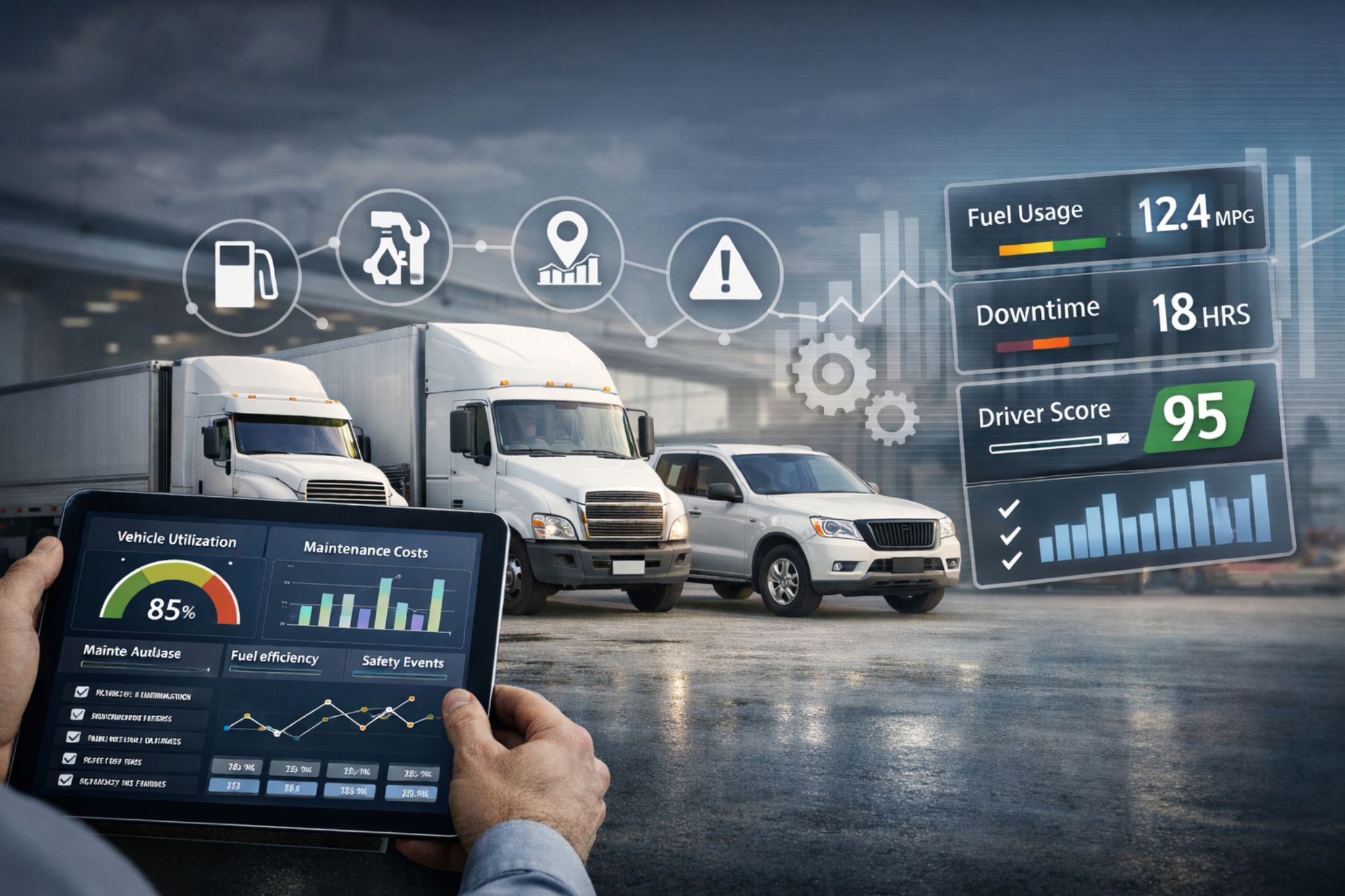
Fleet Performance Monitoring Guide

Fleet Optimization Strategies Guide
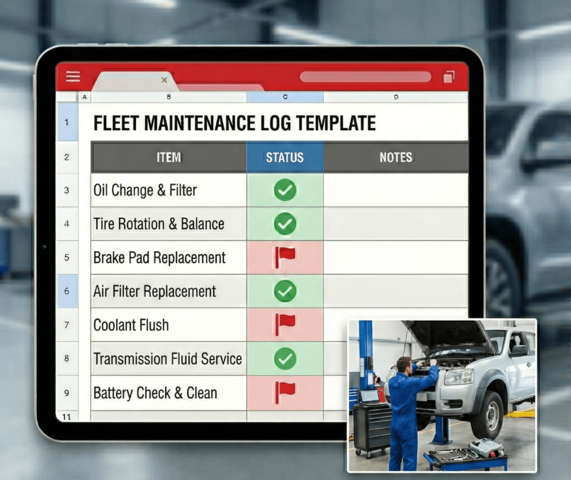
Fleet Maintenance Log Excel Template
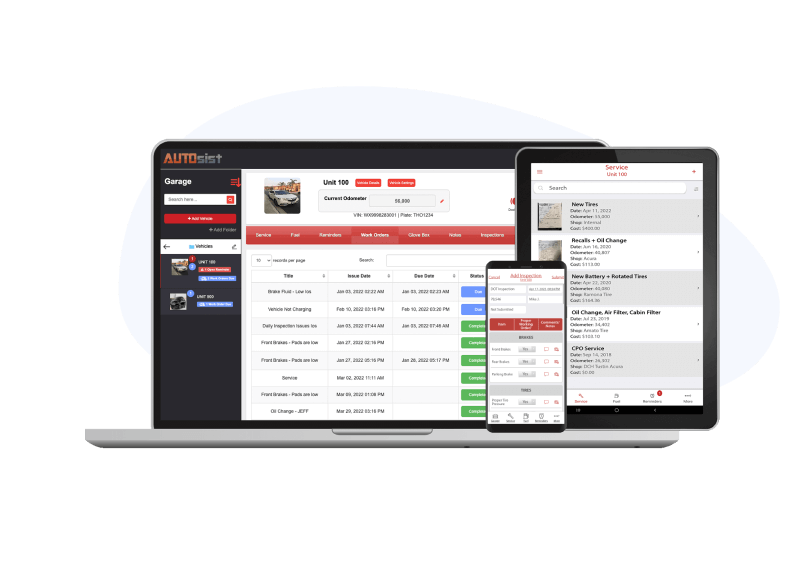
Fleet Management Software