GPS Tracking for Fleet Management
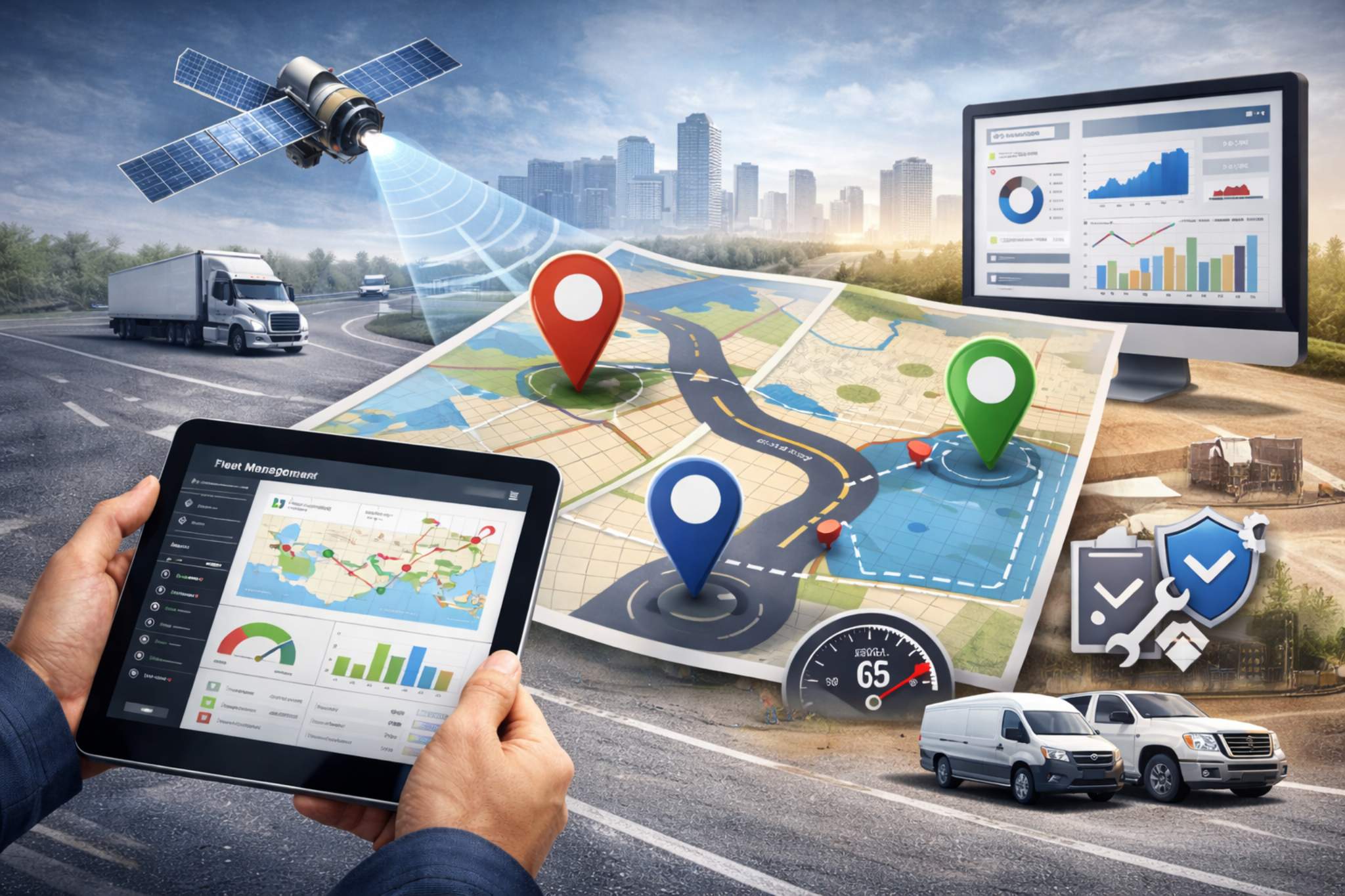
GPS tracking for fleet management uses location-based telematics data to monitor vehicles, drivers, and equipment in real time, enabling operational visibility, performance control, and compliance documentation across fleet operations.

GPS Device and Telematics Options Overview
| Option | Install effort | Data richness | Best fit fleets |
|---|---|---|---|
| OBD plug-in | Low | Moderate | Small to mid fleets |
| Hardwired device | Medium–High | High | Regulated or high-utilization fleets |
| Battery-powered tracker | Low | Basic | Trailers and assets |
| Mobile app tracking | Very low | Limited | Temporary or contractor vehicles |
| OEM embedded telematics | None (factory) | High | Newer vehicle fleets |
Standalone GPS Tracking vs Integrated Maintenance + Telematics Workflow

Standalone GPS Tracking
- Real-time vehicle location visibility
- Basic route playback and trip history
- Geofencing alerts
- Speed and idling monitoring

Integrated Maintenance + Telematics Workflow
- Automated mileage-based preventive maintenance triggers
- Consolidated service history tied to actual usage
- Integrated compliance documentation
- Fleet performance reporting across maintenance and operations
GPS Tracking Fundamentals in Fleet Operations
GPS tracking systems collect, transmit, and store vehicle movement and event data through satellite positioning combined with cellular communication networks. In fleet environments, this data supports oversight, scheduling, and accountability.
Key operational components include:
- Real-time vehicle location monitoring
- Historical trip playback and route verification
- Geofence configuration for job sites or facilities
- Speed and harsh driving event capture
- Engine hour and mileage accumulation tracking
When integrated with fleet management systems, usage data can directly support maintenance scheduling, inspection planning, and asset lifecycle decisions.
Operational outcomes:
- Improved dispatch visibility
- Reduced unauthorized vehicle use
- More accurate service interval tracking
Device Types, Installation Methods, and Data Quality
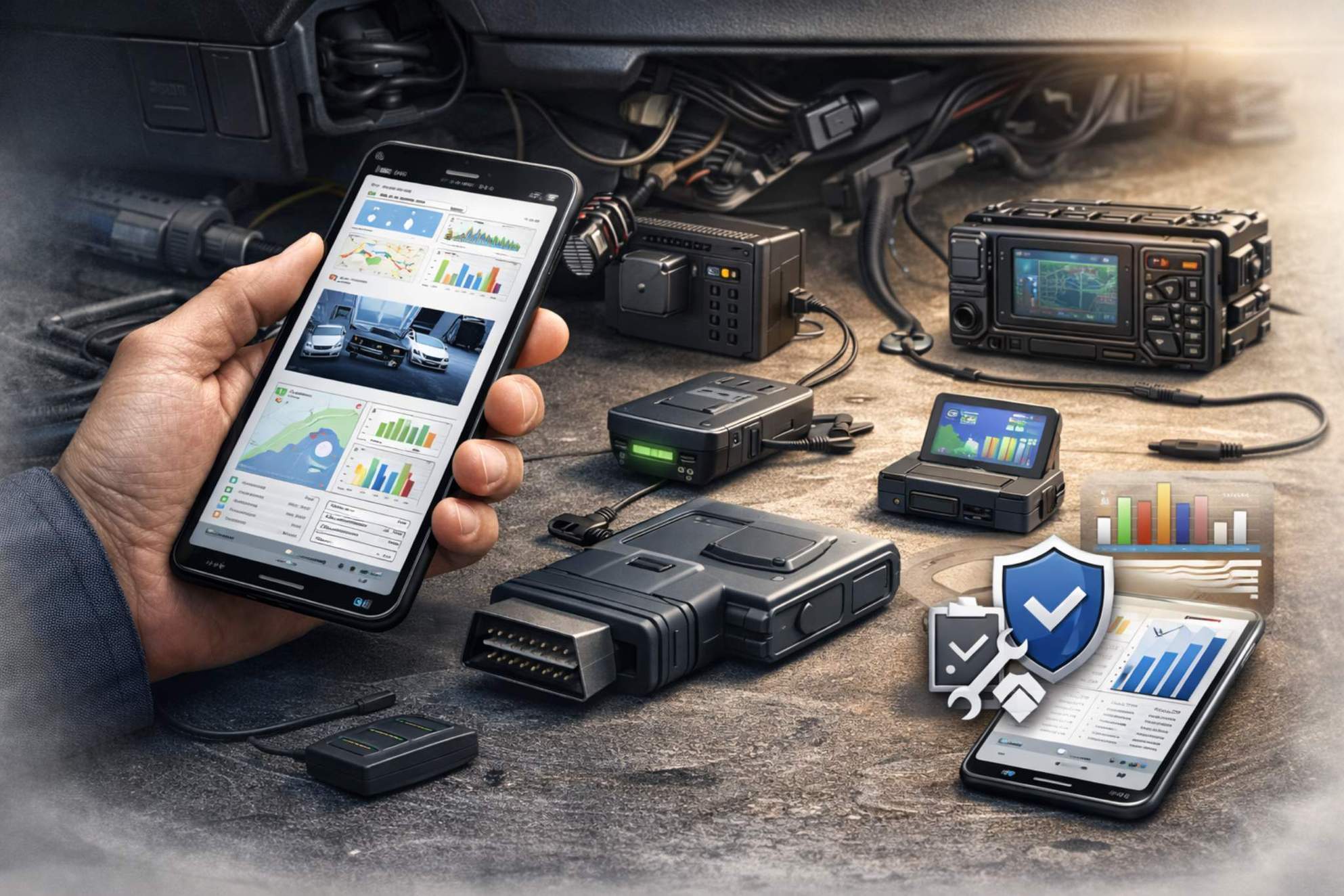
The effectiveness of GPS tracking depends on device type, installation method, and data reliability. Selection should be aligned with fleet size, vehicle mix, and compliance requirements.
Important evaluation factors include:
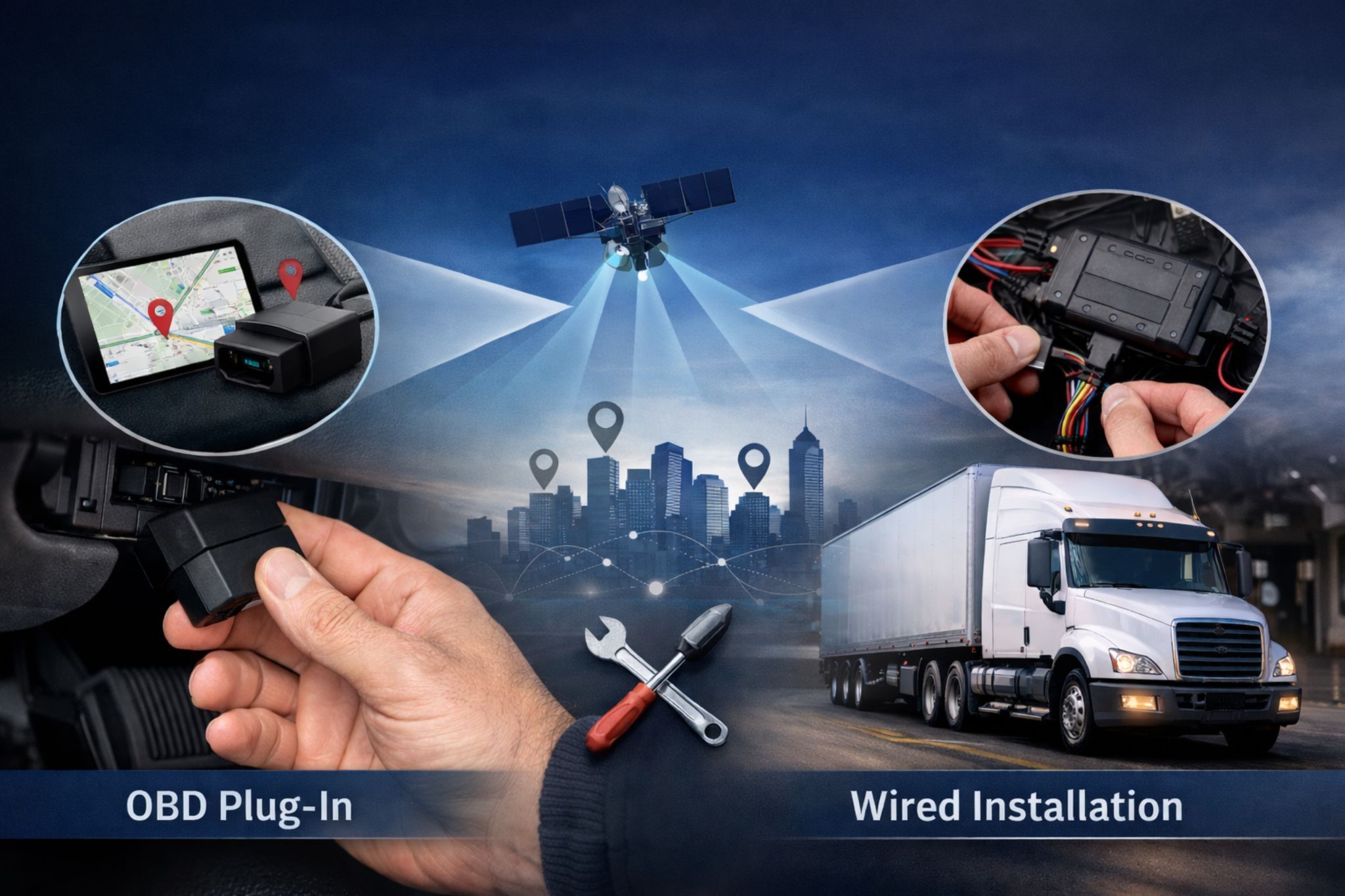
- Installation method (OBD vs hardwired)
- Power source stability
- Data transmission frequency
- Tamper resistance
- Integration capability with maintenance systems
For fleets evaluating installation tradeoffs, the GPS tracking for fleets OBD vs wired installation guide provides deeper technical considerations.
Battery-powered devices are commonly used for trailers and non-powered assets, while hardwired installations are often selected for high-value vehicles or regulated fleets.
Risk controls:
- Define standard installation procedures
- Document device assignments per vehicle
- Validate data accuracy during pilot phase
Operational Use Cases and Performance Metrics
GPS tracking supports both short-term operational control and long-term performance analysis. To extract value, fleets should define clear use cases and measurable outcomes.
Common operational applications include:
- Route optimization and dispatch validation
- Fuel consumption analysis
- Idling time reduction initiatives
- Driver behavior monitoring
- Theft recovery and asset security
Performance measurement should align with defined fleet KPIs. Fleets can reference fleet maintenance KPIs with formulas to align tracking data with broader performance metrics.
Measurable indicators:
- Idle time per vehicle
- Miles driven per day
- On-time arrival rate
- Utilization rate
- Maintenance interval adherence


Selection, Deployment, and Governance Controls
GPS tracking deployment requires policy alignment, technical integration, and structured governance. Implementation should be planned as an operational program, not just a device installation project.
Key deployment steps include:
- Define data ownership and access permissions
- Establish driver notification and privacy policy
- Create exception review workflows
- Align GPS data with maintenance scheduling logic
- Integrate telematics data with fleet management reporting
Fleets evaluating integrated approaches may review fleet management software buyer's guide to understand system-level considerations.
Structured governance ensures tracking data contributes to compliance documentation, audit readiness, and operational transparency rather than creating unmanaged data volume.
Final Takeaways
GPS tracking in fleet management is most effective when aligned with maintenance workflows, compliance documentation, and measurable performance objectives.
- Select device type based on operational risk and vehicle mix.
- Define measurable KPIs before deployment.
- Align telematics data with preventive maintenance logic.
- Establish governance controls and privacy policies.
- Integrate tracking data into centralized fleet reporting.
AUTOsist Fleet Management Resources
GPS Tracking for Fleets: OBD vs Wired Installation Guide

Fleet Maintenance KPIs (With Formulas)

Fleet Management Software Buyer's Guide

GPS Fleet Tracking