Vehicle Safety Inspection: Complete 2026 Fleet Guide
Vehicle safety inspections are structured evaluations of a fleet vehicle’s mechanical condition, safety systems, and regulatory compliance status. Consistent inspection programs help fleets reduce breakdown risk, improve driver safety, and maintain audit-ready maintenance records.

Inspection Record Fields and Data Points
| Field Category | Example Entry | Purpose | Responsible Role |
|---|---|---|---|
| Vehicle Details | Unit ID / VIN | Asset identification | Driver / Admin |
| Inspection Type | Daily / Annual | Defines depth and scope | Fleet Manager |
| Defect Status | Minor / Major | Risk classification | Technician |
| Corrective Action | Work Order # | Repair traceability | Maintenance Team |
| Date & Time | 2026-03-12 08:10 | Audit trail | Driver / System |
Paper-Based Inspections vs Digital Inspections

Paper-Based Inspections
- Slower form completion and manual filing
- Higher risk of lost or damaged records
- Limited real-time visibility for managers
- Error-prone handwriting and duplicate entry

Digital Inspections
- Faster submission and centralized storage
- Automatic timestamps and asset linkage
- Real-time defect alerts and dashboards
- Easier audit preparation and record retrieval
What a Vehicle Safety Inspection Covers in Fleet Operations
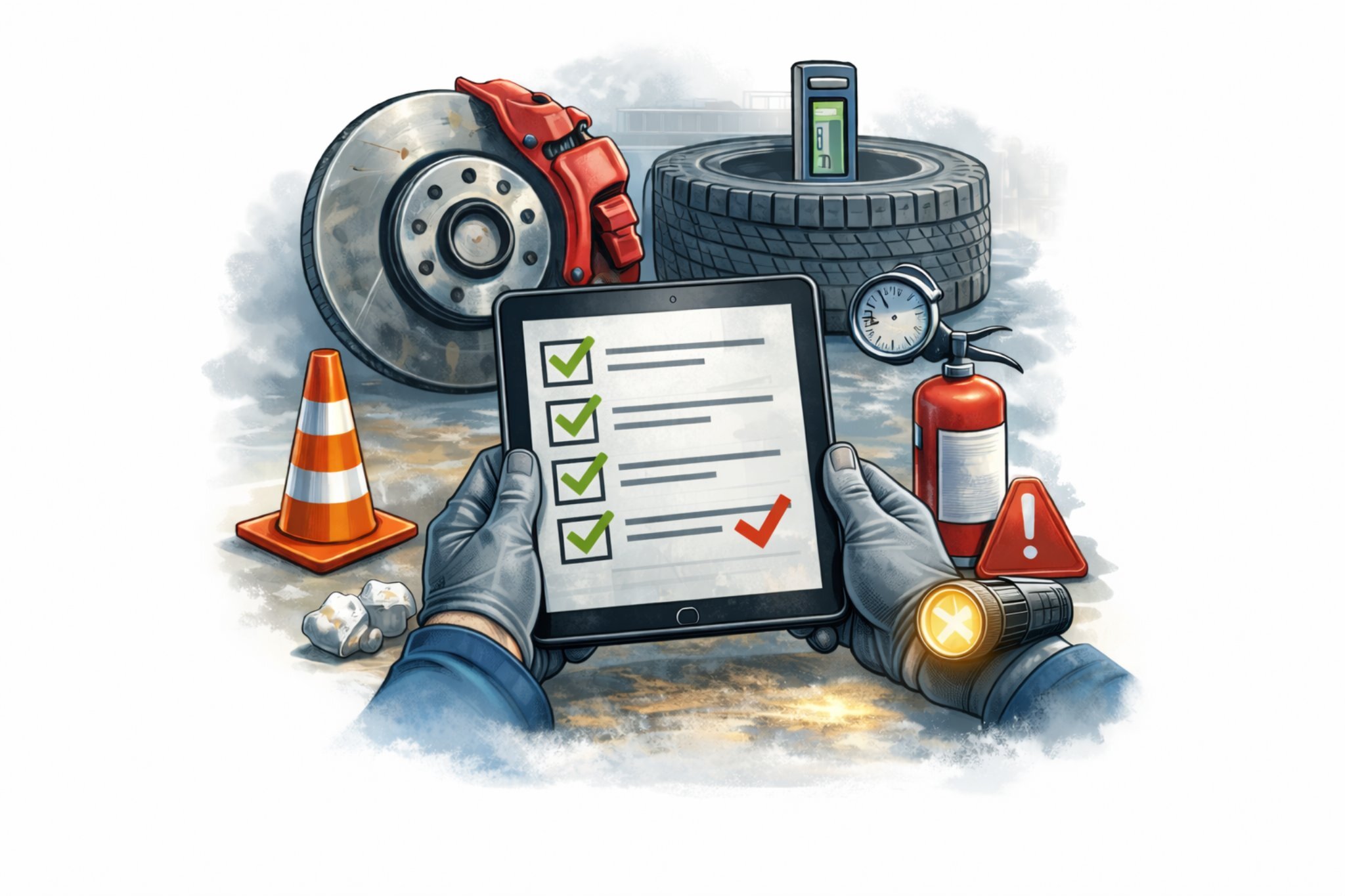
A safety inspection evaluates the condition and functionality of critical vehicle systems that directly affect roadworthiness and legal compliance. The scope varies by fleet type, vehicle class, and operating environment, but core safety components remain consistent.
- Brake system performance and wear indicators
- Tire tread depth, pressure, and sidewall integrity
- Exterior and interior lighting functionality
- Steering, suspension, and alignment condition
- Safety equipment presence (extinguishers, triangles, PPE)
Operational Outcome
- Early defect detection
- Reduced roadside failures
- Improved driver confidence

Daily, Periodic, and Annual Inspection Frameworks
Fleet inspections typically operate on multiple intervals to balance operational speed with technical depth. Daily driver checks focus on visible and functional items, while scheduled and annual inspections address mechanical and regulatory requirements.
- Daily walk-around checks before and after shifts
- Periodic inspections tied to mileage or engine hours
- Annual or regulatory inspections by certified technicians
- Seasonal inspections for weather-specific risks
- Post-incident inspections following accidents or major repairs
Operational Outcome
- Layered safety assurance
- Predictable maintenance planning
- Reduced compliance exposure
Building a Standardized Fleet Inspection Process
Standardization ensures inspection consistency across vehicles, drivers, and locations. A repeatable process reduces subjective judgment and creates uniform data for analysis and audits. Many fleets reference structured resources such as a vehicle inspection checklist and formal guides like the Vehicle Inspection Guide and Fleet Compliance Guide to maintain consistency.
- Define inspection frequency by vehicle class and usage
- Use uniform checklists across all locations
- Assign accountability to drivers and supervisors
- Train staff on defect identification criteria
- Review and update inspection standards quarterly
Operational Outcome
- Consistent inspection quality
- Easier cross-location management
- Clear accountability lines

Recording, Reporting, and Corrective Action Control
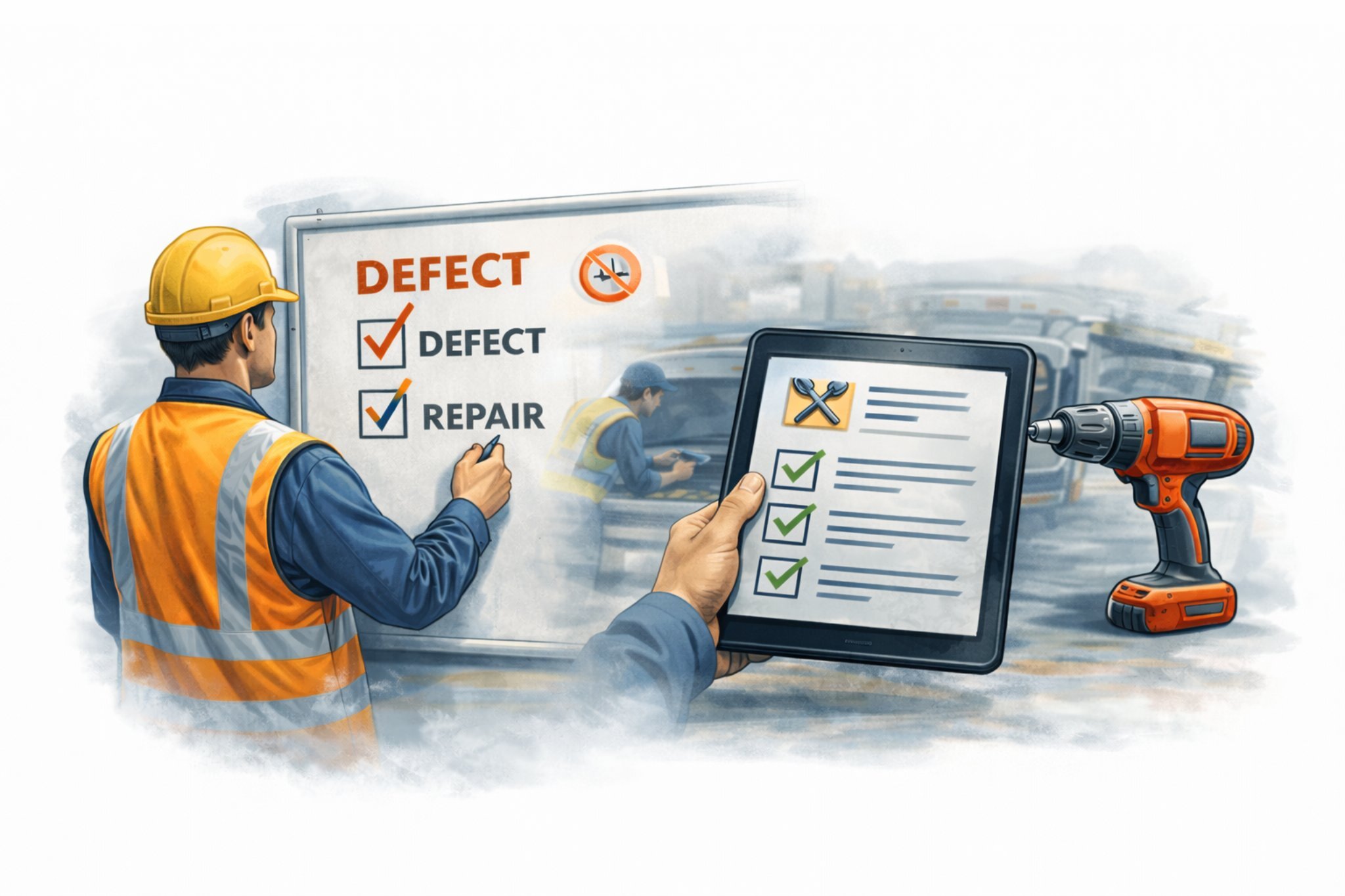
Inspection value depends on accurate documentation and timely follow-through. Recording defects without corrective action creates compliance gaps and operational risk. Centralized digital records and linked work orders improve response speed and traceability.
- Capture inspection data with timestamps and user IDs
- Classify defects as minor, major, or out-of-service
- Generate work orders immediately for critical faults
- Track repair completion and verification checks
- Maintain historical inspection logs for each asset
Operational Outcome
- Faster repair cycles
- Clear audit trails
- Improved maintenance forecasting
Compliance, Risk Management, and Audit Readiness
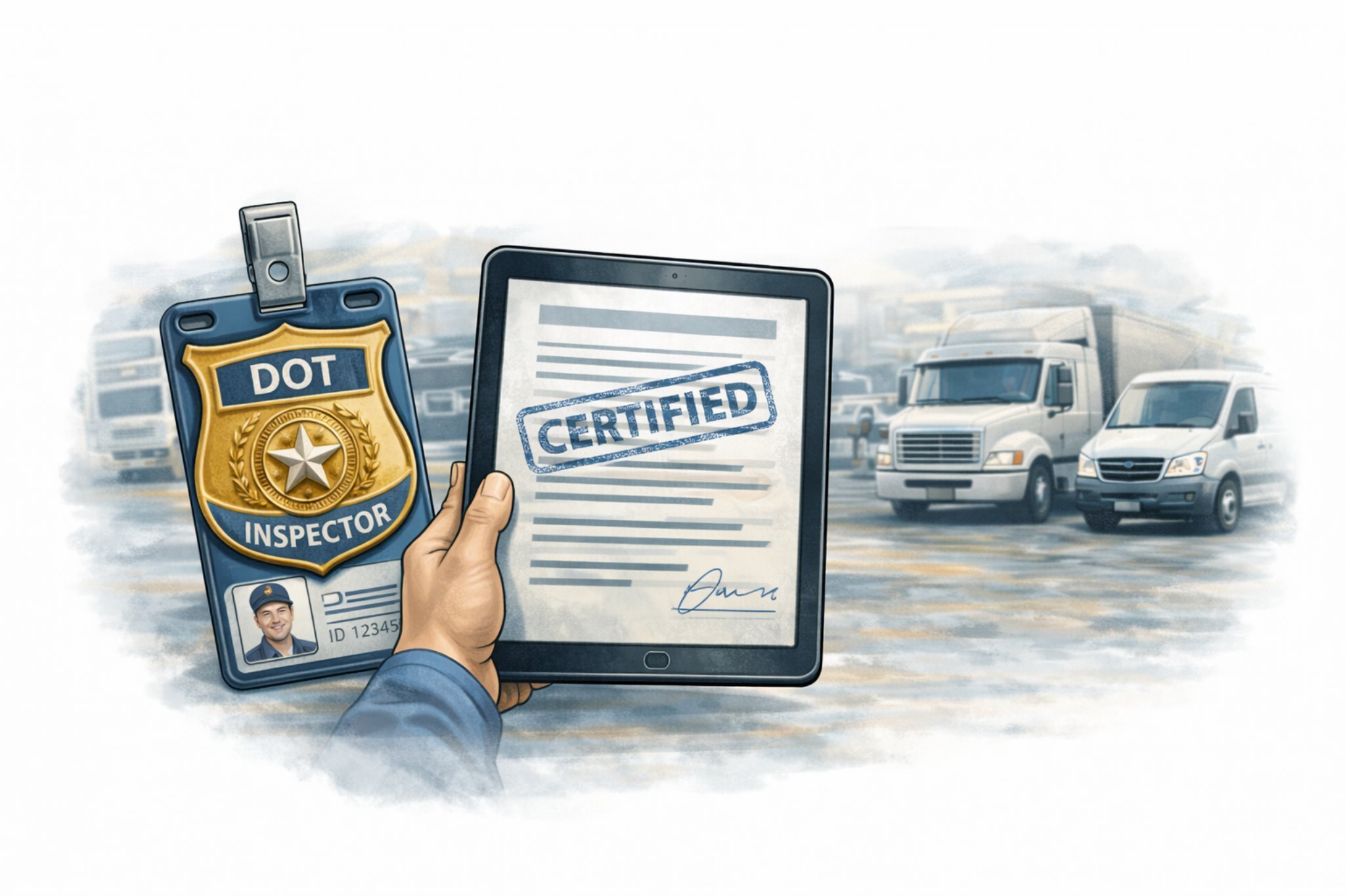
Regulatory inspections and internal audits require organized documentation and consistent processes. Fleets that maintain structured inspection histories and corrective action records are better positioned to pass audits and defend liability claims.
- Retain inspection records according to jurisdiction rules
- Conduct internal audit simulations quarterly
- Align inspection criteria with DOT or regional standards
- Monitor recurring defect patterns and root causes
- Maintain technician certifications and training logs
Operational Outcome
- Stronger legal defensibility
- Reduced insurance risk
- Predictable compliance performance
Final Takeaways
A structured vehicle safety inspection program is a core control system for fleet reliability, safety, and compliance. Consistency, documentation accuracy, and timely repairs determine its effectiveness.
- Standardize inspection checklists and frequencies across the fleet.
- Record every inspection with clear timestamps and asset identifiers.
- Link detected defects directly to corrective work orders.
- Retain organized inspection histories for audits and liability defense.
- Review inspection data regularly to identify recurring risks.
AUTOsist Fleet Management Resources
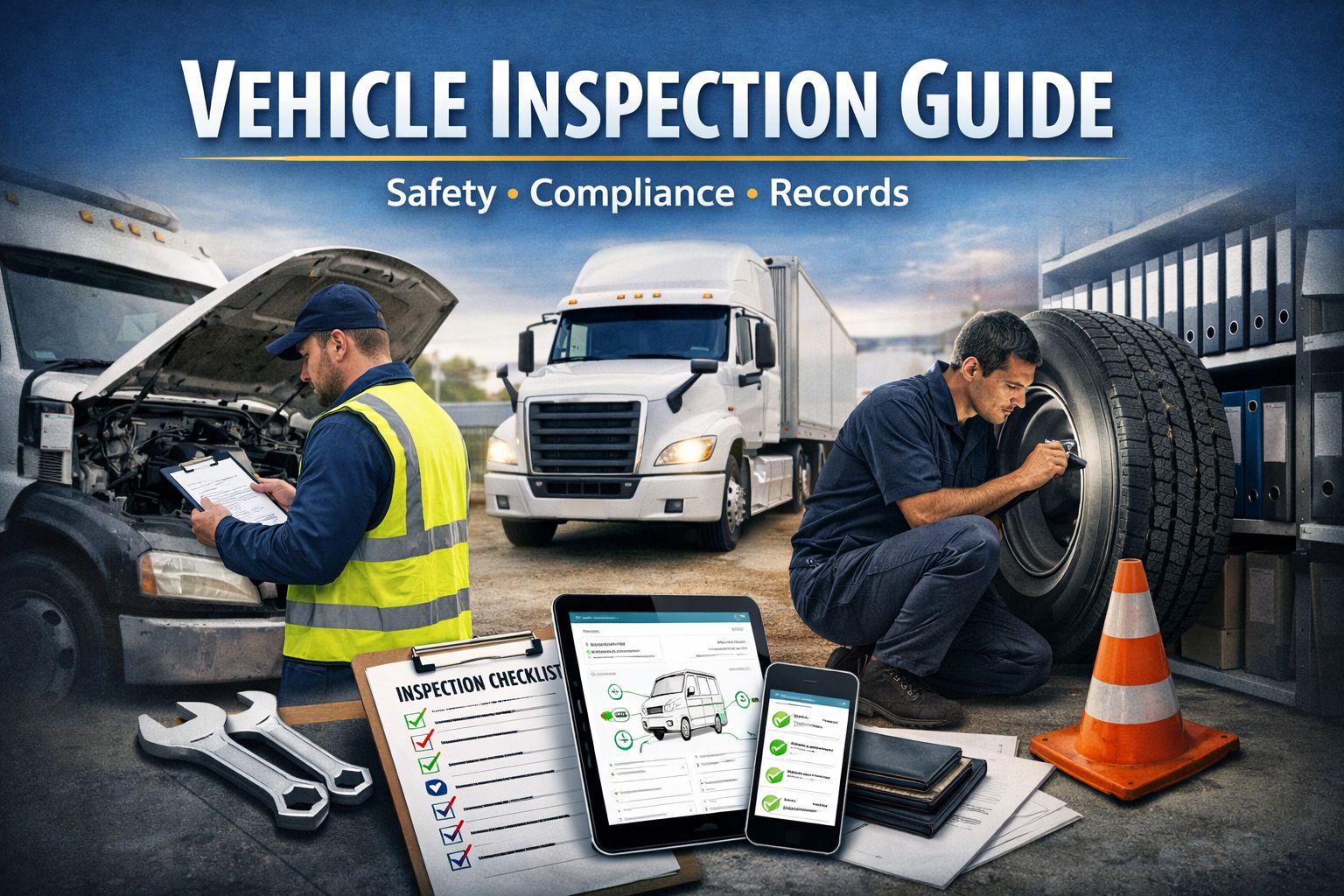
Vehicle Inspection Guide

Fleet Compliance Guide

Vehicle Inspection Checklist
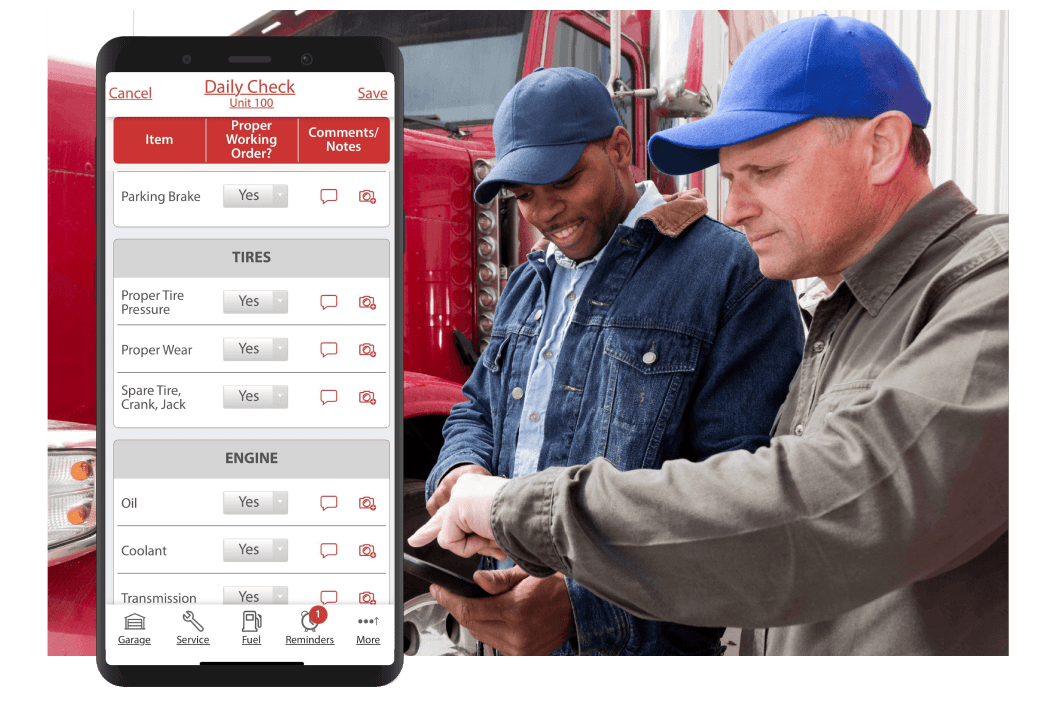
Digital Vehicle Inspection App