Work Order Management Software for Fleets
Work order management software for fleets is a structured digital system used to create, assign, track, and close maintenance tasks across vehicles and equipment. It directly impacts maintenance cost control, technician accountability, compliance documentation, and overall fleet uptime.
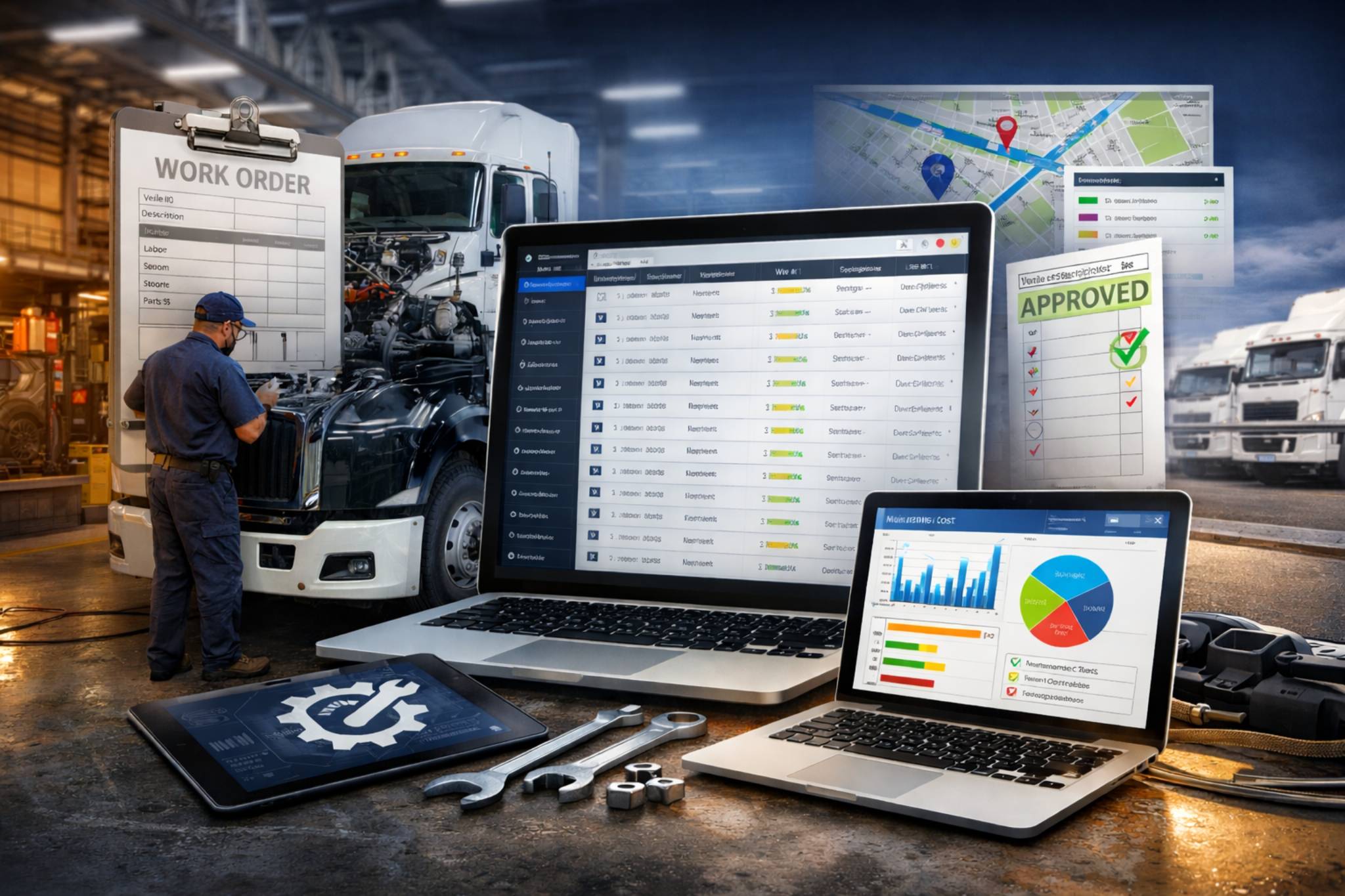
Manual vs Software-Based Work Order Tracking
| Area | Manual Process | Software-Based Process | Operational Effect |
|---|---|---|---|
| Record Keeping | Paper files | Centralized digital records | Faster retrieval |
| Cost Tracking | Separate logs | Automated cost aggregation | Accurate reporting |
| Approval Flow | Verbal/email | System workflow | Controlled spending |
| Audit Support | Manual search | Searchable history | Faster compliance review |
| Reporting | Manual compilation | Real-time dashboards | Data-driven decisions |
Standalone Work Order System vs Integrated Fleet Platform

Standalone Work Order System
- Focused only on repair task tracking
- Limited connection to preventive maintenance schedules
- Often requires manual data re-entry
- Reporting limited to repair history

Integrated Fleet Platform
- Connected to preventive maintenance triggers
- Centralized vehicle service history
- Integrated parts, labor, and cost tracking
- Unified reporting across maintenance operations
What Work Order Management Software Does in Fleet Operations
Work order management software standardizes how maintenance activities are requested, authorized, completed, and documented across a fleet. It replaces fragmented tracking systems with a structured lifecycle.
- Digitally create and assign work orders to technicians
- Track labor hours, parts usage, and associated costs
- Record technician notes and service findings
- Capture completion status and approval confirmations
- Maintain searchable historical repair records
Operational outcome:
- Clear visibility into open and completed repairs
- Reduced administrative errors
- Consistent documentation for audits
For fleets evaluating broader maintenance structure, this connects directly to principles outlined in the guide to fleet maintenance software.
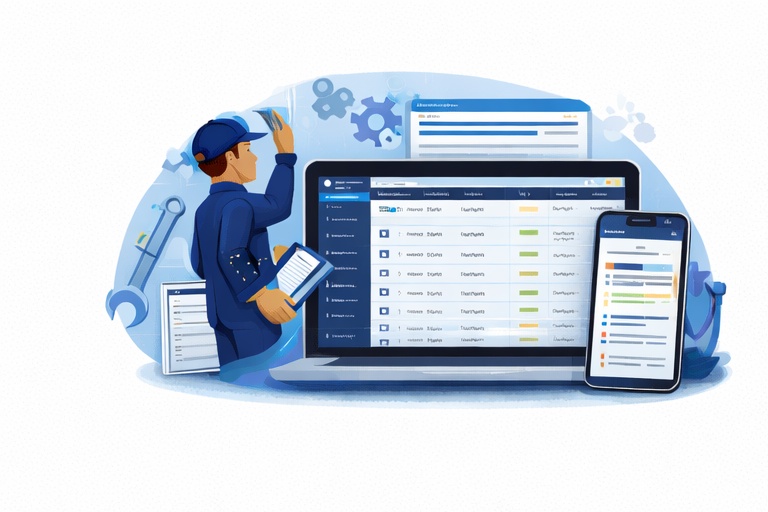

Core Capabilities to Evaluate in Fleet Work Order Systems
Selecting a system requires evaluating functionality beyond simple repair logging. Work order management should support cost control, accountability, and compliance readiness.
- Standardized digital work order templates
- Parts and inventory integration
- Labor time tracking by technician
- Status workflows with approval checkpoints
- Reporting dashboards for maintenance KPIs
Fleets that already operate structured maintenance programs should ensure work order tools align with their preventive maintenance strategy.
Operational outcome:
- Improved repair cost transparency
- Better technician performance tracking
- Stronger maintenance planning accuracy
Implementation, Data Governance, and Process Controls
Transitioning from manual systems to digital work order software requires defined workflows, data standards, and permission controls.
- Define user roles and approval authority
- Standardize work order categories and codes
- Establish documentation retention rules
- Integrate preventive maintenance triggers
- Train technicians on consistent data entry
For fleets currently using paper processes, structured documentation such as a work order template can help formalize inputs before full system adoption.
Operational outcome:
- Controlled repair authorization
- Consistent service documentation
- Improved audit traceability


Cost Structure, ROI, and Risk Reduction Factors
Work order management software influences both direct repair costs and indirect downtime risk. ROI is measured through improved visibility and structured maintenance control.
- Accurate tracking of labor and parts spend
- Reduced repeat repairs due to documentation clarity
- Faster repair turnaround through workflow visibility
- Improved audit readiness for inspections
- Better forecasting of maintenance budgets
Integrated platforms such as fleet maintenance management software reduce duplication between work orders, inspections, and preventive maintenance scheduling.
Operational outcome:
- Lower administrative overhead
- Reduced unplanned downtime
- Stronger financial oversight
Final Takeaways
Work order management software provides operational structure to fleet maintenance activities and strengthens cost, compliance, and performance control.
- Digital workflows reduce repair delays and documentation gaps.
- Integrated cost tracking improves maintenance budgeting accuracy.
- Structured approval flows limit unauthorized repair spend.
- Centralized records support compliance audits and inspections.
- Integration with preventive maintenance improves uptime control.
AUTOsist Fleet Management Resources
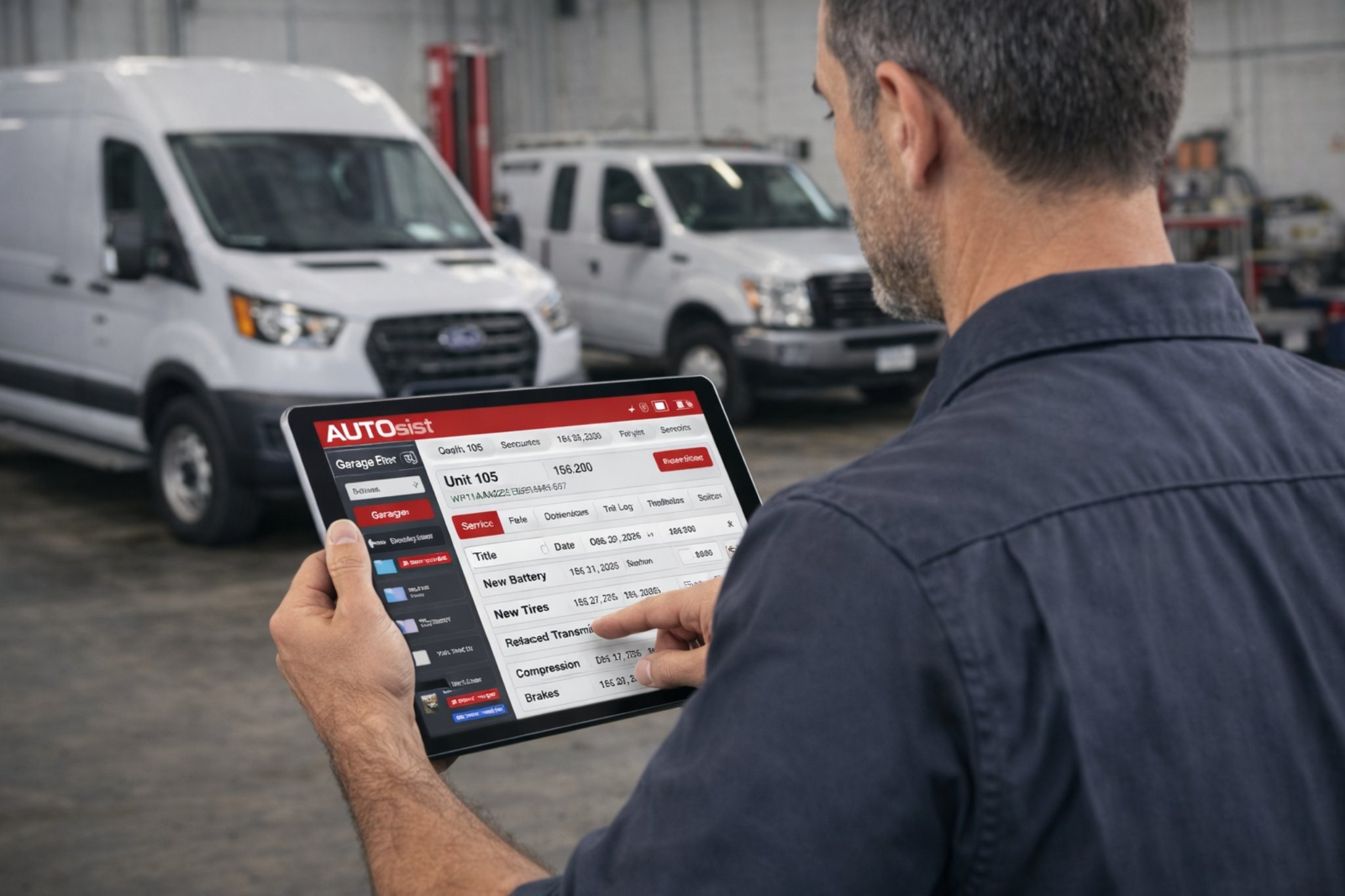
What Is Fleet Maintenance Software

Vehicle Inspection Guide for Fleets
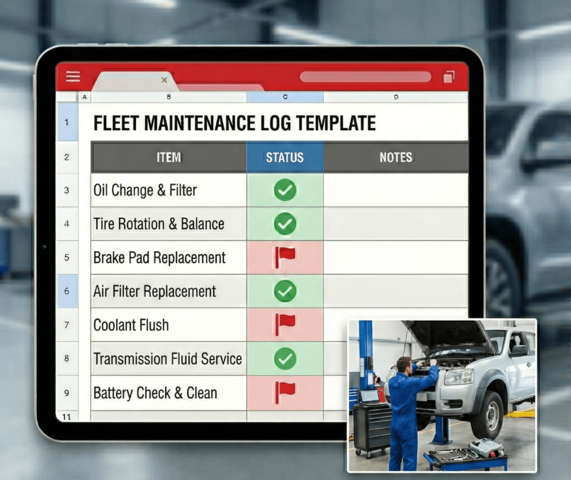
Fleet Maintenance Log Excel Template

Fleet Safety Guide for Fleet Operations