 AUTOsist Team
Feb 04, 2026
Bad Wheel Alignment Symptoms in Fleet Vehicles: Signs, Costs, and Prevention Guide
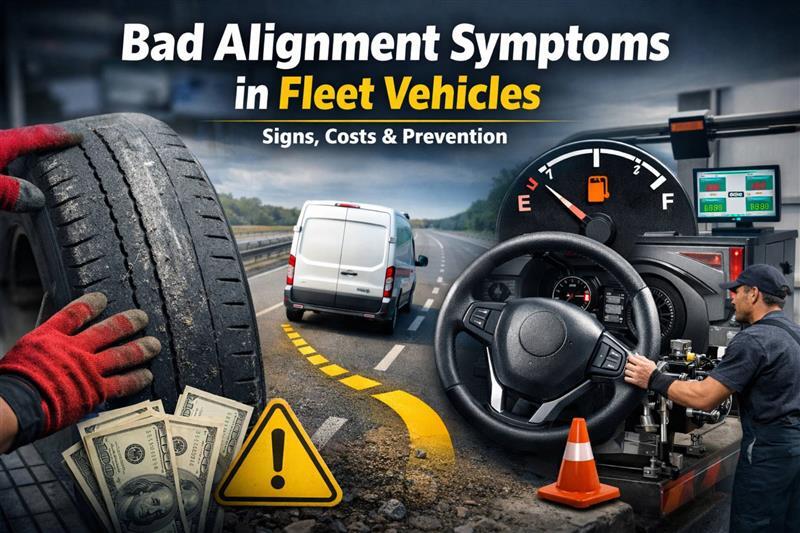
Key Takeaways: Protecting Your Fleet from Alignment Issues
- Uneven tire wear is the earliest red flag. Catching it early prevents thousands in premature tire replacements.
- Pulling and wandering reduce driver safety. Even mild drift increases fatigue and accident probability.
- Fuel efficiency drops quietly. A 2–3% loss scales quickly across multi-vehicle fleets.
- Regular inspections save money. Quarterly or mileage-based checks reduce long-term repair costs.
- Data tracking improves visibility. Maintenance logs and inspection records reveal patterns before failures occur.
- Alignment integrates with preventive maintenance. Pairing it with rotations and inspections maximizes uptime.
- Small corrections prevent large expenses. A $100 alignment today can prevent a $1,000 tire replacement tomorrow.
What Is Wheel Alignment and Why It Matters for Fleet Vehicles
Wheel alignment refers to how a vehicle’s wheels are positioned relative to each other and the road. When alignment is correct, tires sit perfectly straight, distribute weight evenly, and roll with minimal resistance. When it’s off—even slightly—every mile driven creates extra friction, uneven wear, and unnecessary fuel burn.
Fleet managers typically hear three technical terms associated with alignment:
- Camber – inward or outward tilt of the tire when viewed from the front
- Caster – angle of the steering axis that affects stability and cornering
- Toe – whether tires point inward or outward when viewed from above
For a single personal vehicle, misalignment is an inconvenience. For a fleet of 25 delivery vans or 80 service trucks, it becomes a cost multiplier. Poor alignment shortens tire life, reduces fuel efficiency, and increases accident risk. A van that burns just 0.5 extra gallons per day due to rolling resistance can waste $700–$1,000 annually. Multiply that across 30 vehicles and alignment becomes a budgeting issue, not just a maintenance task.
Alignment also directly impacts driver comfort and safety. Drivers dealing with constant steering corrections or vibration experience fatigue faster, which increases the likelihood of mistakes and collisions. In fleet operations where uptime and reliability define success, alignment is not optional—it’s operational hygiene.
8 Warning Signs Your Fleet Vehicles Have Alignment Issues
Uneven or Rapid Tire Wear
One of the earliest and most visible symptoms is irregular tire wear. Misalignment creates distinctive patterns such as inside edge wear, outside shoulder wear, or feathering across tread blocks. Unlike normal wear, these patterns appear quickly and unevenly.
Fleet managers should differentiate alignment wear from under-inflation or suspension damage. Alignment wear usually shows consistent directional patterns, while pressure issues cause more uniform wear across both tires. Ignoring this sign often leads to replacing tires 10,000–20,000 miles earlier than expected. For a 15-vehicle fleet replacing tires at $700 per set, premature wear can exceed $10,000 per year.
Vehicle Pulling to One Side
When drivers report the vehicle drifting left or right on a straight road, alignment is a prime suspect. A simple test is releasing the steering wheel briefly on a level road—if the vehicle veers quickly, alignment likely needs correction.
Pulling is dangerous because it forces constant steering adjustments, increases fatigue, and reduces reaction time. However, not every pull equals alignment. Tire pressure differences or brake drag can also cause it. The key indicator is consistent directional pull across multiple roads and speeds.
Off-Center Steering Wheel
If the steering wheel sits crooked while driving straight, the wheels are not aligned with the steering system. Drivers often compensate unconsciously, but this constant correction accelerates tire wear and strains steering components.
An off-center wheel is also a compliance and safety concern. It signals that alignment has been off for some time and may already be affecting suspension parts. Fleets with frequent curb impacts or tight urban routes see this issue more often.
Steering Wheel Vibration
Vibration usually appears at highway speeds and can stem from both alignment and tire balance issues. Balance problems cause rhythmic shaking, while alignment vibration often feels more directional and increases during acceleration.
Fleet managers should investigate vibration quickly because it can mask deeper issues such as worn ball joints or bent rims. Vehicles that vibrate regularly also cause driver dissatisfaction and increased maintenance complaints.
Squealing Tires
Tires that squeal during normal turns or low-speed maneuvers may indicate misalignment. The sound results from tires dragging instead of rolling freely. This friction raises tire temperatures and accelerates degradation.
Squealing is often ignored because it doesn’t always feel dangerous, but it represents wasted energy and excess fuel consumption. Over time, this symptom can evolve into more severe steering instability.
Poor Handling and Wandering
Vehicles with alignment issues often feel loose, unstable, or difficult to control. Drivers describe it as “floating” or “wandering.” This symptom directly affects confidence and increases the probability of lane departure incidents.
Handling issues are especially risky for larger fleet vehicles such as cargo vans or light trucks carrying equipment. The heavier the load, the more pronounced the instability becomes.
Decreased Fuel Efficiency
Misalignment increases rolling resistance, forcing the engine to work harder. Even a 2–3% drop in efficiency becomes significant at fleet scale. For a 20-vehicle fleet averaging 20,000 miles annually, a small efficiency loss can equal $3,000–$6,000 in extra fuel costs.
Tracking fuel trends through dashboards or analytics tools helps identify this silent symptom before tire wear becomes visible.
Loose or Unstable Steering Feel
Severe misalignment can create a delayed or unresponsive steering feel. This condition signals advanced wear and potential suspension damage. Vehicles at this stage require immediate service to avoid costly repairs or accidents.
What Causes Wheel Alignment Problems in Fleet Vehicles
Fleet vehicles face harsher environments than personal cars. Daily exposure to potholes, uneven loading, curb impacts, and rough job sites constantly pushes wheels out of alignment. Even routine driving gradually shifts suspension geometry over time.
Common fleet-specific causes include:
- Potholes and speed bumps
- Curb strikes during parking or delivery stops
- Heavy or uneven cargo loads
- Worn suspension components
- Long highway mileage without inspection
Most fleets benefit from alignment checks every 12,000–15,000 miles or twice per year, whichever comes first. Vehicles operating in construction or urban delivery routes may need more frequent inspections.
The True Cost of Ignoring Alignment Issues
Alignment neglect compounds costs across several areas. Tires wear faster, fuel efficiency drops, and drivers submit more maintenance tickets. The financial impact often hides until annual budgets reveal inflated operating expenses.
Consider a 25-vehicle fleet:
- Tire replacement: $800 per vehicle × 25 = $20,000
- Fuel waste: $200 per vehicle annually × 25 = $5,000
- Downtime & labor: $150 per service × 25 = $3,750
That equals nearly $30,000 per year from something as preventable as alignment drift. Many fleets discover these losses only after reviewing reports or analytics dashboards such as those discussed in 6 Types of Fleet Management Reports and How to Automate Them.
How to Inspect Your Fleet for Alignment Problems
Regular inspections help catch alignment drift before it escalates. Visual checks combined with driver feedback systems provide early warning without expensive diagnostics.
Fleet managers should establish a simple inspection routine that includes:
- Visual tire tread checks during fuel stops
- Monitoring steering complaints from drivers
- Tracking fuel efficiency fluctuations
- Scheduling quarterly alignment reviews
- Reviewing maintenance history for repeat symptoms
Digital inspection tools and maintenance platforms streamline this process by centralizing data and alerts. Many fleets rely on systems such as AUTOsist’s vehicle inspection and service tracking capabilities to keep alignment-related records organized.
Alignment Maintenance Best Practices for Fleet Managers
Proactive alignment management reduces both direct and indirect costs. Integrating alignment checks into preventive maintenance schedules ensures consistency and accountability.
Effective practices typically include:
- Checking alignment after major pothole or curb impacts
- Pairing alignment with tire rotation schedules
- Recording alignment history per vehicle
- Choosing certified alignment service providers
- Monitoring trends through analytics dashboards
Fleets that already use structured maintenance workflows, such as those outlined in the Fleet Vehicle Maintenance: The Complete Guide to Maximizing Uptime and Minimizing Costs, often see fewer surprise repairs and more predictable budgets.