 Miya Bholat
Feb 17, 2026
Best Vehicle Inspection Apps for Fleet Drivers: Tools That Actually Improve Safety and Compliance
Key Takeaways
- Vehicle inspections directly influence safety, compliance, and uptime. Consistent digital inspections reduce preventable breakdowns and liability exposure.
- Fleet-specific features matter more than generic checklists. Custom forms, offline access, and real-time alerts separate effective tools from basic apps.
- Integration with maintenance workflows is critical. Inspection data must trigger repairs and scheduling, not just documentation.
- Digital inspections deliver measurable ROI. Fleets save time, administrative effort, and avoid costly roadside failures.
- Driver usability determines success. If inspections are fast and intuitive, adoption improves naturally.
- Different apps serve different fleet sizes and priorities. No single solution fits all operations — alignment with workflow needs is key.
- Avoid common selection mistakes. Long-term efficiency and integration capabilities outweigh short-term pricing decisions.
Why Vehicle Inspections Are Make-or-Break for Fleet Operations
Vehicle inspections are not just a compliance checkbox — they are one of the few daily activities that directly influence safety, liability exposure, and vehicle uptime at the same time. A missed brake defect or worn tire does not stay a small problem for long. It turns into a roadside breakdown, an out-of-service violation, or worse, an accident that carries legal and financial consequences.
Industry data consistently shows that a large percentage of roadside violations stem from preventable maintenance issues such as lights, tires, and braking systems. The cost is not only fines. Every unexpected breakdown also means:
- Lost delivery windows
- Overtime labor costs
- Emergency towing expenses
- Customer dissatisfaction
- Increased insurance scrutiny
For fleet managers, inspections are one of the most controllable risk-reduction levers available. The challenge is not knowing inspections matter — it is making them consistent, documented, and actionable across dozens or hundreds of drivers. That is where digital inspection apps shift the equation from reactive to proactive.
What to Look for in a Fleet Vehicle Inspection App
Before comparing specific tools, it is critical to understand that not every inspection app is designed for fleet environments. Many consumer or generic checklist apps look attractive at first but fall short when real operational complexity appears.
A purpose-built fleet inspection app must handle mixed vehicle types, compliance requirements, and maintenance workflows — not just simple checklists.
Inspection Form Customization
Fleet vehicles are rarely uniform. A landscaping company may operate pickups, trailers, and heavy equipment on the same day. A trucking company may manage tractors and refrigerated trailers with different inspection needs.
An effective inspection app should allow:
- Custom forms per vehicle class
- Editable pass/fail criteria
- Mandatory photo fields for defects
- Seasonal or regulatory checklist updates
Without customization, drivers either skip irrelevant items or ignore critical ones. Both outcomes reduce inspection quality.
Driver Accessibility and Ease of Use
Drivers work under time pressure. If an inspection takes too long or requires too many taps, adoption drops quickly. The most successful apps prioritize mobile-first design and simplicity.
Key usability factors include:
- Offline functionality in low-signal areas
- Large tap targets and minimal typing
- Fast photo capture and annotation
- Clear progress indicators
When a driver can complete an inspection in under five minutes without frustration, compliance rates improve naturally.
Real-Time Reporting and Manager Visibility
Fleet managers cannot wait until the end of the day to learn about a failed brake inspection. Immediate visibility allows faster intervention and prevents unsafe vehicles from operating.
Strong reporting features often include:
- Instant alerts for failed items
- Dashboard summaries by vehicle or driver
- Photo and timestamp documentation
- Historical inspection tracking
Real-time insight turns inspections into operational intelligence rather than archived paperwork.
Integration With Maintenance Workflows
An inspection is only valuable if it triggers action. The best apps connect flagged defects directly to maintenance tasks, work orders, or service scheduling.
When inspection data flows into maintenance systems, fleets avoid the common problem of “noted but never repaired.” Integration closes the loop between identification and resolution.
The Best Vehicle Inspection Apps for Fleet Drivers in 2024
Different fleets have different priorities — some emphasize maintenance integration, others focus on telematics or compliance documentation. The following apps stand out for specific strengths rather than overall ranking.
AUTOsist
AUTOsist is particularly strong for fleets that want inspections tightly connected to maintenance management. Drivers can submit digital DVIRs while managers instantly see results and convert flagged defects into work orders or preventive maintenance schedules. It works well for small to mid-sized fleets that need simplicity without sacrificing reporting depth. A potential limitation for very large enterprises is the desire for deeper ERP-level integrations, although its core maintenance features are robust.
Fleetio
Fleetio is widely used among mid-sized and enterprise fleets that want comprehensive asset management combined with inspections. Its inspection module ties well into service reminders and fuel tracking. The platform is feature-rich, which can also mean a longer onboarding period for smaller teams.
eDVIR
eDVIR focuses heavily on compliance and electronic driver vehicle inspection reports. It is often chosen by trucking and logistics fleets prioritizing DOT documentation. The trade-off is that it may feel narrower in scope compared to full fleet management platforms.
Whip Around
Whip Around is popular for its intuitive mobile experience and ease of adoption among drivers. Fleets appreciate how quickly inspections can be rolled out. However, some users may desire deeper maintenance analytics as operations grow.
Samsara
Samsara combines inspections with telematics and dash cam integrations. It suits fleets already invested in hardware-driven fleet visibility. The downside for some businesses is higher overall cost compared to software-focused tools.
Other Options
There are additional niche apps that focus on specific industries such as construction or delivery fleets. These tools can work well when their specialization aligns closely with operational needs but may lack flexibility if the fleet expands or diversifies.
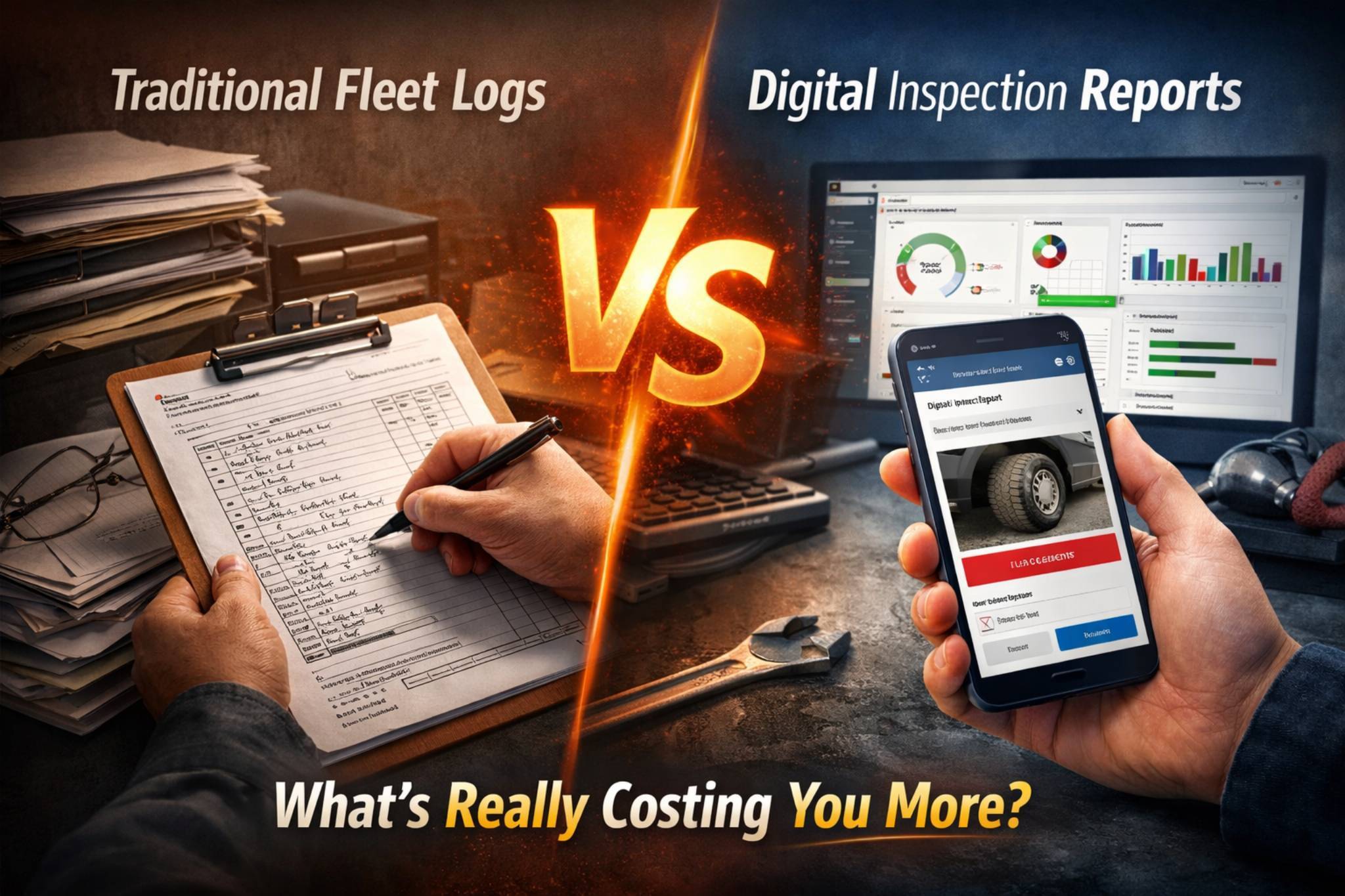
Paper Inspections vs. Digital Inspection Apps — What Fleets Are Actually Saving
Paper inspections appear inexpensive on the surface, but their hidden costs accumulate quickly. Storage cabinets, manual filing, and retrieval time all add friction. More importantly, paper delays communication of urgent defects.
A simple scenario illustrates the difference:
- A driver spends 10 minutes completing a paper inspection
- A manager spends 5 minutes reviewing and filing it
- A defect goes unnoticed for two days
- The vehicle breaks down on a job site costing $600 in towing and lost productivity
Digital inspections reduce or eliminate several of these costs. Fleets commonly report savings in:
- Inspection completion time
- Administrative labor hours
- Audit preparation time
- Missed defect incidents
- Compliance violation risks
The ROI is not only financial. Faster defect reporting directly improves driver safety and vehicle reliability.
How Fleet Drivers Actually Use Inspection Apps in the Field
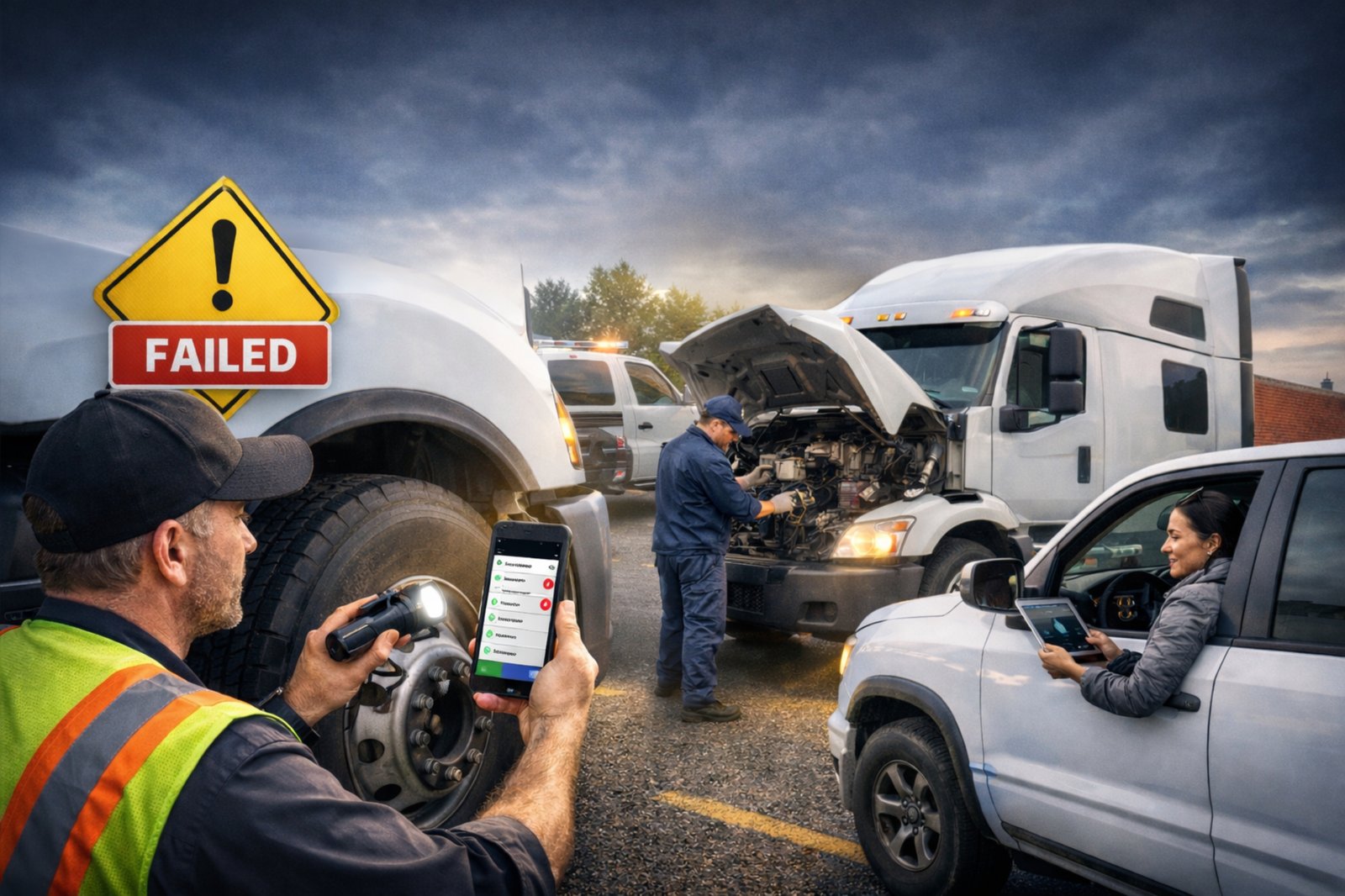
In real-world operations, inspection apps become part of a driver’s daily rhythm rather than an extra task. A typical workflow looks like this:
- Driver opens the app before starting a route
- Selects the assigned vehicle
- Completes a pre-trip checklist with photos
- Flags a worn tire or brake concern
- Submits the inspection instantly
- Fleet manager receives an alert and schedules repair
This seamless flow removes uncertainty and prevents overlooked issues from escalating.
Pre-Trip and Post-Trip Inspections
Pre-trip inspections focus on safety-critical components such as brakes, tires, lights, and steering. Post-trip inspections often highlight wear or damage that occurred during the day. Both are essential for compliance and accountability.
A well-designed app makes both processes quick by allowing saved templates, repeat entries, and automated reminders.
Handling Defects and Flagged Items
The real power of digital inspections appears after a defect is flagged. Instead of handwritten notes, the app creates a documented trail that includes photos, timestamps, and repair history. This documentation protects fleets during audits and liability investigations while ensuring repairs are not forgotten.
Common Mistakes Fleet Managers Make When Choosing an Inspection App
Choosing the wrong tool can create as many problems as it solves. Many fleets encounter avoidable pitfalls during selection.
Common mistakes include:
- Selecting consumer checklist apps not built for fleets
- Ignoring driver adoption and training requirements
- Overlooking maintenance system integration
- Failing to account for mixed vehicle types
- Prioritizing price over workflow efficiency
The most successful implementations focus on long-term usability rather than short-term cost savings.