 Miya Bholat
Feb 26, 2026
Best Work Order & Inventory Management Software for Fleet Teams
Managing fleet work orders and parts inventory manually is a constant uphill battle. A technician needs a brake pad, the shelf looks empty, someone runs to a local supplier, and later you discover three unopened boxes in another storage room. Repairs stall, vehicles sit idle, and costs quietly climb. Paper logs, spreadsheets, and disconnected tools simply cannot keep up with modern fleet complexity.
The right work order and inventory management software changes that dynamic entirely. Instead of chasing approvals, hunting for parts, or guessing stock levels, fleet managers gain real-time visibility and structured workflows. The result is faster repairs, fewer surprises, and tighter control over operational spend — all of which directly influence uptime and profitability.
Key Takeaways
- Integration is everything — Work orders and inventory must operate within the same system to prevent delays and duplicate spending.
- Mobile access drives efficiency — Technicians need real-time updates from the field to avoid communication gaps.
- Inventory visibility saves money — Knowing exact stock levels prevents emergency purchases and overstocking.
- Reporting turns data into strategy — Unified dashboards reveal true maintenance costs and trends.
- Disconnected tools hide expenses — Small inefficiencies compound into major financial losses over time.
- Usability matters as much as features — Intuitive platforms increase adoption and long-term value.
- AUTOsist stands out for unification — Bringing work orders, inventory, and reporting together enables fleets to control uptime, costs, and accountability in one place.
Why Work Order and Inventory Management Go Hand in Hand
Work orders and inventory are two sides of the same operational coin. A repair request without verified parts availability is incomplete. Likewise, an inventory list without usage context becomes meaningless data. When these systems operate separately, fleets face recurring problems: duplicate purchases, delayed repairs, and inaccurate budgeting.
Imagine a technician assigned a suspension repair. The work order says "replace shocks," but the system doesn't confirm stock. The technician checks a spreadsheet, finds outdated numbers, and places a rush order. Two days later, another team discovers identical parts already in storage. This scenario repeats across dozens of vehicles and silently drains resources.
The best software platforms eliminate this disconnect by linking every part movement to a specific work order. When a component is used, inventory adjusts instantly. When stock runs low, alerts trigger before downtime happens. Integration turns guesswork into measurable control.
What to Look for in Work Order & Inventory Management Software
Core Work Order Features
A strong work order module is the operational backbone of fleet maintenance. Without structure, technicians rely on memory, verbal instructions, or fragmented notes. Effective software introduces consistency and accountability.
Key work order capabilities should include:
- Simple creation and assignment of tasks
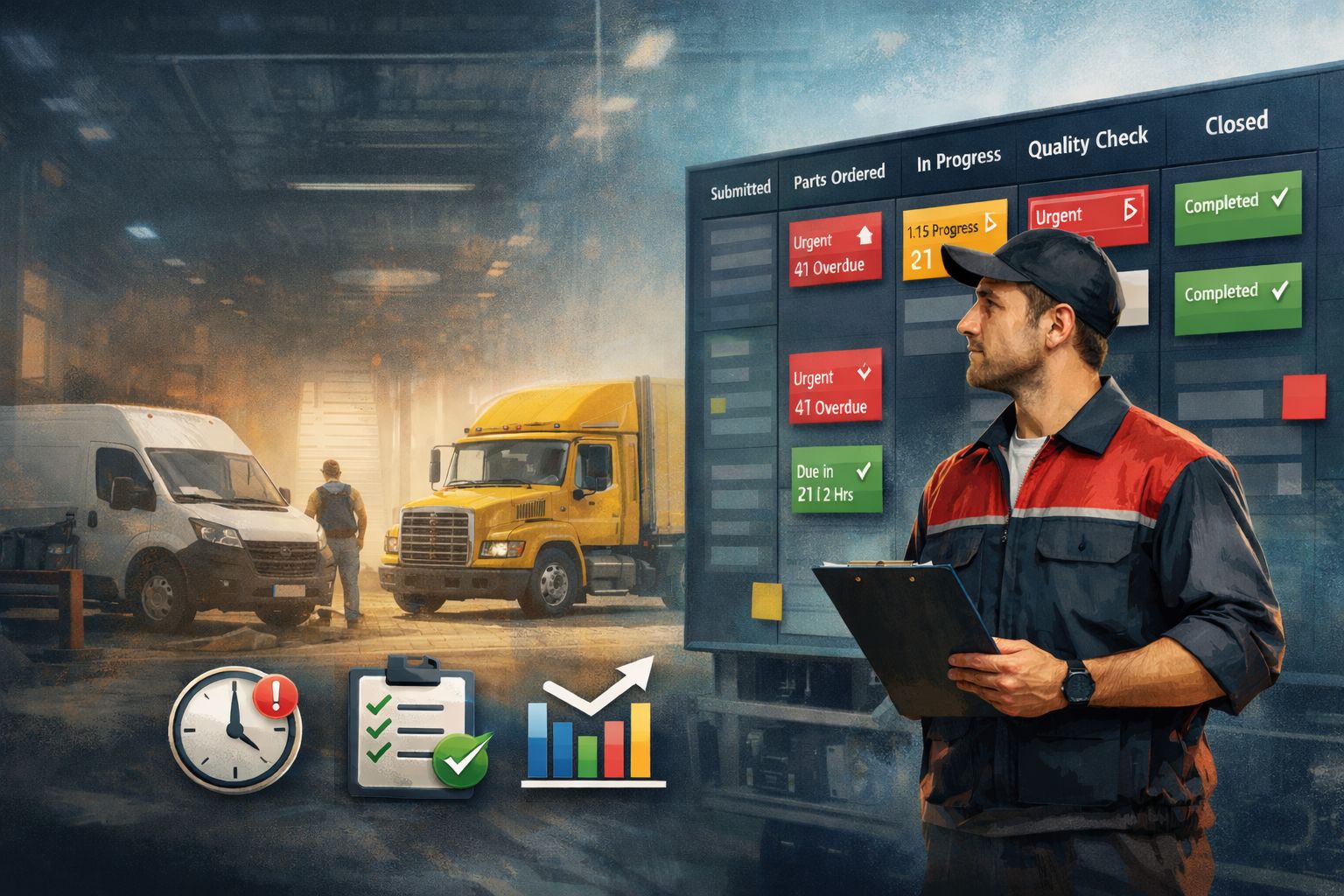
- Real-time status tracking (open, in progress, completed)
- Labor hour logging for accurate cost calculation
- Priority levels to manage urgent repairs
- Technician notes and attachments
- Mobile access for on-site and roadside updates
Mobile functionality is non-negotiable. Technicians rarely sit behind desks. If they cannot update a job from a phone or tablet, delays and data gaps become inevitable.
Inventory Management Capabilities
Inventory software should go beyond counting parts on shelves. It must provide operational intelligence — knowing not just what exists, but where it is, why it's used, and when to reorder.
Critical inventory capabilities include:
- Parts tracking by SKU or serial number
- Automated low-stock alerts
- Supplier and vendor management
- Multi-location visibility for distributed fleets
- Direct linkage between parts and work orders
- Historical usage reporting
Real-time visibility across garages or depots prevents both shortages and overstocking. For growing fleets, this single feature can save thousands annually.
Integration and Reporting
Disconnected tools create blind spots. Integrated systems create clarity. When work orders and inventory live inside the same platform, fleets gain comprehensive reporting that reveals true maintenance costs.
Valuable reporting features include:
- Cost-per-repair tracking
- Parts spend analysis by vehicle or department
- Audit trails for compliance and accountability
- Trend analysis for recurring failures
- Budget forecasting support
Two separate systems might technically "work," but they rarely provide strategic insight. Integration transforms maintenance from reactive firefighting into proactive planning.
The Real Cost of Disconnected Systems
The financial impact of disconnected systems often hides behind routine operations. Consider a single delayed repair:
A delivery van requires a $40 belt replacement. The technician cannot confirm stock, orders overnight shipping for $60, and waits a full day. The van remains idle. If that vehicle typically generates $300 in daily revenue, the one-day delay costs $360 — nearly nine times the original part price.
Multiply this by 10 vehicles per month, and fleets easily lose $3,000–$5,000 without realizing it. Add technician downtime, administrative inefficiencies, and duplicate purchases, and the annual loss can reach tens of thousands.
Disconnected systems do not fail loudly. They fail quietly through small inefficiencies that compound over time.
Key Benefits of the Right Software
When fleets implement unified work order and inventory management software, the operational improvements become visible almost immediately. The benefits extend beyond maintenance departments and influence finance, compliance, and executive decision-making.
The most impactful benefits include:
- Faster repair cycle times
- Reduced duplicate part orders
- Improved technician accountability
- Accurate cost tracking per asset
- Streamlined vendor management
- Audit-ready maintenance records
These advantages translate directly into higher uptime percentages and stronger budget control. Even a 5–10% reduction in downtime can produce significant annual savings for mid-sized fleets.
How to Evaluate Software for Your Fleet's Needs
Questions to Ask Before You Buy
Before selecting a platform, fleet managers should evaluate operational fit rather than just feature lists. The following questions help clarify whether a solution will scale effectively:
- Does it manage work orders and inventory in one system?
- Is there a reliable mobile app for technicians?
- Can it support fleet growth without performance loss?
- What onboarding and customer support resources exist?
- Is pricing based on vehicles, users, or modules?
- Does it integrate with existing telematics or reporting tools?
Clear answers prevent costly migrations later.
Red Flags to Watch Out For
Certain warning signs indicate software that will create more problems than it solves. Fleet managers should remain cautious if a platform:
- Requires heavy manual data entry
- Lacks real-time inventory visibility
- Offers limited or unreliable mobile functionality
- Hides essential features behind expensive upgrades
- Provides weak reporting or export limitations
A modern fleet environment demands agility. Any tool that slows workflows will quickly lose value.
What the Best Platforms Have in Common
Top-rated work order and inventory management platforms share consistent traits. They feel intuitive rather than complex. Users can navigate dashboards without extensive training. Notifications and alerts arrive on time. Vendor management integrates seamlessly. Reporting provides clarity instead of confusion.
Another defining trait is adaptability. Leading platforms support fleets of 10 vehicles as effectively as fleets of 1,000. They also offer reliable mobile experiences and automation features that remove repetitive administrative tasks. The difference between average and excellent software often lies in usability and real-time responsiveness rather than raw feature count.
How AUTOsist Handles Work Orders and Inventory
AUTOsist approaches work order and inventory management as a unified operational system rather than two separate modules. Its fleet maintenance work order software allows managers to create, assign, and monitor repair tasks while technicians update progress directly from mobile devices. This real-time visibility reduces communication delays and keeps everyone aligned.
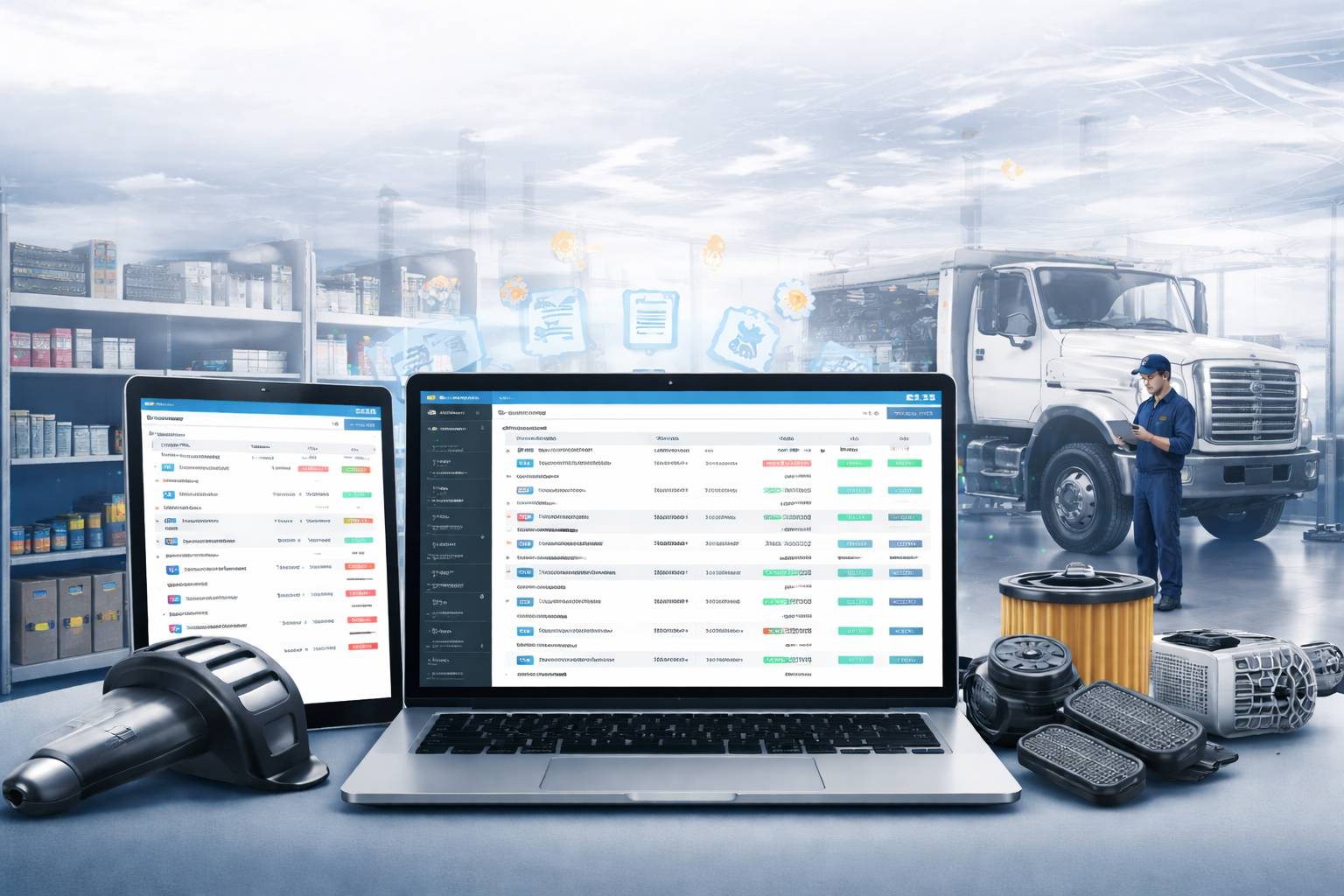
On the inventory side, AUTOsist's parts inventory management software connects every part movement to actual maintenance activity. Low-stock alerts, supplier tracking, and multi-location support help fleets maintain optimal stock levels without over-purchasing. When a technician uses a part, the system updates instantly, eliminating manual reconciliation.
What sets AUTOsist apart is how these systems work together with broader fleet insights like fleet reports and dashboard. Managers can track parts spend, labor hours, and repair trends in one environment rather than exporting data across multiple platforms. The mobile-first design also ensures technicians, drivers, and supervisors stay connected regardless of location.
Instead of acting as a standalone maintenance log, AUTOsist becomes a centralized command center for fleet operations. This integration allows fleets to transition from reactive maintenance toward structured, predictive planning.