 Miya Bholat
Jan 29, 2026
California Diesel Smog Exemptions Guide: What Fleet Managers Need to Know
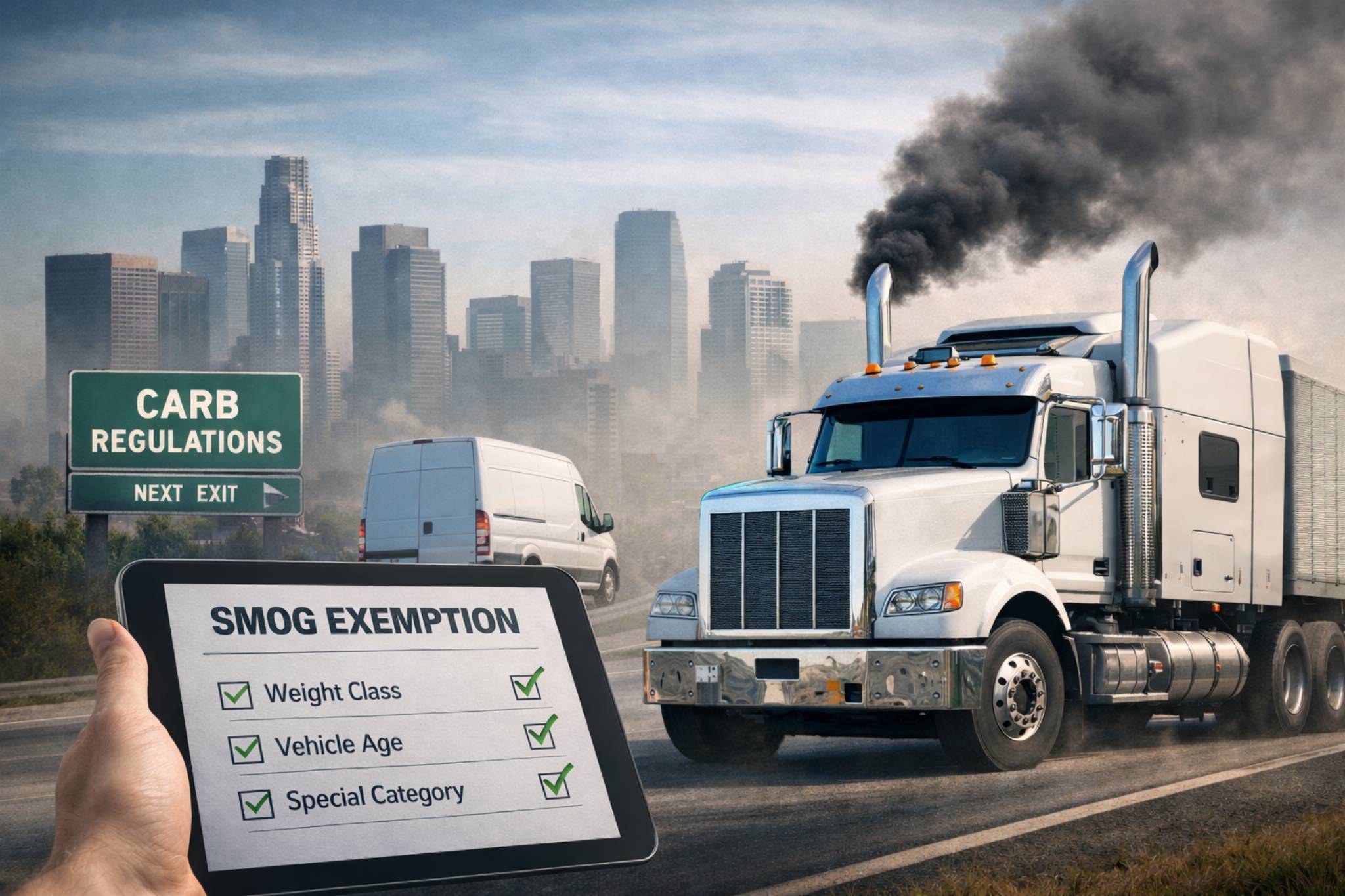
Key Takeaways: California Diesel Smog Exemptions
- Diesel smog exemptions are limited and specific
Exemptions depend on weight, age, and vehicle type—assumptions lead to compliance risk. - Exempt does not mean undocumented
Fleet managers must retain records proving exemption status during inspections and audits. - Regional rules still matter
Local air districts may impose additional oversight beyond statewide requirements. - Mixed fleets require structured tracking
Managing exempt and non-exempt vehicles together demands clear records and consistent processes. - Centralized fleet systems reduce risk
Tools for inspections, reports, and maintenance histories help fleets stay compliant without manual overload.
Understanding California’s Diesel Smog Check Requirements
California has some of the most stringent diesel emissions regulations in the United States. These rules exist to reduce air pollution, improve public health, and bring older, higher-emission diesel vehicles into compliance with modern environmental standards. For fleet managers operating in California, understanding these requirements is not optional—it directly affects vehicle registration, roadside inspections, and overall operational continuity.
Diesel smog check requirements are enforced primarily through the California Department of Motor Vehicles (DMV) and the California Air Resources Board (CARB). Unlike gasoline vehicles, diesel compliance involves a mix of periodic smog inspections, emissions system integrity checks, and additional CARB programs such as the Truck and Bus Regulation. Not every diesel vehicle is treated the same, which is where exemptions become critically important for fleets.
Before assuming any exemption applies, fleet managers must clearly understand which vehicles are required to undergo smog checks, how often those checks occur, and which agencies enforce them. Only then does it make sense to evaluate whether an exemption legitimately applies.
Which Diesel Vehicles Qualify for Smog Check Exemptions?
California diesel smog exemptions are not blanket exclusions. They are narrowly defined and based on measurable vehicle attributes such as weight rating, age, and use type. Fleet managers should review each category carefully instead of relying on assumptions or outdated information.
Weight-Based Exemptions
Vehicle weight plays a major role in determining diesel smog check applicability. California generally focuses diesel smog inspections on light- and medium-duty diesel vehicles.
Fleet managers should understand the following weight-based considerations before classifying vehicles as exempt:
- Diesel vehicles over 14,000 lbs GVWR are typically regulated under CARB programs rather than traditional DMV smog checks.
- Light-duty diesel vehicles 14,000 lbs GVWR and under are more likely to fall under periodic smog inspection requirements.
- Vehicle classifications may differ depending on registration type and declared usage.
Because GVWR is fixed by the manufacturer, this exemption category is relatively straightforward—but only if accurate vehicle records are maintained.
Age-Based Exemptions
Model year is another key factor in determining diesel smog applicability. California draws clear lines around newer versus older diesel vehicles.
Age-based considerations fleet managers should verify include:
- Very old diesel vehicles may fall outside certain smog programs but still be subject to other CARB compliance rules.
- Newer diesel vehicles often have built-in emissions systems that are monitored through onboard diagnostics rather than traditional tailpipe testing.
- Exemptions based on age do not override registration or reporting obligations.
Age-based exemptions are frequently misunderstood, especially by fleets operating legacy equipment alongside newer vehicles.
Vehicle Type Exemptions
Certain vehicle categories are treated differently due to their specialized use cases or regulatory frameworks.
Common vehicle-type exemptions may apply to:
- Agricultural and farm-use diesel vehicles
- Certain government-owned or municipal fleet vehicles
- Specialized off-road or limited-use equipment
Fleet managers should never assume a vehicle type is exempt without verifying its registration classification and declared use.
California Diesel Smog Exemption Rules by Region
While California diesel emissions standards are set at the state level, enforcement and supplemental requirements can vary by region. Local air quality management districts may impose additional rules or reporting requirements that affect exemption eligibility.
For example:
- The South Coast Air Quality Management District may apply stricter oversight for high-density urban fleets.
- Bay Area fleets may encounter additional reporting requirements tied to regional emissions targets.
- Rural districts may enforce the same exemptions but with different inspection frequencies.
Fleet managers operating across multiple regions must track both statewide and regional requirements to avoid compliance gaps.
How to Verify Your Fleet’s Exemption Status
Determining whether a diesel vehicle is exempt requires more than checking a single box. Fleet managers should follow a repeatable verification process to ensure accuracy.
A practical verification process includes:
- Reviewing each vehicle’s GVWR, model year, and registration class
- Using DMV vehicle records to confirm smog applicability
- Cross-referencing CARB program requirements where applicable
- Retaining documentation that supports exemption status
Managing this process manually becomes difficult as fleets grow. Many fleet managers rely on centralized vehicle records systems like a vehicle service history system to keep exemption data consistent and auditable.
Documentation Requirements for Exempt Diesel Vehicles
Even exempt vehicles must be documented properly. During audits, roadside inspections, or registration renewals, fleet managers are often required to prove why a vehicle is not subject to smog testing.
Documentation fleets should maintain includes:
- Vehicle registration showing GVWR and declared use
- Manufacturer specifications confirming weight class
- CARB compliance or exemption records, if applicable
- Maintenance and inspection histories supporting operational status
Using a centralized platform such as fleet reports and dashboard tools can simplify documentation access and reduce response time during inspections.
Common Misconceptions About Diesel Smog Exemptions
Misunderstanding exemptions is one of the fastest ways to create compliance risk. Several assumptions repeatedly cause issues for fleet operators.
The most common misconceptions include:
- Assuming all older diesel vehicles are automatically exempt
- Confusing CARB emissions compliance with DMV smog inspections
- Believing exempt vehicles require no emissions-related documentation
- Treating regional rules as optional or inconsistent
Clear internal policies and consistent recordkeeping help fleets avoid these pitfalls.
Managing Compliance for Mixed Fleets
Most fleets operate a mix of exempt and non-exempt diesel vehicles. Managing both categories effectively requires structured tracking and proactive scheduling.
Fleet managers should focus on:
- Clearly labeling exemption status in vehicle records
- Scheduling smog checks only for applicable units
- Tracking renewal dates and documentation expirations
- Maintaining inspection readiness across the entire fleet
Digital tools such as digital vehicle inspection apps and preventive maintenance reminders help reduce manual errors and ensure no vehicle falls through the cracks.
This is also where fleet management platforms like AUTOsist add value by consolidating inspections, documents, and compliance-related tasks into a single system.