 Miya Bholat
Mar 02, 2026
10 Common Fleet Management Mistakes (And How to Avoid Them)
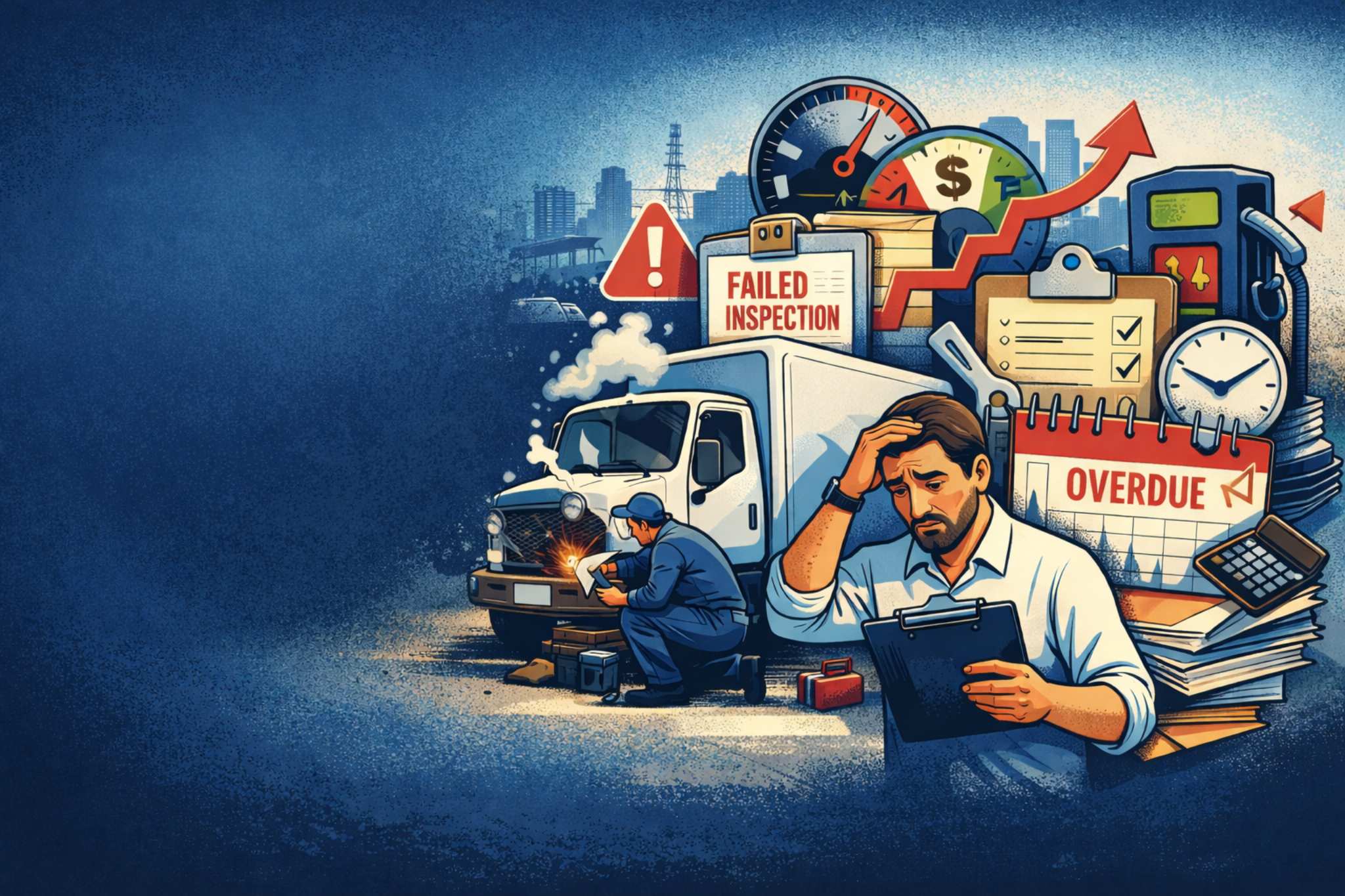
Fleet managers don’t usually fail because they don’t care. They fail because small oversights compound.
A missed oil change here. An inspection skipped there. A spreadsheet that hasn’t been updated in weeks. On their own, these issues seem minor. But across a 25-, 50-, or 200-vehicle fleet, they quietly snowball into unplanned downtime, inflated repair bills, compliance headaches, and frustrated drivers.
Industry data consistently shows that unplanned downtime can cost fleets anywhere from $448 to over $760 per vehicle per day, depending on vehicle type and industry. That doesn’t include lost revenue, missed deadlines, or customer dissatisfaction. The truth is, most fleet management mistakes aren’t dramatic — they’re systemic.
In this post, we’ll break down the most common fleet management mistakes and, more importantly, how to avoid them before they start draining your budget.
Key Takeaways: Fleet Management Mistakes to Stop Making Today
- Reactive maintenance is always more expensive than preventive maintenance. Small delays lead to large repair bills and increased downtime.
- Inspections protect both safety and compliance. Skipping them creates avoidable liability and audit risk.
- Data without action is wasted potential. Track cost-per-mile, downtime, and utilization — then use them to guide decisions.
- Disorganized records create operational and legal exposure. Centralized digital documentation reduces audit stress and protects warranties.
- Driver behavior directly impacts maintenance costs. Accountability and coaching reduce wear, fuel waste, and safety incidents.
- Manual systems don’t scale. As fleets grow, automation and centralized visibility become operational necessities.
Why Fleet Management Mistakes Are More Costly Than Most Managers Realize
Fleet management errors rarely show up as a single line item. Instead, they show up as patterns:
- Higher-than-expected repair bills
- Increasing downtime rates
- Fuel costs creeping up
- More roadside breakdowns
- Compliance violations during audits
A delayed maintenance interval might save $150 today but trigger a $6,000 engine repair six months later. Skipping driver inspections might save five minutes per shift but result in a DOT violation that carries thousands in fines — or worse, liability exposure in the event of an accident.
Poor fleet management also affects:
- Safety: Worn brakes, bald tires, and ignored fault codes increase accident risk.
- Compliance: Incomplete documentation can lead to audit failures.
- Asset lifespan: Vehicles replaced years earlier than necessary inflate capital costs.
- Team morale: Drivers lose trust when equipment constantly fails.
When you zoom out, these mistakes don’t just cost money — they erode operational stability.
Mistake #1 — Skipping or Delaying Preventive Maintenance
Preventive maintenance is one of the most talked-about best practices in fleet management — and still one of the most commonly neglected.
The Real Cost of Reactive Maintenance
Reactive maintenance means fixing vehicles after they fail. Preventive maintenance means servicing them before they fail.
The math is straightforward:
- Oil change: $100–$150
- Ignored oil change → engine damage: $5,000–$12,000
- Brake pad replacement: $300–$600
- Ignored brake wear → rotor/caliper damage: $1,500+
Reactive maintenance also adds:
- Emergency towing costs
- Overtime labor
- Lost productivity
- Missed service commitments
If you want a deeper breakdown of why this happens, see this guide on the hidden cost of poor fleet maintenance.
The reality is simple: reactive maintenance is always more expensive — even when the repair itself looks similar on paper.
How to Build a Preventive Maintenance Schedule That Sticks
A preventive maintenance schedule fails when it lives in someone’s memory or on a static spreadsheet.
A schedule works when it includes:
- Mileage-based triggers (e.g., oil change every 5,000 miles)
- Time-based triggers (e.g., inspections every 90 days)
- Engine-hour triggers for heavy equipment
- Automated reminders and alerts
- Clear ownership and accountability
Many fleets use tools like fleet preventive maintenance schedules to automate recurring service tasks and ensure nothing falls through the cracks.
The key isn’t complexity. It’s consistency.
Mistake #2 — Poor Vehicle Inspection Practices
Pre-trip and post-trip inspections are often treated as routine paperwork. That’s a mistake.
When inspections are rushed or skipped entirely, small issues go unnoticed:
- Tire tread below legal depth
- Fluid leaks
- Brake wear
- Lighting failures
- Steering issues
For regulated fleets, Driver Vehicle Inspection Reports (DVIRs) are not optional. Incomplete or inaccurate reports can result in compliance violations during roadside inspections or audits.
A strong inspection process includes:
- Standardized checklists
- Digital documentation
- Photo capture for defects
- Immediate maintenance flagging
- Clear driver accountability
A digital vehicle inspection app can reduce paperwork errors while improving visibility into vehicle condition across the fleet.
Inspections aren’t just compliance tasks. They’re your first line of defense against expensive breakdowns.
Mistake #3 — Not Tracking Fleet Data or Ignoring What It’s Telling You
Many fleets collect data. Fewer actually use it.
The Metrics Fleet Managers Should Be Monitoring
Without tracking performance metrics, you’re managing based on assumptions. At a minimum, fleets should monitor:
- Cost per mile — Total operating cost divided by miles driven
- Vehicle utilization rate — How effectively each vehicle is used
- Downtime rate — Percentage of time vehicles are unavailable
- Maintenance cost per vehicle — Identifies high-cost assets
- Fuel efficiency trends — Detects performance or driver behavior issues
If you’re unsure how to calculate and interpret these metrics, this guide on fleet maintenance KPIs with formulas provides a structured breakdown.
Metrics reveal patterns that individual invoices never will.
Turning Data Into Decisions
Data only matters when it drives action.
For example:
- A truck with 40% higher maintenance costs than similar units may be a replacement candidate.
- A spike in brake repairs might indicate harsh driving habits.
- Falling fuel efficiency could point to underinflated tires or engine issues.
Modern reporting tools like fleet reports and dashboard systems help centralize this information so you can spot trends early.
The goal isn’t more data. It’s better decisions.
Mistake #4 — Disorganized Maintenance Records and Documentation
Paper files. Random PDFs. Multiple spreadsheets. Sticky notes.
Disorganized records create serious downstream problems:
- Missed warranty claims
- Inaccurate resale valuations
- Failed DOT audits
- Difficulty proving maintenance compliance
- Lost service history during personnel turnover
When documentation is scattered, you don’t have a fleet management system — you have a liability.
Centralized digital systems allow fleets to:
- Store full vehicle service histories
- Attach receipts and photos
- Track inspection reports
- Maintain compliance documentation
- Access records instantly during audits
If you’re still unsure how to structure recordkeeping, this guide on how long to keep fleet maintenance records explains retention best practices.
Records aren’t just paperwork. They’re protection.
Mistake #5 — Neglecting Driver Accountability and Communication
Fleet managers often focus heavily on vehicles and overlook driver behavior.
Driver habits directly impact:
- Brake wear
- Tire lifespan
- Fuel efficiency
- Accident frequency
- Maintenance frequency
Common oversight areas include:
- Speeding
- Harsh acceleration and braking
- Skipped inspections
- Late defect reporting
- Failure to report warning lights
Driver accountability doesn’t mean micromanagement. It means clarity.
Strong driver programs include:
- Clear safety expectations
- Regular performance feedback
- Transparent metrics
- Recognition for safe driving
- Coaching instead of punishment
When vehicle data, inspections, and driver behavior are connected, patterns become visible — and correctable.
Mistake #6 — Trying to Manage Everything Manually
Spreadsheets work — until they don’t.
Manual systems break down as fleets grow because they rely on:
- Human memory
- Manual data entry
- Delayed reporting
- Limited visibility
- Single points of failure
As fleet size increases, complexity multiplies:
- More vehicles
- More drivers
- More inspections
- More service intervals
- More documentation
The hidden costs of manual management include:
- Administrative time drain
- Missed service intervals
- Data inaccuracies
- Inconsistent reporting
- Slower decision-making
Fleet management software centralizes maintenance scheduling, inspections, driver tracking, fuel monitoring, reporting, and recordkeeping into one connected platform.
AUTOsist, for example, combines preventive maintenance scheduling, work order tracking, inspections, and reporting into a single system designed specifically for fleet operations. Instead of managing disconnected tools, fleets gain real-time visibility across vehicles, drivers, and costs.
Manual systems aren’t just inefficient. They limit scalability.
Mistake #7 — Relying on Manual Systems Instead of Fleet Management Software
One of the most common underlying issues in fleet operations is relying on spreadsheets, paper logs, or disconnected tools. While these methods may work for small fleets initially, they quickly break down as operations scale.
Manual systems make it difficult to maintain accurate service history, track maintenance tasks, and ensure nothing slips through the cracks. As a result, fleets often experience missed services, duplicate work, and increased fleet downtime.
Another challenge is the lack of real-time visibility. Managers are forced to rely on outdated information, making it harder to make informed decisions or respond quickly to issues.
Adopting fleet management software eliminates these gaps by centralizing data, automating tracking, and providing real-time insights. This reduces operational friction and ensures that critical processes are consistently followed.
Mistake #8 — Failing to Move from Reactive Maintenance to a Preventive Maintenance Program
Many fleets continue to operate in a reactive mode, addressing issues only after a breakdown occurs. While this may seem manageable in the short term, it leads to higher costs and frequent disruptions.
Without a structured preventive maintenance program, vehicles are more likely to experience unexpected failures. This not only increases repair costs but also impacts schedules, customer commitments, and overall efficiency.
A missing or inconsistent maintenance schedule further compounds the problem. When services are delayed or skipped, small issues escalate into major repairs.
Shifting away from reactive maintenance toward a preventive approach allows fleets to plan maintenance activities in advance, reducing unplanned downtime and improving vehicle lifespan.
Implementing this shift is significantly easier with fleet management software, which automates scheduling, sends reminders, and ensures maintenance consistency across the fleet.
Mistake #9 — Ignoring Fleet Data and Performance Trends
Another critical mistake is collecting data but not using it effectively. Many fleets track maintenance, fuel usage, and repairs but fail to analyse this information to improve operations.
Without monitoring trends, issues like rising maintenance costs or declining vehicle performance often go unnoticed until they become major problems. This reactive approach leads to inefficiencies and unnecessary expenses.
Data also plays a key role in identifying underperforming vehicles, optimizing routes, and improving overall fleet utilization. Without it, decision-making is largely based on assumptions rather than facts.
Using fleet management software with reporting and analytics capabilities allows managers to track performance in real time. This enables proactive decision-making and helps prevent small issues from turning into costly disruptions as fleet management software improves business efficiency for fleet owners both in short and long term as their fleet grows.
Leveraging data effectively is essential for improving efficiency and maintaining control over fleet operations.
Mistake #10 — Not Standardizing Fleet Management Processes
A lack of standardized processes can create inconsistencies across fleet operations. When different teams or locations follow different methods, it leads to gaps in maintenance, inspections, and reporting.
For example, inconsistent documentation results in incomplete service history, making it difficult to track maintenance or ensure compliance. Similarly, varying inspection practices increase the risk of missed issues.
As fleets grow, these inconsistencies become harder to manage and can significantly impact efficiency and accountability.
Standardizing workflows ensures that every vehicle follows the same procedures, regardless of location or team. This improves reliability and reduces operational errors.
Using fleet management software helps enforce these standards by providing structured workflows, checklists, and centralized tracking ensuring consistency across the entire fleet.
Fleet management mistakes are rarely dramatic — but they’re almost always expensive. The good news? Every mistake outlined here is preventable with structured processes, accountability, and the right tools in place.
Stop reacting. Start optimizing.
Frequently Asked Questions
-
What are the most common fleet management mistakes?
The most common mistakes include relying on reactive maintenance, lacking a proper maintenance schedule, poor tracking of service history, and not using fleet management software for visibility and control. -
How do fleet management mistakes increase costs?
Mistakes lead to unplanned repairs, higher fuel usage, compliance issues, and increased fleet downtime all of which significantly raise operational costs over time. -
Why is reactive maintenance a problem for fleets?
Reactive maintenance causes unexpected breakdowns, delays, and expensive emergency repairs, making it one of the biggest cost drivers in fleet operations. -
How can fleet management software reduce mistakes?
Fleet management software automates maintenance scheduling, tracks service history, and provides real-time insights, helping fleets avoid missed tasks and poor decision-making. -
What is the best way to improve fleet management processes?
The best approach is to implement a preventive maintenance program, standardize workflows, and use a centralized system to track and manage all fleet operations efficiently.