 Miya Bholat
Mar 24, 2026
Cost Per Mile: How to Calculate and Reduce It Across Your Fleet
Key Takeaways: Lowering Cost Per Mile Across Your Fleet
- CPM is the most complete efficiency metric — It combines all costs into a single number you can act on.
- Accurate data is everything — Missing costs or mileage leads to misleading CPM calculations.
- Idle time and underutilization are silent cost drivers — They inflate CPM without obvious warning signs.
- Preventive maintenance reduces long-term costs — Staying ahead of issues keeps vehicles efficient and reliable.
- Fuel efficiency has an outsized impact on CPM — Small improvements can drive significant savings.
- Tracking CPM regularly helps you catch problems early — Trends matter more than one-time calculations.
- The goal isn't just lower costs—it's better utilization — More productive miles always lead to a healthier fleet.
Why Cost Per Mile Is the KPI Fleet Managers Can't Ignore
Most fleet managers track fuel spend, repair costs, or insurance premiums separately. The problem is that these numbers live in silos. You might know fuel costs are rising, but you don't always see how that impacts your overall operational efficiency.
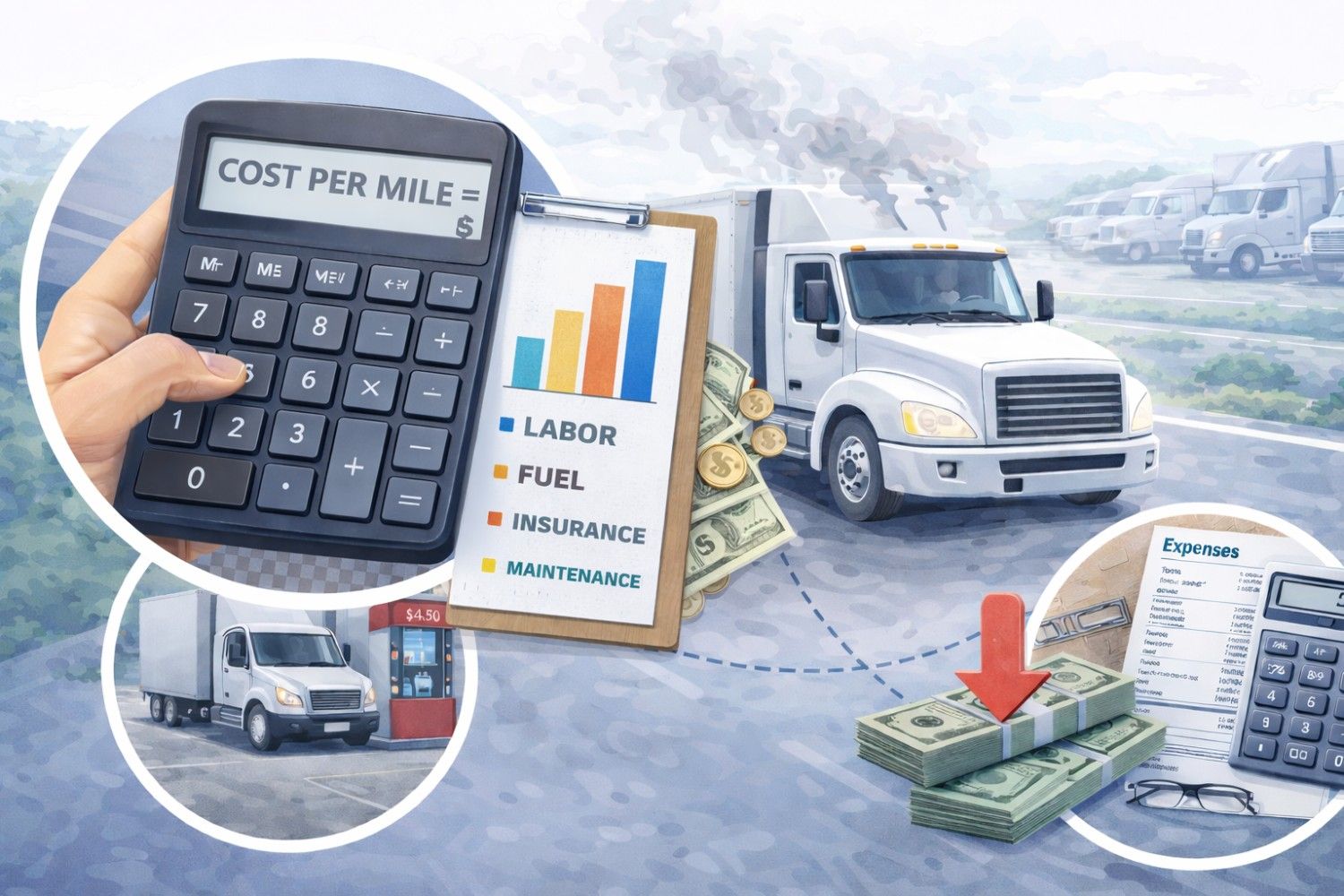
Cost per mile (CPM) solves that problem. It combines every major expense into one simple, actionable number. Instead of guessing where money is leaking, CPM shows you exactly how efficiently your fleet is operating on a per-mile basis.
Think of it this way: two fleets can spend the same total amount in a month, but the one that drives more productive miles will always have a lower CPM. That's why CPM isn't just a financial metric—it's an operational performance indicator.
How to Calculate Cost Per Mile
At its core, CPM is a simple formula:
Total Fleet Operating Costs ÷ Total Miles Driven
The challenge isn't the math—it's making sure you include the right costs and track mileage accurately. If you miss categories or underestimate usage, your CPM becomes misleading.
Fixed Costs to Include
Fixed costs stay relatively stable regardless of how much your vehicles are used. These costs still impact CPM because they're spread across the miles your fleet drives.
Here are the key fixed costs to include:
- Depreciation of vehicles over time
- Insurance premiums for each vehicle
- Registration and licensing fees
- Lease or loan payments
- Administrative overhead tied to fleet operations
These costs don't change month to month, but if your fleet drives fewer miles, they increase your CPM because they're distributed across a smaller mileage base.
Variable Costs to Include
Variable costs fluctuate based on how much your fleet is used. These are often the biggest drivers of CPM changes.
Make sure you account for:
- preventive maintenance schedules
- Tire wear and replacement
- Routine maintenance (oil changes, filters, inspections)
- Repairs and unexpected breakdowns
- Roadside assistance and towing
These costs scale directly with usage, which means inefficiencies show up quickly in your CPM.
A Simple CPM Calculation Example
Let's break this down with a realistic example.
Imagine a 20-vehicle fleet operating over one month:
- Fixed costs: $40,000
- Variable costs: $60,000
- Total monthly cost: $100,000
- Total miles driven: 200,000 miles
CPM = $100,000 ÷ 200,000 miles = $0.50 per mile
Now consider what happens if utilization drops and the fleet only drives 150,000 miles:
New CPM = $100,000 ÷ 150,000 = $0.67 per mile
Same cost, higher CPM. That's the power of this metric—it exposes inefficiency immediately.
What's a Good Cost Per Mile for a Fleet?
There's no universal "good" CPM because it varies widely depending on your fleet.
Several factors influence what you should expect:
- Vehicle type (light-duty vs. heavy-duty trucks)
- Industry (delivery, construction, utilities, etc.)
- Fleet age and condition
- Operating environment (urban vs. long-haul routes)
For reference, many fleets loosely compare their CPM to the IRS mileage rate, but that's only a rough benchmark. It doesn't reflect your actual operating conditions.
What matters more is your internal trend. If your CPM is decreasing over time, you're improving efficiency. If it's rising, something is off—even if you're still within industry averages.
The Hidden Costs That Inflate Your CPM
Many fleets think they understand their costs, but CPM often reveals hidden inefficiencies that aren't obvious in day-to-day operations.
Here are the most common cost drivers that quietly push CPM higher:
- Delayed maintenance leading to expensive repairs
- Excessive idling and wasted fuel
- Poor route planning and unnecessary mileage
- Underutilized vehicles sitting idle
- Inconsistent driver behavior
Deferred Maintenance
Skipping maintenance might feel like saving money in the short term, but it almost always backfires.
A missed oil change can lead to engine wear. Ignoring minor issues can turn into major breakdowns. These failures increase repair costs, downtime, and ultimately CPM.
A structured approach—like using preventive maintenance schedules—helps keep costs predictable and prevents expensive surprises.
Idle Time and Fuel Waste
Idling is one of the easiest ways to burn money without moving an inch.
A diesel vehicle can burn roughly 0.8 gallons per hour while idling. Multiply that across a fleet, and the numbers add up quickly. Over time, idle-heavy operations see a noticeable spike in fuel costs and CPM.
Reducing idle time doesn't require major changes—just better visibility and driver accountability.
Underutilized Vehicles
A vehicle that rarely moves still costs you money every day.
It continues to accumulate:
- Insurance costs
- Depreciation
- Registration fees
If a portion of your fleet isn't being used efficiently, you're spreading fixed costs across fewer productive miles. That alone can significantly inflate CPM.
Proven Strategies to Reduce Cost Per Mile
Reducing CPM isn't about cutting corners—it's about improving efficiency across the board. The most effective fleets focus on a combination of operational discipline and better data.
Optimize Preventive Maintenance Schedules
Preventive maintenance is one of the most reliable ways to control costs.
Well-maintained vehicles:
- Run more efficiently
- Break down less often
- Last longer
Using a system to track service intervals and maintenance history—such as fleet maintenance software—ensures nothing slips through the cracks.
Monitor and Improve Fuel Efficiency
Fuel is typically one of the largest contributors to CPM, which makes it a high-impact area for improvement.
Focus on:
- Reducing aggressive driving (hard braking, speeding)
- Minimizing idle time
- Optimizing routes to eliminate unnecessary miles
- Tracking fuel usage trends with tools like fleet fuel management software
Even small improvements in fuel efficiency can lead to meaningful CPM reductions.
Right-Size Your Fleet
Not every fleet needs the number of vehicles it currently operates.
Regularly audit utilization to identify:
- Vehicles that are underused
- Assets that can be reassigned
- Units that should be sold or retired
A leaner fleet spreads fixed costs across fewer—but more productive—vehicles, lowering CPM.
Extend Vehicle Lifespan Strategically
Extending the useful life of your vehicles reduces the cost of ownership per mile.
This doesn't mean running vehicles into the ground. It means:
- Maintaining them properly
- Repairing issues early
- Replacing them at the right time—not too soon, not too late
When done correctly, this approach improves ROI and lowers CPM over time.
How to Track CPM Over Time (and Spot Problems Early)
Calculating CPM once a year isn't enough. The real value comes from tracking it consistently.
Monthly or quarterly tracking helps you:
- Identify rising costs early
- Compare performance across vehicle types
- Spot inefficiencies in specific locations or routes
- Measure the impact of operational changes
For example, if CPM suddenly increases for a specific group of vehicles, it could signal:
- Maintenance issues
- Driver behavior problems
- Fuel inefficiencies
This is where centralized tracking becomes critical. Platforms like AUTOsist bring together maintenance data, fuel usage, and mileage tracking in one place, making it easier to monitor trends and act quickly.
If you want to go deeper into cost structures, resources like the fleet cost breakdown guide available in your internal library can help contextualize where your money is going.
If you treat cost per mile as a living metric—not just a report—you'll start making smarter, faster decisions that improve both efficiency and profitability across your fleet.