 Miya Bholat
May 25, 2026
How do Electric Vehicles Fit Into Modern Fleet Management?
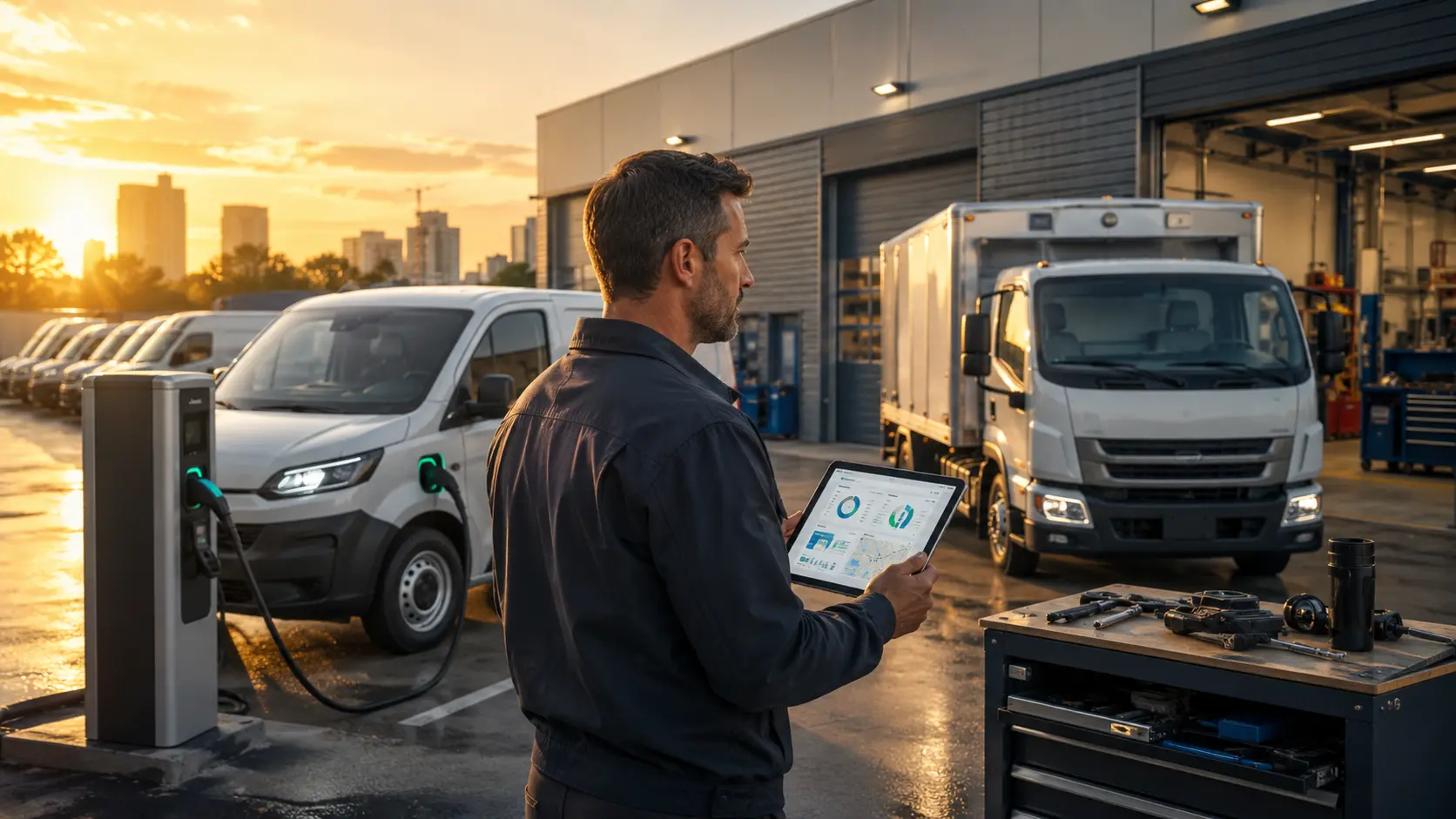
Electric vehicles fit into modern fleet management by becoming part of a planned mixed fleet strategy where fleet managers choose the right routes, update maintenance schedules, prepare charging workflows, train drivers, and track EV and gas vehicle performance in one fleet management software system. EVs work best when they are matched to predictable daily mileage, return to base operations, and clear cost tracking instead of being added only for sustainability goals.
This guide explains why EVs matter now, how they change fleet workflows, which vehicles should move first, and how to track EV and gas vehicles in one operating system.
Key Takeaways
- EVs fit best when fleet managers start with use case, not hype.
The strongest first candidates are predictable routes, daily return to base vehicles, and stop and go urban operations. - EV costs need full lifecycle review.
Fleet managers should compare purchase price, charging setup, energy cost, maintenance savings, downtime, and incentives before making a replacement decision. - Mixed fleets need updated maintenance workflows.
EVs reduce oil changes and many fluid services, but they add battery checks, charging equipment reviews, software updates, and high voltage safety considerations. - Charging changes daily operations.
Route planning, shift scheduling, driver behavior, and depot capacity all affect whether EVs improve or disrupt fleet performance. - EV success depends on unified reporting.
Fleet managers need one place to track fuel, charging, maintenance, inspections, downtime, and cost per mile across EV and ICE vehicles. - Driver training matters as much as vehicle selection.
Drivers need clear guidance on range, charging, regenerative braking, warning lights, and inspection steps before EVs enter daily service.
Why Fleet Managers Are Taking EVs Seriously Now
Electric vehicles are no longer a future planning topic for fleet managers. They are already entering service fleets, delivery fleets, public sector fleets, construction support fleets, and corporate vehicle programs. The Alternative Fuels Data Center says light duty all electric vehicle operation and maintenance cost averages 6.1 cents per mile, and EVs perform well in stop and go fleet use.
That does not mean every vehicle should become electric right away. A smarter approach is to identify which vehicles have predictable routes, reliable charging access, manageable payload needs, and clear cost savings. For industries such as construction fleet management, EVs may fit support trucks, supervisor vehicles, and local service vehicles before heavy duty or long distance units.
Fleet managers are taking EVs seriously because the decision now affects operating cost, compliance, procurement, driver planning, facility planning, and brand reputation. Fuel price swings make budgeting harder, while many companies and public organizations face stronger pressure to reduce emissions.
OEMs are also expanding electric options across vans, pickups, light duty vehicles, and specialty units. That gives fleet managers more choices, but it also makes planning more complex. Teams now need to compare gas, diesel, hybrid, and electric vehicles with the same level of financial discipline.
The Business Case Beyond Green Marketing
The EV business case starts with total cost of ownership. EVs usually cost more upfront, but they can reduce fuel and maintenance costs over time. They have fewer moving parts, no engine oil changes, fewer exhaust related repairs, and less brake wear because regenerative braking helps slow the vehicle.
A practical comparison can help. If a gas vehicle costs more per mile because of fuel, oil changes, brake wear, and engine maintenance, while an EV reduces those recurring costs, the EV may become more attractive over three to five years. The result depends on miles driven, electricity rates, charging setup, downtime, purchase price, resale value, and incentives.
Fleet managers should not rely on one purchase price comparison. They should review cost per mile, repair frequency, idle time, route length, and maintenance history. A good starting point is to compare EV planning with broader fleet management software cost analysis so vehicle and operating costs stay connected.
Government Incentives That Change the Numbers
Incentives can reduce the upfront barrier, but they change often. The IRS states that the qualified commercial clean vehicle credit under Section 45W is not available for vehicles acquired after September 30, 2025. Fleet managers should verify current federal, state, local, and utility programs before building the final EV budget.
Charging infrastructure incentives also matter. In some cases, utility programs can support charger installation, electrical upgrades, or depot charging projects. These incentives can make a major difference because the vehicle is only one part of the EV investment.
What Changes When EVs Enter Your Fleet
EVs are not just gas vehicles with a different fuel source. They change how routes get planned, how drivers prepare for shifts, how maintenance teams build schedules, and how managers review operating data.
Fleet managers should expect changes in four areas:
- Charging availability and charge timing
- Route planning and daily mileage limits
- Maintenance schedules and technician training
- Reporting for energy use, downtime, and battery health
These changes are manageable when they are planned before the first EV enters service. They become disruptive when teams treat EVs exactly like existing gas or diesel vehicles.
Charging Infrastructure and Route Planning
Charging is one of the biggest operational changes. A gas vehicle can refuel quickly almost anywhere. An EV needs planned charging time, charger access, and route confidence. For return to base vehicles, depot charging often works well because vehicles can charge overnight or between shifts.
Public charging may support some routes, but it adds uncertainty. Chargers may be occupied, out of service, slow, or located away from the job site. Fleet managers should plan around real route patterns instead of advertised vehicle range.
Tools such as fleet GPS tracking software can help managers understand route distance, vehicle usage, stop patterns, and which units may be strong EV candidates.
How EV Maintenance Differs From ICE Vehicles
EVs can reduce many routine maintenance tasks, but they do not remove the need for maintenance planning. They still need inspections, tires, brakes, suspension checks, cooling system reviews, cabin filters, software updates, charging port checks, and battery health monitoring.
Fleet managers should update preventive maintenance schedules for EVs rather than copying old gas vehicle schedules. The most important EV maintenance items usually include:
- Battery health and range performance checks
- Charging port and charging cable condition
- Tire wear caused by vehicle weight and torque
- Brake condition and regenerative braking behavior
- Software updates and warning light reviews
- High voltage system inspection by qualified technicians
A system for fleet preventive maintenance schedules helps teams separate EV service needs from gas and diesel service needs without relying on memory or spreadsheets.
Building a Mixed Fleet Strategy EVs Plus ICE Vehicles
Most fleets will not go fully electric at once, and many should not try. Mixed fleet planning lets managers test EVs in the right use cases while keeping ICE vehicles where they still perform better.
A phased strategy should start with data. Review daily mileage, route predictability, payload, towing, driver location, idle time, maintenance cost, and fuel spend. Then choose a small group of vehicles where EVs have the strongest chance to succeed.
Matching Vehicle Type to Use Case
The best first EV candidates usually have predictable daily routes and regular return to base schedules. These vehicles give managers better control over charging, range, and maintenance timing.
Strong EV candidates often include:
- Local delivery vehicles with repeat routes
- Field service vehicles that stay within a set territory
- Supervisor or inspection vehicles with predictable mileage
- Shuttle vehicles with fixed daily patterns
- Light duty support vehicles for local operations
Poor first candidates may include vehicles with heavy towing, long rural routes, unpredictable dispatch patterns, limited charger access, or high daily mileage. Those vehicles may still become EV candidates later, but they require more planning.
Managing Maintenance Workflows Across Both Vehicle Types
Mixed fleets create a new workflow challenge. The shop may need to manage oil changes for ICE vehicles, battery checks for EVs, tire wear across both groups, and different service triggers for each unit.
This is where manual tracking starts to break down. A fleet with gas, diesel, hybrid, and electric vehicles needs different schedules, different inspection forms, and different cost categories. The process becomes easier when managers use one system to track vehicle service history across every asset type.
Tracking EV Performance and Fleet Costs in One System
Fleet managers need unified visibility when EVs enter the operation. If fuel lives in one spreadsheet, charging logs live in another, inspections sit on paper, and maintenance history stays in email, no one can see the true cost or reliability of the EV program.
AUTOsist can support mixed fleet tracking by helping teams organize maintenance, inspections, cost records, documents, and reporting across different vehicle types. The goal is not to treat every vehicle the same. The goal is to compare them clearly.
Key Metrics to Track for EV Fleet Health
EV performance should be measured from day one. Without early tracking, fleet managers cannot prove whether EVs reduce cost, create delays, or fit the intended routes.
Important EV metrics include:
- Energy cost per mile
- Charging session duration and frequency
- Range compared with actual daily usage
- Battery health and range loss over time
- EV maintenance cost compared with ICE units
- Downtime caused by charging or service delays
A fleet reports dashboard helps managers compare these numbers across EVs and ICE vehicles instead of reviewing each vehicle type separately.
Integrating EV Data With Existing Fleet Reporting
Most fleet teams already track fuel, maintenance, inspections, driver assignments, and documents. EVs add new data streams such as charging logs, battery condition, software updates, and energy cost.
A strong EV strategy brings those data points into the existing reporting process. That gives managers one operating view instead of a separate EV tracking system. Teams that already use integrated fleet management software can build EV reporting into existing workflows with less disruption.
Driver Training and Compliance for EV Fleets
Drivers play a major role in EV success. They need to understand range behavior, charging steps, regenerative braking, warning messages, and how payload, weather, and driving habits affect battery use.
Training should be practical. Drivers need to know when to charge, how to report a charging issue, what warning lights matter, and how to avoid returning a vehicle with too little range for the next shift.
Updating Pre Trip Inspection Checklists for EVs
Traditional inspection checklists do not always cover EV needs. Fleet managers should update inspection forms so drivers can report EV issues before they turn into downtime.
EV inspection items may include:
- Charging port condition
- Battery warning messages
- Cable storage and visible damage
- Range level before and after route
- Regenerative braking feel
- Tire condition and uneven wear
A digital vehicle inspection app can help teams create EV specific inspection forms while keeping regular ICE inspection forms in the same system.
Common Mistakes Fleets Make When Adding EVs
The biggest EV mistakes usually happen before the vehicles arrive. Fleet managers may focus on purchase price while underestimating charging costs, driver training, route limits, and data tracking.
Common mistakes include:
- Buying EVs before confirming route fit
- Ignoring charger installation timelines
- Assuming public charging will always be available
- Failing to update maintenance schedules
- Tracking EV costs outside normal fleet reports
- Giving drivers little guidance on range and charging
Many of these mistakes connect back to weak planning systems. If a team already struggles with manual tracking, EVs can make the gaps more visible. Reviewing common fleet management software mistakes can help managers avoid adding EV complexity to an already scattered workflow.
Is Your Fleet Ready for EVs? A Practical Readiness Checklist
Fleet readiness starts with the daily work. Before adding EVs, managers should confirm whether routes, facilities, drivers, maintenance teams, and reporting systems can support them.
Use this checklist before the first EV purchase:
- Do your best candidate vehicles drive predictable daily mileage?
- Do those vehicles return to base often enough to charge reliably?
- Can your facility support depot charging?
- Do drivers understand range, charging, and EV warning signs?
- Can your maintenance team handle EV service requirements?
- Can your software track EV and ICE costs together?
- Do you have a clear plan for downtime, charging delays, and backup vehicles?
EVs fit into modern fleet management when they solve a real operational problem. They should reduce cost, improve predictability, support compliance goals, or match routes better than existing vehicles. If managers choose the right vehicles, update workflows, and track performance from day one, EVs can become a practical part of a stronger mixed fleet strategy.
Frequently Asked Questions
-
What are the maintenance differences between EVs and gas vehicles in a fleet?
EVs do not need oil changes, spark plugs, exhaust repairs, or many engine related services. They still need tire checks, brake inspections, battery health monitoring, software updates, charging equipment checks, and high voltage system service from qualified technicians. -
How do I know which vehicles in my fleet to replace with EVs first?
Start with vehicles that run predictable local routes, return to base daily, have moderate mileage, and do not require heavy towing or long distance travel. These vehicles are easier to charge, easier to monitor, and less likely to disrupt daily operations. -
Can fleet management software track both EVs and ICE vehicles?
Yes. Fleet management software can track EVs and ICE vehicles in one system when it supports maintenance schedules, inspections, cost tracking, documents, service history, and reporting across different vehicle types. This helps managers compare energy cost, fuel cost, downtime, and maintenance activity without separate spreadsheets. -
How long does it take to transition a fleet to EVs?
Most fleets transition in phases over several years. The timeline depends on vehicle availability, route fit, charging infrastructure, budget, driver readiness, and replacement cycles. A pilot group usually gives managers better data before larger purchases. -
What charging infrastructure does a fleet need for EVs?
The best setup depends on vehicle use. Return to base fleets may use depot chargers, while variable route fleets may need access to reliable public charging. Managers should review electrical capacity, charger speed, parking layout, utility incentives, and backup plans before buying EVs.