 Miya Bholat
Feb 25, 2026
How to Eliminate Work Order Backlog with SLAs and Status Boards
A work order backlog rarely shows up overnight. It creeps in — one delayed brake inspection, one parts order that takes too long, one technician pulled to an emergency job. Before you know it, you have a wall of unfinished tickets and no clear sense of what actually needs attention today versus what's just been sitting there for weeks.
Backlog isn't just an administrative nuisance. It's a safety risk, a compliance liability, and a direct cost driver. Vehicles run longer with unresolved defects, technicians lose focus, and managers spend more time chasing updates than solving problems. The two tools that consistently cut through this mess are simple but powerful: Service Level Agreements (SLAs) and work order status boards.
When used together, they turn maintenance from reactive firefighting into a controlled, visible workflow.
Key Takeaways
-
Backlog is a structural problem, not just workload.
Unclear ownership, poor prioritization, and reactive scheduling create queues that grow silently. -
SLAs force decisions before chaos starts.
Defined resolution timelines prevent every work order from competing equally. -
Status boards create instant visibility.
A shared visual pipeline eliminates confusion and exposes bottlenecks early. -
SLAs and status boards only work together.
Visibility without deadlines lacks urgency; deadlines without visibility lack enforcement. -
Metrics reveal where improvement is needed.
Cycle time, compliance rate, and backlog age show exactly where friction lives. -
Software makes the system sustainable.
Automation, alerts, and dashboards scale the process without adding administrative burden.
Why Work Order Backlogs Form (And Why They're Hard to Kill)
Most fleets don't drown in backlog because they "have too much work." They drown because the work isn't structured. Backlogs grow when there's no clear prioritization system, no defined ownership, and no reliable visibility into what's open versus what's actually being worked on. The queue becomes a dumping ground rather than a pipeline.
Another root issue is reactive scheduling. When maintenance only happens after a breakdown or a complaint, the calendar becomes chaos. Preventive jobs get pushed, urgent repairs cut the line, and technicians constantly switch tasks. Over time, the system trains itself to accept delay as normal.
Backlog also hides inside poor documentation. If work orders aren't standardized or tracked in one place, managers rely on memory or scattered notes. That's when items slip through the cracks and quietly age into serious problems.
The Hidden Costs of a Backlogged Maintenance Queue
A growing queue doesn't just look messy — it drains money. One day of unexpected downtime for a commercial vehicle can easily cost $500–$1,000 in lost revenue, overtime, and emergency service calls. Multiply that by even three vehicles per month and the annual impact climbs into five figures quickly.
Backlog also creates secondary damage, including:
- Increased asset wear from delayed repairs
- Compliance violations and inspection failures
- Technician burnout from constant urgent work
- Customer dissatisfaction from missed delivery windows
The most expensive cost is often invisible: shortened vehicle lifespan. A deferred $200 repair can turn into a $3,000 failure months later.
How Backlog Becomes a Culture Problem
The real danger isn't the backlog itself — it's normalization. Teams start saying, "We've always had a three-week queue," as if it's unavoidable. When delay becomes expected, urgency disappears. No one feels personally accountable because the system never demands accountability.
Once this mindset sets in, critical and routine work blend together. A brake issue sits next to a cosmetic repair, and neither gets the attention it deserves. Culture shifts from proactive ownership to passive acceptance, and reversing that requires structural change, not motivational speeches.
What Are SLAs in Fleet Maintenance (And Why Most Fleets Don't Have Them)
In fleet maintenance, an SLA isn't a legal contract. It's an internal promise: this type of work order will be resolved within a specific timeframe. It's simply a rule that defines how long something is allowed to stay open.
Most fleets don't implement SLAs because they sound corporate or complicated. In reality, the absence of SLAs creates prioritization chaos. Without time boundaries, every job competes equally for attention, and urgent work only gets noticed when it becomes an emergency.
SLAs create clarity. They force decisions upfront instead of in the heat of the moment. When a new work order appears, the system already knows how quickly it needs action.
Types of Work Orders That Need Different SLA Tiers
A single deadline for all work orders doesn't work. Tiering allows managers to match urgency to impact. A practical system often looks like this:
- Tier 1 (Critical): Safety issues or vehicles out of service — resolve within 4–8 hours
- Tier 2 (Urgent): Performance problems affecting productivity — resolve within 24–48 hours
- Tier 3 (Routine): Scheduled PMs or minor repairs — resolve within 5–7 business days
Tiering forces prioritization before the queue fills up. It removes emotional decision-making and replaces it with structured logic.
How to Set SLA Targets That Are Realistic, Not Aspirational
Guessing SLA targets leads to constant breaches and frustration. Effective SLAs come from data. Start by reviewing historical resolution times, technician availability, and parts lead times. If brake repairs usually take 10 hours due to parts delivery, a 4-hour SLA only sets the team up for failure.
A practical approach includes:
- Reviewing the last 3–6 months of work order cycle times
- Calculating technician capacity versus average workload
- Factoring in parts inventory and supplier reliability
- Getting technician feedback before finalizing targets
SLAs should stretch performance, not break morale. Buy-in from the shop floor is what turns them from policy into practice.
Building a Work Order Status Board That Actually Gets Used
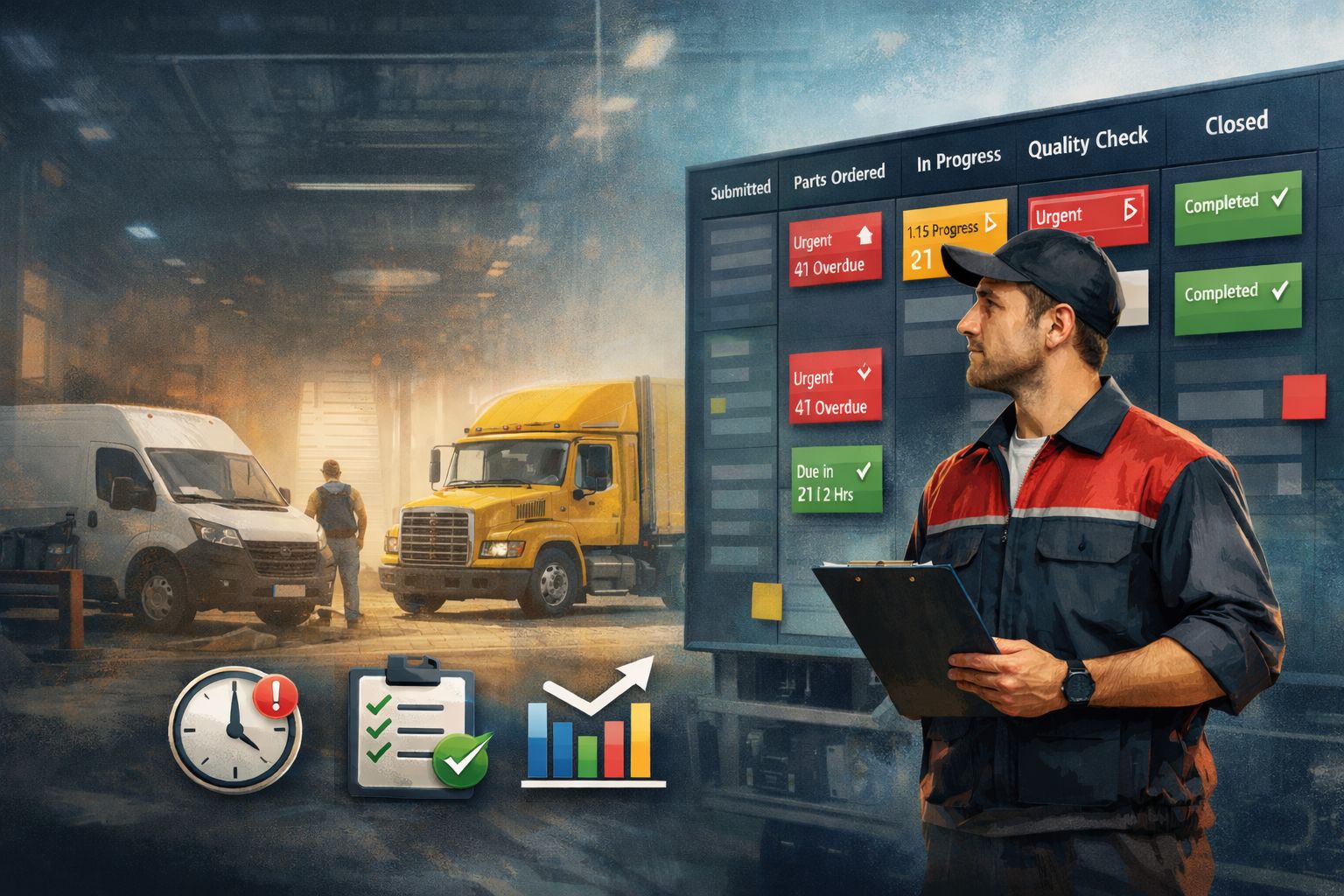
A status board is simply a live visual representation of every open work order and its current stage. It can be digital or physical, but the key is visibility. Without it, managers rely on spreadsheets, emails, or hallway conversations to answer the question: "Where does this stand?"
The difference between chaos and control is often just one screen or board showing real-time status. When everyone can see the same information, confusion drops immediately and ownership becomes obvious.
The Work Order Stages Your Status Board Should Track
Named stages eliminate ambiguity. "In progress" means different things to different people unless the workflow is defined. A common pipeline includes:
- Submitted
- Approved
- Parts Ordered
- In Progress
- Quality Check
- Closed
Each stage clarifies responsibility and progress. It also exposes bottlenecks instantly — if "Parts Ordered" keeps growing, the issue isn't technicians; it's supply chain.
Who Should Own Each Stage (And How to Avoid Handoff Gaps)
Backlogs often form between people, not during work. When no one owns the transition from approval to parts ordering, work sits idle. Ownership must be explicit at every stage — from submission to final inspection.
Practical ownership rules include:
- A designated approver for all incoming work orders
- A parts manager responsible for procurement stages
- A lead technician assigning jobs daily
- A supervisor validating quality checks
Clear handoffs prevent silent delays. Without them, work orders live in limbo and backlog quietly grows.
Connecting SLAs to Your Status Board for Real Accountability
SLAs without visibility are just policies on paper. Status boards without SLAs lack urgency. Together, they create a self-correcting system. The board shows where work is, and SLAs show when it needs to move.
In daily practice, this might mean a shop foreman reviewing the board every morning. A Tier 1 work order sitting in "Parts Ordered" beyond its SLA triggers immediate escalation. Instead of discovering delays weeks later, the issue is visible in hours. This pairing transforms maintenance from reactive chasing into proactive management.
Metrics to Track Once Your SLA + Status System Is Running
Once the system is live, measurement becomes the improvement engine. Metrics reveal where delays originate and where capacity adjustments are needed.
Key performance indicators to monitor include:
- SLA Compliance Rate: Percentage of work orders closed within target time
- Average Cycle Time: How long each work order type takes from open to close
- Backlog Age Distribution: Age of the oldest open items
- First-Time Fix Rate: Jobs completed without repeat visits
- Technician Utilization: Balance between workload and availability
These numbers aren't about punishment. They're diagnostic tools. When cycle time spikes, it signals resource imbalance or process friction.
Common Mistakes That Sabotage SLA and Status Board Rollouts
Many fleets implement these systems and still fail because execution breaks down. The concept is simple; the discipline is not. The most common pitfalls include:
- Setting SLAs without technician input
- Building a status board no one updates
- Treating all work orders as equally urgent
- Ignoring SLA compliance reviews
- Rolling out without training or context
These failures usually stem from lack of ownership or unrealistic expectations. A system only works if it's maintained daily and reinforced weekly.
How Fleet Maintenance Software Makes SLAs and Status Boards Scalable
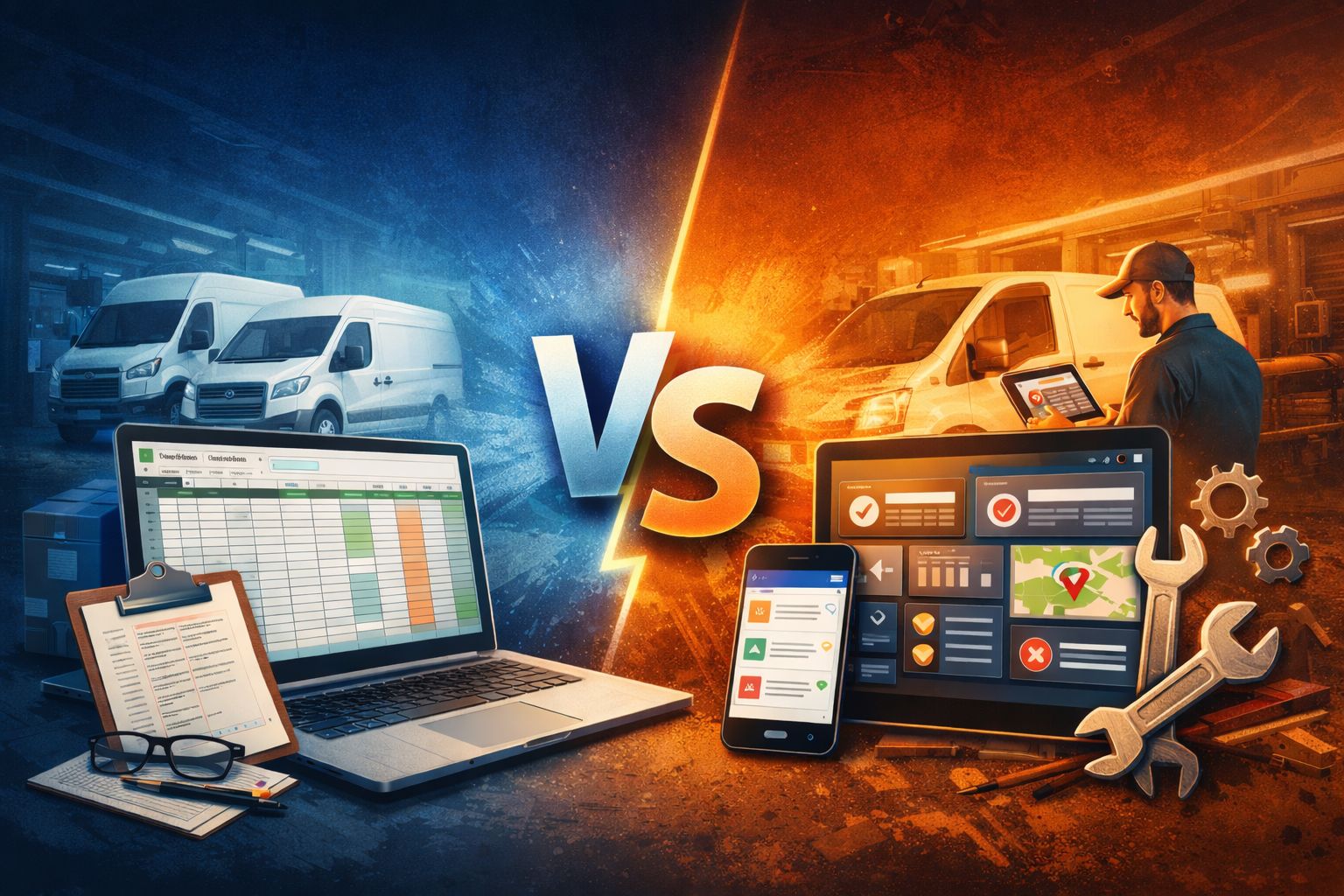
Manual whiteboards and spreadsheets work for small shops, but they collapse at scale. Once you're managing 20 or more open work orders across multiple vehicles or locations, manual tracking becomes a job of its own. Updates lag, information conflicts, and visibility fades.
Fleet maintenance software automates status movement, SLA alerts, and technician assignments. Tools like fleet maintenance work order software and real-time fleet reports and dashboards allow managers to see backlog trends instantly instead of piecing together data. When paired with a structured workflow like the one outlined in how to track fleet maintenance step-by-step, the system scales without increasing administrative overhead.
AUTOsist, for example, provides centralized work order tracking, automated alerts, technician assignment features, and mobile accessibility so updates happen in real time rather than at the end of the day. The result isn't just better visibility — it's fewer handoff gaps and faster resolution cycles. The software becomes the living status board that enforces SLAs automatically rather than relying on memory or manual updates.