 Miya Bholat
Apr 14, 2026
What Changes When Your Fleet Grows Beyond 20 Vehicles
Key Takeaways
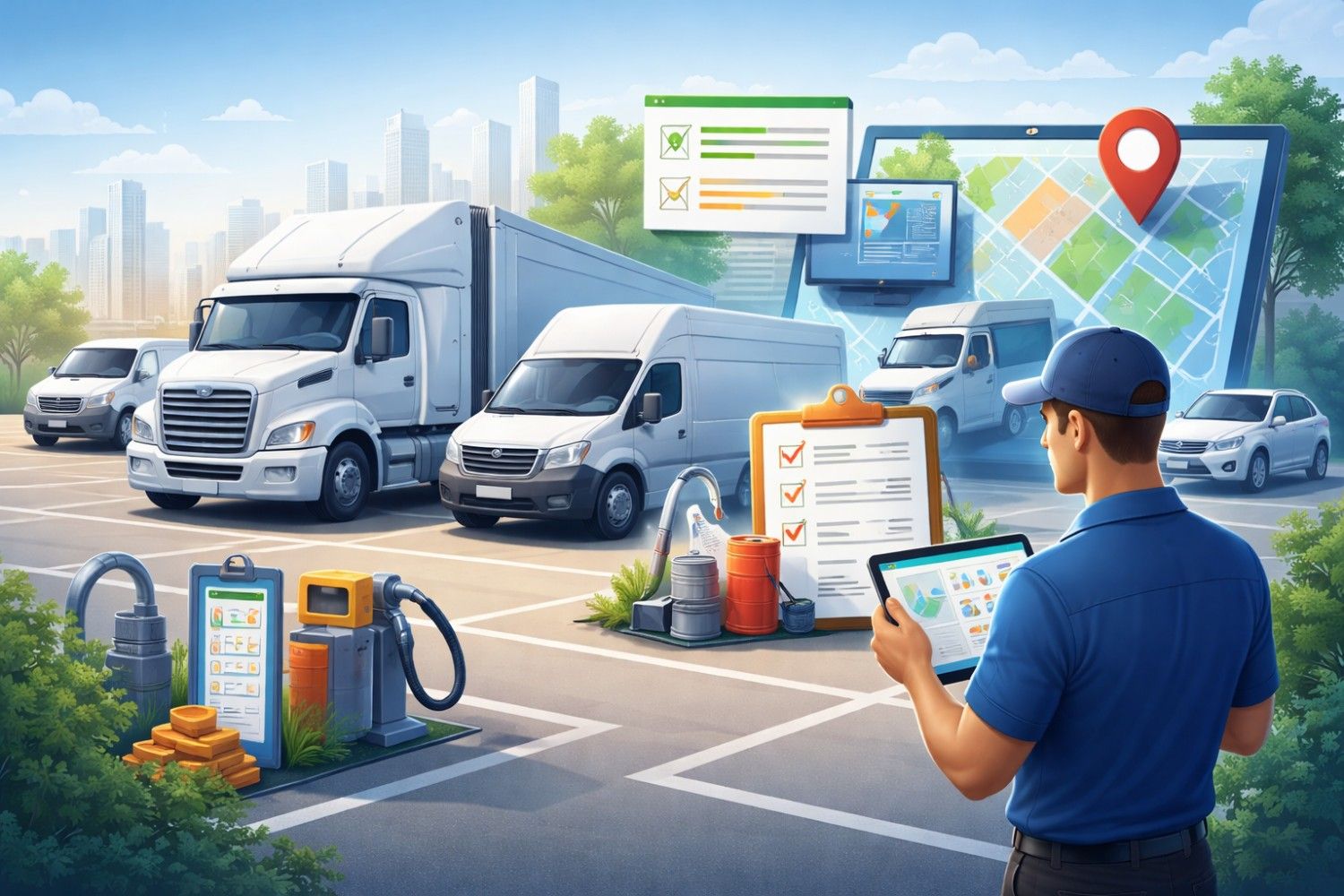
- 20 vehicles is where systems start breaking down
What worked for 5–10 vehicles becomes unreliable as coordination, tracking, and visibility gaps increase. - Spreadsheets can't scale with maintenance complexity
Manual tracking leads to missed services, costly breakdowns, and inconsistent records across vehicles. - Driver accountability requires structured systems
Assigning vehicles, tracking inspections, and maintaining records becomes a logistics problem, not a memory task. - Fuel and cost visibility becomes harder to control
Without proper tracking, fleets lose insight into one of their largest operating expenses. - Compliance risk increases with every added vehicle
Documentation gaps multiply quickly, exposing fleets to fines, failed audits, and operational disruptions.
The 20-Vehicle Threshold Is a Real Inflection Point
There's nothing magical about the number 20, but fleet managers consistently describe it as the point where things start to break.
At 5 or 10 vehicles, you can rely on memory, spreadsheets, or informal processes. You know who drives what. You can track maintenance manually. Problems are manageable.
At 20+, everything changes.
Coordination becomes harder. Visibility drops. Small inefficiencies compound into real costs. What used to be "good enough" starts creating operational risk.
This is exactly why many fleets begin looking into structured systems like fleet management software once they hit this size.
If you're already noticing friction, you're not alone, this is a predictable stage of growth.
Maintenance Tracking Gets Too Complex for Spreadsheets
Tracking maintenance across 20+ vehicles isn't just more work—it's exponentially more complex.
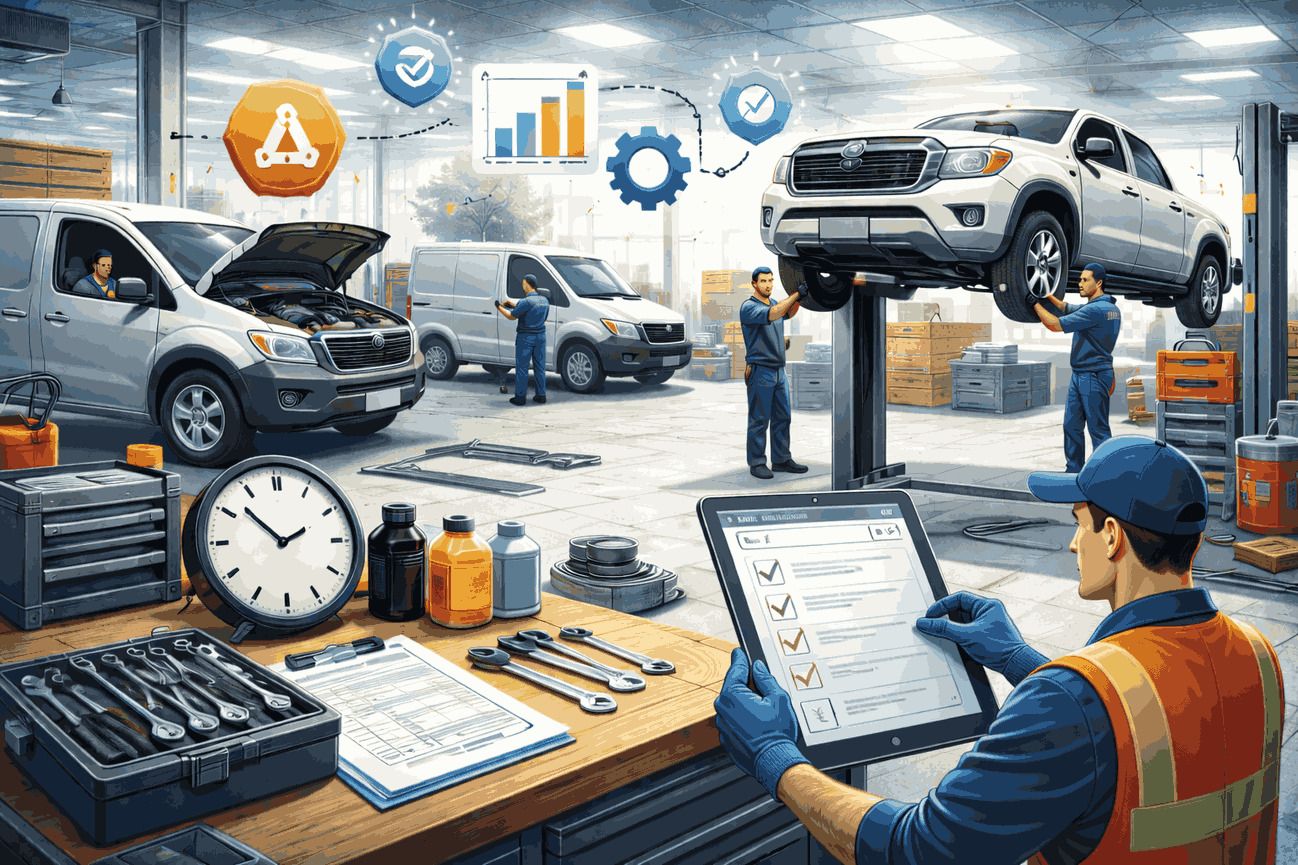
Each vehicle has its own service intervals, history, and usage patterns. Multiply that by 20, 30, or 50 units, and manual tracking becomes unreliable.
Even small errors, missed oil changes, delayed inspections, incomplete records, can quickly turn into expensive problems.
If you've ever wondered whether manual tracking is still viable, this breakdown of spreadsheets vs. fleet management software explains exactly where things start to fail.
The Hidden Cost of Reactive Maintenance
Reactive maintenance might feel manageable at small scale but at 20+ vehicles, it becomes expensive fast.
Here's a simple comparison:
- Routine oil change: $100–$200
- Preventive brake inspection: $150–$300
- Unplanned breakdown: $1,500–$5,000+ (plus downtime)
Now multiply just one missed service across 20 vehicles. That's how costs spiral.
Reactive maintenance also creates:
- Unplanned downtime
- Driver delays
- Emergency repair costs
- Lost productivity
What a Scalable Maintenance System Actually Looks Like
At this stage, fleets need structured systems, not reminders in someone's head.
A scalable maintenance setup typically includes:
- Automated service reminders based on mileage or time
- Centralized vehicle service history for every asset
- Multi-user access for teams
- Real-time dashboards for visibility
- Digital work orders and inspection tracking
Solutions like:
are designed specifically to handle this level of complexity.
Driver and Vehicle Assignment Becomes a Logistics Problem
At small scale, you know who drives which vehicle.
At 20+, that stops working.
Drivers rotate. Vehicles get reassigned. Accountability becomes unclear. And without structure, issues fall through the cracks.
This is where formal systems become necessary.
Fleet managers need to track:
- Driver-to-vehicle assignments
- Inspection completion (pre/post trip)
- Reported issues and defects
- Responsibility for damage or violations
Tools like a digital vehicle inspection app and fleet user driver management help create accountability and consistency across the fleet.
Without these, you're relying on assumptions, and that's where liability risk grows.
Fuel and Cost Visibility Disappears Without the Right Tools
Fuel is often your second-largest expense after labor.
But once your fleet grows, tracking fuel manually becomes unreliable.
You lose visibility into:
- Cost per vehicle
- Cost per mile
- Inefficient vehicles
- Fuel misuse or waste
Without data, you're guessing.
What Fleet Managers Are Actually Tracking (And What They're Missing)
Most growing fleets track some basics but miss critical insights.
Here's the gap:
What they track:
- Fuel receipts
- Total monthly spend
- Mileage (sometimes)
What they should track:
- Cost per mile per vehicle
- Fuel efficiency trends over time
- Outliers (vehicles consuming more fuel than expected)
- Driver behavior impacting fuel usage
Tools like fleet fuel management software and trip mileage tracking provide the data needed to actually control costs.
Compliance and Documentation Pressure Increases
Compliance doesn't scale linearly, it multiplies.
More vehicles mean:
- More inspections
- More registrations
- More documentation
- More audit risk
Missing just one document across 20+ vehicles can create serious problems.
At this stage, fleets need structured documentation systems.
Typical requirements include:
- Vehicle registration and insurance records
- Maintenance and inspection logs
- Driver qualification files
- DOT compliance documentation
Using systems like a vehicle document management system helps centralize and organize everything.
If you're unsure what to track, this guide on information fleet manager track daily weekly monthly breaks it down clearly.
How to Build a Fleet Management Stack That Scales
At 20+ vehicles, you don't just need tools, you need a system.
A scalable fleet management stack typically includes:
- Centralized fleet management software
- Defined workflows for maintenance and inspections
- Clear ownership across roles
- Real-time reporting and dashboards
If you're building this from scratch, resources like how fleet management software improves business efficiency can help you make better decisions.
The goal isn't complexity—it's clarity and control.
Signs You've Outgrown Your Current System
Not sure if you've hit this stage yet? These are common signals:
- You're missing maintenance schedules
- Drivers report issues late or inconsistently
- You spend hours on admin every week
- Fuel costs feel unpredictable
- You don't trust your data
- Compliance feels reactive instead of controlled
If this sounds familiar, you're likely already experiencing the scaling problem.
This is also why many fleets explore solutions after realizing the problems fleet management software solves and how to reduce fleet manager administrative workload.
Frequently Asked Questions
-
At what point should I switch from spreadsheets to fleet management software?
If you're managing 15–20 vehicles and starting to miss maintenance, lose visibility, or spend too much time on admin, it's time to switch. -
Why does fleet management get harder after 20 vehicles?
Because coordination, tracking, and documentation scale faster than your ability to manage them manually. -
How much does poor fleet tracking actually cost?
Even one missed service can lead to thousands in repairs. Multiply that across vehicles, and costs escalate quickly. -
What's the first system I should implement when scaling?
Start with maintenance tracking and inspection workflows, these have the biggest operational impact. -
Can small fleets benefit from fleet management software too?
Yes but the ROI becomes much more obvious once you cross the 15–20 vehicle threshold.