 Miya Bholat
Apr 10, 2026
How Fleet Managers Can Reduce Daily Administrative Workload?
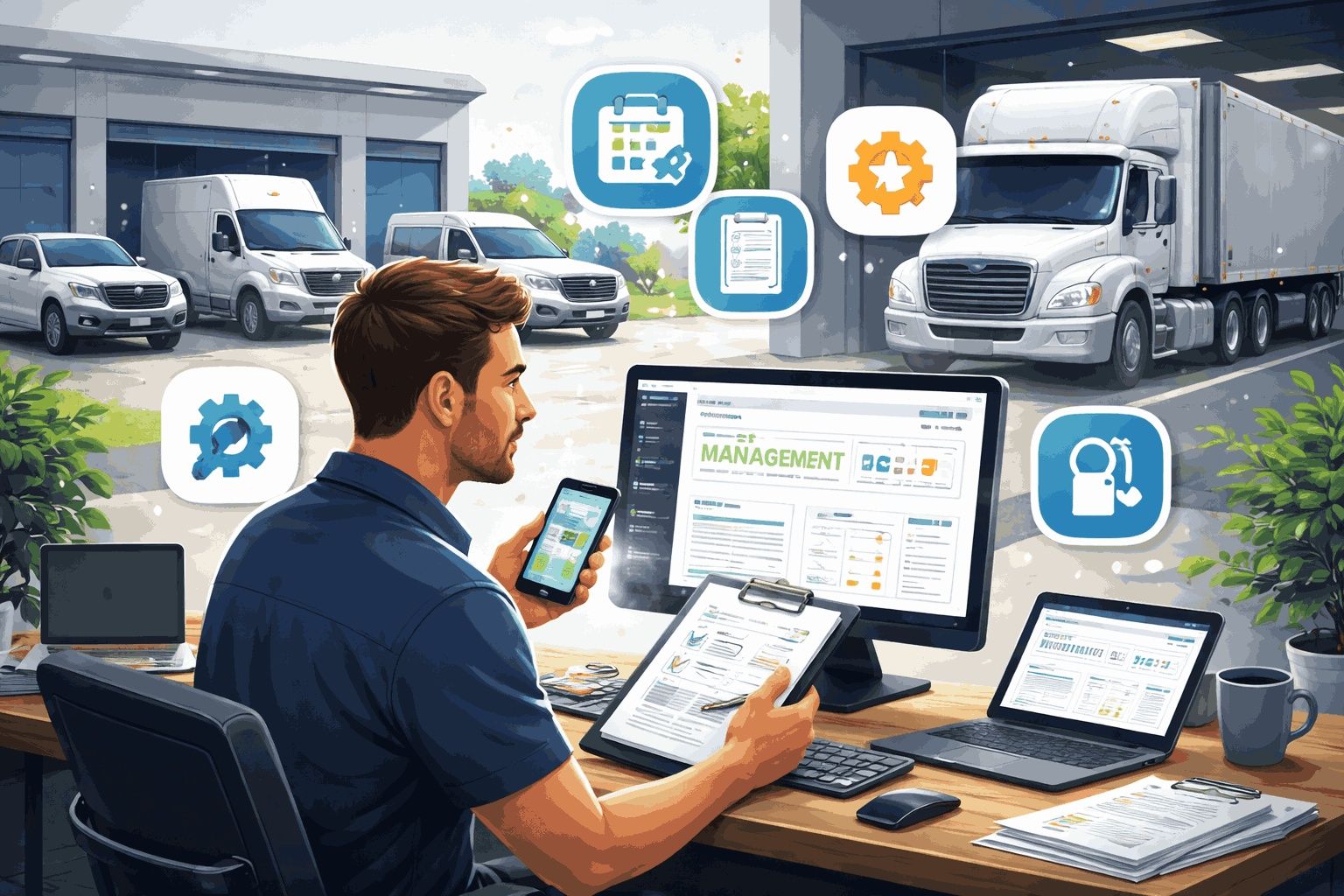
Fleet managers don't struggle because they lack effort. They struggle because too much of their time is spent on tasks that don't directly improve fleet performance.
Modern fleet management software helps shift that burden by automating routine processes and centralizing data.
Key Takeaways
- Fleet managers lose significant time to admin work:
Up to 30–40% of the day is spent on paperwork, coordination, and manual tracking instead of improving fleet performance. - Manual processes fail as fleets grow:
Spreadsheets and paper-based systems lead to missed maintenance, data errors, and compliance risks at scale. - Automation removes repetitive workload:
Automating scheduling, inspections, and reporting eliminates the need for constant manual input and follow-ups. - Digital inspections replace paperwork entirely:
Mobile inspection workflows capture data instantly, reduce errors, and create automatic records for compliance. - Centralized systems reduce communication delays:
Bringing driver updates, tasks, and issue reporting into one platform removes back-and-forth calls and confusion. - Real-time reporting eliminates manual compilation:
Dashboards and automated reports provide instant visibility without hours of data gathering. - Reducing admin workload unlocks strategic time:
Fleet managers can focus on cost control, uptime improvement, and long-term planning instead of daily admin tasks.
The Hidden Time Drain in Fleet Management
Most fleet managers underestimate how much time admin work consumes until they actively track it. Between updating logs, coordinating with drivers, and compiling reports, it's common to spend 2–4 hours per day on admin tasks alone.
That's nearly half the workweek lost to non-strategic activities.
The issue isn't that these tasks are unnecessary, they are essential. The problem is how they're handled. When every task requires manual input, follow-ups, and verification, time drains quickly.
What Counts as Administrative Workload?
Administrative workload builds gradually across routine tasks that feel small individually but become overwhelming collectively.
These include:
- Manually tracking maintenance schedules
- Logging inspection results from paper forms
- Coordinating with drivers through calls and texts
- Managing fuel usage and expense tracking
- Organizing compliance documents and records
- Building many type of fleet management reports from scattered data sources
When these tasks are disconnected, duplication happens. The same data gets entered multiple times across different systems, increasing both workload and error risk.
Why Traditional Fleet Admin Processes Don't Scale
Manual workflows can function in smaller fleets, but they quickly collapse as operations grow. Each additional vehicle adds complexity — more service intervals, more inspections, more data points to track.
Without automation, that complexity translates directly into more manual work.
Relying on spreadsheets is one of the most common bottlenecks. As shown in this breakdown of spreadsheets vs fleet management software, what starts as a simple system becomes difficult to manage, prone to errors, and impossible to scale efficiently.
The Real Cost of Manual Processes
Administrative inefficiency has direct financial consequences.
Consider a simple scenario:
- A missed service interval leads to a breakdown
- The repair costs $3,000
- The downtime causes delayed deliveries or lost revenue
- The root cause is a missed reminder that would have taken minutes to set up
Now multiply that across multiple vehicles in a fleet.
Manual admin processes increase the likelihood of:
- Missed maintenance leading to costly repairs
- Compliance violations due to incomplete documentation
- Inefficient fuel tracking and cost leakage
- Time wasted reconciling inconsistent data
What looks like "just admin work" often becomes a major cost driver.
Automation Strategies That Actually Reduce Admin Time
Reducing administrative workload doesn't require a full system overhaul. It starts with automating the most repetitive, time-consuming tasks.
The highest-impact automation opportunities include:
- Maintenance scheduling and reminders
- Inspection workflows
- Driver communication and task management
- Reporting and analytics
Each of these removes a layer of manual effort while improving accuracy.
Automated Maintenance Scheduling and Reminders
Manually tracking service intervals is one of the biggest time drains. Fleet managers often rely on spreadsheets or memory, which increases the risk of missed maintenance.
Using fleet preventive maintenance schedules automates this entirely.
Instead of tracking dates manually, systems trigger maintenance based on mileage or time. This ensures:
- No missed service intervals
- Reduced need for manual tracking
- Improved vehicle uptime
- Consistent maintenance records
Fleet managers should never be responsible for remembering when a service is due.
Digital Inspection Workflows
Paper-based inspections create unnecessary work. Drivers fill out forms, fleet managers collect them, and someone has to enter the data manually.
Switching to a digital vehicle inspection app eliminates that process.
Digital inspections provide:
- Instant submission of inspection results
- Automatic flagging of issues
- Built-in audit trails for compliance
- No need for manual data entry
This not only saves time but also improves accuracy and visibility.
Centralized Driver Communication
One of the biggest hidden time drains is communication. Calls, texts, and emails scattered across platforms create delays and confusion.
Centralizing communication within a system reduces this friction.
Instead of chasing updates, fleet managers can:
- Assign tasks directly to drivers
- Receive real-time updates on issues
- Track completion without follow-ups
- Maintain a record of all communication
This eliminates back-and-forth and reduces time spent coordinating daily operations.
Smarter Reporting Without the Manual Work
Reporting is one of the most time-consuming admin tasks. Many fleet managers spend hours compiling data from different sources just to create basic reports.
Modern systems change this completely.
With tools like a fleet reports dashboard, reporting becomes automatic.
Instead of building reports manually, fleet managers get:
- Real-time dashboards with live data
- Exportable reports generated instantly
- Maintenance and cost trends without manual analysis
- Centralized visibility across the fleet
Good reporting should happen as a byproduct of operations, not as a separate task.
How to Audit Your Own Admin Workflow
Before making changes, fleet managers need to understand where their time is actually going.
A simple one-week audit can reveal significant inefficiencies.
Start by tracking every task and how long it takes. Then categorize each task into:
- Tasks that can be automated
- Tasks that can be delegated
- Tasks that are necessary but can be optimized
- Tasks that add little value and can be eliminated
This exercise often uncovers surprising insights. Many managers find that a large portion of their time is spent on tasks that could be automated immediately.
Building a Leaner Admin System Step by Step
Reducing admin workload doesn't happen overnight. The most effective approach is gradual and focused.
Start With What Takes the Most Time
Begin with the biggest bottleneck.
For most fleets, this is:
- Maintenance tracking
- Inspection management
- Reporting
By addressing the highest time-consuming task first, you create immediate impact and build momentum for further improvements.
If you're planning a broader transition, this guide to implementing fleet management software provides a structured approach.
Getting Driver Buy-In
No system works if drivers don't use it.
To ensure adoption:
- Keep workflows simple and intuitive
- Provide short, practical training sessions
- Explain how the system benefits drivers directly
- Use mobile-friendly tools that fit into their daily routine
When drivers see that new systems reduce their workload too, adoption becomes much easier.
What Fleet Managers Gain Back When Admin Is Under Control
Reducing administrative workload isn't just about saving time. It changes how fleet managers operate.
Instead of reacting to issues, they can focus on proactive improvements.
With admin under control, fleet managers gain time for:
- Negotiating better vendor contracts
- Analyzing cost trends and inefficiencies
- Improving preventive maintenance strategies
- Strengthening compliance processes
- Planning long-term fleet optimization
If you're looking to go deeper, this breakdown of how fleet management software improves business efficiency shows the broader operational impact.
The goal isn't to eliminate admin work completely. It's to reduce it to the point where it no longer limits your ability to manage the fleet effectively.
Frequently Asked Questions
-
What tasks take up the most time for fleet managers each day?
Maintenance tracking, inspection logging, driver communication, reporting, and compliance documentation are the most time-consuming daily tasks. -
How can fleet management software reduce paperwork?
It replaces paper-based processes with digital workflows, automates data capture, and centralizes all records in one system. -
What is the best way to automate vehicle maintenance scheduling?
Use mileage- or time-based triggers that automatically schedule service and send reminders without manual tracking. -
How do digital vehicle inspections save time compared to paper forms?
They eliminate manual data entry, provide instant issue reporting, and automatically store inspection records for compliance. -
How long does it take to see results after streamlining fleet admin processes?
Most fleets start seeing time savings within a few weeks, especially after automating maintenance scheduling and inspections.