 Miya Bholat
Feb 09, 2026
Fleet Inspection Checklist & DOT Audit Survival Guide for Commercial Fleets
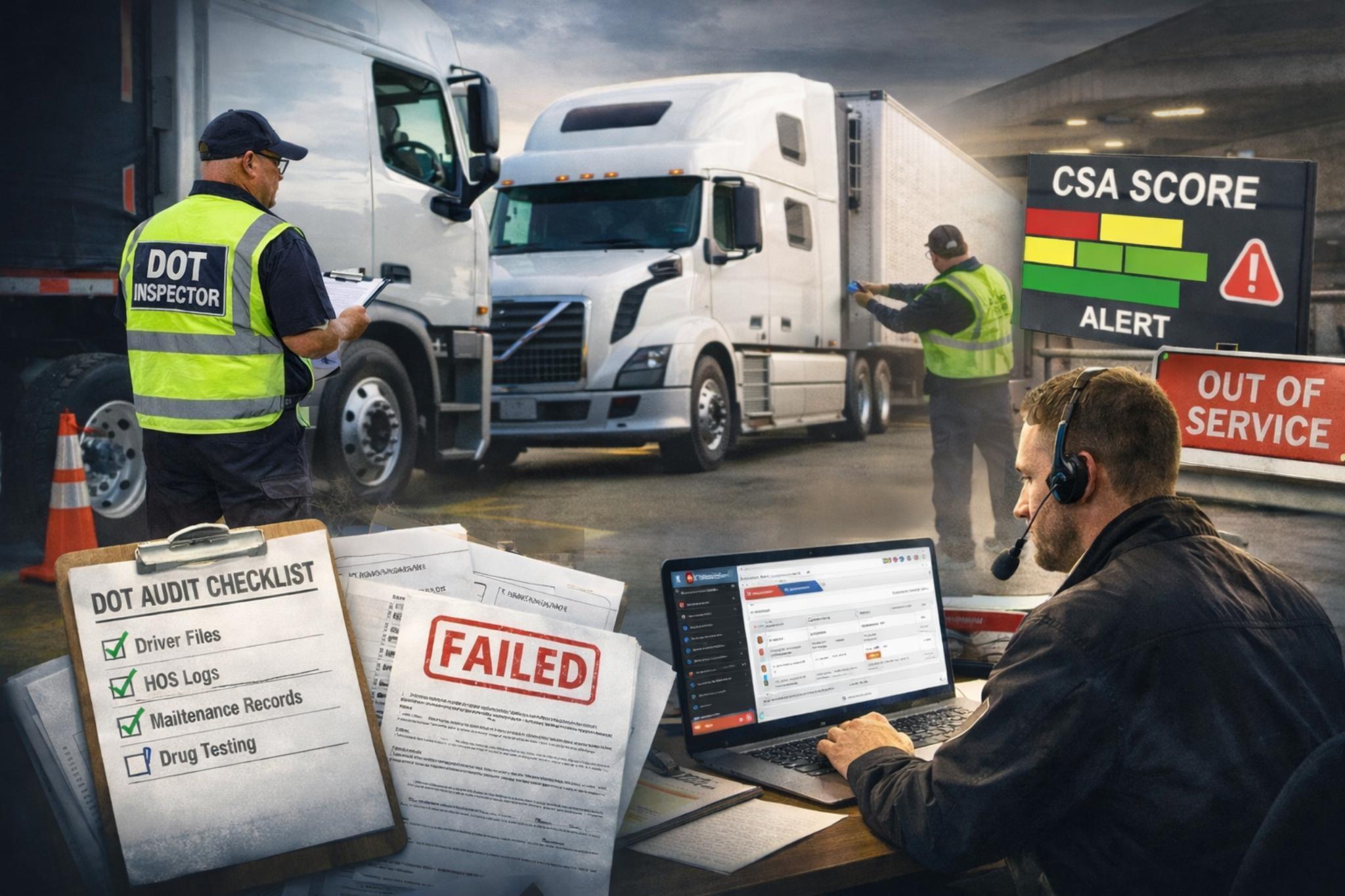
Key Takeaways: Your DOT Audit Readiness Action Plan
-
Treat Audits as Ongoing Processes, Not Events
Routine compliance habits reduce panic and prevent last-minute documentation chaos. -
Centralize Driver and Vehicle Documentation
Digital organization ensures instant retrieval and professional audit presentation. -
Follow Preventive Maintenance Schedules Rigorously
Document every inspection and repair under 49 CFR 396 to prove systematic upkeep. -
Monitor Hours of Service and Drug Testing Regularly
HOS and substance testing violations frequently trigger deeper investigations. -
Conduct Monthly Internal Compliance Reviews
Internal audits catch small errors before they become costly violations. -
Use Technology to Automate Compliance Tracking
Fleet management systems like AUTOsist reduce manual errors and improve record accuracy. -
Respond Quickly and Professionally to Audit Failures
Corrective action plans and transparent communication protect long-term safety ratings.
Why DOT Audits Can Make or Break Your Fleet Operations
A DOT audit isn’t a casual review — it’s a deep operational inspection that can immediately affect whether your vehicles stay on the road. During a compliance review, auditors examine records, maintenance practices, driver files, and safety programs to determine if your fleet meets federal standards under regulations like 49 CFR Part 396 (Inspection, Repair, and Maintenance) and 49 CFR Part 382 (Controlled Substances and Alcohol Use Testing).
Failing an audit can result in thousands of dollars in fines, lowered CSA (Compliance, Safety, Accountability) scores, and in severe cases, out-of-service orders that halt revenue entirely. A single critical violation can ground multiple vehicles overnight. For a 25-truck fleet averaging $900 in daily revenue per vehicle, just two days of downtime can mean $45,000 in lost income — not including penalties or emergency repair costs.
The biggest misconception is that DOT audits are “just paperwork.” In reality, they expose whether your operation runs with discipline or chaos. Fleets that treat compliance as an afterthought often scramble when auditors arrive, while organized fleets treat audits as routine checkpoints rather than emergencies.
What DOT Auditors Actually Look For During Inspections
Understanding audit scope removes guesswork. DOT auditors follow structured procedures and evaluate both documentation and operational behavior. They want proof that your fleet doesn’t just claim compliance — it demonstrates it consistently.
Driver Qualification Files (DQF)
Driver Qualification Files verify that each driver legally and safely operates commercial vehicles under 49 CFR Part 391. Missing medical certificates, expired licenses, or incomplete employment histories trigger immediate red flags. Auditors often start here because driver eligibility directly affects road safety liability.
Vehicle Maintenance Records
Maintenance logs fall under 49 CFR 396.3, which requires systematic inspection and repair documentation. Auditors look for evidence of scheduled preventive maintenance, repair receipts, and annual inspection reports. Fleets that rely on scattered spreadsheets often struggle to present cohesive records quickly.
Hours of Service (HOS) Compliance
Under 49 CFR Part 395, auditors verify that drivers follow legal driving limits. Log inconsistencies, missing ELD data, or unrealistic trip durations can signal falsification. Even minor discrepancies can escalate into broader compliance concerns.
Drug and Alcohol Testing Programs
Regulated by 49 CFR Part 382, this program ensures drivers undergo pre-employment, random, and post-incident testing. Missing random test logs or outdated policy acknowledgments commonly result in violations.
Hazmat and Cargo Documentation (if applicable)
Fleets transporting hazardous materials must comply with 49 CFR Parts 171–180. Auditors inspect shipping papers, training certificates, and emergency response documentation. Errors here often carry heavier penalties due to safety risks.
The Complete Pre-Audit Fleet Inspection Checklist
Preparation transforms audits from stressful surprises into predictable reviews. The most effective fleets follow a structured checklist weeks before an expected audit.
Document Organization and Accessibility
Before auditors request anything, your documentation should already be structured and searchable. A practical preparation routine includes:
- Centralized digital storage for driver and vehicle files
- Clearly labeled maintenance and inspection folders
- Backup copies of licenses, permits, and insurance
- Updated compliance policies and acknowledgments
- Secure but easily accessible audit-ready folders
Fleets using dedicated vehicle maintenance tracking systems often retrieve records in seconds instead of hours, which immediately sets a professional tone during audits.
Vehicle File Requirements
Every commercial vehicle must maintain a documented lifecycle. Essential file contents include:
- Annual inspection certificates
- Repair and service invoices
- Preventive maintenance schedules
- Tire tread and brake inspection records
- Registration and insurance documentation
Many fleets rely on structured resources like a Fleet Maintenance Audit Checklist to ensure nothing slips through the cracks.
Driver File Requirements
Driver files prove operational eligibility. Each file should contain:
- Valid CDL and endorsements
- Medical examiner certificates
- Road test or equivalent certification
- Employment verification and background checks
- Training and safety acknowledgment forms
A missing document doesn’t just delay audits — it can disqualify a driver instantly.
Maintenance Program Documentation
Auditors expect to see systematic evidence, not ad-hoc repairs. Strong documentation includes:
- Written preventive maintenance policies
- Scheduled service intervals
- Inspection and defect correction logs
- Parts replacement histories
- Vendor service contracts or in-house repair records
A fleet that documents recurring inspections using a digital vehicle inspection app demonstrates proactive safety rather than reactive repair culture.
Common DOT Audit Failures and How to Avoid Them
Most DOT audit failures stem from patterns rather than isolated errors. The same issues appear repeatedly across fleets of all sizes. Recognizing these trends helps prevent repeat violations.
The most frequent audit failures include:
- Incomplete Driver Qualification Files – Missing medical cards or expired licenses
- Inconsistent Maintenance Records – Repairs performed without documented inspections
- HOS Log Violations – Unrealistic driving durations or missing ELD data
- Drug Testing Gaps – Random testing not conducted on schedule
- Unverified Inspection Repairs – Defects marked “fixed” without supporting invoices
For example, a mid-sized logistics fleet in 2023 discovered during a compliance review that 6 of its 42 vehicles lacked annual inspection certificates. The oversight resulted in $7,200 in fines and temporary vehicle restrictions. The issue wasn’t mechanical failure — it was documentation neglect.
Avoidance comes down to repeatable processes, not heroic last-minute efforts. Fleets that perform monthly internal audits rarely face surprise violations because they treat compliance as routine housekeeping.
Creating a Year-Round Compliance System (Not Just Pre-Audit Panic)
Reactive compliance creates stress and risk. Proactive compliance builds confidence and operational efficiency. The difference lies in establishing ongoing systems rather than scrambling before audits.
Daily and Weekly Compliance Tasks
Consistency starts with small recurring habits. Effective routines often include:
- Daily driver vehicle inspection reports (DVIRs)
- Weekly logbook or ELD reviews
- Immediate defect correction verification
- Driver license expiration monitoring
- Maintenance schedule confirmations
Monthly Compliance Reviews
Monthly reviews allow fleets to catch patterns before they escalate. Strong review practices include:
- Driver file completeness checks
- Preventive maintenance completion audits
- Drug and alcohol testing schedule validation
- CSA score monitoring
- Internal compliance scoring
Using Technology to Automate Compliance Tracking
Technology reduces human error and improves audit readiness. Fleet management software like AUTOsist allows fleets to automate inspection reminders, centralize driver files, and maintain organized maintenance logs. Instead of searching for paperwork, managers can instantly generate reports that align with DOT expectations.
Platforms that integrate inspection workflows, service histories, and driver management into one dashboard transform compliance from reactive panic into predictable routine. Many fleets also rely on structured guides such as the DOT Fleet Maintenance Requirements Guide to align policies with federal standards.
What to Do If Your Fleet Fails a DOT Audit
Failure doesn’t end operations — but it demands immediate corrective action. DOT authorities usually provide a remediation timeline, and how you respond determines whether your safety rating recovers or deteriorates further.
Immediate corrective actions typically include:
- Conducting a full internal compliance audit within 7–14 days
- Repairing or inspecting all flagged vehicles
- Updating incomplete driver files
- Submitting proof of corrective measures to auditors
- Implementing ongoing compliance monitoring systems
Communication matters. Fleets that maintain professional dialogue with auditors and demonstrate organized corrective plans often regain favorable ratings faster than those who delay or dispute findings without documentation.
A realistic recovery scenario might involve dedicating two weeks to documentation cleanup and process restructuring. While short-term operational disruption may occur, long-term compliance stability prevents repeat penalties and protects insurance premiums.
A DOT audit doesn’t have to be a threat. With structured checklists, consistent documentation, and year-round compliance systems, it becomes a routine validation of a well-run fleet rather than a disruption to operations.