 Miya Bholat
Mar 05, 2026
How Fleet Telematics Works (And Why It Matters for Fleet Managers)
Managing a fleet without visibility feels like flying blind. You don't know exactly where your vehicles are, how your drivers are behaving, or whether that check engine light has been ignored for two weeks. You rely on phone calls, spreadsheets, and assumptions.
Fleet telematics changes that completely.
By combining vehicle hardware, GPS tracking, and cloud-based software, telematics gives you real-time insight into your fleet's location, performance, and health. In this guide, we'll break down how fleet telematics works, what data it collects, and how you can turn that data into measurable improvements in safety, maintenance, and cost control.
Key Takeaways
- Fleet telematics is more than GPS tracking. It combines vehicle hardware, GPS, cellular networks, and software to provide real-time operational visibility.
- The system has three core parts. In-vehicle devices collect data, cellular networks transmit it, and fleet platforms turn it into usable insights.
- Telematics collects deep operational data. From idling and fuel usage to engine diagnostics and fault codes, the insight goes far beyond location tracking.
- Data becomes valuable through alerts and reporting. Real-time notifications and historical trend analysis allow you to act before small issues become expensive problems.
- The biggest gains come from maintenance integration. When telematics connects to preventive maintenance systems, fleets reduce breakdowns and extend vehicle lifespan.
- Choosing the right system requires strategic evaluation. Look for integration, scalability, ease of use, and actionable reporting — not just tracking hardware.
What Is Fleet Telematics?
Fleet telematics is the combination of telecommunications and informatics used to collect and transmit vehicle data remotely. In simple terms, it's technology that allows you to monitor your vehicles without being physically present.
Many people think telematics is just GPS tracking. It's much more than that.
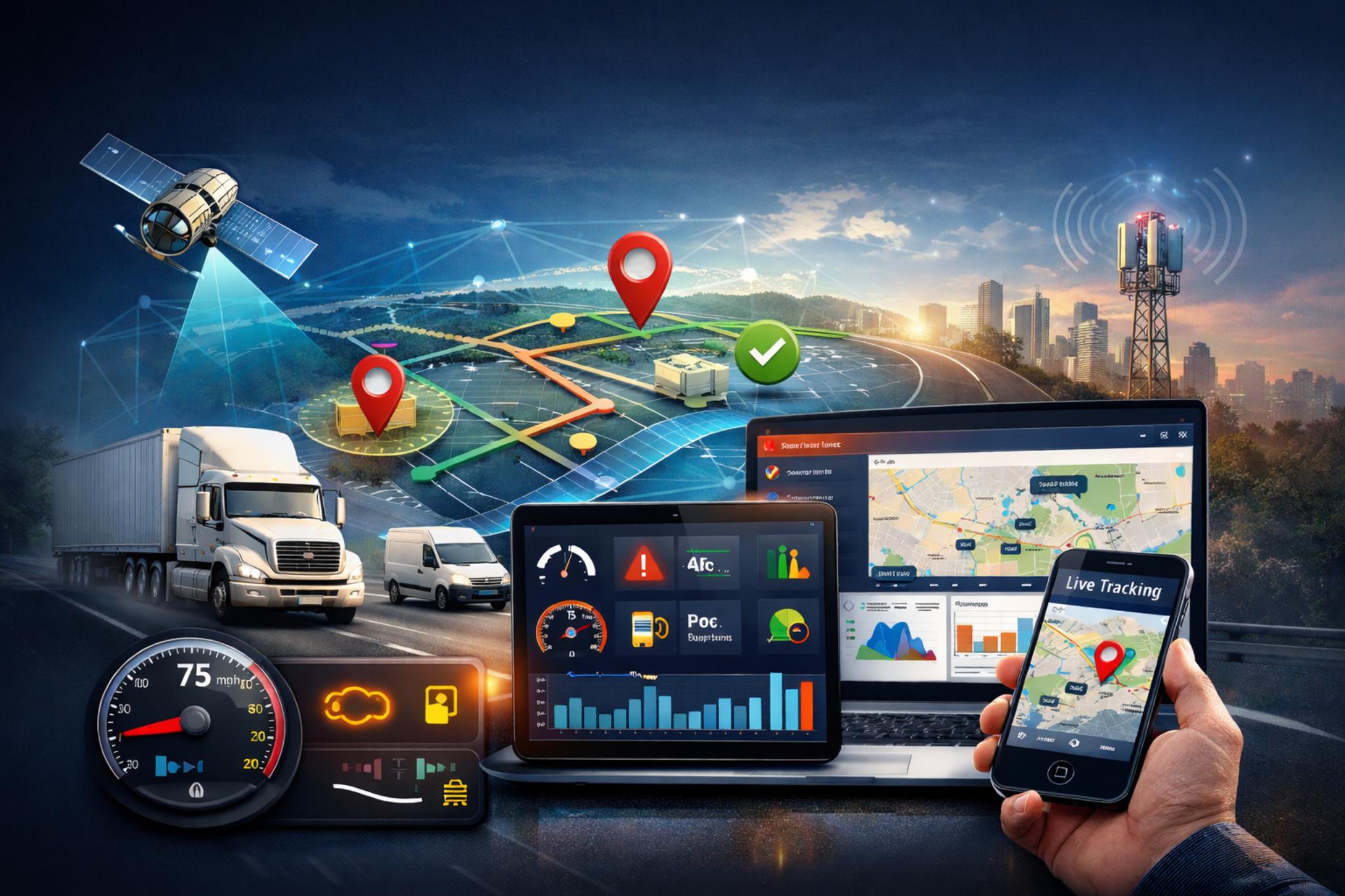
A modern telematics system collects data from the vehicle's onboard systems, sends that data over cellular networks, and presents it inside a fleet management platform. From there, fleet managers can monitor performance, receive alerts, and make informed decisions.
If you're new to the concept, think of telematics as the digital nervous system of your fleet — constantly sensing, transmitting, and reporting what's happening on the road.
The Core Components of a Fleet Telematics System
Fleet telematics works because of three core components working together: the in-vehicle device, the communication network, and the management platform.
The In-Vehicle Telematics Device (OBD or Hardwired)
The telematics device is installed inside the vehicle. Most plug into the OBD-II port (common in light- and medium-duty vehicles), while others are hardwired directly into the vehicle's electrical system — more common in heavy-duty fleets.
This device reads data directly from the vehicle's ECU (engine control unit). That includes information like engine diagnostics, RPM, fuel consumption, and fault codes.
There are two primary installation types:
- Plug-and-play OBD devices — easy to install, ideal for smaller fleets
- Hardwired devices — more secure and stable for commercial trucks
- Battery-powered trackers — useful for trailers or non-powered assets
- Advanced systems with CAN bus access — provide deeper diagnostic insights
The choice depends on your fleet size, vehicle type, and security requirements.
If you want a deeper look at installation differences, AUTOsist's guide on GPS tracking for fleets (OBD vs wired installation) provides a helpful breakdown.
Cellular and GPS Networks
Once the device collects vehicle data, it needs to transmit it.
GPS satellites determine the vehicle's location by triangulating signals. That provides latitude, longitude, speed, and direction.
Cellular networks then send that information from the vehicle to a cloud-based server. Think of it like your phone sending data to an app — except it's your truck sending engine data to your fleet dashboard.
You don't need to manage satellites or servers. The telematics provider handles the infrastructure behind the scenes.
The Fleet Management Platform
This is where telematics becomes useful.
All collected data flows into a web-based dashboard. Fleet managers can log in and see:
- Real-time vehicle locations
- Trip history and route playback
- Driver behavior metrics
- Engine fault codes
- Fuel usage patterns
- Maintenance alerts
Platforms like AUTOsist's GPS fleet tracking and telematics combine tracking with maintenance and reporting tools — turning raw vehicle signals into operational visibility.
Without the platform, telematics data is just numbers. With the platform, it becomes decisions.
What Data Does Fleet Telematics Actually Collect?
Fleet telematics collects far more than location data. It captures a wide range of operational and mechanical information.
Before reviewing the list below, keep in mind: not every fleet uses every data point. You can configure systems based on your priorities.
Here are common types of telematics data:
- GPS location and route history
- Vehicle speed and speeding events
- Idling time and idle duration
- Harsh braking, acceleration, and cornering
- Engine RPM and load
- Fuel consumption and fuel level
- Odometer readings
- Diagnostic trouble codes (DTCs)
- Battery voltage and health
- Seatbelt usage (in supported vehicles)
For example, idling alone can cost fleets thousands annually. If a vehicle idles one hour per day, five days per week, at roughly 0.8 gallons per hour, that's about 208 gallons per year. At $4 per gallon, that's over $800 per vehicle — just from idling.
Multiply that across 25 vehicles and you're looking at $20,000+ annually.
Telematics makes those hidden costs visible.
How Fleet Telematics Data Gets Turned Into Actionable Insights
Raw data doesn't reduce costs. Insight does.
Telematics platforms process incoming data and turn it into alerts, dashboards, and reports that help you take action quickly.
Real-Time Alerts and Notifications
Real-time alerts allow you to respond immediately instead of discovering problems later.
Examples include:
- Speeding alerts when drivers exceed thresholds
- Geofence breach notifications
- Engine warning alerts triggered by fault codes
- Excessive idling notifications
- After-hours vehicle movement alerts
If a vehicle triggers a diagnostic trouble code, you can schedule service before a roadside breakdown. That's the difference between planned maintenance and reactive repair.
Historical Reporting and Trend Analysis
Historical reporting reveals patterns.
Instead of reacting to single incidents, you can analyze:
- Which drivers consistently exceed speed limits
- Which routes consume more fuel
- Which vehicles trigger frequent fault codes
- How maintenance costs trend over time
- Utilization rates across the fleet
Over time, this data becomes strategic. It supports budgeting, compliance audits, and safety initiatives.
For fleets looking to measure performance consistently, reviewing fleet KPIs is essential — AUTOsist's guide to fleet maintenance KPIs with formulas provides a structured approach.
Key Benefits of Fleet Telematics for Fleet Managers
Now that you understand how telematics works, let's focus on why it matters.
Telematics delivers measurable improvements when implemented correctly.
Here are the most impactful benefits:
- Improved driver safety — behavior monitoring reduces risky driving habits
- Lower fuel costs — reduced idling and optimized routing cut waste
- Reduced maintenance costs — early detection prevents major failures
- Better compliance — trip logs and documentation simplify audits
- Increased accountability — clear data removes guesswork
- Higher fleet utilization — visibility improves asset deployment
According to multiple industry studies, fleets that implement driver monitoring programs can reduce accidents by 20–30%. Even a modest reduction in collision frequency can significantly lower insurance premiums and downtime.
Telematics also supports proactive safety management. If you're building a structured safety program, AUTOsist's fleet safety monitoring guide outlines practical steps to implement one.
Fleet Telematics and Preventive Maintenance — A Natural Pairing
One of the most powerful uses of telematics is preventive maintenance automation.
Telematics devices capture:
- Odometer readings
- Engine hours
- Fault codes
- Engine temperature data
- Performance anomalies
Instead of manually tracking mileage in spreadsheets, maintenance schedules can trigger automatically based on real data.
For example, when a vehicle reaches 5,000 miles, the system can generate a service reminder. If a diagnostic trouble code appears, you can create a work order immediately — reducing the risk of catastrophic failure.
Platforms like AUTOsist integrate telematics directly into fleet preventive maintenance schedules, linking real-time data with automated service tracking. That means fewer missed intervals and stronger documentation.
When telematics and maintenance software work together, fleets shift from reactive repair to structured preventive programs — which lowers total cost of ownership over time.
How to Choose the Right Fleet Telematics System
Not all telematics solutions are equal. Choosing the right system requires evaluating both hardware and software.
Before selecting a provider, consider these questions:
- Does it support your vehicle types (light-duty, heavy-duty, mixed fleet)?
- Is installation plug-and-play or hardwired?
- Does it integrate with your existing maintenance software?
- What reporting and dashboard capabilities are included?
- Are alerts configurable and actionable?
- What is the pricing structure (hardware + subscription)?
- Is customer support responsive and knowledgeable?
Integration matters more than most fleet managers realize. If telematics data lives in one system and maintenance in another, you create silos.
That's why many fleets evaluate integrated solutions alongside standalone trackers. Reviewing a comprehensive fleet telematics integration guide can help clarify what to look for in a unified platform.
The goal isn't just tracking vehicles — it's improving operations.
Fleet telematics works by turning vehicles into connected data sources. When you use that data correctly, you don't just see your fleet — you control it.
And that visibility changes everything.