 Miya Bholat
Apr 17, 2026
Why Government Fleets Need Modern Fleet Management Software?
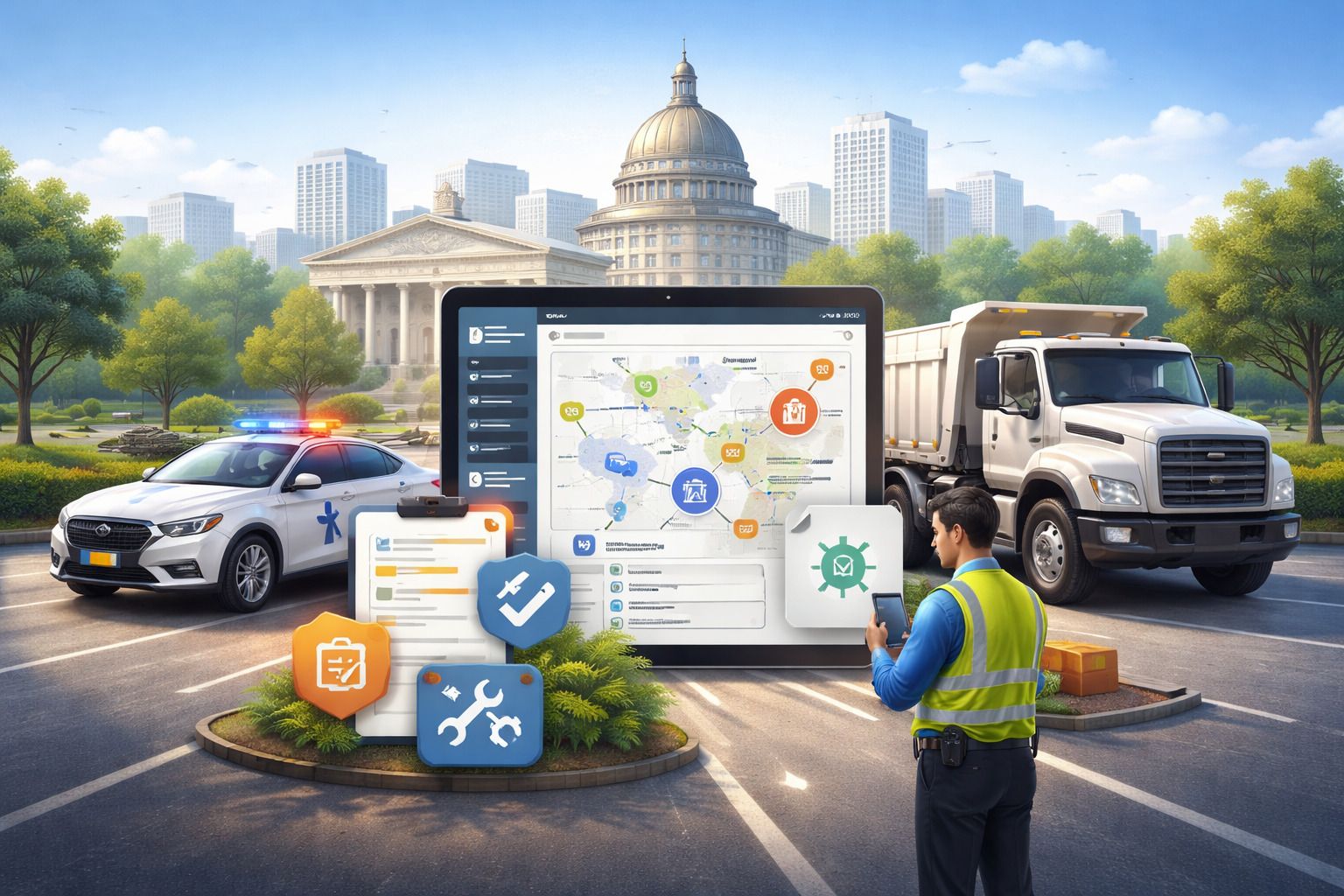
Running a government fleet is not like running a private operation. You are dealing with fixed budgets, public scrutiny, aging vehicles, and often outdated systems that rely heavily on manual processes. At the same time, expectations remain high. Roads must be maintained, emergency services must stay active, and public transport must run without interruption.
This creates a difficult balance. Fleet managers, procurement officers, and municipal leaders are expected to do more with less while ensuring compliance and accountability. This is exactly where modern fleet management software becomes essential, not optional.
Key Takeaways
- Government fleets face stricter operational pressure than private fleets
Budget limits, audits, and public accountability make inefficiency far more costly. - Manual systems quietly increase costs over time
Paper logs and spreadsheets lead to missed maintenance, downtime, and compliance risks. - Modern software reduces both operational and administrative workload
Automation replaces repetitive tracking, reporting, and recordkeeping tasks. - Preventive maintenance directly improves service delivery
Keeping vehicles on the road ensures uninterrupted public services. - Centralized visibility improves accountability across departments
A single system helps track performance, justify budgets, and manage resources efficiently.
What Is Government Fleet Management and Why It Matters ?
Government fleet management refers to the oversight, maintenance, and operation of vehicles used by public sector agencies such as municipalities, utilities, law enforcement, and transportation departments. These fleets are responsible for delivering essential public services, which makes reliability and accountability far more critical than in most private sector operations.
Unlike commercial fleets, government operations must balance cost efficiency with transparency. Every maintenance decision, fuel expense, and repair record may be subject to public scrutiny or audit. This is why many agencies are moving toward structured systems like government fleet management to centralize operations and improve visibility across departments.
At its core, effective government fleet management ensures that vehicles remain safe, compliant, and available when needed. It also provides the data required to justify budgets, plan replacements, and demonstrate operational efficiency to stakeholders.
Why Government Fleet Management Is Uniquely Challenging
Government fleets operate under a completely different set of constraints compared to commercial fleets. These challenges are structural and often unavoidable.
Some of the most common issues include:
- Fixed annual budgets that limit flexibility
- Procurement processes that slow down decision making
- Strict audit and reporting requirements
- A wide variety of vehicle types across departments
- Limited staff handling large operational workloads
When these challenges combine with manual processes, inefficiencies multiply quickly.
The Hidden Costs of Outdated Fleet Operations
Many government fleets still rely on spreadsheets or paper logs to manage operations. While this may seem manageable at first, the long term impact is significant.
Here is where costs start to build up:
- Missed service intervals leading to breakdowns
- Emergency repairs that cost significantly more than planned maintenance
- Increased vehicle downtime affecting public services
- Incomplete or missing records during audits
- Administrative hours spent on manual tracking
This is why many fleets begin evaluating alternatives after realizing the limitations of spreadsheets vs fleet management software.
The Compliance and Reporting Burden on Government Fleets
Government fleets must meet a wide range of compliance requirements. These include safety inspections, emissions standards, DOT regulations, and internal audits. Each of these requires accurate documentation and consistent tracking.
Without a centralized system, compliance becomes reactive instead of proactive.
Fleet managers often deal with:
- Inspection logs stored across multiple formats
- Inconsistent maintenance records
- Difficulty retrieving documents during audits
- Risk of penalties due to missing data
How Modern Software Simplifies Compliance Tracking
Modern systems centralize everything into one platform. Maintenance logs, inspection reports, and compliance documents are automatically recorded and stored.
Instead of chasing paperwork, fleets can:
- Maintain audit ready records at all times
- Track inspections using a digital vehicle inspection app
- Store documents in a centralized vehicle document management system
- Generate reports instantly when needed
This shift removes a major administrative burden while improving compliance accuracy.
How Fleet Management Software Cuts Government Fleet Costs
Cost reduction is one of the strongest arguments for adopting modern software. The savings come from multiple areas, not just one.
Key cost drivers that improve include:
- Preventive maintenance replacing expensive breakdown repairs
- Reduced fuel waste through better tracking and monitoring
- Lower administrative costs due to automation
- Extended vehicle lifespan with proper service scheduling
For example, fleets using fleet preventive maintenance schedules can significantly reduce unexpected failures and improve asset longevity.
Calculating ROI for a Municipal Fleet
Let's consider a simple example of a 50 vehicle city fleet.
Without software:
- 10 unexpected breakdowns per year
- Average repair cost per breakdown: $2,500
- Total: $25,000
With preventive maintenance:
- Breakdowns reduced by 40 percent
- Savings: $10,000 annually
Now add:
- Reduced fuel waste: $8,000
- Administrative time savings: $12,000
Total estimated annual savings: $30,000 or more.
For a deeper breakdown, many teams refer to a fleet management software cost breakdown to build internal justification.
Improving Fleet Uptime and Vehicle Availability for Public Services
Vehicle uptime directly impacts service delivery. When vehicles are unavailable, operations slow down or stop entirely.
Examples include:
- Public works vehicles delaying road repairs
- Emergency vehicles reducing response coverage
- Transit vehicles causing service disruptions
Improving uptime is not just operational, it is public facing.
Preventive Maintenance Scheduling That Actually Works
Modern systems allow fleets to schedule maintenance based on real data.
These schedules can be triggered by:
- Mileage thresholds
- Engine hours
- Time based intervals
Using tools like OEM factory maintenance schedules ensures vehicles are serviced according to manufacturer recommendations.
This approach prevents failures before they happen instead of reacting after breakdowns.
Fleet Visibility and Accountability Across Departments
Government fleets often span multiple departments. This makes tracking performance and accountability difficult without centralized systems.
Fleet managers need a single source of truth.
Modern systems provide:
- Real time visibility across all vehicles
- Department level performance tracking
- Data for budget justification
- Clear audit trails for accountability
For example, organizations using systems described in how integrated fleet management software connects your entire operation gain better control over multi department fleets.
Work Order Management for Multi Department Fleets
Paper based work orders create delays and confusion. Digital work orders streamline the entire repair process.
With fleet maintenance work order software, fleets can:
- Assign tasks instantly to technicians
- Track repair status in real time
- Maintain complete service history
- Reduce communication gaps between departments
This improves both efficiency and accountability.
Modernizing Government Fleet Operations: What to Look for in Software
Choosing the right system requires focusing on practical functionality, not just features.
Here are the most important capabilities to prioritize:
- Preventive maintenance scheduling to avoid breakdowns
- Inspection tools for consistent reporting
- Fuel tracking for cost control
- Work order management for repair workflows
- Document storage for compliance
- Mobile access for field teams
- Multi department support for centralized visibility
If you are evaluating solutions, resources like a fleet management software buyers guide can help compare options effectively.
Government agencies often benefit from solutions tailored specifically for their needs, such as government fleet management systems designed for public sector operations.
Making the Case for Fleet Software in a Government Budget
Getting approval for new software in a government environment requires a clear and structured approach.
Fleet managers should focus on three areas:
- Cost savings through reduced repairs and fuel usage
- Risk reduction by improving compliance and audit readiness
- Operational efficiency through automation and centralized data
To strengthen your case:
- Use real data from your current operations
- Highlight inefficiencies caused by manual systems
- Show projected ROI using simple calculations
- Address IT concerns such as data security and integration
A phased rollout can also make adoption easier. Start with one department, measure results, and expand gradually.
Frequently Asked Questions
-
What is fleet management software and how does it work for government agencies?
Fleet management software is a centralized system that helps track vehicles, maintenance, inspections, and compliance. For government fleets, it replaces manual processes with automated tracking and reporting. -
How much can a government fleet save by switching to fleet management software?
Savings vary, but many fleets reduce maintenance and fuel costs by 15 to 30 percent while also lowering administrative workload. -
Is fleet management software hard to implement for a city or municipality?
Most modern platforms are designed for easy onboarding. Many fleets start with a small rollout and expand once processes are established. -
What compliance requirements can fleet software help government fleets meet?
It helps manage inspections, maintenance records, emissions tracking, and audit documentation, ensuring everything is organized and accessible. -
How does fleet management software improve vehicle uptime and service delivery?
By scheduling preventive maintenance and tracking vehicle health, software reduces breakdowns and keeps vehicles available for critical public services.