 Miya Bholat
Feb 09, 2026
How Telematics & Fleet Data Help Lower Fleet Insurance Premiums
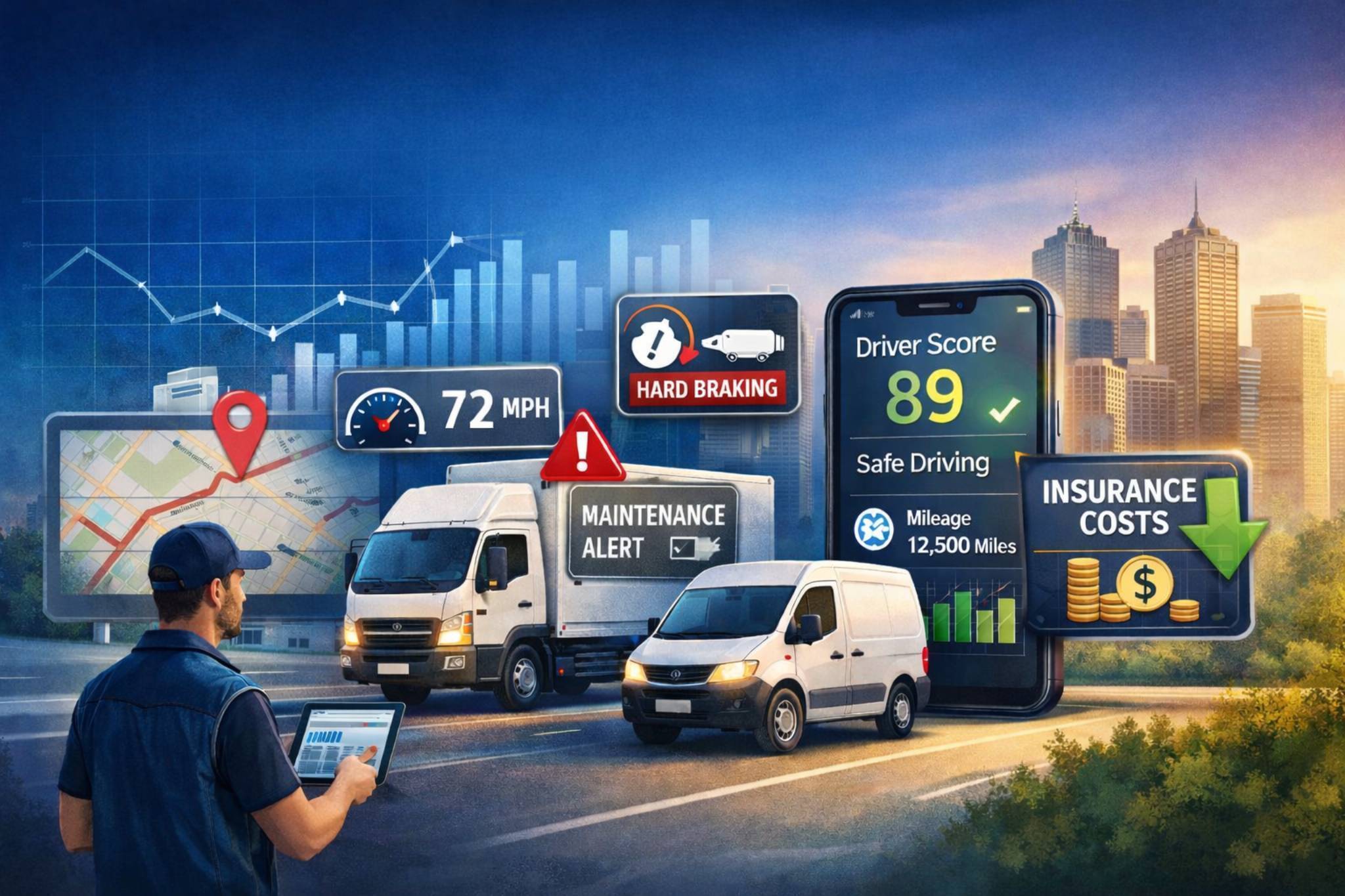
Key Takeaways: Your Roadmap to Lower Insurance Costs
- Measure Real Risk, Not Assumptions – Telematics replaces generalized underwriting with factual performance metrics.
- Coach Drivers Continuously – Behavior improvements directly reduce incident probability and premium pressure.
- Maintain Documented Service History – Structured maintenance logs demonstrate reliability and reduce liability.
- Adopt Usage-Based Insurance Programs – UBI rewards safe operations with tangible discounts.
- Choose Integrated Platforms – Systems that unify GPS, maintenance, and analytics deliver stronger insurer confidence and broader ROI.
Why Fleet Insurance Premiums Are Rising (And How Data Can Help)
Commercial fleet insurance costs have climbed steadily over the last decade, and many fleet managers now report annual premium increases between 8–20%, even when they haven’t filed major claims. Several forces drive these increases: higher vehicle repair costs, rising accident litigation expenses, parts inflation, and growing claim severity. For example, the average commercial vehicle accident claim in the U.S. now exceeds $70,000, while severe injury cases can easily surpass $500,000. Insurers adjust premiums to offset these risks, which means safe fleets often end up subsidizing unsafe ones under traditional rating models.
Telematics changes that equation. Instead of broad risk categories, insurers can analyze actual operational data. When fleets prove that drivers operate safely, vehicles receive regular maintenance, and routes remain optimized, insurers gain confidence that claim probability drops. This confidence often translates into usage-based discounts, safer-driver incentives, and long-term premium stability.
Fleets that actively manage data instead of reacting to renewals typically see:
- Lower claim frequency
- Faster dispute resolution with evidence
- Stronger negotiation leverage during policy renewal
- Eligibility for Usage-Based Insurance (UBI) programs
- Long-term premium predictability
What Telematics Data Do Insurance Companies Actually Care About?
Insurance companies do not look at “data” in general — they focus on risk-correlated metrics. These metrics directly relate to collision probability, fraud likelihood, and vehicle reliability.
Driving Behavior Metrics
Driver behavior sits at the top of insurer evaluation models. Aggressive driving increases accident probability and claim severity, so insurers weigh these metrics heavily. Hard braking events, sudden acceleration, speeding frequency, and unsafe cornering patterns indicate elevated risk. Even excessive idling can signal poor route planning or fatigue-related inefficiencies.
Key behavior indicators insurers track include:
- Hard braking frequency per 1,000 miles
- Speed violations over posted limits
- Rapid acceleration events
- Harsh cornering counts
- Idle time percentage vs engine hours
Fleets that coach drivers using scorecards often reduce risky behavior by 20–40% within six months, which directly strengthens insurance negotiations.
Vehicle Utilization and Mileage Data
Mileage directly influences exposure. A delivery van traveling 35,000 miles annually presents higher risk than one traveling 12,000. However, insurers also analyze how those miles accumulate. Night driving, congested urban routing, and inconsistent scheduling increase risk compared to predictable daytime routes.
Utilization insights insurers value:
- Annual and monthly mileage trends
- Route density and traffic exposure
- Time-of-day usage patterns
- After-hours or unauthorized vehicle movement
- Seasonal workload spikes
Maintenance Records and Vehicle Health
A well-maintained vehicle reduces breakdown-related accidents and liability risks. Insurers often request maintenance logs because tire failures, brake wear, and neglected inspections correlate with severe incidents. Fleets that digitize service history through systems like AUTOsist gain an advantage because documentation becomes instantly accessible rather than scattered across spreadsheets.
When fleets maintain structured service history, they demonstrate operational discipline similar to recommendations in the Preventive Maintenance Checklists & Schedules approach.
How Usage-Based Insurance (UBI) Programs Work for Fleets
Usage-Based Insurance replaces estimation with measurement. Instead of predicting risk from vehicle type and ZIP code alone, insurers calculate premiums based on real-world performance data collected through telematics devices or integrated fleet software.
The process typically follows these stages:
- Enrollment and device or software integration
- Initial monitoring period (usually 90–180 days)
- Data scoring and behavioral analysis
- Discount eligibility assessment
- Ongoing performance tracking
Unlike traditional policies, UBI rewards improvement. A fleet that reduces speeding incidents over three quarters can see mid-term discounts rather than waiting for annual renewal.
Calculating Your Potential Savings: Real Numbers from Real Fleets
Savings vary by fleet size and discipline, but industry averages show 5–30% discount potential when telematics data demonstrates lower risk. Consider realistic examples:
Example 1 – 20-Vehicle Service Fleet
Annual premium: $60,000
Telematics investment: $3,600/year
Premium reduction: 12% ($7,200)
Net annual gain: $3,600
Example 2 – 75-Vehicle Logistics Fleet
Annual premium: $240,000
Telematics investment: $9,000/year
Premium reduction: 18% ($43,200)
Net annual gain: $34,200
Example 3 – 200-Vehicle Construction Fleet
Annual premium: $680,000
Telematics investment: $21,000/year
Premium reduction: 22% ($149,600)
Net annual gain: $128,600
ROI often reaches break-even within 3–6 months, especially when telematics also reduces fuel waste and downtime. Fleets leveraging analytics dashboards similar to Fleet Management Analytics & Metrics tend to identify cost leaks quickly.
5 Ways to Optimize Your Fleet Data for Better Insurance Rates
5 Ways to Optimize Your Fleet Data for Better Insurance Rates Strong data collection alone is not enough. Insurers want to see continuous improvement and policy enforcement.
Implement Driver Scorecards and Behavior Coaching
Driver coaching transforms raw event data into actionable improvements. Fleets that hold monthly reviews and provide incentive programs experience faster behavioral change.
Effective scorecard strategies include:
- Ranking drivers by safety index
- Rewarding low incident frequency
- Scheduling quarterly coaching sessions
- Sharing anonymized benchmark comparisons
- Tracking improvement trends over time
Establish Proactive Maintenance Schedules
Preventive maintenance reduces both accidents and roadside failures. Digital scheduling ensures service intervals remain consistent rather than reactive.
Set and Enforce Speed Policies
Speed governance paired with telematics alerts helps fleets curb one of the most common risk factors insurers penalize.
Reduce Idle Time and After-Hours Usage
Unauthorized vehicle use often correlates with higher claim probability. Idle reduction also lowers fuel costs and emissions.
Document Safety Training and Improvements
Insurers value proof of training because it demonstrates operational accountability. Documenting sessions and incident response procedures strengthens underwriting reviews.
Choosing Telematics Solutions That Insurers Recognize
Not all telematics platforms carry equal weight with insurers. Recognition depends on data accuracy, integration reliability, and reporting transparency. Fleets should prioritize systems that integrate GPS tracking, maintenance history, and driver behavior analytics in one ecosystem rather than fragmented tools.
Features insurers typically recognize:
- Continuous GPS and mileage tracking
- Automated maintenance logging
- Driver behavior event recording
- Secure data export and reporting
- Integration with insurance carrier dashboards
Solutions that combine telematics with maintenance and reporting — such as AUTOsist’s integrated fleet platform — provide a single source of truth rather than scattered data silos. Platforms that also align with industry standards discussed in the Fleet Risk Management Complete Guide further strengthen credibility during underwriting reviews.
Beyond Insurance: Additional ROI from Fleet Data
Insurance savings represent only one layer of telematics ROI. Most fleets discover that operational improvements deliver greater cumulative financial impact over time.
Additional benefits commonly include:
- Fuel savings: 8–15% reduction through idle monitoring and route optimization
- Maintenance savings: 10–20% fewer emergency repairs
- Productivity gains: Improved dispatch accuracy and scheduling
- Accident reduction: Lower incident frequency and claim severity
- Compliance readiness: Faster audit response with digital records
These benefits compound annually, often exceeding the insurance discount itself.
Fleets that treat telematics as a strategic asset rather than a tracking tool consistently achieve lower premiums, improved safety, and stronger long-term financial stability.