 Miya Bholat
Jun 29, 2026
7 Ways Parts Delays Disrupt Fleet Maintenance
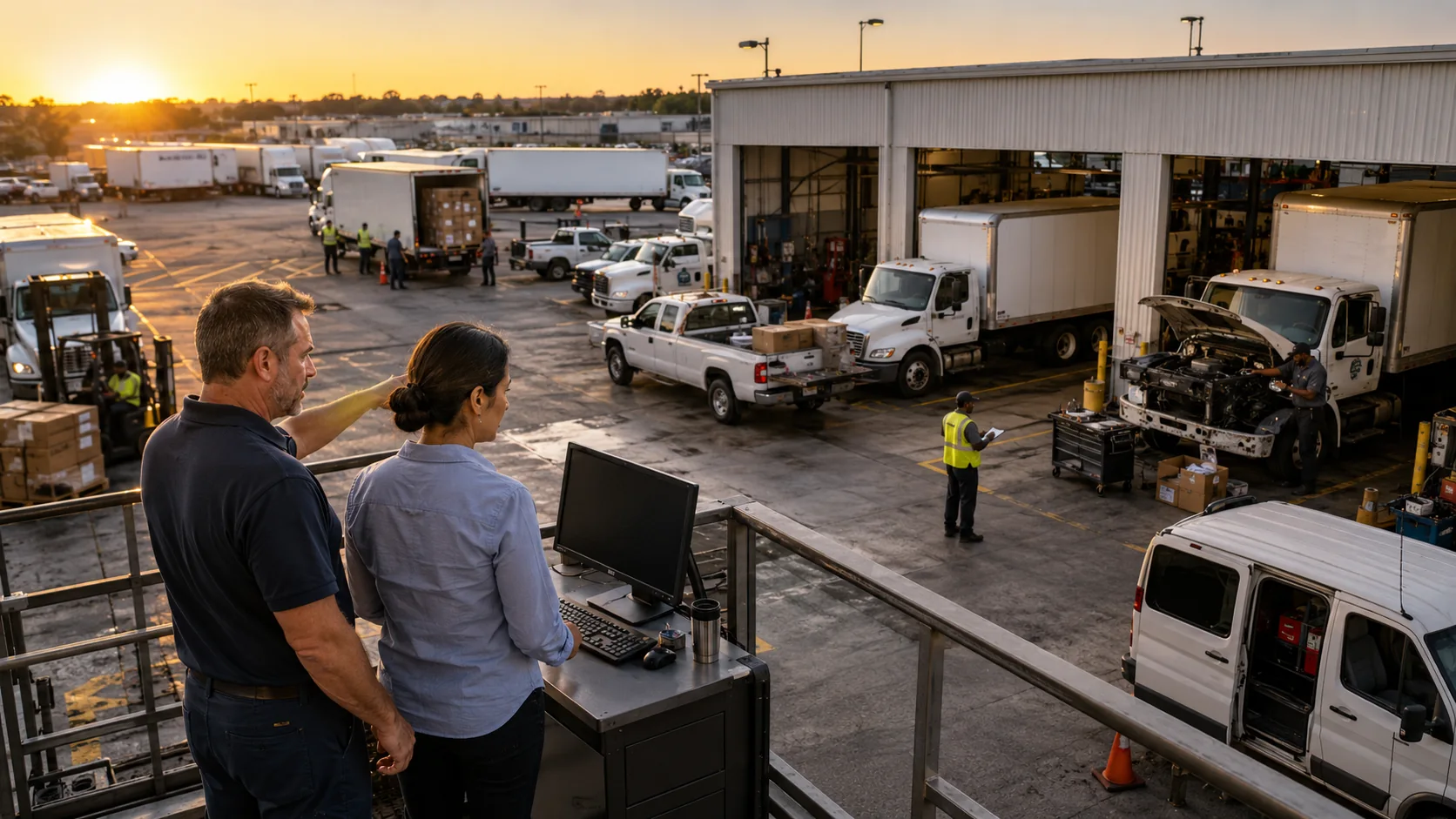
Parts delays disrupt fleet maintenance by extending downtime, pushing preventive work off schedule, increasing costs, reducing technician productivity, frustrating drivers, weakening customer service, and forcing teams into reactive maintenance. The solution is to manage maintenance as one connected system through better forecasting, broader supplier coverage, disciplined preventive work, and a fleet maintenance software platform that keeps repair status, parts needs, and vehicle history visible.
Key Takeaways
- Parts delays affect the entire operation: A single backordered component can disrupt vehicles, labor, drivers, customers, and budgets, while downtime may cost $448 to $760 per vehicle each day.
- Vehicle downtime keeps growing: A repair may be diagnosed quickly but remain unfinished for days because one part is unavailable.
- Preventive maintenance loses priority: Emergency jobs occupy bays and technicians, allowing scheduled service to fall behind.
- Costs extend beyond the part: Rentals, freight premiums, overtime, missed work, and penalties can exceed the purchase price.
- Technician productivity falls: Half completed repairs block bays and make daily workload planning less efficient.
- Drivers and customers feel the impact: Unreliable vehicles affect earnings, schedules, service windows, and trust.
- Reactive maintenance becomes normal: Fleets regain control through parts forecasting, protected preventive schedules, and connected repair tracking.
Why Parts Delays Have Become the New Normal for Fleets
Parts shortages are no longer isolated events. Fleetio's 2026 Fleet Benchmark Report found that 54.4 percent of fleet professionals named rising costs as a top concern, while 28.9 percent specifically pointed to parts and vehicle availability.

Supply Chain Pressures That Aren't Going Away
Several pressures continue to affect parts availability and pricing:
- Semiconductor shortages limit electronic modules, sensors, and control systems.
- Port disruptions create unpredictable delivery windows.
- The 2023 UAW strike and 2024 Taiwan earthquake created supplier ripple effects.
- Tariffs and material cost increases raised prices for metals and electronics.
- Some critical parts now carry lead times of 16 weeks or more.
Adding more vendors does not always solve the problem when several distributors depend on the same manufacturer. Fleets need alternate brands, approved substitutes, remanufactured options, and clear sourcing rules for critical components.
Aging Fleets Make the Problem Worse
S&P Global Mobility reported that the average vehicle age reached a record 12.8 years in 2025. Older vehicles require more repairs, while discontinued or less common components can be harder to source.
Accurate vehicle service history records help fleet teams identify assets with repeated failures, rising repair frequency, and recurring parts delays before those vehicles absorb too much of the maintenance budget.
1. Extended Vehicle Downtime That Drains Revenue
Downtime is the most visible disruption caused by parts shortages. Industry estimates place its average cost at $448 to $760 per vehicle per day before adding customer penalties, driver disruption, rental costs, or internal scheduling time.
According to the 2025 NPTC Benchmarking Survey, an average breakdown takes roughly 20 hours to resolve, up from approximately 15.8 hours in the prior year. A 50 truck fleet experiencing average breakdown rates can lose around 5,500 operational hours annually to unplanned maintenance.
A technician may diagnose the problem within an hour, yet the vehicle can sit for several days because one component is backordered. A defined fleet downtime management process helps teams separate diagnostic time, approval time, parts wait time, and actual repair time.
2. Preventive Maintenance Schedules Fall Apart
Parts delays consume the same bays, technicians, and management attention needed for scheduled service. When emergency jobs remain open, preventive work moves to the next day or week until maintenance compliance begins to slip.
Fleetio's 2026 report found that 72 percent of operators experience maintenance and repair challenges weekly or monthly. Fleets with strong preventive maintenance adherence experience around 20 percent fewer downtime days, yet average preventive maintenance compliance sits near 84 percent.
Automated preventive maintenance scheduling shows overdue services, upcoming intervals, and vehicles that should not be postponed again. Fleet teams should also understand what can happen when they delay fleet maintenance for 30 days instead of treating rescheduling as harmless.
3. Maintenance Costs Spiral Beyond Budget
Parts delays increase spending through both price inflation and secondary operating costs. A budget based only on normal parts prices and standard repair times will not hold when urgent jobs include availability premiums, extra shipping, rentals, and overtime.
Direct Cost Increases
Parts prices have climbed around 20 to 30 percent in some categories because of higher commodity, production, and transportation costs. ATRI data also shows that repair and maintenance cost per mile has risen approximately 34 percent since 2020. Emergency repairs can cost three to nine times more than scheduled maintenance.
The table below shows how parts delays create additional expenses beyond the purchase price of the component.
| Cost Area | How Parts Delays Increase Cost | Operational Result |
|---|---|---|
| Part purchase | Scarcity and substitute premiums raise prices | Higher repair invoices |
| Shipping | Expedited and split deliveries add freight charges | More cost without guaranteed arrival |
| Labor | Repeated setup and overtime increase technician hours | Lower shop efficiency |
| Vehicle coverage | Rentals and substitute vehicles become necessary | Higher route and operating costs |
| Service failure | Missed appointments and contract penalties reduce revenue | Lower margins and customer trust |
Hidden Costs Most Fleets Miss
The largest increases may never appear on the original parts invoice:
- Rental vehicles, which are becoming one of the fastest growing fleet budget items.
- Expedited shipping charges for backordered components.
- Technician overtime caused by changing work schedules.
- Repeated inspections and setup work for unfinished repairs.
- Administrative time spent updating vendors, drivers, operations teams, and customers.
One fleet manager reported repair completion times increasing four times when parts and technician delays occurred together. That compounding effect shows why the price of the repair alone does not reveal its full financial impact.
4. Technician Productivity Takes a Hit
Parts delays idle skilled labor as well as vehicles. ATRI found that 65.5 percent of diesel repair shops were understaffed in 2025, with an average of 19.3 percent of positions unfilled.
Shop productivity suffers in several ways:
- Vehicles waiting for parts continue occupying useful bay space.
- Technicians stop and restart jobs, repeating preparation and inspection work.
- Diagnostic specialists get pulled into daily triage instead of completing planned jobs.
- Uncertain delivery dates make technician workload planning unreliable.
- Growing backlogs increase the risk of rushed work and repeat repairs.
Digital fleet maintenance work orders can record repair status, assigned labor, pending components, approvals, and next actions. This allows managers to move technicians to work that can be completed instead of leaving them attached to stalled repairs.
5. Driver Satisfaction and Retention Suffer
Drivers lose confidence when vehicles break down repeatedly or remain unavailable without a reliable return date. The impact becomes more serious when drivers earn by route, load, mileage, or productive hours because vehicle downtime can reduce their earning capacity.
Repair uncertainty also disrupts work and personal schedules. Drivers may arrive without an available vehicle, lose an assigned route, or receive a replacement assignment with little notice. In a tight labor market, unreliable equipment and poor maintenance communication can become employee retention problems.
6. Customer Service and Contract Compliance Break Down
A vehicle waiting for a part can cause late deliveries, missed service windows, cancelled appointments, and rescheduled routes. For trucking and logistics fleet operations, repeated vehicle failures can trigger service level penalties or place valuable customer contracts at risk.
Consider a delivery fleet that loses several vehicles each month to extended repairs. Rental vehicles cover some routes, but capacity remains inconsistent and the fleet misses service commitments for three consecutive months. A key customer eventually moves the account because the fleet cannot reliably meet the agreed service level.
Customer trust is difficult to rebuild once service failures become predictable. Even when the cause is an unavailable component, customers usually judge the fleet by whether the delivery, appointment, or service visit happened as promised.
7. Reactive Maintenance Becomes the Default
Parts delays push fleet teams into constant fire fighting. Every open repair feels urgent, preventive work keeps moving, and technicians respond to whichever vehicle operations needs next.
A practical maintenance target is 70 to 80 percent scheduled work, 10 to 15 percent predictive work, and only 10 to 20 percent reactive work. Fleets trapped in parts delay cycles may operate closer to an even split between planned and reactive maintenance.
Each 10 percent shift from reactive to proactive maintenance can reduce total maintenance costs by approximately 6 to 8 percent. Reviewing the causes of reactive fleet maintenance helps teams separate unavoidable failures from breakdowns caused by missed service, poor inspection follow up, weak inventory planning, or recurring defects.
How to Fight Back Against Parts Delays
Fleet teams cannot control every supplier, port, tariff, or manufacturer constraint. They can control how early they identify parts demand, what they keep in stock, how they communicate repair status, and whether preventive maintenance remains protected.
Build a Smarter Parts Inventory Strategy
Use maintenance records to forecast demand based on vehicle age, mileage, engine hours, seasonal use, and failure history. A tiered inventory strategy keeps spending focused on parts that protect uptime:
- Tier one: Stock frequent and uptime critical parts such as filters, belts, batteries, brake components, lamps, and common sensors.
- Tier two: Set minimum quantities for moderately frequent parts with predictable replacement patterns.
- Tier three: Maintain approved backup suppliers and substitute options for expensive, low use components.
- Tier four: Flag obsolete or model specific components that may affect future replacement decisions.
A parts inventory management system can track available quantities, usage, reorder points, unit costs, and components already assigned to open repairs.

Vendor diversification matters as much as stocking. Fleets should avoid relying on one distributor for every category and should identify local, regional, original equipment, aftermarket, and remanufactured options before an urgent failure happens.
Shift from Reactive to Preventive Maintenance
Consistent preventive work catches wear before complete failure and creates time to order parts during a planned service window. The strongest process connects driver reports, inspection defects, scheduled service, and verified repair completion.
A digital vehicle inspection process can surface defects earlier, while maintenance schedules and work orders turn those findings into assigned action. This gives the fleet more time to source components before a small issue disables the vehicle.
Use Maintenance Software to Close the Visibility Gap
Parts delays become harder to manage when drivers, managers, repair shops, and finance teams have different information. AUTOsist can centralize repair communication so teams can see which vehicle is waiting, why it is waiting, and who owns the next step.
A consistent parts delay workflow should include these steps:
- Record the defect and affected vehicle.
- Confirm the diagnosis and required component.
- Assign the repair and responsible vendor.
- Record the expected parts arrival date.
- Update operations when the arrival date changes.
- Track repair completion, downtime, and final cost.
- Review vendor and vehicle performance.
A fleet reports dashboard helps management compare downtime, maintenance cost, repeat repairs, overdue service, and vendor performance. The same data supports replacement planning before an aging vehicle enters a cycle of frequent failures and difficult to source components.
Stop Letting Parts Delays Run Your Fleet
Parts delays are not only a supply chain problem. They are a fleet performance problem that affects vehicle uptime, maintenance schedules, technician labor, driver satisfaction, customer service, and financial results.
Fleets perform better when maintenance operates as a proactive system instead of a series of urgent repairs. Better forecasting, protected preventive schedules, broader supplier coverage, accurate repair updates, and complete vehicle histories create resilience through better planning, better data, and better tools.
Frequently Asked Questions
-
How much does vehicle downtime from parts delays actually cost?
Industry estimates place fleet downtime at approximately $448 to $760 per vehicle per day. The total can rise when rentals, overtime, towing, missed routes, and customer penalties are included. -
Why are fleet parts taking so long to arrive in 2025 and 2026?
Delays come from semiconductor constraints, port disruption, material price increases, tariffs, labor shortages, and production interruptions. Older vehicles may also require components with limited stock or longer production cycles. -
How can preventive maintenance reduce the impact of parts shortages?
Preventive maintenance identifies wear before complete failure. This gives the fleet more time to source parts, compare suppliers, and schedule the repair before the issue becomes an emergency. -
What parts should fleet managers stock to prevent downtime?
Fleets should prioritize frequent and uptime critical items such as filters, belts, batteries, brake components, lamps, and common sensors. Stocking decisions should consider failure history, supplier lead time, component cost, and operational impact. -
How does maintenance software help manage parts delays?
Maintenance software connects defects, work orders, parts status, expected arrival dates, vehicle history, and repair completion. Teams gain one source of information and better data for vendor evaluation, inventory planning, and vehicle replacement decisions.