 Miya Bholat
Aug 21, 2026
What Ambulance Fleet Managers Should Track Daily?
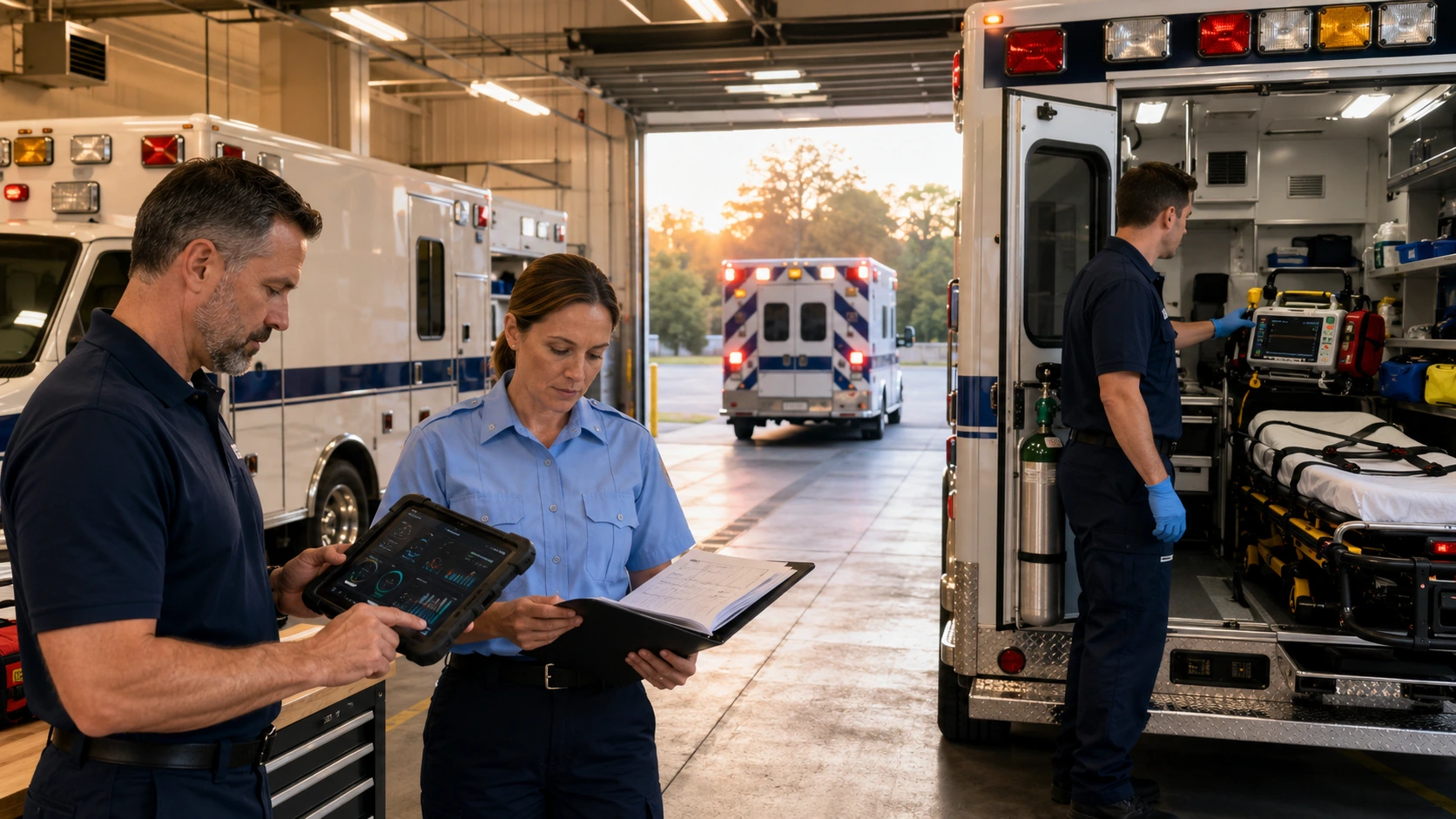
Ambulance fleet managers should track vehicle condition, emergency systems, medical equipment, controlled substances, mileage, fuel, defects, and inspection records every shift. The goal is to confirm two layers of readiness: the vehicle can respond safely, and the patient compartment can support clinical care. A centralized fleet management software process helps connect those checks to maintenance, accountability, and unit availability.
This dual responsibility is what separates EMS and ambulance fleet management from ordinary commercial fleet oversight. A mechanically sound ambulance still cannot enter service if its oxygen supply, defibrillator, medications, stretcher system, or required records are not ready.
Key Takeaways
- Ambulances require two readiness checks every shift. Fleet managers must confirm that both the vehicle and its medical compartment are ready for emergency response.
- Ambulance inspections go beyond standard fleet checks. Emergency lighting, sirens, climate control, oxygen, clinical equipment, and controlled substances require daily verification.
- CAAS GVS V4.0 strengthens the readiness baseline. The standard provides an important safety and performance framework for new and remounted ambulances.
- Every defect needs a clear escalation decision. Severity, ownership, response action, unit availability, and return to service approval must be documented.
- High utilization makes daily mileage and fuel tracking essential. Rapid mileage accumulation compresses maintenance intervals and increases the risk of overdue service.
- Complete records protect audit readiness. Daily documentation provides evidence for maintenance decisions, state inspections, licensing reviews, and compliance audits.
Why Daily Tracking Looks Different for an Ambulance Fleet
A delivery vehicle can sometimes wait for the next available service window. An ambulance cannot remain available when a defect could affect response, transport, or patient care. Every shift begins with two questions: Is the vehicle safe to operate, and is everything required for clinical response present and functional?
The Golden Hour is commonly used to explain why early treatment and transport can matter in time sensitive trauma care. It should not be treated as a rigid stopwatch for every patient, but it captures the operational stakes. A failed siren, depleted oxygen cylinder, weak defibrillator battery, or unsecured stretcher can consume time when the crew has little time to spare.
Daily checks therefore need clear ownership. Crews inspect and report what they can observe, while fleet, clinical, and operations leaders decide whether a problem can be corrected immediately or requires the unit to leave service.
Vehicle Readiness Checks Every Shift Should Start With
Begin with the same roadworthiness fundamentals expected in a commercial vehicle inspection, then account for emergency response duty. Ambulances idle extensively, accelerate under load, operate electrical equipment while stationary, and may travel over curbs, rough shoulders, or congested streets.
A daily vehicle check should cover:
- Tires, tread condition, pressure, and visible damage
- Brakes, steering, suspension, and fluid leaks
- Engine oil, coolant, transmission fluid, and washer fluid
- Headlights, brake lights, turn signals, and scene lighting
- Fuel level and visible warning indicators
- Mirrors, windshield, wipers, and backup camera
- Doors, steps, grab handles, and compartment latches
A digital vehicle inspection app can standardize these observations while preserving photos, timestamps, unit details, and crew identification. The record should show what was inspected, not simply that a form was submitted.
Pre Trip Inspection Items Unique to Emergency Vehicles
Emergency systems require a separate functional check because a standard commercial inspection does not cover the full ambulance operating environment.
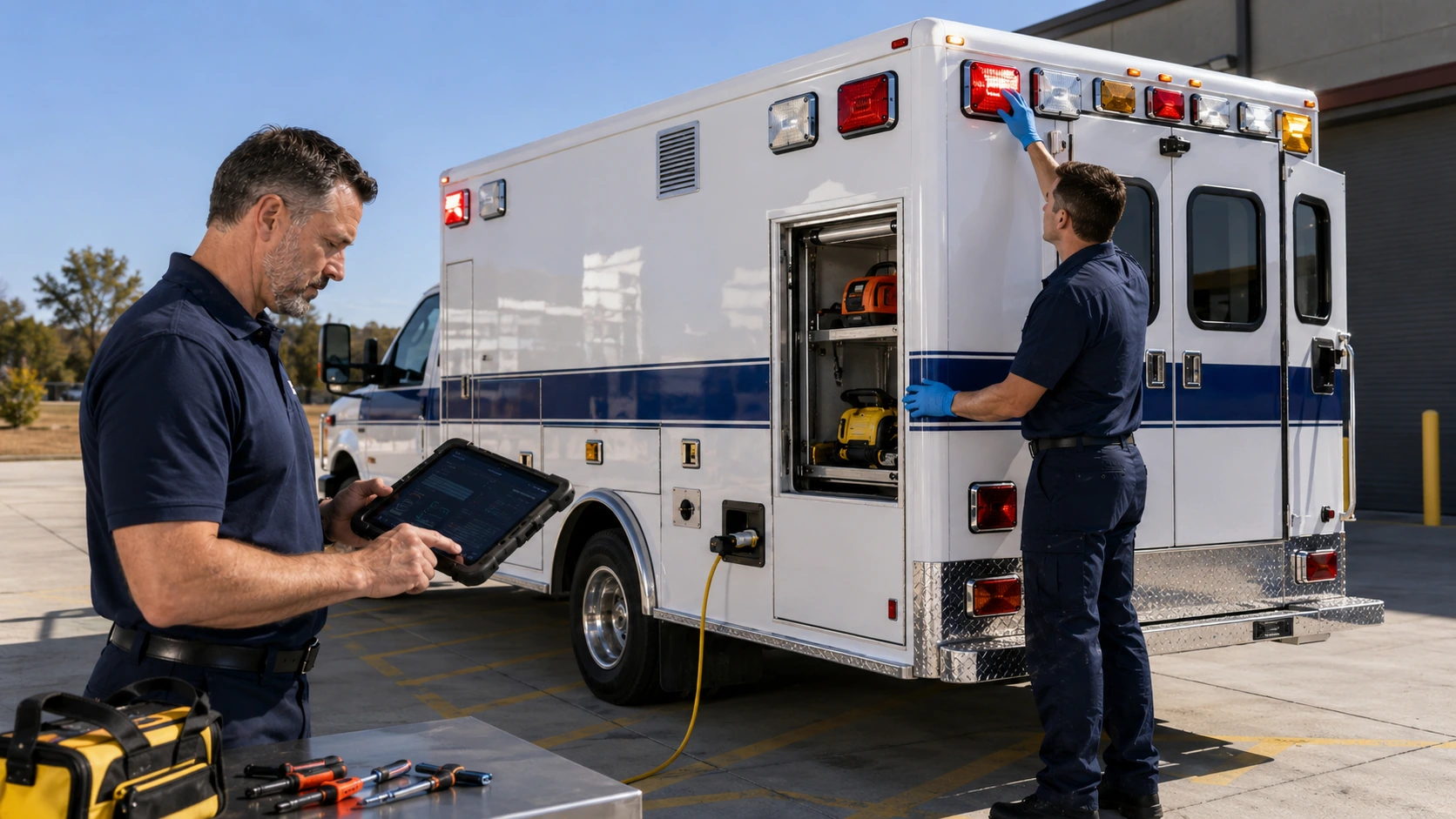
Crews should verify:
- Siren tones and public address equipment
- Emergency lighting circuits and control switches
- Patient compartment heating and cooling
- Shore power connection and charging function
- Power inverter and interior electrical outlets
- Suction system and onboard oxygen delivery
- Patient compartment doors and warning alarms
Inspection results should feed fleet preventive maintenance schedules when repeated observations suggest wear. A slow door latch or intermittent warning light may not stop the first response, but recurring reports can reveal a developing failure.
Medical Equipment and Compliance Checks That Cannot Wait Until Weekly
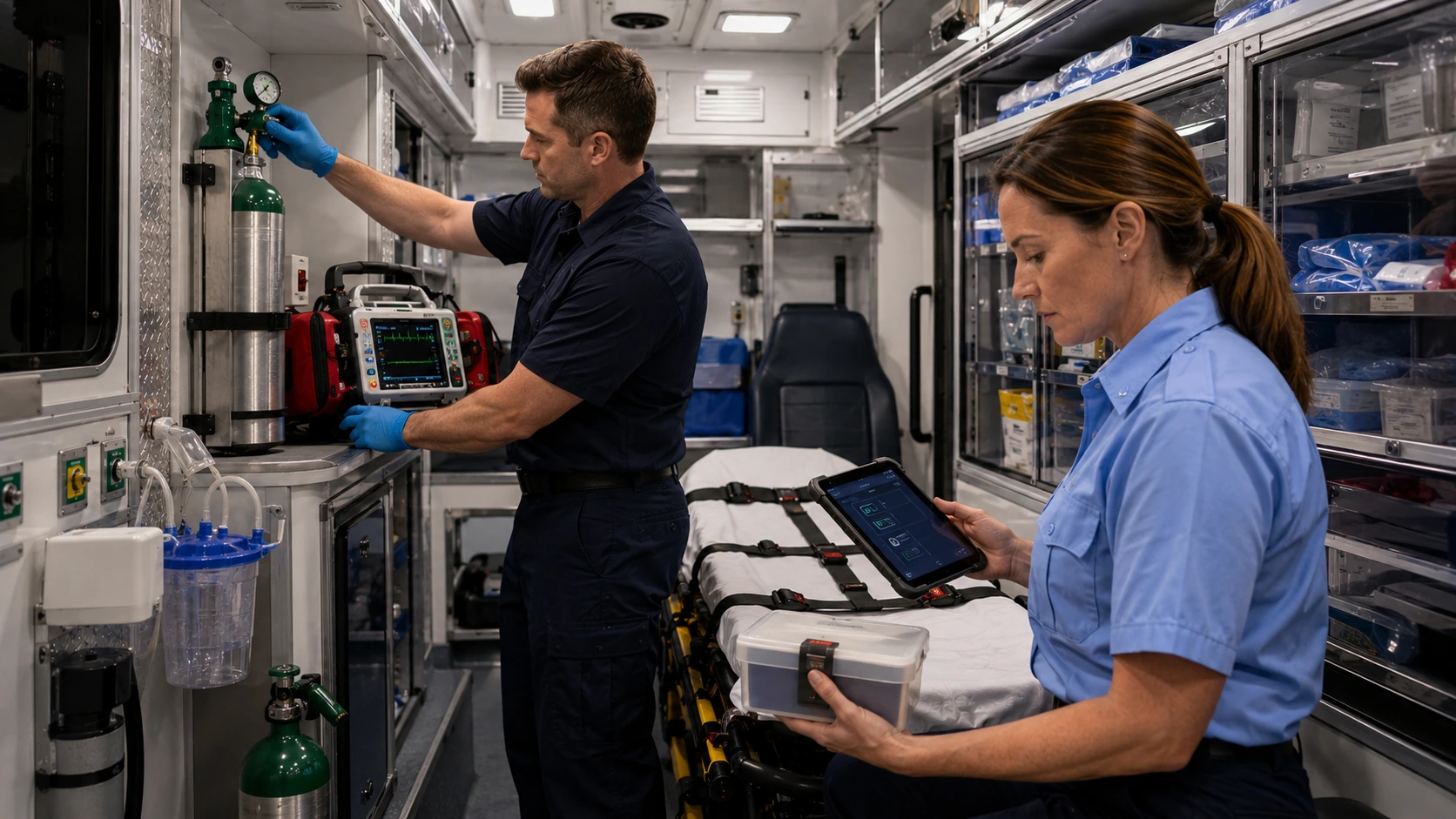
Vehicle readiness does not establish clinical readiness. The medical compartment needs a documented check before the unit enters service and whenever responsibility transfers between crews.
Daily medical checks should include:
- Main and portable oxygen cylinder pressure
- Cardiac monitor and defibrillator battery condition
- Defibrillator self test or approved function check
- Medication presence, packaging, and expiration dates
- Stretcher operation and litter fastener engagement
- Suction equipment, airway supplies, and required disposables
Fleet records should preserve mechanical work separately from clinical inventory while still connecting both to the unit. A complete vehicle service history can help managers determine whether power, charging, climate, or stretcher mounting problems have occurred before.
Controlled Substance and Narcotic Accountability
Controlled substance accountability is a same day responsibility, not a weekly administrative review. The assigned crew should verify the narcotic count at the beginning and end of custody according to local policy, confirm seals or storage controls, and record each transfer or administration.
The log should identify the medication, quantity, responsible personnel, time, and reason for any change. Any mismatch requires immediate escalation under the agency policy. State requirements differ, so the process must follow the applicable state EMS authority, medical direction, and federal controlled substance obligations.
Complete custody records belong in a secure vehicle document management system or another access controlled repository. Fleet managers may not own the clinical record, but they must know whether an accountability failure affects unit availability.
Mileage, Fuel, and Utilization Data Fleet Managers Should Log Daily
A high use ambulance may accumulate roughly 60,000 to 90,000 miles in a year. That is approximately three to four times the 20,785 annual miles reported for an average demand response vehicle in the United States Department of Energy vehicle mileage data. Actual ambulance mileage varies substantially by call volume, coverage area, deployment model, and hospital distance.
This utilization compresses maintenance windows. A mileage based service interval that lasts months in another government vehicle may arrive within weeks in a busy ambulance operation.
Managers should record:
- Beginning and ending odometer readings
- Fuel added and current fuel level
- Engine hours when available
- Miles driven and calls completed
- Idle time and extended standby periods
- Unit swaps and reserve unit assignments
Connecting these entries through fleet fuel management software helps reveal unusual consumption, missed fuel entries, and the operating cost of extensive idling.
Mileage alone does not explain emergency vehicle use. GPS tracking and telematics can add engine hours, route activity, location history, and utilization context when agency policy permits that data collection.
How Daily Defects Get Escalated Without Delaying Response Readiness
Every defect needs a decision path. Leaving free text in an inspection form without assigning severity and ownership creates uncertainty about whether the ambulance can remain available.
Use this daily escalation workflow:
- The crew reports the defect with the unit number, time, description, and supporting evidence.
- An authorized reviewer classifies the severity based on safety, clinical readiness, and operational risk.
- The fleet manager or designated authority records the decision and signs off.
- Operations assigns a spare unit, monitors the condition, or holds the ambulance out of service.
- A work order is generated with the defect evidence and required priority.
- An authorized person verifies the correction and clears the ambulance for return to service.
The response should be consistent for each severity level:
| Defect severity | Required response | Sign off responsibility | Unit status |
|---|---|---|---|
| Minor | Record the issue and schedule correction | Crew lead or designated supervisor | Available if policy permits |
| Needs monitoring | Set inspection frequency and repair deadline | Fleet manager or maintenance lead | Available with documented conditions |
| Out of service | Remove unit and assign replacement | Authorized fleet or operations leader | Unavailable until cleared |
A fleet maintenance work order should carry the original report, severity, repair action, parts used, completion time, and clearance decision. This keeps the defect connected to the evidence that initiated the repair.
Building a Daily Routine That Holds Up Under CAAS and State EMS Standards
The CAAS Ground Vehicle Standard V4.0 became effective on July 1, 2025. It addresses current practices and requirements for new and remounted ambulances, including vehicle safety, structural integrity, electrical systems, and patient care environments.
The standard does not replace state EMS vehicle licensing rules or local operating procedures. Fleet managers need to identify which authority controls vehicle licensing, required equipment, inspection frequency, medication handling, and removal from service in their jurisdiction.
Daily documentation should capture:
- Date, time, unit, mileage, and inspecting crew
- Every item checked and its result
- Photos or notes supporting reported defects
- Severity and availability decision
- Corrective action and responsible owner
- Final clearance with the approver and time
Consistent records make fleet reports and dashboards more useful during state inspections and internal audits because reviewers can trace a defect from discovery through resolution.
Turning Daily Checks Into Fleet Wide Visibility
Individual inspection forms have limited value if managers cannot see which ambulances are ready, restricted, awaiting repair, or operating with monitored conditions. Daily records should roll into one view showing unit availability, open defects, upcoming service, mileage accumulation, missed checks, and overdue approvals.
Managers should review exceptions first. A failed item, incomplete inspection, recurring defect, mileage spike, or unresolved sign off deserves attention before another complete inspection from a healthy unit.
Once the daily process is reliable, the broader daily, weekly, and monthly fleet tracking cadence can help leadership decide when to review trends, costs, utilization, and longer term performance without duplicating the shift level inspection process.
Frequently Asked Questions
-
What should be checked on an ambulance every day?
Check the chassis, tires, brakes, fluids, lights, sirens, backup camera, climate control, shore power, oxygen, defibrillator, medications, stretcher, controlled substances, mileage, fuel, and open defects. Confirm both mechanical and clinical readiness before placing the unit in service. -
How is ambulance daily tracking different from regular fleet tracking?
Ambulance tracking covers two readiness layers. The vehicle must be safe to drive, and the patient compartment must be clinically prepared. Regular fleet checks rarely include oxygen, defibrillators, medications, stretcher restraints, narcotics, or emergency warning systems. -
What is the CAAS Ground Vehicle Standard?
The CAAS Ground Vehicle Standard defines safety, performance, and patient care environment requirements for new and remounted ambulances. Version 4.0 became effective on July 1, 2025. State and local requirements still apply. -
How often should narcotic counts be verified?
Verify narcotic counts whenever agency policy requires, commonly at each custody transfer and at the beginning and end of a crew shift. Investigate and report any discrepancy immediately according to state, federal, and agency procedures. -
What happens if a daily ambulance inspection fails?
Classify the defect, document the evidence, obtain authorized sign off, and decide whether the unit can operate, requires monitoring, or must leave service. Assign a reserve ambulance when necessary, create a work order, and require clearance before return to service.