 Miya Bholat
Aug 13, 2026
When Should Managers Review Fleet Camera Footage?
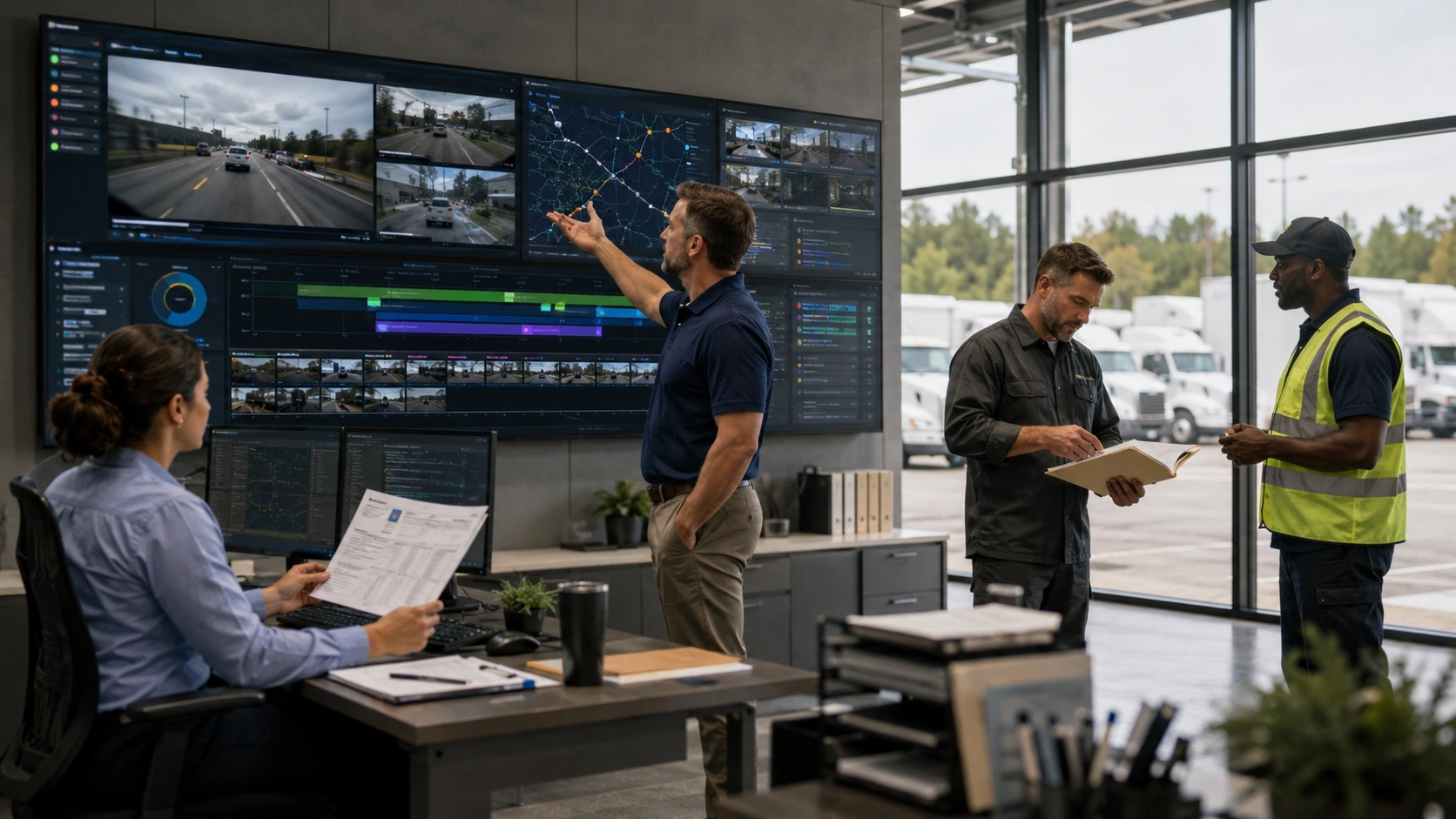
Fleet managers should review camera footage immediately after collisions, near misses, complaints, and AI safety alerts, then continue with weekly coaching reviews and monthly safety audits. The right approach is not watching every minute of recorded video. It is creating a clear review process built around defined safety events, recurring reviews, and documented follow up. This supports stronger fleet safety and compliance practices while helping managers protect drivers, resolve claims, and reduce repeat risks.
The most effective camera programs balance quick response with consistent coaching. Managers secure important footage before it is overwritten, review events while the details are still clear, and use patterns from multiple events to improve routes, training, and operating policies.
Key Takeaways
- Review serious events immediately. Collisions, near misses, complaints, and major safety alerts require prompt footage review and preservation.
- Use footage for coaching, not only discipline. Drivers are more likely to accept camera programs when reviews help improve safety and protect them from false claims.
- Create a weekly or biweekly review rhythm. Regular coaching helps managers identify risky behavior before it becomes a collision.
- Complete a monthly trend audit. Fleet wide patterns can reveal unsafe routes, recurring vehicle issues, or drivers who need additional support.
- Preserve incident footage before automatic deletion. Routine footage may disappear within 30 to 90 days, while claim related footage may need to remain available for years.
- Connect footage with operational records. Camera events become more useful when reviewed alongside GPS data, inspections, service history, and driver records.
Why Reviewing Footage at the Right Time Matters More Than Having Cameras
Installing cameras does not create a safety program by itself. Without a review process, footage often remains untouched until an accident, complaint, or insurance request forces someone to search through it. That delay can allow unsafe behavior to continue and may mean important footage disappears before the business secures it.
AI camera programs are often associated with incident reductions between 25 and 40 percent when fleets combine event detection with coaching and intervention, according to ABI Research, 2024. The technology creates value only when managers act on the information. Insurers also increasingly want evidence that a fleet is actively reviewing events and documenting coaching, not simply installing cameras and storing recordings.
For managers building a program, fleet driver safety camera strategies provide useful context on how camera systems support prevention, accountability, and claim protection.
Event Triggered Reviews Every Manager Should Act On
A written camera policy should identify the events that require immediate review. The most important triggers include:
- A collision, near miss, or roadside incident
- An AI or telematics safety alert
- A customer, public member, or driver complaint
- A suspected fraud claim or disputed delivery
- A serious vehicle defect connected to driving conditions
After Any Collision, Near Miss, or Roadside Incident
Secure relevant footage within hours, not days. Recordings can be overwritten in as little as 30 days, depending on the camera and storage settings. A preservation request can also arrive quickly after a crash, sometimes within 24 hours.
Review footage from before, during, and after the event. The surrounding context may show traffic conditions, driver behavior, weather, road hazards, or the actions of another vehicle. This can help establish responsibility, protect a driver from a false accusation, and speed up the insurance investigation.
The FMCSA Crash Cost Methodology, 2025, reports large truck costs of $46,765 for a non injury crash and $383,168 for an injury crash. Older fleet safety materials also commonly cite an average truck crash cost of $148,279 and an injury crash cost of $331,108. Managers should confirm which methodology their insurer or legal team uses before presenting a figure in a formal report. FMCSA's current crash cost methodology explains how these estimates are calculated.
A practical incident response should include the following actions:
- Lock the relevant footage so it cannot be overwritten
- Save footage from several minutes before and after the event
- Record the vehicle, driver, location, and event time
- Notify the claims or safety lead
- Connect the footage to the incident record
When AI or Telematics Flags a Safety Event
Hard braking, rapid acceleration, speeding, lane departure, phone use, fatigue, and seatbelt violations should receive a risk based review. The most serious events deserve immediate attention. Lower risk events can be grouped into a scheduled coaching queue.
A camera alert is a signal, not a final judgment. Managers should review the footage with the vehicle location, road conditions, traffic, and driver history before deciding what happened. A sudden braking event near a work zone may be appropriate. The same event on a clear road may require coaching.
Nearly 90 percent of legal experts surveyed by EROAD favored event based dash cams over continuous recording because targeted footage can reduce unnecessary discovery risk. EROAD's review of event based dashcam practices provides additional legal and operational context.
Managers can use fleet dash camera capabilities to organize event footage around specific safety behaviors instead of manually watching hours of routine driving.
After a Customer or Driver Complaint
A complaint about unsafe driving, delivery conduct, vehicle contact, or an on site interaction should trigger a prompt review. The footage may confirm the complaint, show a coaching opportunity, or protect the driver by disproving the allegation.
Managers should avoid making a decision from a short clip alone. Review the surrounding footage and compare it with the driver statement, customer account, GPS location, and delivery record. This approach supports fair decisions and helps preserve trust.
Scheduled Footage Reviews That Build a Safer Fleet
Immediate reviews handle urgent events. Scheduled reviews create lasting improvement.
Weekly or Biweekly Coaching Sessions
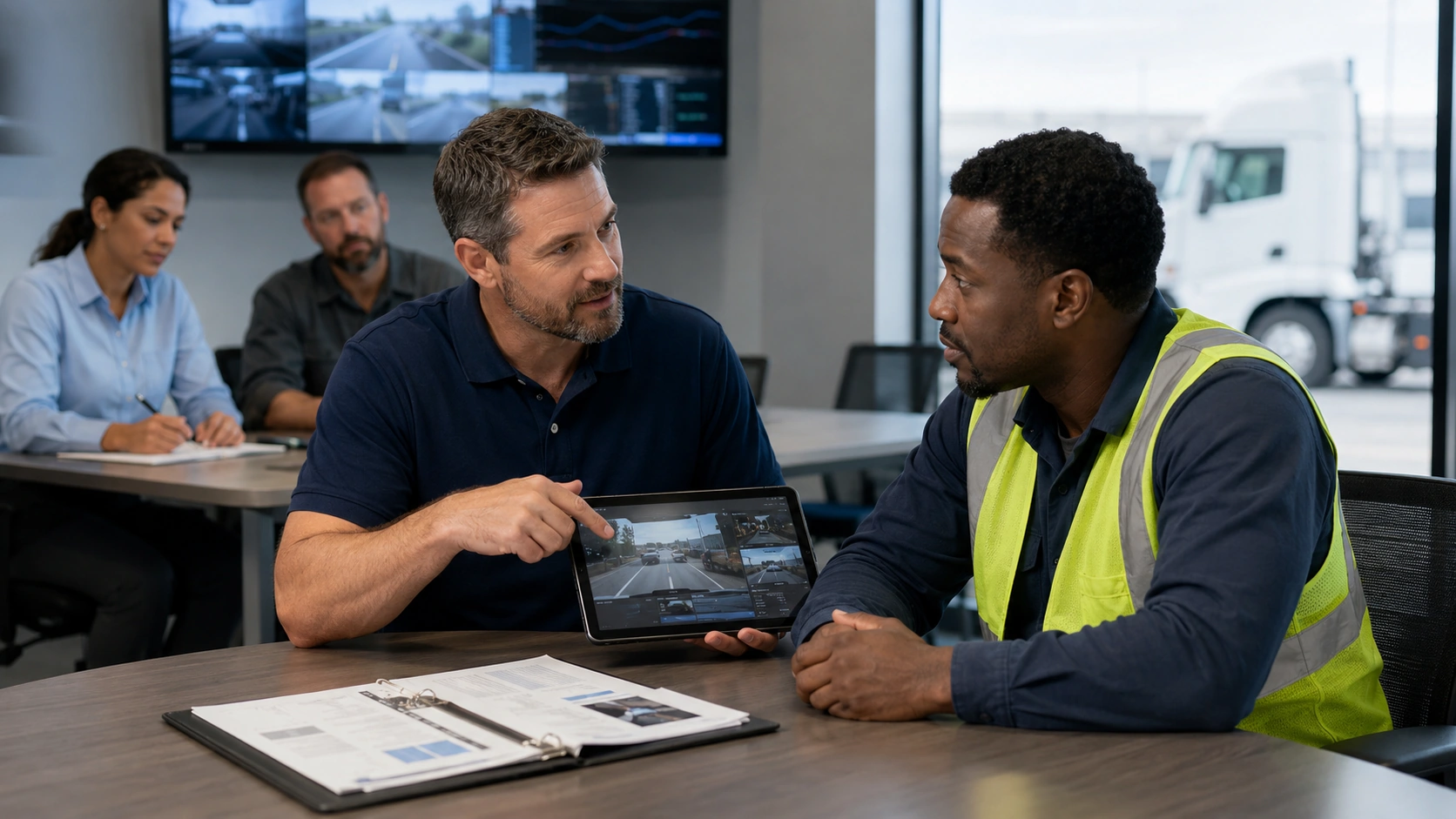
Each week or every two weeks, select a manageable sample of flagged events. Review them with drivers in a private coaching conversation. Discuss what happened, what could have been done differently, and what support the driver needs.
Proactive coaching works better than waiting for a major incident because the manager can address patterns while they are still developing. A useful review should end with one clear action, such as reducing following distance, slowing near a specific route hazard, or avoiding handheld phone use.
Managers who need a broader behavior framework can use this complete fleet driver monitoring framework when designing review categories.
Monthly Safety Trend Audits
A monthly audit looks beyond individual events. It asks whether certain behaviors are concentrated among specific routes, vehicle groups, shifts, or driver experience levels.
Useful questions include:
- Are hard braking events increasing on one route?
- Are newer drivers receiving more distraction alerts?
- Are events concentrated in one vehicle with a maintenance concern?
- Are coaching actions reducing repeat events?
- Are certain locations creating frequent near misses?
A fleet reports and dashboards system can help managers compare events over time and identify where training or operational changes will have the greatest effect.
Pre Renewal Insurance Documentation Reviews
Begin an insurance review 60 to 90 days before renewal. Gather event trends, coaching records, policy acknowledgements, and examples of corrective action. Some market data places potential premium reductions between 15 and 30 percent for fleets that can demonstrate active safety programs, although results vary by insurer, fleet type, and loss history.
The cameras alone may not earn a discount. The documentation showing that managers reviewed footage, coached drivers, and tracked improvement is often more persuasive.
How Long to Keep Footage and When to Preserve It
Routine footage does not need to remain available forever, but incident footage should be preserved as soon as a potential claim becomes known. Retention rules can vary by state, contract, insurer, and legal advice.
| Event type | Recommended retention period | Required action |
|---|---|---|
| Routine footage | 30 to 60 days | Allow normal deletion unless a concern is identified |
| Safety event | 90 days to 1 year | Review, document, and preserve if coaching or risk action follows |
| Collision or complaint | 1 to 3 years | Secure the footage and connect it to the incident file |
| Litigation hold | Until resolution | Preserve all relevant footage and related records |
Marathon Strategies, 2025, reported 49 verdicts exceeding $100 million in 2024. ATRI's cited analysis reported a median nuclear verdict of $36 million in its underlying dataset. These figures show why a fleet should preserve relevant evidence once it receives notice of a potential claim.
Failure to preserve footage after notice may create spoliation disputes, adverse inferences, or sanctions. Managers should involve their insurer and legal counsel when a serious claim is possible.
Common Mistakes That Undermine Footage Review Programs
Camera investments often fail because the review process is unclear. Avoid these mistakes:
- Reviewing footage only after an accident
- Watching continuous footage instead of using event triggers
- Failing to define who can review footage
- Using footage only for punishment
- Allowing incident footage to auto delete
- Failing to document coaching and follow up
Automotive Fleet, 2026, reported that fleets using footage for proactive safety and recognition saw driver approval increase by nearly 87 percent compared with surveillance focused programs. The lesson is simple. Drivers need to understand how the program protects them and improves safety.
Building a Footage Review Policy That Actually Works
A written policy should explain who has access, what events trigger a review, how footage is stored, how managers document decisions, and how drivers can ask questions. It should also explain when footage may be shared with insurers, claims teams, law enforcement, or legal counsel.

The policy should connect camera reviews with fleet compliance guidance and should define a consistent coaching standard. Use fleet user and driver management records to document acknowledgements, training, and follow up.
A simple review workflow looks like this:
Transparency matters. Drivers are more likely to accept camera review when the policy explains that footage can protect them from false claims, recognize safe behavior, and support fair coaching.
Connecting Footage Reviews to Your Fleet Management System
Footage becomes more valuable when it is connected to the rest of the vehicle record. A hard braking event means something different when the vehicle recently had a brake inspection, traveled through a construction zone, or carried an unusually heavy load.
AUTOsist can connect camera review work with the wider vehicle record. This helps managers understand whether a safety event relates to driver behavior, road conditions, vehicle condition, or an unresolved operational issue.
For example, a hard braking event may require a closer look at the vehicle's maintenance background. Reviewing the related vehicle service history can help managers identify recent brake work, recurring defects, or service delays that may have influenced the event.
Inspection results provide another important part of the picture. By connecting footage with a digital vehicle inspection app, managers can compare camera events with reported defects, inspection findings, corrective action, and follow up records. The goal is not to collect more footage. The goal is to turn the right footage into faster decisions, better coaching, stronger documentation, and safer fleet operations.
Frequently Asked Questions
-
How often should fleet managers review dash cam footage?
Review serious events immediately, conduct coaching reviews weekly or every two weeks, and complete a fleet wide trend audit monthly. -
What triggers an immediate footage review?
Collisions, near misses, roadside incidents, serious AI alerts, customer complaints, driver complaints, and potential claims should receive prompt review. -
How long should fleet camera footage be stored?
Routine footage is commonly stored for 30 to 60 days. Incident footage should remain available for one to three years, while litigation footage should be preserved until the matter is resolved. -
Can dash cam footage be used in court?
It can support a claim or defense when the footage is authentic, relevant, properly preserved, and handled according to applicable law and company policy. -
How do you get drivers to accept camera review programs?
Explain the purpose clearly, limit access, use footage for coaching and recognition, apply the policy consistently, and show drivers how footage can protect them from false claims.