 Miya Bholat
May 20, 2026
Why Fleet Costs Keep Rising Even When Vehicle Count Stays the Same?
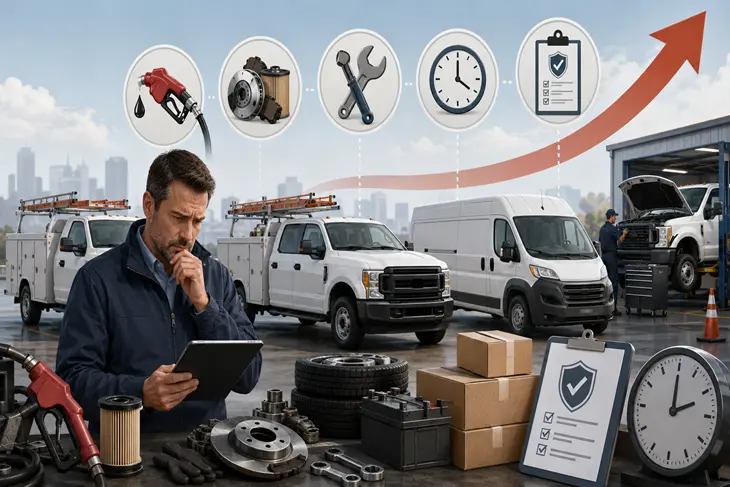
Fleet costs keep rising without adding vehicles because the same assets become more expensive to operate over time. Maintenance needs increase, parts and labor cost more, fuel waste compounds, downtime gets harder to absorb, and insurance or compliance work can grow with fleet complexity. That is why strong fleet cost management matters. It helps managers see where money is going before a stable fleet turns into an unstable budget.
If your budget grew but your vehicle count did not, you are not alone. Many fleet managers start the year assuming last year's numbers are a reasonable baseline, then discover that repair invoices, fuel spend, and admin time have all moved upward.
The frustrating part is that these increases rarely come from one obvious source. They usually come from several small leaks that build over time. This article breaks down the cost drivers behind that pattern and shows how to diagnose them before they become normal operating expenses.
Key Takeaways
- Fleet costs can rise even when vehicle count stays flat. Aging assets, higher repair prices, fuel waste, downtime, insurance, and manual admin can all increase spend without adding a single vehicle.
- Aging vehicles often create a nonlinear cost curve. A vehicle that looked affordable in year four can become expensive by year seven as repairs become more frequent and less predictable.
- Reactive maintenance usually costs more than prevention. Emergency repairs, towing, downtime, and missed work often turn a manageable service issue into a budget problem.
- Downtime is bigger than the repair invoice. The real cost includes lost productivity, driver idle time, replacement rentals, delayed routes, and customer impact.
- Cost trends matter more than one month of spending. A cost per mile or cost per vehicle trend over 12 to 24 months shows whether your fleet is becoming harder to operate.
- Better tracking helps managers make repair or replace decisions. Centralized records, service reminders, and cost reports make it easier to spot vehicles that are draining the budget.
The Hidden Cost Drivers Most Fleet Managers Overlook
Fleet cost inflation is not random. It usually follows patterns that become visible once you track costs by vehicle, mile, repair type, and downtime event. The problem is that many teams only review total monthly spend, which hides the real source of the increase.
A fleet can look stable on paper while individual vehicles quietly become more expensive. One truck may need repeat repairs, another may idle too much, and another may sit in the shop for three days every time a part is delayed. Without vehicle level reporting, these issues blend into a single budget line.
Aging Vehicles and the Maintenance Curve
As vehicles age, maintenance costs do not always rise in a straight line. A vehicle in year four may need mostly scheduled service, tires, brakes, and inspections. By year seven, that same vehicle may need suspension work, electrical repairs, emissions related service, transmission attention, or repeated diagnostic time.
That is why total cost of ownership matters more than purchase price. A vehicle that was cheap to buy can become expensive to keep if it spends more time in the shop and less time doing productive work. AAA estimated that 2025 maintenance, repair, and tire costs averaged 11.04 cents per mile for new vehicles, which shows how operating costs continue beyond the purchase decision.
For example, a van that costs $2,500 a year to maintain in year four may jump to $5,500 or more by year seven once larger repairs begin. If that van also causes missed routes or rental needs, the true cost is even higher. That is why many fleets use fleet vehicle total cost of ownership tracking to compare repair history against replacement timing.
Reactive vs. Preventive Maintenance Cost Gap
Reactive maintenance costs more because it usually arrives with extra charges attached. A worn belt caught during scheduled service is one repair. A failed belt on the road can mean towing, emergency labor, driver downtime, missed appointments, and a second vehicle to cover the work.
A simple way to think about it is this: if a scheduled repair costs $400, the same issue after failure may cost $1,200 to $2,000 once downtime and emergency handling are included. That is how deferred maintenance compounds. Small delays create larger repairs, and larger repairs create operational disruption.
Preventive maintenance works best when it is based on mileage, engine hours, usage type, and vehicle age. Fleets that want a structured approach can use fleet preventive maintenance schedules to reduce guesswork and keep service from slipping through the cracks.
How Labor and Parts Inflation Quietly Inflate Fleet Budgets
Some cost increases sit outside a fleet manager's direct control. Labor rates rise, parts become more expensive, and vehicle technology gets more complex. You cannot stop those trends, but you can plan for them with better maintenance forecasting and cost visibility.
The key is to avoid treating every invoice as a one off surprise. When labor and parts inflation hit a fleet with poor records, managers struggle to tell whether costs are rising because of market conditions, aging vehicles, vendor pricing, poor preventive maintenance, or all of the above.
Technician Labor Rate Increases
Technician labor is one of the biggest pressure points in fleet maintenance. Shops need skilled technicians, and newer vehicles often require more diagnostic time, specialized tools, and electronic troubleshooting. Even in house teams feel this pressure through wages, training, recruiting, and overtime.
Recent fleet maintenance data shows the market can move quarter by quarter. The American Trucking Associations reported that combined parts and labor costs fell 1.3 percent in Q4 2025 after rising 3.8 percent in Q3 2025, which still left fleets dealing with elevated cost pressure over the second half of the year.
When labor rates rise, repeat repairs become even more damaging. Paying twice to diagnose the same recurring problem is not just annoying. It is a sign that your maintenance records, work orders, or vendor notes may not be giving you enough visibility.
Parts Costs and Supply Chain Volatility
Parts costs can rise because of inflation, vehicle complexity, supply constraints, or changes in supplier availability. A basic repair becomes more expensive when parts take longer to arrive, especially if the vehicle sits idle while the team waits.
Parts delays also create secondary costs that do not always appear on the repair invoice. A delayed brake part may create a rental charge. A delayed sensor may cause a missed service route. A delayed specialty component may push a high value asset out of production for several days.
Fleet managers can reduce some of this impact by tracking high use parts, repeat failures, and vendor lead times. A parts inventory management system can help teams see what they have, what they use most often, and where stockouts are creating downtime.
Downtime Is Costing More Than Your Repair Invoices Show
Downtime is one of the most undercounted fleet costs because it rarely appears in one clean line item. The repair invoice may show $900, but the business may lose far more through missed work, idle drivers, delayed deliveries, rescheduled jobs, and replacement vehicle costs.
Use this simple formula to estimate the real number:
Downtime Cost = Daily vehicle revenue or operational value x Days out of service + Labor idle time + Rental or replacement cost
For example, if one service truck supports $900 of daily work, sits for three days, keeps a driver idle for $220, and needs a $150 per day rental, the downtime cost is $3,370 before you even count the repair itself. That is why a fleet with stable vehicle count can still see a sharp cost increase when downtime events become more frequent.
A good downtime review should look at more than shop days. Managers should also track why downtime happened, which assets repeat the pattern, and whether scheduled maintenance could have prevented it. For a deeper process, review this guide on how to calculate fleet downtime cost.
Fuel and Route Inefficiency: The Slow Leak in Your Budget
Fuel costs can climb even when miles stay flat. Poor engine health, underinflated tires, aggressive driving, long idle time, and inefficient routing all increase fuel use without changing the size of the fleet.
Small changes matter when they repeat across every vehicle. A few extra minutes of idling per day may not look serious for one truck, but across 30 vehicles over hundreds of workdays, it becomes a real budget leak.
Fleet managers should watch for fuel waste patterns like these:
- Vehicles with declining miles per gallon compared with similar units
- Drivers with repeated idle time spikes
- Routes that create unnecessary mileage or stop and go driving
- Maintenance issues that affect fuel economy
- Fuel spend increases without matching mileage increases
Engine condition also plays a role. Dirty filters, worn spark plugs, alignment issues, and tire pressure problems can all reduce efficiency. Teams that use fleet fuel management software can compare fuel spend, mileage, and vehicle history in one place instead of chasing answers through spreadsheets and receipts.
Compliance, Insurance, and Administrative Costs Are Climbing Too
Not every rising fleet cost comes from the engine bay. Compliance, insurance, inspections, documentation, and administrative work can all increase even when vehicle count stays the same.
Insurance premiums may rise because of fleet age, claims history, driver behavior, repair cost inflation, and vehicle type. A fleet with older vehicles and inconsistent inspection records may look riskier to insurers than a similar sized fleet with strong documentation. If insurance has become a larger budget item, breakdown of fleet insurance coverage and cost factors can help managers understand what may be influencing premiums.
Compliance costs also scale with complexity. DOT records, inspection logs, driver documentation, and service histories all take time to manage. A digital vehicle inspection app helps teams standardize inspections and keep issues from getting buried in paper forms.
How to Diagnose Where Your Fleet Budget Is Actually Leaking
The best way to control rising costs is to stop looking only at total spend. Total spend tells you what happened. A cost audit tells you why it happened.
Start by reviewing the areas that connect maintenance, downtime, fuel, and asset age. When these numbers sit in separate systems, the pattern stays hidden. When they sit together, outliers become obvious.
Pull a Cost Per Vehicle Report
A cost per vehicle report should include maintenance spend, fuel spend, downtime, inspections, mileage, repairs, and recurring issues for each unit. This report shows which vehicles are pulling the fleet average upward.
One high cost asset can distort the whole budget. For example, a fleet of 20 vehicles may look like it has a moderate maintenance increase, but one aging truck could be responsible for a large share of the jump. A fleet reports dashboard can help managers compare vehicles and spot those outliers faster.
Track Maintenance Cost Trends Over 12 to 24 Months
A single expensive month does not always mean the fleet has a problem. Trend lines tell the real story. If maintenance cost per mile has climbed for four straight quarters, the fleet may be moving into a more expensive operating stage.
Track these numbers consistently:
- Maintenance cost per mile
- Maintenance cost per vehicle
- Downtime days per vehicle
- Scheduled versus unscheduled repair spend
- Fuel cost per mile
- Repeat repair frequency
This is where fleet maintenance cost reduction strategies become more useful. You can prioritize fixes based on the trend that is actually driving the budget increase.
Separate Scheduled vs. Unscheduled Maintenance Costs
The split between scheduled and unscheduled maintenance is one of the clearest diagnostic metrics in fleet cost management. If more than 30 to 40 percent of your maintenance budget goes toward unscheduled repairs, the fleet may have a systemic problem.
That problem could be missed preventive maintenance, poor inspection follow up, aging assets, weak driver reporting, or incomplete service records. The fix starts with separating planned work from breakdown work so managers can see whether they are controlling the maintenance cycle or reacting to it.
What Fleet Managers Can Do Right Now to Stabilize Costs
Rising costs do not always require dramatic cuts. Many fleets can stabilize spend by improving visibility, tightening maintenance discipline, and acting sooner when a vehicle starts trending in the wrong direction.
Start with practical moves that reduce surprises:
- Build preventive maintenance schedules by mileage, age, and usage
- Set cost alerts when a vehicle exceeds expected spend
- Review assets that may be past their economic replacement point
- Centralize maintenance records, inspections, fuel, and downtime data
- Train drivers on speeding, idling, harsh braking, and issue reporting
AUTOsist can help by bringing maintenance records, service reminders, inspections, and cost per vehicle reports into one system. That makes it easier to compare assets, catch overdue work, and understand why costs are rising. If you are still relying on spreadsheets or paper files, reading a guide on the hidden costs of managing a fleet without software explains why those gaps often become expensive.
When Rising Costs Signal It's Time to Replace, Not Repair
Sometimes the best cost control move is not another repair. It is replacing the vehicle before it consumes more money than it is worth. The challenge is knowing when that point arrives.
A repair versus replace decision should compare maintenance history, downtime, resale value, safety risk, future repair probability, and the cost of a replacement unit. If a vehicle needs frequent unscheduled repairs, has declining reliability, and creates regular downtime, it may have passed its economic replacement point.
Use historical maintenance records to make this decision with confidence. If one vehicle has doubled its cost per mile over 18 months and downtime keeps increasing, that is stronger evidence than a gut feeling. For delivery operations, looking out for signs when you should replace your delivery fleet gives useful replacement indicators that apply to many fleet types.
Frequently Asked Questions
-
Why do fleet costs go up even when I am not adding vehicles?
Fleet costs go up because existing vehicles become more expensive to operate. Aging assets, higher labor rates, parts inflation, downtime, fuel waste, insurance increases, and manual admin work can all raise costs without increasing vehicle count. -
What is the biggest hidden cost in fleet management?
Downtime is often the biggest hidden cost because it affects more than repair spend. A vehicle out of service can create lost revenue, idle labor, rental costs, delayed work, and customer service issues. -
How do I calculate the true cost of vehicle downtime?
Use this formula: daily vehicle revenue or operational value x days out of service + idle labor + rental or replacement cost. This gives a more realistic number than the repair invoice alone. -
When should I replace a fleet vehicle instead of repairing it?
Consider replacement when repair costs, downtime, safety risk, and future failure probability exceed the value of keeping the vehicle. Historical maintenance cost per mile is one of the best signals for this decision. -
What is the difference between reactive and preventive maintenance costs?
Preventive maintenance is planned work that keeps vehicles reliable. Reactive maintenance happens after something fails, and it often costs more because it adds towing, emergency labor, downtime, and operational disruption.