 Nicki Karim
February 18, 2021
Why Fleet Maintenance Is Important and How to Simplify It
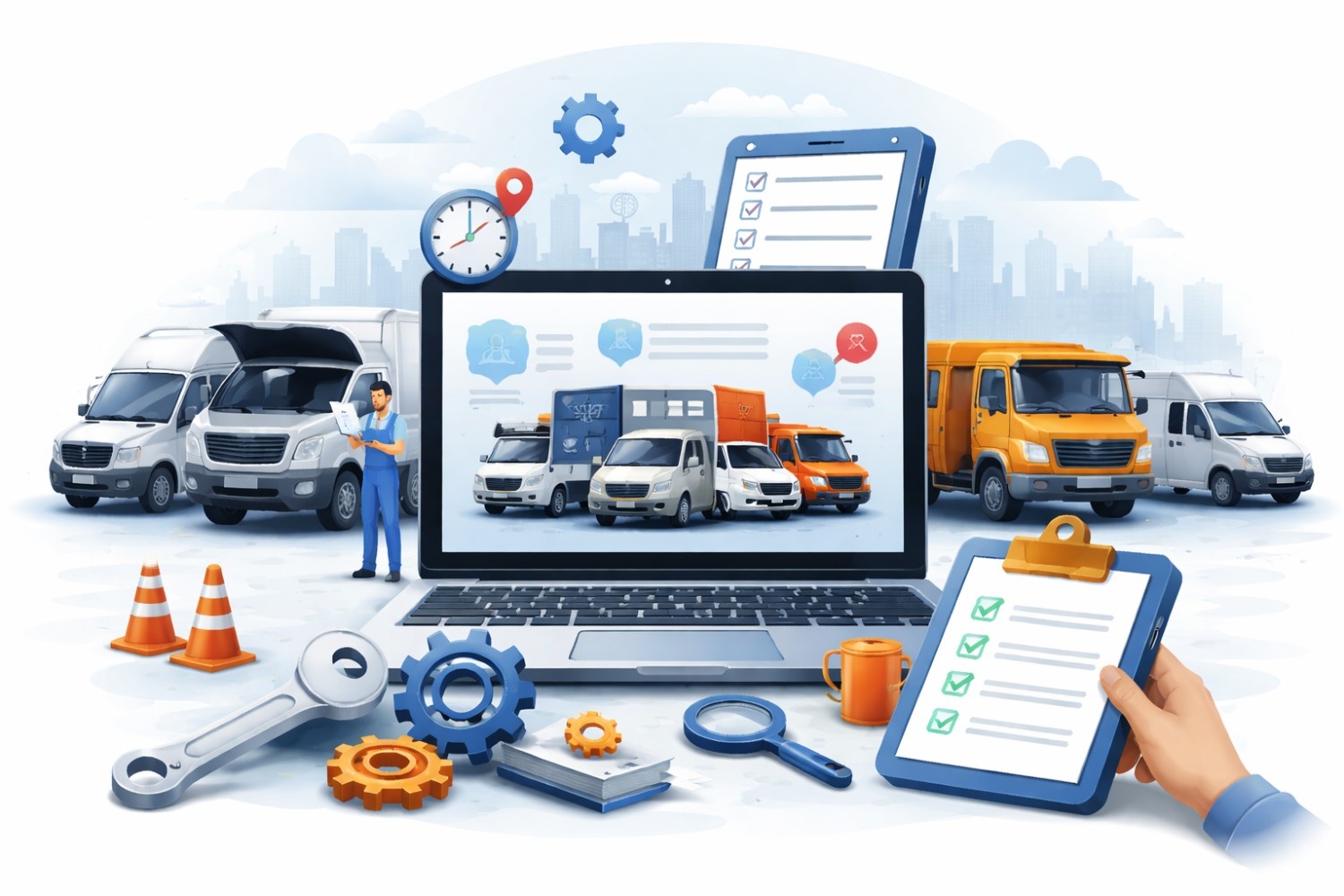
Feeling overwhelmed with the management of your business? Or looking for more ways to profit? Keeping up with fleet maintenance is key for both. Fleet maintenance helps not only in the short term with the up-keeping of your files, but saves you a lot of money in the long run.
Fleet operations become harder to manage as vehicles, drivers, and responsibilities grow. Understanding why fleet management is important is not just about organization it directly impacts safety, costs, and long-term business performance.
The benefits of fleet maintenance go far beyond keeping vehicles running. A structured approach to fleet maintenance management helps reduce unexpected breakdowns, control repair costs, improve compliance, and ensure that every vehicle operates safely and efficiently. As fleets scale, many businesses turn to Fleet Maintenance Software to centralize data, automate reminders, and maintain consistency across every vehicle.
Without a clear system in place, maintenance quickly becomes reactive. Missed services, incomplete records, and delayed inspections lead to higher downtime and increased risk. This is why more businesses are shifting toward proactive, system-driven maintenance strategies to keep operations smooth and predictable.
Here we list the importance of preventive proactive maintenance methods.
1. Increases Safety of Employees and Others in the Factories and on the Road
Generally, employers are liable for the safety of their employees when the employee is acting within the scope of their employment. Say a limo driver of limo company hits another car on its way to drop off a party, the limo company will be liable for the safety of that limo driver, the passengers on that limo, and also the parties who have been hit by its employee. This type of liability can be minimized by making sure that every vehicle and equipment used by employees is up to date. Liability is heightened when an employee is provided with a dangerous instrument, such as a vehicle, when the employer knows or has a reason to know, that use of the vehicle creates unreasonable risk or harm to others.
A Web Based fleet maintenance system allows easy access for every employee operating an equipment or vehicle. Software such as AUTOsist centralize the data of all the vehicles of the business and managers can grant their drivers access to the specific vehicles that they’re operating. This lessens the burden on the owner, and shifts some of the responsibility to the drivers as they then have the responsibility to check reminders set by the fleet manager and keep their vehicles in check. AUTOsist will actually send a reminder to these drivers’ phones and emails letting them know about the specific reminder that was set for the vehicle. The reminder feature allows the employers and employees to have a peace of mind that the vehicles they are sending out are current with their maintenance and up to date on any administrative items. Vehicles that are well kept are less likely to break down on the road and cause accidents.
Why Fleet Management Is Important as Operations Grow
As fleets expand, the complexity of managing vehicles, drivers, and maintenance increases significantly. This is where understanding why fleet management is important becomes critical. Without a structured system, small inefficiencies missed services, delayed inspections, or incomplete records quickly turn into larger operational problems.
One of the biggest benefits of fleet maintenance is visibility. When you have a clear view of your maintenance schedule, service history, and upcoming tasks, you can make proactive decisions instead of reacting to breakdowns. This is the foundation of effective fleet maintenance management, where every vehicle is tracked, maintained, and optimized for performance.
Many businesses initially rely on spreadsheets to manage this process. While this may work for very small fleets, tools like Excel often fall short as operations scale. Managing maintenance across multiple vehicles manually becomes time-consuming and error-prone, which is why many fleets eventually move beyond spreadsheets toward more structured systems.
In fact, transitioning from manual tracking to a centralized system allows fleets to track maintenance without extra staff. With the right system in place, managers can organize data, automate reminders, and ensure consistency across all vehicles without needing additional staff.
2. Helps Prevent Expensive Repairs
Fleet maintenance helps employers stay proactive with preventive maintenance. With constant use, any tool or instrument, such as a piece of equipment, vehicle, or other asset, is prone to wear and tear. When a person relies on reactive maintenance methods, they essentially do not worry about the maintenance of their equipment until there has been an unscheduled breakdown. Lack of preventive maintenance is most often the cause of unscheduled breakdown maintenance. This type of maintenance can be very costly and easily minimized by a proactive maintenance software program. When it comes to the maintenance of their equipment and vehicles, the focus of companies should be to have majority of their vehicle repairs scheduled rather than unscheduled.
Implementing a software which allows you to easily input and access your vehicles’ data such as the due dates of the next oil change, cleaning, vehicle inspection, adjustment, testing, repair, and/or replacement of worn parts, saves you the headache of unscheduled breakdowns and repairs. Reminders on some of these software as the one mentioned above allow you to see and repair small damages and perform routine maintenances such as oil changes before they become a big problem. Documenting these inspections and small repairs help you keep track of all the work that your vehicle has undertaken and will need to take in the future, giving you the satisfaction that each vehicle is in great shape before you send your employees off on the road.
Each piece of equipment and vehicle have different limitations. Many factors need to be taken into account on how often a piece of equipment or vehicle will need maintenance. An important factor for vehicles is their odometer. With the help of fleet maintenance software, you will be able to give an estimate of how many miles your vehicle drives in a given timespan, and the software will record that and give you notifications on the next due maintenance based on that record. Since each vehicle will most likely have a different mileage, this allows you to keep up with each of your vehicles as their maintenance dates approach without having to be overwhelmed with, say, the oil change of twenty trucks in one week.
3. Decreases Equipment and Vehicle Downtime
This also help decrease vehicle and equipment downtime. When a vehicle breaks down on the road, a lot of money and time need to be invested in getting the vehicle repaired and back up and running safely. Say a truck is out for a delivery to a grocery store in New York from California and it breaks down in a remote city in Idaho. This truck will most likely need to be towed to some auto repair shop miles away. This would be very lengthy and costly for the employer. It would also delay the delivery, which would affect the business owner’s relationship with the client. The same applies to equipment in warehouse that are necessary for the daily operations of businesses. Having scheduled repairs ensures that a machine or vehicle is less likely to breakdown unexpectedly and have lengthy downtime.
Turning Fleet Maintenance into a Scalable System, not a Burden
As fleets grow, maintenance should not become more chaotic, it should become more structured. Strong fleet maintenance management is not just about fixing vehicles; it is about building a system that scales with your operations.
One of the key benefits of fleet maintenance is consistency. When every vehicle follows a defined maintenance schedule, you reduce variability in performance, avoid unexpected breakdowns, and maintain higher operational reliability. This consistency is what separates reactive fleets from well-managed ones.
Understanding why fleet management is important also comes down to control. Without a centralized approach, maintenance tasks become fragmented across spreadsheets, notes, and individual responsibilities. This leads to missed services, incomplete records, and rising costs over time.
By implementing a structured system, fleets can standardize inspections, automate maintenance schedules, and maintain accurate service history across all vehicles. This ensures that maintenance becomes a predictable process rather than an ongoing challenge.
Ultimately, the goal is to shift from reactive maintenance to a controlled, proactive system where every decision is backed by data. When done right, maintenance stops being a burden and becomes a competitive advantage for your business.
4. Improves Resale Value
When reselling a piece of equipment or vehicle, it is important to not only have it fully repaired and safe, but you will need to have all the documentation to prove it. To maximize resale value, you should be able to show that you complied with manufacturer’s servicing schedules and requirements. Buyers typically assess used equipment and vehicles thoroughly, so it is highly important to have a very detailed record of documentation and proof of consistent maintenance. This gives reassurance to the buyers because it shows entire history of the machine showing that it was well taken care of, which in turn reduces liability for the sellers and makes it very easy for the seller to proof that they sold their machines in good condition.
5. Meets Green Objectives
Pollution has increased steadily over the years, and a major contributor is the growing number of vehicles and equipment used in daily business operations. When these assets are not properly maintained, emissions rise significantly, especially from older or poorly serviced vehicles.
This is why regulatory bodies enforce strict inspection and maintenance requirements based on a vehicle’s age, type, and usage. Staying compliant is not just about passing inspections, it’s about maintaining vehicles in a condition that minimizes environmental impact. Using a Vehicle Document Management System helps businesses keep all inspection records, compliance documents, and maintenance logs organized and easily accessible when needed.
At the same time, following OEM Factory Maintenance Schedules ensures that vehicles are serviced according to manufacturer standards, which helps optimize performance, reduce emissions, and extend the lifespan of each asset. Together, proper documentation and structured maintenance play a critical role in keeping fleets compliant, efficient, and environmentally responsible.
Carlos Blanco, a field inspector for the U.S. Department of Transportation, advises that organized records ready for inspection can smooth out the audit process. Blanco emphasizes the importance of organized records because it shows that the owner is proactive with the maintenance of their vehicles and, therefore, committed to safe operation. This may even influence the depth of the inspection and reduce the length of the inspection review from three days to one and a half. Jason Followill, a motor carrier inspector for the California Highway Patrol, further advises that being unable to find records or find them for examinations raises red flags and leads to more in-depth lengthier inspections.
“As an operations manager at JACO Limo, I struggled for months to find an affordable fleet management application available on mobile and desktop that multiple people in our organization could quickly pick up on and manage. We identified that we had lost more than $12,000 in 2016 due to confusion, inefficiencies and lack of reporting before we found and implemented AUTOsist.”
Small businesses like JACO Limo who are continuing to multiply in the number of vehicles and equipment that their companies own, are starting to rely on fleet management applications to efficiently collect and organize data to keep up with all their fleet maintenance and record keeping.
Some insurance companies are even highly recommending their customers to incorporate a dependable vehicle maintenance program to help lower vehicle operating costs. State Auto specifically has a policy that states the following:
"A dependable vehicle maintenance program will help to lower vehicle operating costs and will reduce the chances of a vehicle being involved in an accident due to mechanical failure. We recommend that you establish a scheduled vehicle maintenance program (miles and/or months) with written records maintained on all work, such as lubrication, oil changes, general repairs, and major repairs"
Try AUTOsist risk free to help you save time and money when it comes to your fleet. Click Here for a 14 day trial (no credit card required).
Sources:
- State Auto Insurance Company. https://www.stateauto.com
- “The Objectives of Fleet Maintenance Management.” Chron. http://work.chron.com/objectives-fleet-maintenance-management-26483.html.
- http://m.government-fleet.com/article/640/how-to-implement-a-fleet-preventive-maintenance-program
- Department of Motor Vehicles. https://www.transportation.gov/regulations
- “Avoiding DOT Recordkeeping Nightmares.” LCT Limousine, Charter, & Tour. LCT Magazine. 14 September 2014. lctmag.com 17 August 2017.
Frequently Asked Questions
-
Why fleet management is important for small businesses?
Fleet management is important because it helps businesses track vehicle maintenance, reduce costs, improve safety, and keep operations running smoothly as fleets grow. -
What are the benefits of fleet maintenance?
The benefits of fleet maintenance include reduced breakdowns, lower repair costs, improved safety, better compliance, and longer vehicle lifespan. -
What is fleet maintenance management?
Fleet maintenance management is the process of tracking, scheduling, and optimizing all vehicle maintenance activities to ensure reliability and efficiency. -
Can fleets manage maintenance using Excel?
Small fleets can use Excel initially, but as the number of vehicles grows, manual tracking becomes inefficient and increases the risk of missed maintenance. -
How can you track fleet maintenance without hiring more staff?
You can track fleet maintenance without hiring more staff by using a centralized system that automates reminders, organizes data, and standardizes maintenance workflows.