 Miya Bholat
Feb 04, 2026
Why Fleet Maintenance Software Matters More as Growing Fleets Scale
Key Takeaways: Scaling Your Fleet Maintenance Strategy
- Manual systems fail quietly as fleets grow, leading to missed services, rising costs, and compliance risks.
- Maintenance complexity scales exponentially, not linearly, making spreadsheets unreliable beyond small fleets.
- Preventive maintenance breaks down first, pushing fleets into expensive reactive cycles.
- Centralized data is essential for spotting trends, controlling budgets, and planning growth.
- Fleet maintenance software scales without added workload, keeping operations stable as vehicles are added.
- Switching early delivers higher ROI, lower stress, and smoother long-term growth.
The Tipping Point: When Manual Fleet Maintenance Stops Working
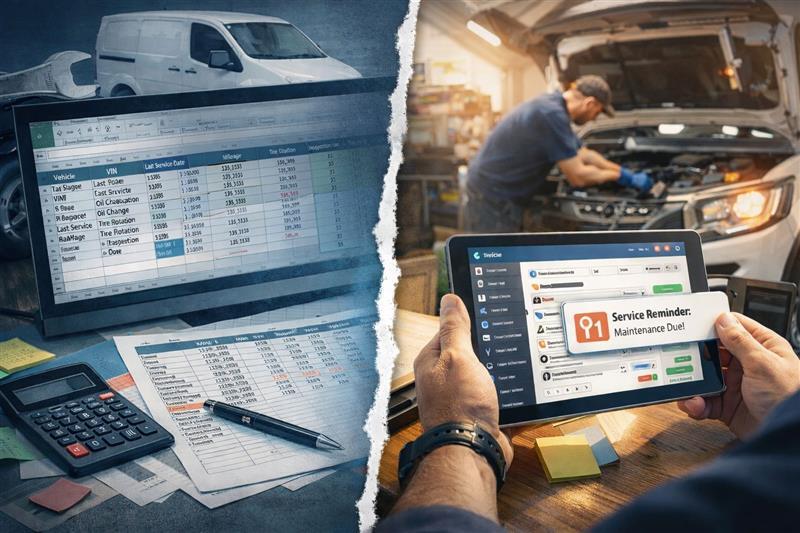
Every fleet reaches a point where spreadsheets, whiteboards, and reminder emails quietly stop working. It rarely happens overnight. Instead, small cracks start showing up—missed oil changes, overdue inspections, incomplete records—until maintenance turns reactive and chaotic.
For many fleets, this tipping point arrives somewhere between 10 and 25 vehicles. At that size, each unit has its own service intervals, inspection schedules, vendors, and compliance requirements. Tracking all of that manually means relying on human memory and disconnected files. One missed entry can lead to an overdue preventive maintenance (PM) service or a compliance issue that only surfaces during an audit.
The warning signs tend to follow a pattern:
- Maintenance tasks start slipping because reminders depend on someone "remembering"
- Vehicles go down unexpectedly despite having "a schedule"
- Costs rise without a clear explanation
- Paper or spreadsheet records don't match what actually happened in the shop
At small fleet sizes, these issues feel manageable. As the fleet grows, they compound. The problem isn’t that spreadsheets stop existing—it’s that they stop scaling. Manual systems don’t fail loudly; they fail gradually, until the operational risk becomes too large to ignore.
How Complexity Multiplies With Each Vehicle You Add
The Mathematics of Multi-Vehicle Maintenance
Fleet growth doesn’t create linear maintenance complexity—it creates exponential complexity. Each additional vehicle adds multiple overlapping service schedules, inspection types, and cost events.
Consider a simple example. If each vehicle requires:
- 4 preventive services per year
- 12 inspections per year
- 6 repair events per year
That's 22 maintenance touchpoints per vehicle annually.
Now compare fleet sizes:
- 5 vehicles = 110 annual touchpoints
- 25 vehicles = 550 annual touchpoints
- 50 vehicles = 1,100 annual touchpoints
Those numbers don't include parts tracking, vendor coordination, or documentation. Manually managing over a thousand recurring maintenance events requires constant oversight. Without automation, every added vehicle increases the odds of something being missed—not because the team isn't capable, but because the system can't keep up.
The Hidden Cost of Maintenance Coordination
Maintenance complexity isn't just about scheduling—it's about coordination. As fleets scale, managers spend more time chasing information than making decisions.
Here's where time quietly disappears:
- Calling vendors to confirm service history
- Digging through invoices to find past repairs
- Updating multiple spreadsheets after each job
- Answering driver questions about vehicle readiness
That administrative overhead has a real opportunity cost. Every hour spent reconciling maintenance data is an hour not spent optimizing uptime, controlling costs, or planning fleet expansion. Without a centralized system, growth forces managers into survival mode instead of strategic mode.
What Breaks Down First as Your Fleet Scales
Service Scheduling and Preventive Maintenance
Preventive maintenance is usually the first casualty of fleet growth. When schedules live in calendars or spreadsheets, missed services become inevitable. Vehicles slip past mileage thresholds. Inspections get delayed. Small issues turn into breakdowns.
Once PM becomes inconsistent, fleets fall into reactive maintenance cycles:
- Repairs cost more than scheduled service
- Downtime increases
- Driver trust in fleet reliability drops
This isn’t a failure of intent—it’s a failure of scalability. Without automation, preventive maintenance depends on constant manual effort, which doesn’t scale with fleet size.
Compliance and Record-Keeping
Compliance demands precision. As fleets grow, so do inspection requirements, audit trails, and documentation volume. Paper records and scattered files make it difficult to prove compliance consistently.
Common issues include:
- Missing inspection records
- Incomplete service histories
- Inconsistent documentation formats
- Delays during audits or roadside inspections
Digital inspection tools and centralized records—like those supported by a digital vehicle inspection app—reduce these risks by standardizing data capture and storage. Without them, compliance becomes increasingly fragile as the fleet expands.
Cost Tracking and Budget Control
Cost visibility erodes quickly in growing fleets. When invoices live in email inboxes and spreadsheets, it’s nearly impossible to see spending patterns clearly.
Managers lose insight into:
- Cost per vehicle
- Vendor price inconsistencies
- Rising repair frequency on specific units
Without accurate cost data, budgeting becomes reactive instead of predictive. That lack of control makes growth riskier and less profitable over time.
The Data Problem: Why You Can't Manage What You Can't See
Fleet data fragmentation is one of the most underestimated growth challenges. Maintenance records, inspection forms, fuel data, and repair costs often live in separate systems—or worse, on paper.
When data is scattered:
- Trends stay hidden
- Problem vehicles aren't identified early
- Decisions rely on gut feeling instead of evidence
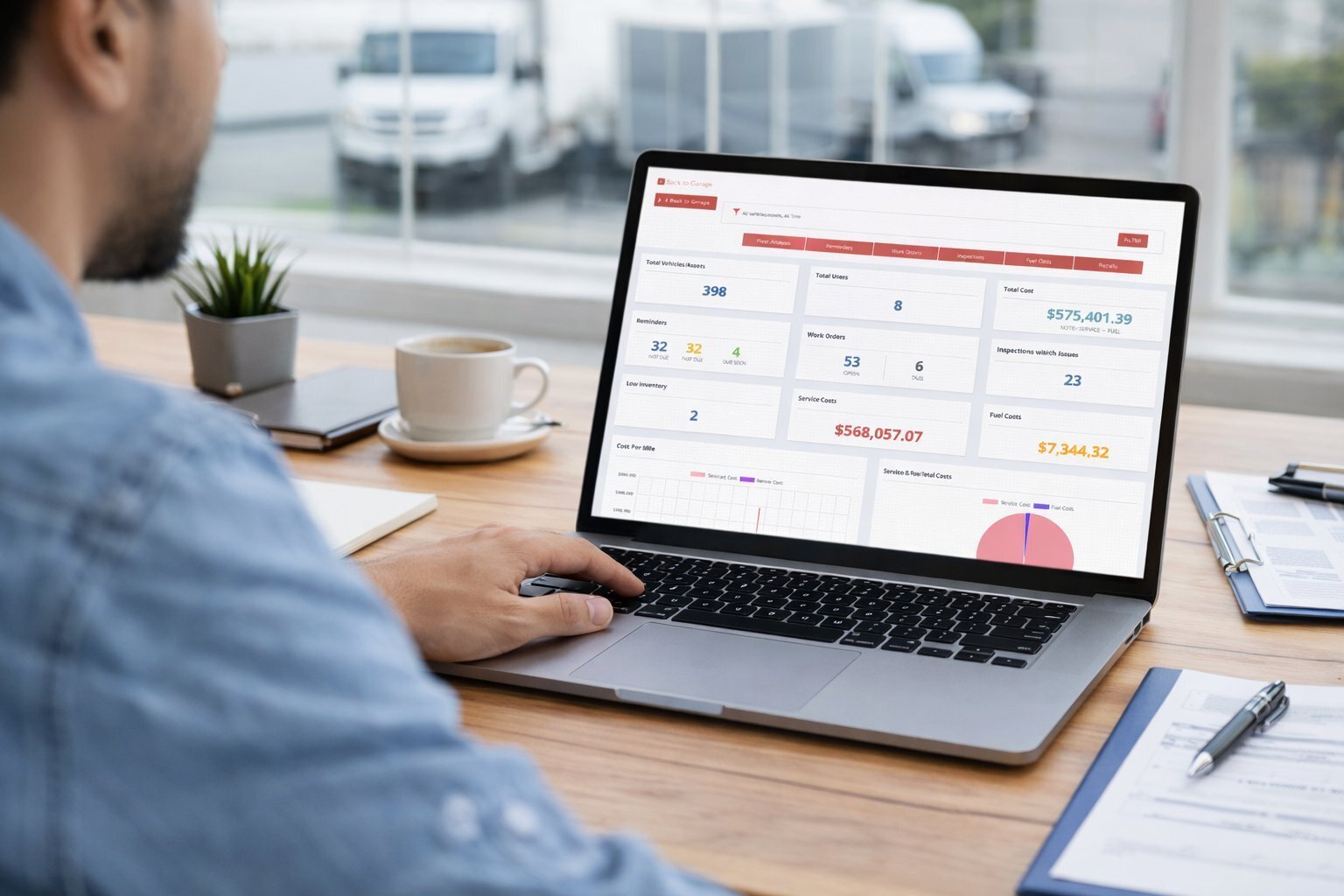
This directly impacts long-term planning. Without consolidated data, it’s difficult to decide when to replace vehicles, renegotiate vendor contracts, or adjust maintenance strategies. Centralized dashboards—like those available through fleet reporting tools—turn raw data into actionable insight, giving managers visibility across the entire operation.
Choosing a Scalable Fleet Solution Before Problems Compound
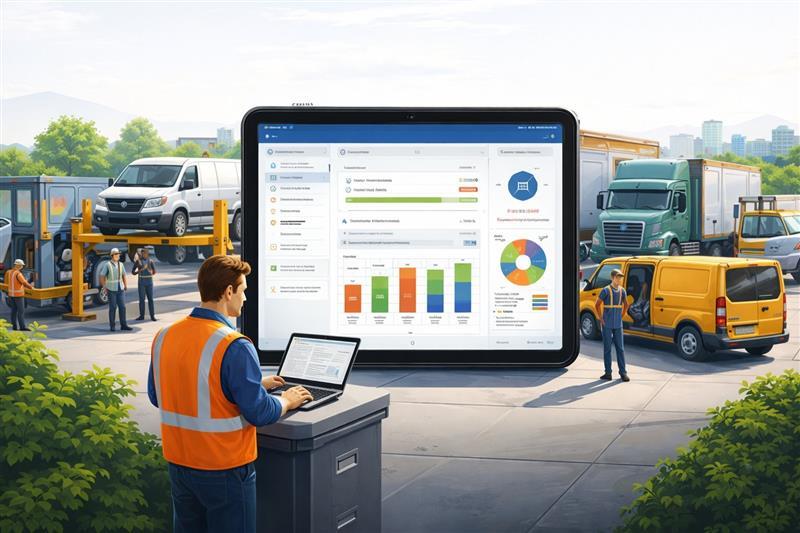
As fleets grow, the challenge isn’t just managing more vehicles it’s finding a scalable fleet solution for growing fleet operations that doesn’t break under added complexity. Platforms like fleet maintenance software bring scheduling, cost tracking, and reporting into one system.
Many fleets transition from spreadsheets to tools that only partially solve the problem. The result is the same fragmentation—just with better visuals. Data still lives in silos, schedules still require manual oversight, and missed services continue to happen.
A system that actually scales should remove those dependencies entirely. That means:
- Automatically triggering maintenance based on mileage, engine hours, or time
- Centralizing service history, inspections, and repair records
- Providing real-time visibility into costs and performance
- Eliminating manual follow-ups and reminders
This is where systems that help fleets avoid missed or overdue service for vehicles become essential. Instead of relying on someone to track intervals manually, services are scheduled and executed consistently across the entire fleet.
When evaluating options, it becomes important to understand how to compare vendors for fleet maintenance expense reporting, cost control, and operational reporting. The difference often comes down to how well the system connects data across workflows not just how it tracks maintenance.
Major Platforms like fleet management software bring scheduling, reporting into one system. What fleet maintenance software does and does not and top features you need in pro fleet maintenance software highlight what actually supports long-term scalability.
How Fleet Maintenance Software Scales With Your Growth
Automated Scheduling and Reminders
Fleet maintenance software removes manual dependency from scheduling. Instead of tracking dates and mileage manually, the system automatically schedules services and sends reminders as thresholds are reached.
With automated preventive maintenance scheduling:
- No added workload as vehicles are added
- Fewer missed services
- Consistent PM execution across the fleet
Tools like fleet preventive maintenance schedules and reminders allow fleets to scale without increasing administrative burden.
Centralized Records and Instant Access
Cloud-based systems centralize service history, inspections, and documents in one place. This matters more as fleets add locations, drivers, and managers.
Centralized records provide:
- Instant access from any location
- Consistent documentation formats
- Shared visibility across teams
Systems such as a vehicle service history system eliminate time wasted searching for information and reduce errors caused by duplicate or outdated records.
Real-Time Cost Tracking and Reporting
As fleets grow, real-time visibility becomes essential. Maintenance software automatically tracks costs, aggregates data, and presents it through dashboards and reports.
With real-time reporting:
- Spending trends are easy to spot
- Budget overruns surface early
- Cost-per-vehicle metrics stay accurate
Fleet managers gain control instead of reacting after problems escalate.
The ROI of Switching Before You're Overwhelmed
Waiting too long to adopt fleet maintenance software is costly. Breakdowns increase. Compliance risks rise. Administrative burnout sets in.
Consider a conservative example:
- One unexpected breakdown costs $1,500
- Three breakdowns per month = $54,000 annually
- Software costs a fraction of that
Beyond direct savings, early adoption reduces implementation friction. Training teams and migrating data is far easier before systems are overloaded. Fleets that adopt software early build scalable habits instead of patching broken processes later.
Tools like the AUTOsist ROI calculator help quantify these savings and show the long-term financial impact of proactive adoption.
Why Small Fleets Should Adopt Maintenance Software Earlier Than Expected
There’s a common assumption that maintenance software for small fleets is something to consider later. In practice, waiting is what creates the complexity fleets struggle with as they grow.
Manual tracking works until it doesn’t. Early-stage fleets often rely on memory, spreadsheets, or simple reminders. But as vehicles increase, those systems don’t evolve they get stretched. That’s when missed services, incomplete records, and reactive maintenance begin to take over.
Adopting structured systems early changes that trajectory.
Instead of rebuilding processes later, fleets can start with:
- Consistent preventive maintenance scheduling across every vehicle
- Centralized service history that grows with the fleet
- Clear visibility into maintenance costs from day one
Tools like fleet preventive maintenance schedules ensure services happen on time without added administrative effort, while systems like vehicle service history keep records accurate and accessible as operations expand.
Understanding factors like AUTOsist cost becomes more meaningful in this context. The real comparison isn’t software versus no software it’s structured operations versus reactive breakdown cycles.
Over time, fleets that adopt early avoid the need to fix broken processes. They scale with consistency instead of complexity, which is what ultimately keeps maintenance predictable and controlled.
Frequently Asked Questions
-
What is reactive maintenance in fleet management?
Reactive maintenance means repairing vehicles only after a failure occurs. It leads to higher costs, more downtime, and less predictable operations compared to preventive maintenance. -
How can fleets reduce reactive maintenance?
Fleets reduce reactive maintenance by using preventive maintenance schedules, tracking service history consistently, and automating reminders to avoid missed services. -
What systems help fleets avoid missed or overdue service?
Systems with automated scheduling, mileage tracking, and centralized maintenance records ensure services are completed on time without relying on manual tracking. -
When should a small fleet adopt maintenance software?
Small fleets should adopt maintenance software early, typically before reaching 10–15 vehicles, to avoid scaling issues and operational inefficiencies. -
How do you compare fleet maintenance software vendors?
Focus on automation capabilities, reporting depth, cost tracking accuracy, scalability, and how well the system connects maintenance, inspections, and operational data.