Fleet Fuel Management Strategy and Control
Fleet fuel management strategy refers to the systems, processes, and controls used to monitor fuel usage, reduce waste, and manage one of the largest operating costs in fleet operations.

Fuel Data Sources and Metrics
| Data Source | Metric Captured | Frequency | Operational Use |
|---|---|---|---|
| Fuel cards | Fuel volume per transaction | Per fill | Expense tracking |
| Telematics systems | Fuel consumption rate | Real-time | Efficiency analysis |
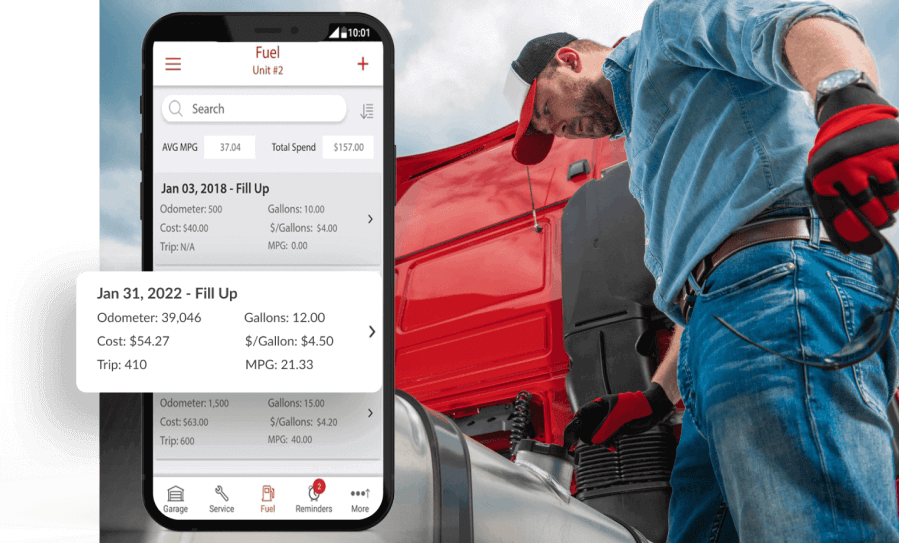
| Odometer readings | Miles driven | Daily/weekly | MPG calculation |
| Engine diagnostics | Idle time, fuel burn | Real-time | Behavior monitoring |
| Manual logs | Fuel entries | As recorded | Backup validation |
Fuel Cards vs Telematics-Based Tracking
Fuel Cards
- Tracks fuel purchases by driver or vehicle
- Enables spend controls and purchase limits
- Simplifies accounting and reconciliation
- Limited visibility into actual fuel consumption

Telematics-Based Tracking
- Captures real-time fuel consumption and idle data
- Links fuel usage to driver behavior and routes
- Detects anomalies such as excessive idling or inefficient driving
- Supports deeper operational optimization beyond transactions
Core Components of a Fleet Fuel Management Strategy
A structured fuel management strategy requires multiple coordinated components that ensure visibility, accountability, and control across the fleet.
- Fuel tracking systems (cards, telematics, logs)
- Defined fuel policies and usage guidelines
- Driver accountability and monitoring frameworks
- Integration with maintenance and mileage data
- Reporting and analytics for cost visibility
Outcome:
- Improved fuel cost control
- Increased operational transparency
- Better decision-making based on data
Fuel Data Tracking and Monitoring Systems
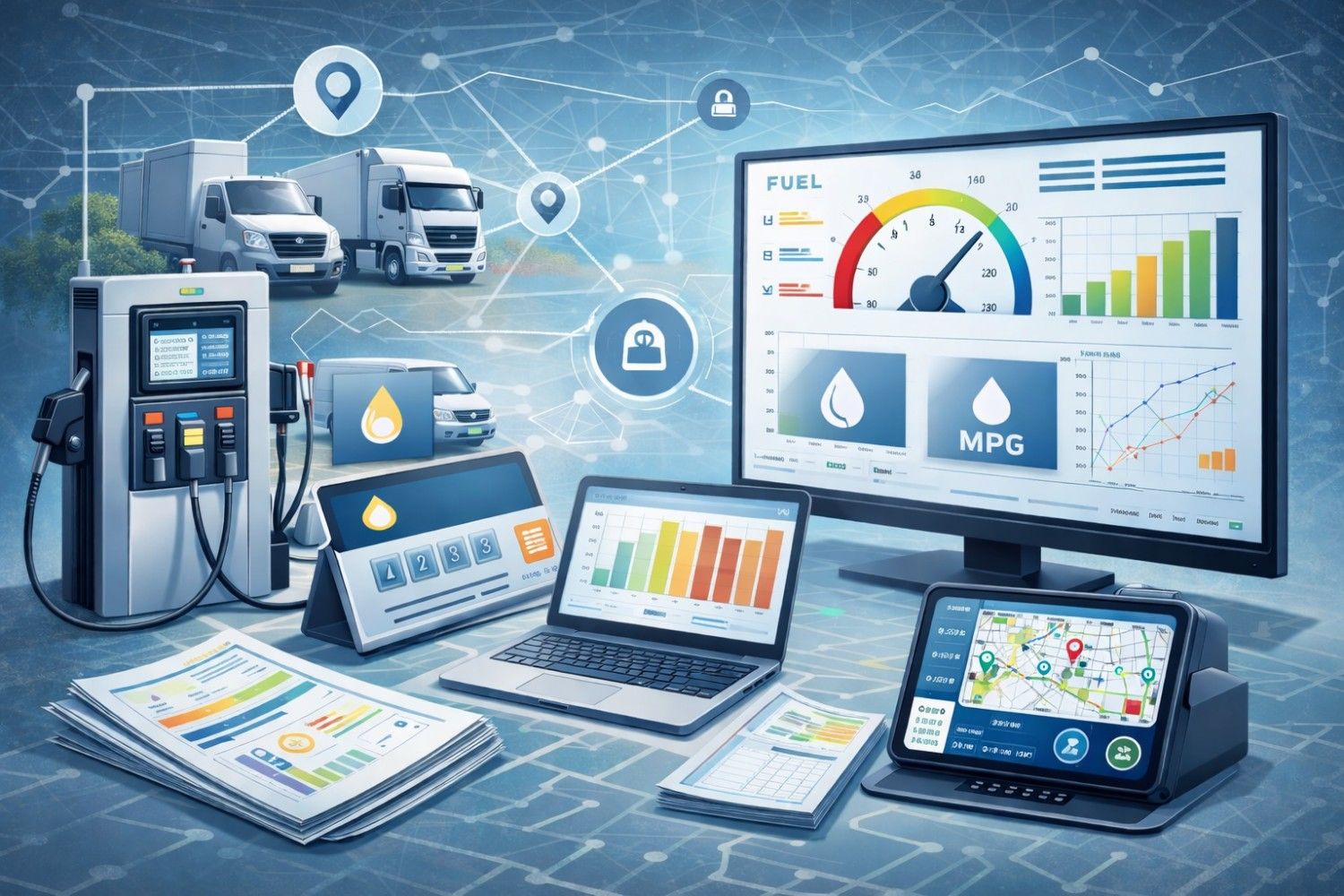
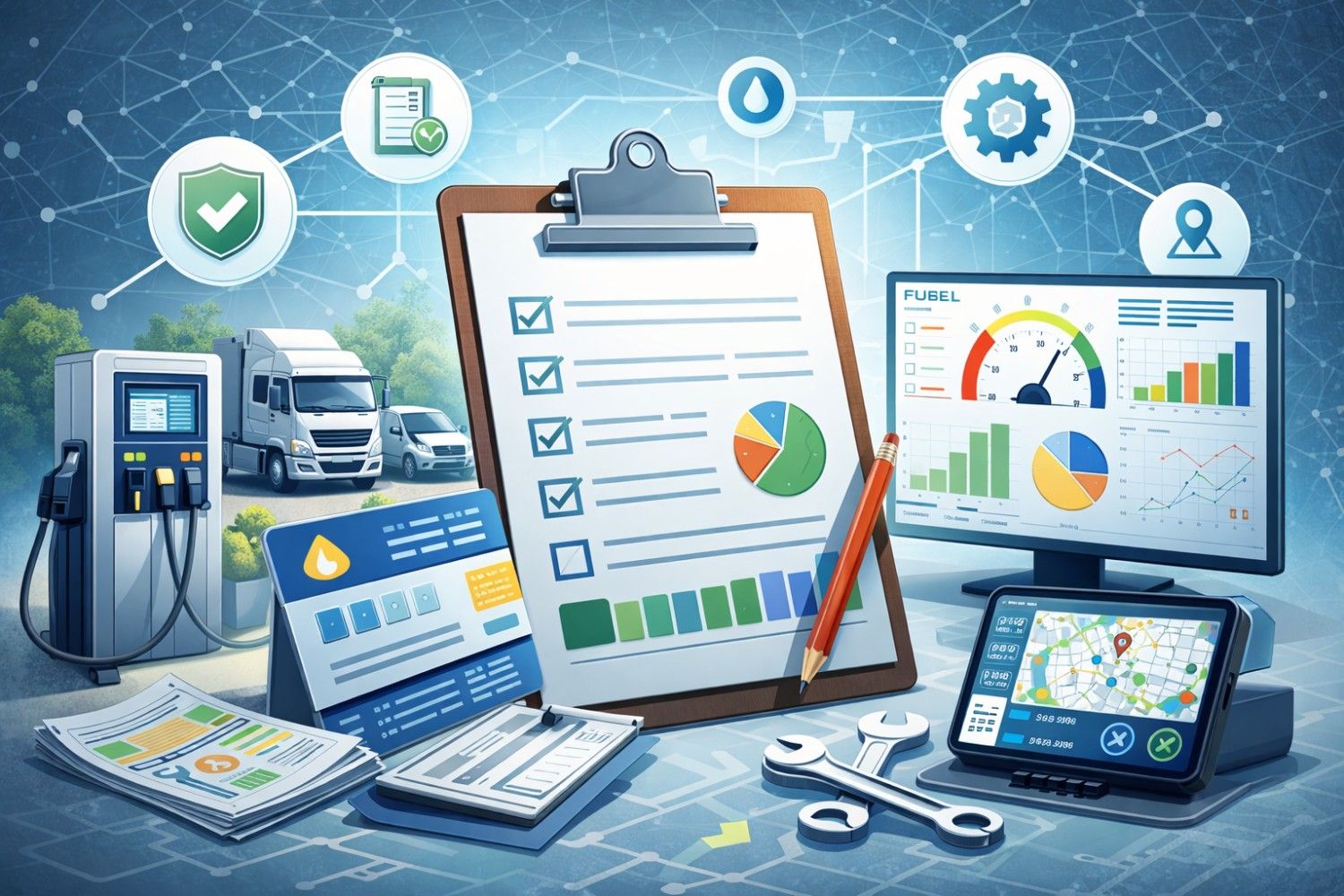
Fuel data must be consistently captured and validated to provide reliable insights for operational decisions.
- Use telematics systems for real-time fuel and idle tracking
- Integrate fuel data with mileage and route information
- Validate fuel transactions against vehicle activity
- Monitor key metrics such as MPG, idle time, and fuel cost per mile
- Maintain centralized fuel data records
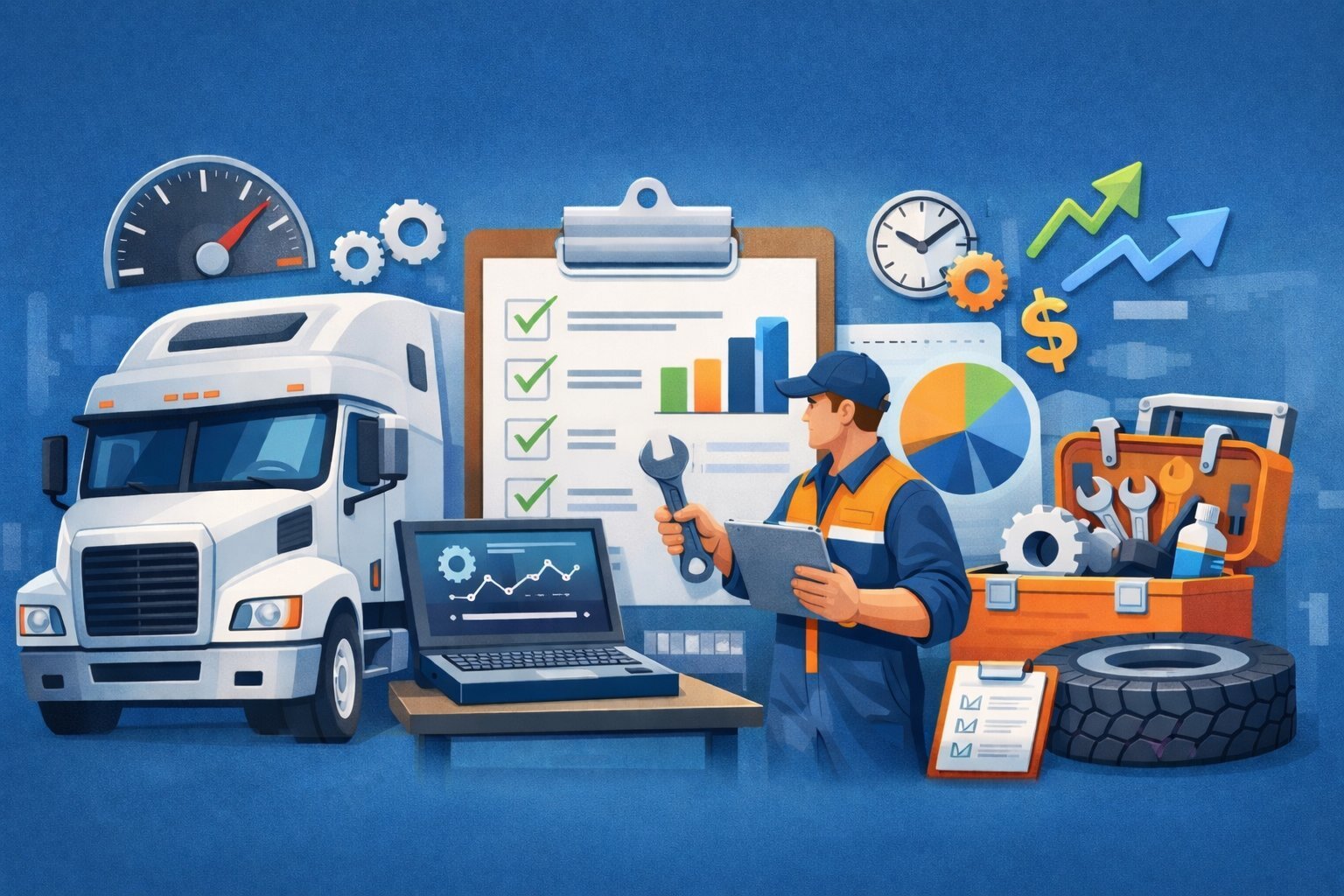
To align fuel tracking with broader operational metrics, fleets often reference frameworks like the AUTOsist fleet maintenance KPIs guide.
Outcome:
- Accurate fuel usage visibility
- Identification of inefficiencies
- Reliable data for performance benchmarking
Fuel Consumption Control and Optimization Methods
Reducing fuel consumption requires both operational changes and data-driven optimization strategies.
- Reduce excessive idling through driver policies
- Optimize routing and dispatch planning
- Maintain proper tire pressure and vehicle condition
- Implement preventive maintenance using resources like the preventative maintenance guide
- Train drivers on fuel-efficient driving practices
Outcome:
- Lower fuel consumption per vehicle
- Reduced operating costs
- Extended vehicle lifespan

Fuel Fraud, Loss Prevention, and Risk Management
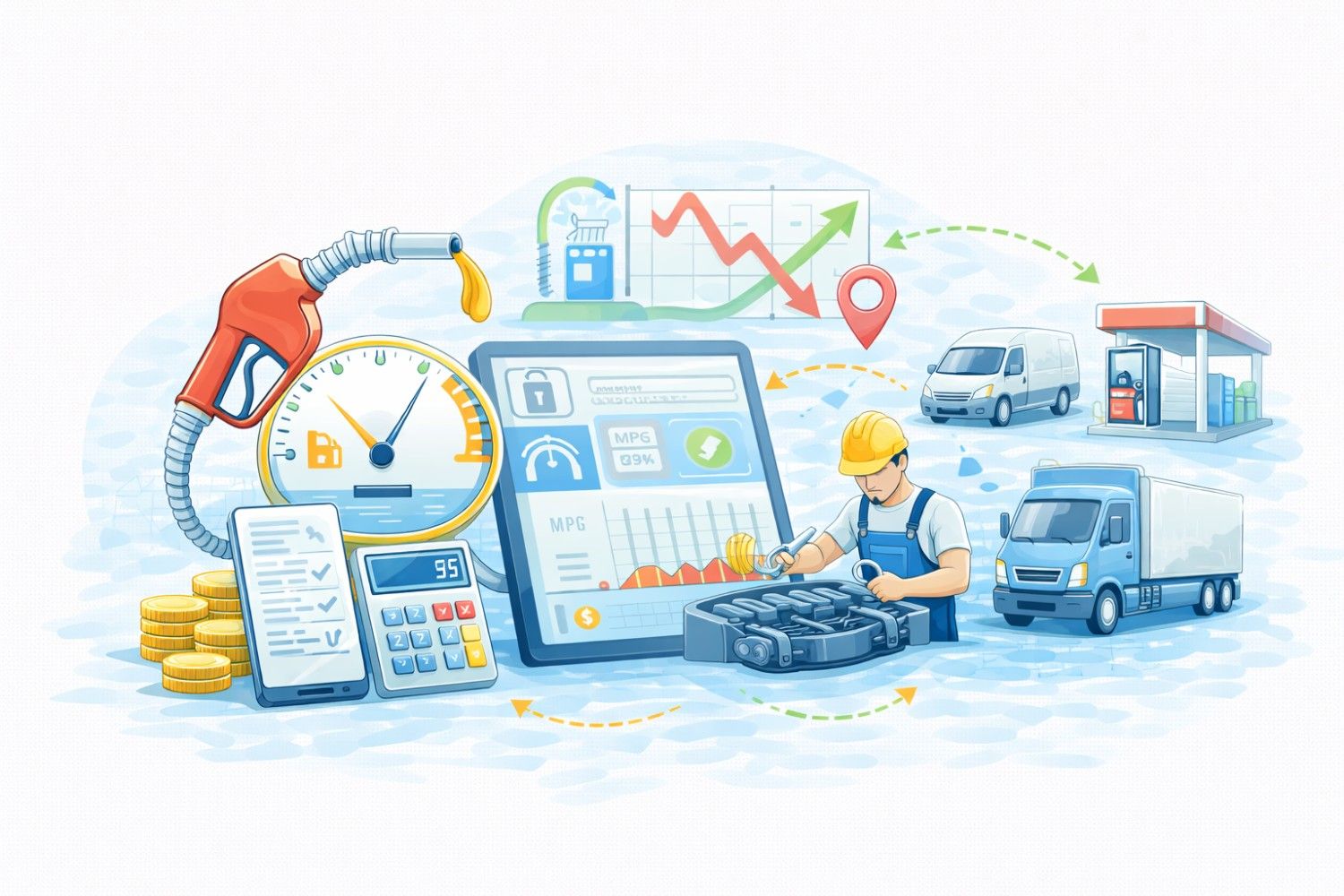
Fuel misuse and fraud can significantly impact operating costs if not actively monitored and controlled.
- Set fuel card controls (limits, location restrictions)
- Match fuel transactions with vehicle location and usage
- Detect anomalies such as fuel purchases without vehicle movement
- Audit fuel data regularly for inconsistencies
- Use integrated systems to reduce manual errors
Outcome:
- Reduced fuel theft and misuse
- Improved accountability
- Stronger compliance and audit readiness
Implementation and Continuous Improvement of Fuel Management Programs
Fuel management strategies must evolve continuously based on operational data and performance outcomes.
- Establish baseline fuel performance metrics
- Monitor trends and identify deviations
- Conduct regular reviews of fuel policies
- Adjust strategies based on seasonal or operational changes
- Integrate fuel management with broader fleet systems such as fleet optimization strategies
Outcome:
- Continuous cost improvement
- Adaptive operational control
- Long-term fuel efficiency gains

Final Takeaways
Fleet fuel management is not a single system but a coordinated strategy combining data, policies, and operational controls.
- Fuel data visibility is the foundation of cost control
- Telematics provides deeper insights than transaction-only systems
- Driver behavior and maintenance directly impact fuel efficiency
- Fraud prevention requires validation across multiple data sources
- Continuous monitoring and improvement drive long-term savings
AUTOsist Fleet Management Resources
Fleet Maintenance KPIs Guide
Preventative Maintenance Guide
Fleet Maintenance Log
Fleet Fuel Management Software