 Miya Bholat
Feb 19, 2026
Fleet Maintenance Software Pricing & ROI: What It Really Costs and How to Calculate Your Return

Fleet managers rarely struggle with whether they need better maintenance tracking — the real hesitation usually comes down to cost. You might be thinking: “Is this another monthly subscription draining my budget?” or “Will the ROI actually show up, or is this just another tool?”
The truth is, fleet maintenance software isn’t just an expense line. When implemented correctly, it becomes a cost-control system that prevents breakdowns, reduces admin hours, and extends vehicle life. But to see that value clearly, you need to understand both pricing structures and ROI math — not just vendor marketing.
Key Takeaways
- Expect pricing variation, not a fixed number. Fleet maintenance software ranges widely depending on vehicle count, features, and support levels.
- The hidden cost of doing nothing is often higher. Reactive repairs, downtime, and admin hours quietly exceed subscription fees.
- ROI math is simple but powerful. Baseline current costs, estimate savings, and calculate payback months to make confident decisions.
- Features matter more than price alone. Preventive scheduling, inspections, fuel tracking, and analytics drive the strongest returns.
- Vendor evaluation should include usability and support. A cheaper tool with poor adoption delivers little value.
- AUTOsist is worth evaluating alongside competitors. Its maintenance scheduling, inspection tools, and reporting capabilities align directly with the ROI drivers fleet managers care about most.
Why Fleet Maintenance Software Is Central to Fleet Cost Management
Fleet maintenance software is not just a tool for tracking repairs. It is a foundational system within broader fleet cost management strategies, where every operational expense is monitored and optimized. When fleets lack centralized visibility, maintenance becomes unpredictable, budgets drift, and costs compound without clear accountability.
Within a structured fleet cost management approach, maintenance data becomes one of the most valuable financial inputs. It directly impacts repair spend, asset lifespan, and operational efficiency. By shifting from reactive tracking to a data-driven system, fleets gain control over cost patterns instead of reacting to them after the fact.
This is where fleet maintenance software plays a critical role. It connects maintenance schedules, service history, and cost data into one system, allowing managers to identify trends early and act before costs escalate. Over time, this creates a feedback loop where better data leads to better budgeting decisions.
For fleets looking to understand how maintenance fits into overall financial performance, exploring a structured fleet management cost breakdown can provide additional clarity on where costs originate and how they can be controlled.
What Does Fleet Maintenance Software Actually Cost?
Fleet maintenance software pricing varies widely because vendors structure their plans differently. Some price by vehicle count, others by users, and a few offer flat monthly tiers. Add-on features, onboarding services, and integrations also shift the final cost.
Here’s what typically influences pricing:
- Fleet size (number of vehicles or assets)
- Feature depth (maintenance only vs. full fleet management)
- Number of users or drivers
- Integrations with GPS, fuel cards, or accounting tools
- Support and onboarding level
Small fleets may spend $20–$50 per month, mid-size fleets often land between $75–$300 per month, and enterprise operations can reach $500+ per month, depending on complexity and scale. One-time licensing models still exist but are becoming rare due to ongoing software updates and cloud infrastructure costs.
Per-Vehicle vs. Flat-Rate Pricing Models
These are the two most common pricing structures you’ll encounter:
- Per-Vehicle Pricing: You pay a small monthly fee for each vehicle. This works well for very small fleets but can scale quickly as you grow.
- Flat-Rate Pricing: A fixed monthly fee covering a range of vehicles. This becomes cost-effective once fleets exceed 20–30 assets.
- Hybrid Models: Some vendors combine tiers with usage caps.
- User-Based Pricing: Charges increase as more employees access the system.
- Feature-Tier Pricing: Basic maintenance is cheap; advanced analytics cost more.
Fleet managers should watch for “ballooning costs.” A per-vehicle model that looks affordable at 15 vehicles can double or triple when the fleet expands to 50.
Hidden Costs to Watch For
Advertised pricing rarely shows the entire picture. Before signing any contract, ask vendors about these potential extras:
- Implementation fees for setup or configuration
- Training costs for drivers and mechanics
- Data migration from spreadsheets or legacy systems
- Add-on modules like fuel tracking or parts inventory
- Integration fees with GPS or accounting software
Many fleets underestimate onboarding costs, only to realize later that poor training reduces adoption — and that kills ROI faster than any subscription fee.
The Real Cost of NOT Using Fleet Maintenance Software
Manual tracking feels “free,” but it carries hidden expenses that quietly drain budgets. Paper logs and spreadsheets increase human error, delay repairs, and reduce visibility into vehicle health.
Consider these common cost leaks:
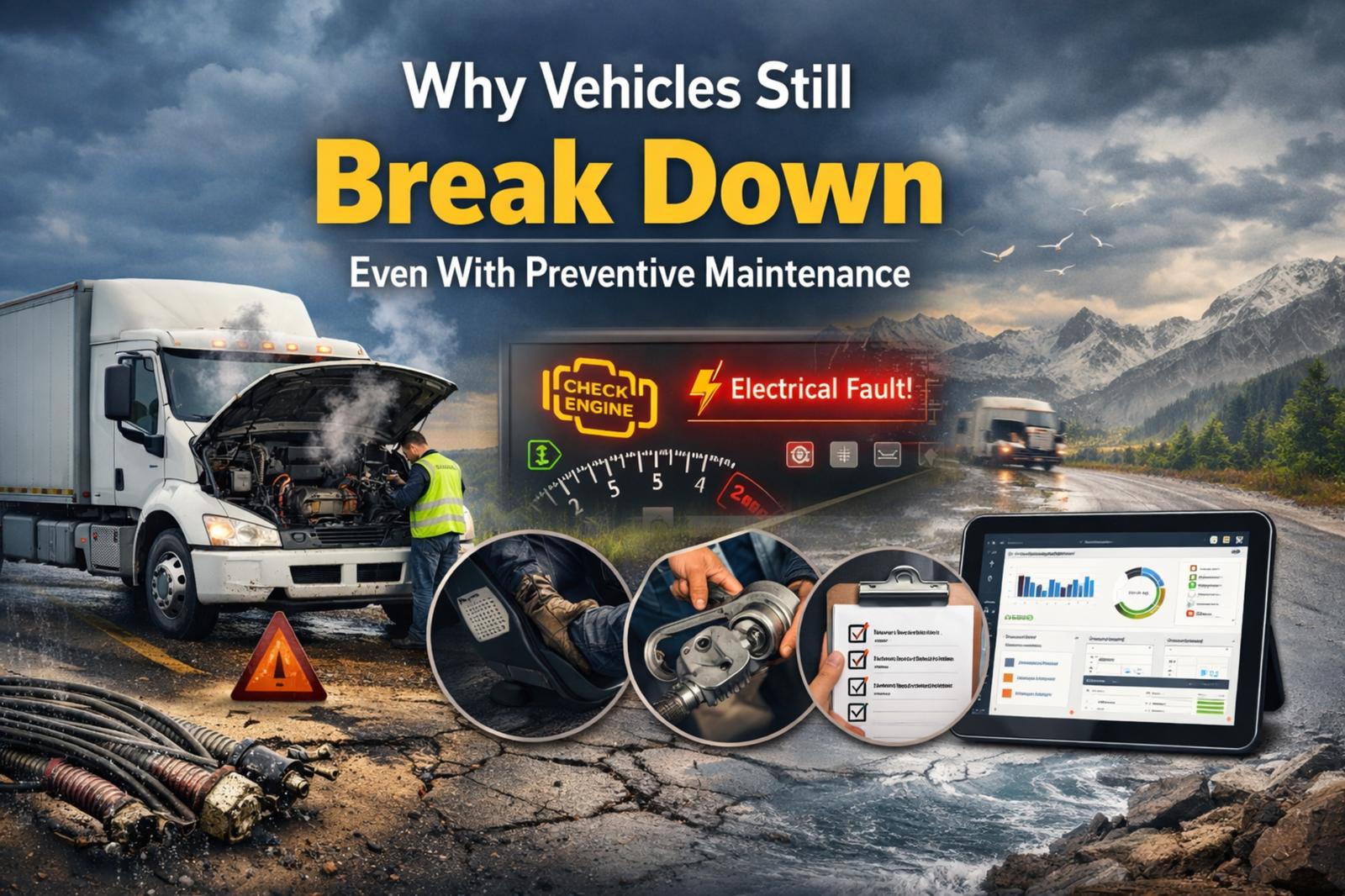
- Reactive repairs: Emergency roadside breakdowns often cost 3–5× more than scheduled maintenance.
- Vehicle downtime: Even one day of lost delivery or service can cost hundreds or thousands.
- Compliance penalties: Missed inspections or expired registrations lead to fines.
- Administrative labor: Hours spent updating spreadsheets instead of managing operations.
- Shortened vehicle lifespan: Deferred maintenance accelerates depreciation.
Industry estimates often place the cost of an unplanned breakdown between $400 and $1,200 per incident, depending on vehicle type and location. Multiply that by several events per year, and suddenly a modest software subscription looks minor.
For deeper insight into how poor maintenance impacts budgets, many fleet managers reference resources like hidden cost of poor fleet maintenance.
How to Calculate ROI on Fleet Maintenance Software
This is where decisions become data-driven. ROI calculations don’t need to be complex; they just need realistic inputs and consistent tracking.
Step 1 — Baseline Your Current Costs
Start by gathering real numbers from your current operation. Avoid guesses; even rough estimates should come from historical data.
Focus on:
- Total annual maintenance spend
- Average downtime hours per vehicle
- Labor hours spent on manual tracking
- Fuel consumption patterns
- Compliance-related fines or fees
The clearer your baseline, the more accurate your ROI forecast.
Step 2 — Estimate Savings by Category
Fleet maintenance software usually generates savings across multiple areas. Instead of looking for one big win, stack smaller improvements together.
Typical savings categories include:
- Reduced labor hours from automation
- Fewer breakdowns through proactive scheduling
- Improved fuel efficiency from better vehicle health
- Lower compliance risk through reminders and digital records
- Extended asset lifespan via consistent maintenance
For example, cutting just two hours of admin work per week per manager can translate into thousands annually.
Step 3 — Calculate Payback Period
Use this simple formula:
(Annual Software Cost) ÷ (Monthly Savings) = Months to Break Even
Example:
A 50-vehicle fleet spends $1,800 annually on software and saves $250 per month from reduced downtime and admin labor.
$1,800 ÷ $250 = 7.2 months to break even
After that point, the software effectively pays for itself.
Sample ROI Calculation Table
| Category | Annual Cost Before | Annual Cost After | Annual Savings |
|---|---|---|---|
| Breakdowns | $9,000 | $4,500 | $4,500 |
| Admin Labor | $6,000 | $3,000 | $3,000 |
| Compliance Fines | $1,200 | $300 | $900 |
| Total Savings | — | — | $8,400 |
Even conservative improvements can exceed software subscription costs several times over.
Turning ROI Insights Into Ongoing Cost Control Systems
Calculating ROI is only the first step. The real value comes from turning those insights into repeatable systems that continuously control and reduce costs. Without this transition, ROI remains a one-time exercise instead of an ongoing advantage.
A key shift happens when fleets move from reactive maintenance to a structured preventive maintenance program. Instead of waiting for failures, fleets follow a defined maintenance schedule that reduces breakdown frequency and stabilizes repair costs. This predictability makes it easier to manage budgets and avoid sudden financial spikes.
Another critical factor is reducing fleet downtime, which is often one of the largest hidden expenses. By using fleet maintenance software to automate alerts and track service intervals, fleets can minimize unexpected disruptions and keep vehicles operational. Over time, even small reductions in downtime translate into significant cost savings.
Fleets that want to go further often combine maintenance insights with broader analytics such as fleet management reports. This allows managers to identify high-cost assets, track performance trends, and make informed decisions about repairs, replacements, and resource allocation.
For fleets aiming to scale cost control efforts, strategies outlined in fleet maintenance cost reduction strategies can help extend ROI beyond initial implementation and into long-term financial efficiency.
Key Features That Justify the Price Tag
Not all features contribute equally to ROI. The most impactful tools are those that reduce manual work and prevent expensive failures.
Features that typically drive the strongest return include:
- Preventive maintenance scheduling to avoid breakdowns
- Work order management for repair visibility
- Fuel tracking to monitor efficiency
- Inspection checklists for compliance and safety
- Reporting and analytics for data-driven decisions
Platforms like AUTOsist map directly to these ROI drivers with capabilities such as preventive schedules, digital inspections, and detailed reporting dashboards . The value comes from consolidating multiple manual systems into one reliable workflow.
What to Look for When Comparing Fleet Maintenance Software Vendors
Price alone doesn’t determine value. Two vendors may charge the same monthly fee but deliver very different outcomes depending on usability and support.
When comparing options, evaluate:
- Ease of onboarding: How quickly can your team adopt it?
- Mobile accessibility: Can drivers update inspections on the go?
- Integration capability: Does it connect with GPS or fuel cards?
- Customer support quality: Response time matters during breakdowns.
- Scalability: Will the system grow with your fleet?
Many fleet managers explore comparative guides such as best fleet maintenance software for small fleets to understand feature depth versus price tiers.
Common Cost Questions Fleet Managers Ask Before Investing in Software
Before committing to any platform, fleet managers often ask very specific cost-related questions. These questions go beyond general pricing and focus on how software performs in real operational scenarios.
One of the most common concerns is understanding fleet maintenance software pricing across vendors. While base subscriptions may appear similar, the real difference comes from how well a platform tracks and controls costs. For example, tools that provide service history reports allow fleets to analyze past repairs and identify cost patterns that would otherwise go unnoticed.
Another key requirement is the ability to compare expenses across vendors and service providers. Many fleets look for tools that support repair pricing comparison so they can evaluate which service shops deliver the best value over time. Without this visibility, fleets often overpay for outsourced repairs without realizing it.
Fleets managing operations across multiple locations also prioritize systems that track outsourced maintenance spend. A strong fleet maintenance software solution should centralize costs related to parts, labor, and external vendors, ensuring that no expense category goes unmonitored.
For operations focused on heavy vehicles, questions around truck fleet maintenance program cost and semi truck maintenance software cost are especially common. These fleets typically deal with higher repair frequency and more expensive components, making cost tracking even more critical.
Finally, advanced fleets look for platforms that combine maintenance with fuel and operational data. Systems that integrate maintenance cost reporting per vehicle with fuel tracking provide a complete view of total operating expenses, helping managers make more informed financial decisions.
For a broader perspective on evaluating pricing and ROI across platforms, refer to fleet management cost expense analysis.
Questions to Ask Before Signing a Contract
Before committing to any vendor, clarify the financial and operational details. These questions often uncover hidden costs or limitations.
Ask vendors:
- What exactly is included in the base price?
- Are there per-user or per-vehicle fees?
- Is onboarding and training included?
- What integrations cost extra?
- What is the contract length and exit policy?
Clear answers reduce surprises later and ensure your ROI projections remain realistic.
When viewed through an ROI lens rather than a subscription lens, fleet maintenance software shifts from “another expense” to a cost-control investment that protects uptime, compliance, and long-term vehicle value.
Frequently Asked Questions
-
How much does fleet maintenance software cost?
Fleet maintenance software cost varies based on fleet size, features, and integrations. Small fleets may spend $20 to $50 per month, while larger fleets with advanced reporting and integrations can exceed $300 per month. -
What is the cost of a truck fleet maintenance program?
Truck fleet maintenance program cost depends on vehicle type, usage, and maintenance frequency. Heavy duty fleets typically have higher costs due to expensive parts, labor, and more frequent servicing needs. -
What tools help compare repair pricing for fleet managers?
Fleet managers use maintenance software with reporting and analytics features to compare repair pricing across vendors. These tools help identify cost variations and choose more cost effective service providers. -
How can fleets track outsourced maintenance costs across locations?
Fleets can track outsourced maintenance costs using centralized fleet maintenance software that records vendor expenses, parts, and labor across all locations in one system. -
What is the best way to track ROI for fleet maintenance software?
The best way to track ROI is by measuring reductions in downtime, repair costs, and administrative hours while using reporting tools to monitor cost trends over time.