 Miya Bholat
May 26, 2026
6 Fleet Repair Handoff Problems That Delay Maintenance
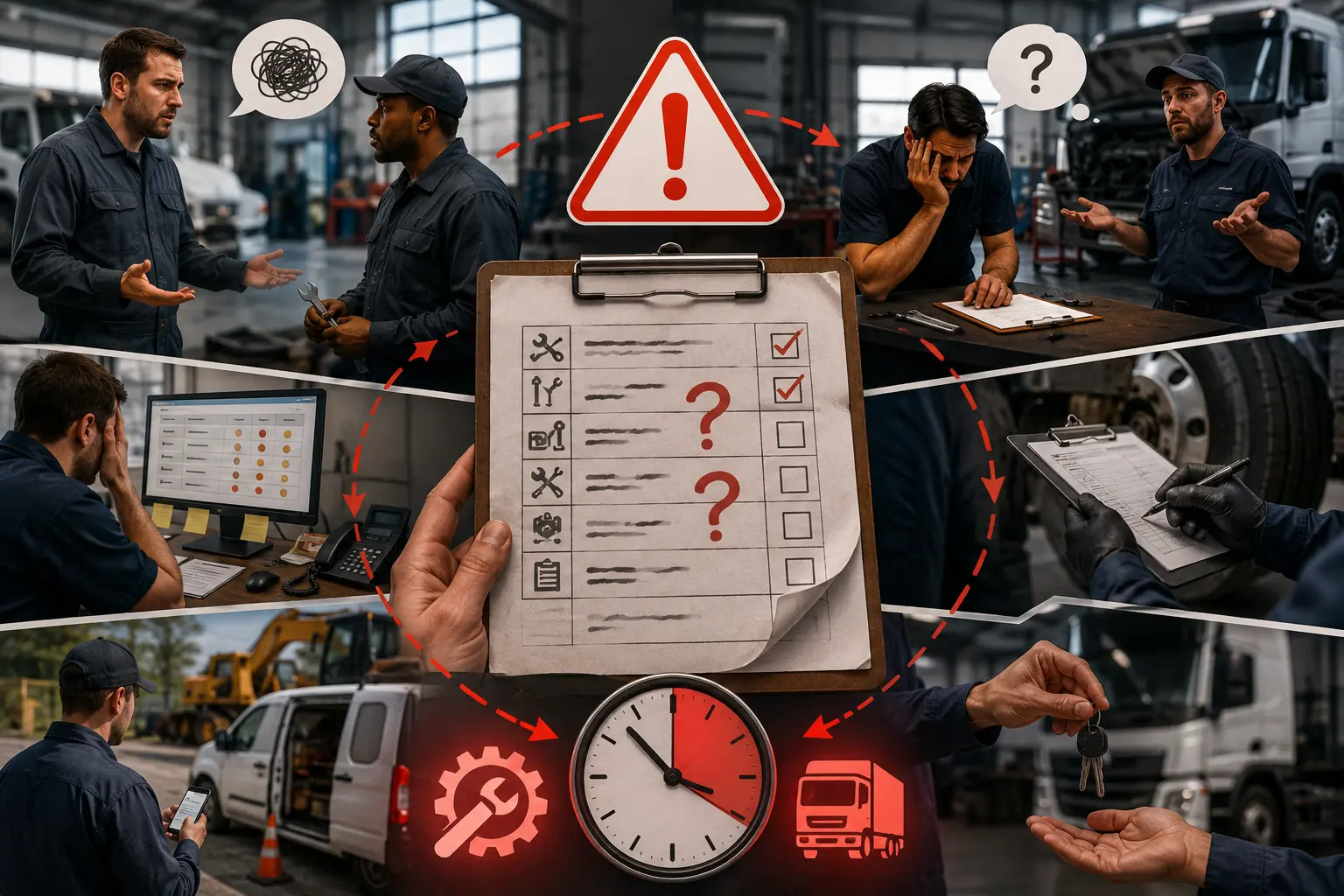
A fleet repair handoff problem happens when maintenance information fails to transfer clearly between people during the repair process. Most fleets solve these delays by using centralized fleet maintenance software that keeps work orders, technician notes, inspection reports, and repair status connected in one system. When repair details stay attached to the vehicle instead of relying on memory or verbal updates, fleets reduce downtime, avoid duplicate work, and move repairs forward faster.
Key Takeaways
-
Fleet repair handoff failures often create hidden maintenance delays.
Missing updates between drivers, dispatchers, technicians, and vendors force fleets to repeat diagnostics and delay repairs. -
Incomplete repair documentation causes vehicles to stay out of service longer.
Technicians lose time rebuilding repair history when work orders lack notes, inspection results, or next steps. -
Repair visibility becomes harder as fleets grow.
Without centralized tracking, fleet managers struggle to monitor repair progress, prioritize downtime, and communicate accurate timelines. -
Structured digital workflows reduce repair delays across the fleet.
Centralized repair records, digital inspections, and maintenance tracking tools help fleets keep repair information connected. -
Consistent repair handoff processes improve technician productivity.
When every repair follows the same workflow, fleets reduce confusion during shift changes and vendor repairs.
Why Repair Handoffs Break Down in Fleet Operations
A repair handoff happens anytime repair responsibility moves from one person to another. This includes driver reported issues, dispatcher created work orders, technician shift changes, vendor repairs, and multi day maintenance jobs involving multiple technicians.
Many fleet maintenance delays happen long before a wrench touches the vehicle. A technician may finish diagnosing a problem but fail to document the next repair step. A driver may report a warning light verbally without creating a proper record. A vendor may return a repaired vehicle with incomplete paperwork. Every missing detail creates another repair gap that slows maintenance operations.
These communication breakdowns become even more difficult to manage in environments like construction fleet operations where technicians, operators, field supervisors, and dispatchers constantly move between jobsites, vehicles, and repair priorities throughout the day.
Fleet operations create more handoff opportunities than most maintenance environments. Vehicles move constantly between drivers, jobsites, maintenance bays, and outside repair vendors. Every transition increases the chance that repair information gets lost, delayed, or misunderstood.
Many fleets still rely on disconnected paperwork, text messages, whiteboards, or verbal conversations to communicate repair status. These methods may work temporarily for small teams, but they break down quickly as fleets scale. Fleets often discover these operational gaps while reviewing recurring downtime patterns through fleet maintenance KPI tracking processes that reveal repeated repair inefficiencies.
Problem 1: Verbal Only Updates That Get Forgotten or Misheard
One of the most common repair handoff failures happens when technicians rely entirely on verbal communication. A technician may mention that a component already failed testing, another technician assumes a part was ordered, or a dispatcher misunderstands the repair priority entirely.
These verbal updates disappear the moment shifts change or workloads increase.
A technician starting a repair later in the day may have no visibility into previous diagnostic work. This often leads to repeated inspections, duplicate troubleshooting, and unnecessary downtime. Fleets managing repairs manually frequently experience these delays before switching to centralized vehicle service history tracking systems that preserve repair notes in real time.
The Real Cost of "I Thought You Knew"
The biggest cost of poor handoffs is wasted technician time.
If a technician spends one extra hour repeating diagnostics on several vehicles every week, the fleet quickly loses dozens of labor hours each month. Vehicles also remain unavailable longer, which increases scheduling pressure across the rest of the operation.
Poor repair communication also damages technician productivity. Teams lose confidence in repair documentation when work orders constantly miss critical details. Many fleets later connect these inefficiencies to broader fleet downtime management challenges affecting overall maintenance performance.
Problem 2: Incomplete Work Orders Passed Between Technicians
A work order should give the next technician enough context to continue the repair immediately. Unfortunately, many fleets still use work orders with vague descriptions like "engine issue" or "check brakes" without documenting diagnostic steps, inspection results, or pending tasks.
This forces technicians to restart the repair process instead of continuing it.
Incomplete work orders usually miss important information such as mileage, fault codes, inspection findings, deferred repairs, or ordered parts. Fleets often improve this process after adopting structured fleet maintenance work order software that standardizes repair documentation across the operation.
What a Complete Handoff Work Order Should Include
A clean technician handoff requires consistent repair documentation that follows every vehicle through the maintenance process.
- Vehicle number and current mileage
- Driver reported symptoms and inspection findings
- Diagnostic tests already completed
- Parts replaced, ordered, or pending
- Remaining repair steps still required
- Current repair status and estimated completion time
Many fleets also improve repair consistency by aligning documentation with structured fleet maintenance standard operating procedures used across technicians and shifts.
Problem 3: No Centralized Visibility Into Repair Status Across the Fleet
Many fleet managers struggle to answer a simple question: "What is the current repair status of this vehicle?"
When repair updates stay trapped inside notebooks, clipboards, spreadsheets, or technician memory, managers lose visibility into repair progress. This creates scheduling problems, delayed communication with drivers, and difficulty prioritizing urgent repairs.
The problem becomes worse as fleet size increases. A small fleet may manage temporarily with manual updates, but larger operations need centralized visibility into repair timelines, pending parts, technician assignments, and vehicle availability.
Fleets often address this issue by moving away from disconnected spreadsheets toward centralized fleet maintenance tracking systems that provide live repair visibility across the operation.
Problem 4: Shift Changes That Reset Repair Context
Shift changes create one of the biggest repair handoff risks in fleet maintenance.
A day shift technician may spend hours diagnosing a problem only for the next technician to arrive without understanding what already happened. Sometimes repair notes remain inside the truck, on paper, or in someone's memory instead of inside a centralized system.
This creates delays immediately. Technicians waste time searching for paperwork, repeating inspections, or calling coworkers after hours for clarification.
Many fleets reduce these issues by combining digital repair workflows with structured preventive maintenance scheduling processes that standardize technician workflows throughout the repair cycle.
How Shift Handoff Failures Compound Over Multi Day Repairs
Long repairs become more vulnerable to communication gaps with every additional handoff.
Imagine a truck requiring a multi day engine repair. The first technician diagnoses the issue, the second technician begins disassembly, and the third technician installs replacement components. If each technician leaves incomplete documentation, the repair timeline stretches unnecessarily because every shift spends time rebuilding context.
This becomes even more disruptive in operations managing large service volumes like trucking and logistics fleet operations where vehicle downtime directly affects deliveries and route schedules.
Problem 5: Driver Reported Issues Lost Before Reaching the Shop
Many repair delays begin before the vehicle even enters the maintenance bay.
Drivers often report problems verbally, through text messages, or during busy dispatch conversations. Critical details may never reach the maintenance team accurately. Sometimes the issue never enters a work order at all.
This creates a dangerous disconnect between drivers and technicians. A technician may receive only partial information about warning lights, performance symptoms, or inspection concerns, which slows diagnostics immediately.
Fleets improve this process significantly by using structured digital vehicle inspection reporting tools that move driver reported issues directly into the maintenance workflow without relying on verbal communication.
Problem 6: Vendor and Third Party Repair Handoffs With No Documentation Trail
Outside vendor repairs often create the largest repair visibility gap in fleet operations.
A vehicle leaves for an external repair shop and returns with limited documentation about what work was completed, what inspections occurred, or which problems remain unresolved. Fleet managers may only receive a basic invoice without detailed service records.
This creates repeat failures, compliance risks, and incomplete repair history. Future technicians may have no visibility into previous vendor work, which makes troubleshooting harder later.
Many fleets solve this issue by centralizing external repair records inside vehicle document management systems that store invoices, inspection reports, and service documentation alongside internal maintenance history.
How Fleet Maintenance Software Closes the Handoff Gap
Fleet maintenance software reduces repair delays by creating a centralized system where repair information follows the vehicle through every stage of maintenance.
Instead of relying on memory or scattered paperwork, technicians document repairs directly inside digital work orders. Drivers submit issues digitally, managers track repair progress in real time, and vendors upload supporting documentation into the same maintenance record.
Centralized systems also improve repair visibility across the fleet. Managers can quickly identify stalled repairs, monitor technician workloads, and review maintenance history without chasing paperwork between departments.
Many fleets also combine repair tracking with fleet preventive maintenance scheduling tools to ensure recurring service tasks stay connected to the same repair history and inspection workflows.
Digital workflows become especially valuable for operations managing mixed assets through equipment maintenance management platforms that track both vehicles and heavy equipment within one maintenance system.
Building a Repair Handoff Process That Actually Sticks
Fleets improve repair handoffs when they standardize the process instead of relying on individual habits.
The following practices help maintenance teams reduce communication gaps and repair delays.
- Require technicians to complete digital repair notes before closing shifts
- Standardize work order fields across the entire maintenance team
- Move driver reported issues directly into the maintenance workflow
- Store vendor invoices and inspection reports in centralized vehicle records
- Review stalled repairs daily using maintenance reporting dashboards
- Train technicians to document unfinished work clearly before handoffs
Many fleets also strengthen long term consistency by reviewing common fleet maintenance software implementation mistakes before introducing new repair workflows across the operation.
Frequently Asked Questions
-
Why do fleet repairs get delayed even when parts are available?
Fleet repairs often get delayed because repair information fails during technician, dispatcher, or vendor handoffs. Missing notes, incomplete work orders, and undocumented diagnostics force technicians to repeat work instead of continuing repairs immediately. -
What should technicians include before handing off a repair job?
Technicians should document completed diagnostics, parts replaced, pending repairs, inspection findings, current vehicle status, and next repair steps before ending a shift. Clear documentation helps the next technician continue the repair without losing time rebuilding context. -
How do shift changes create fleet maintenance delays?
Shift changes create delays when repair information stays verbal or incomplete. The incoming technician may not know what testing already happened, which parts were ordered, or what repair step comes next. This often leads to repeated diagnostics and longer vehicle downtime. -
How can fleet maintenance software improve repair handoffs?
Fleet maintenance software improves repair handoffs by centralizing work orders, technician notes, inspection reports, repair history, and status updates in one system. This allows drivers, dispatchers, technicians, and managers to track repairs without relying on memory or paper records. -
Why do outside vendor repairs create maintenance tracking problems?
Vendor repairs often create tracking problems because fleets receive incomplete service documentation after the vehicle returns. Missing repair details make it difficult to track previous work, identify repeat failures, and maintain accurate maintenance records across the fleet.