 Miya Bholat
Aug 05, 2026
Fuel Logs vs. Odometer Readings: Finding the Mismatch
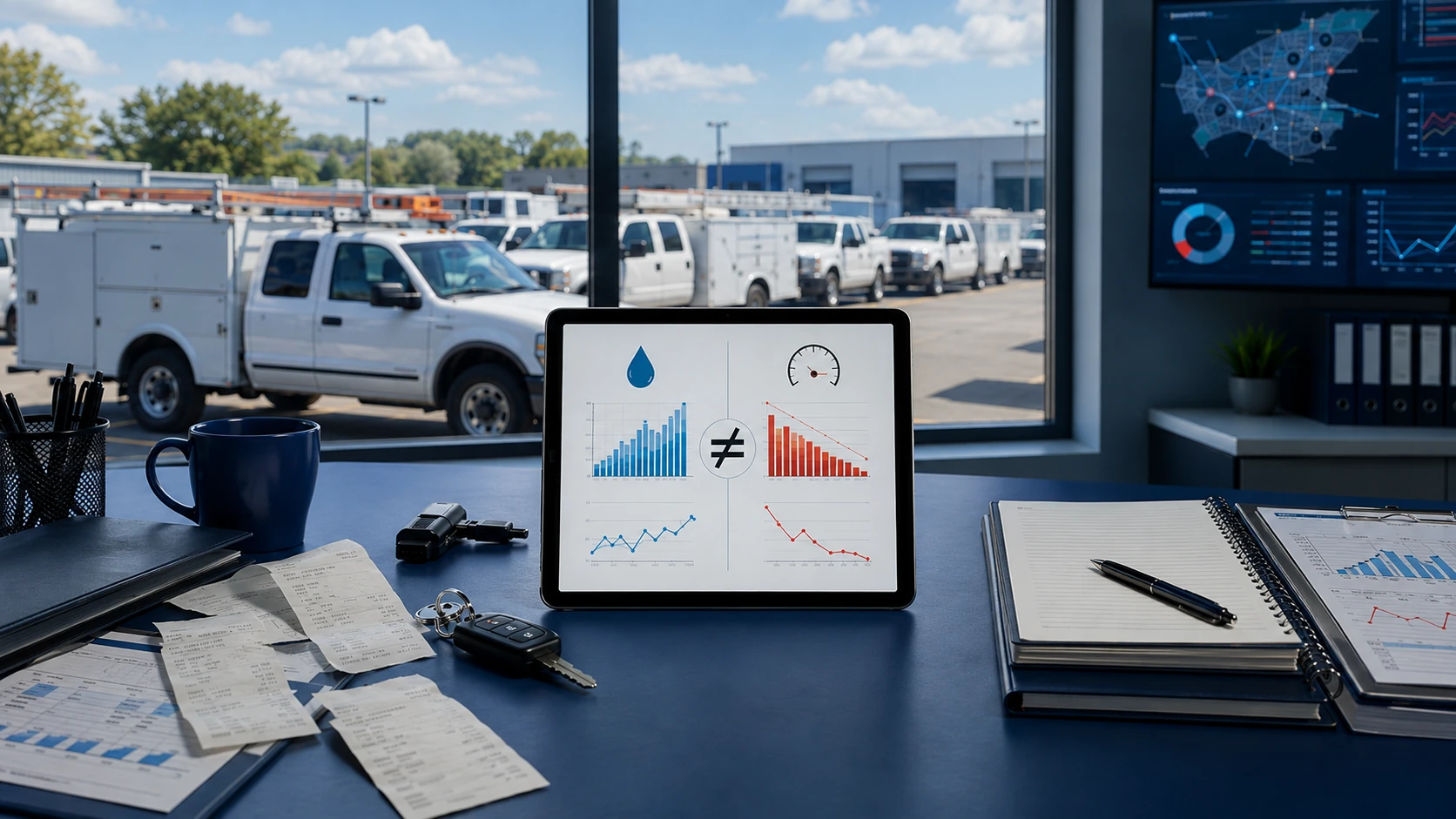
A fuel log and odometer mismatch means the gallons purchased do not support the miles the vehicle appears to have driven. The solution is to reconcile gallons, mileage source, vehicle assignment, and expected MPG in one fleet fuel management process so the mismatch becomes an early warning signal instead of a cost that compounds quietly.
Key Takeaways
- Fuel and mileage must tell the same story. If gallons and miles do not produce a reasonable MPG, one of the records needs review.
- Most mismatches start with manual entry. Drivers may transpose digits, guess odometer readings, or enter old mileage at the pump.
- Not every odometer source matches. Dashboard readings, ECM values, and GPS mileage can drift because they measure distance differently.
- Wrong card assignment breaks reconciliation. A fuel purchase tied to the wrong vehicle makes per vehicle MPG unreliable.
- Variance thresholds should trigger action. A drop of 10 percent from baseline deserves review, while 20 percent calls for urgent investigation.
- Weekly review limits damage. Monthly reconciliation gives small errors enough time to become expensive patterns.
Why Fuel and Mileage Data Should Always Align
Fuel and mileage data connect through a simple equation: miles driven divided by gallons purchased equals fuel economy. If a truck logs 300 miles and takes 20 gallons, the result is 15 MPG. If the same truck logs 300 miles and takes 33 gallons, the result drops near 9 MPG, which tells you something changed in the data, the vehicle, or the fueling behavior.
That ratio affects more than fuel spend. Maintenance teams use mileage to trigger service, finance teams use cost per mile for budgets, and compliance teams rely on accurate distance records for IFTA reporting. Replacement timing also depends on mileage accuracy because a unit that looks overused or underused can distort lifecycle planning.
Manual logs make this harder. Industry telematics research reports that manual mileage logs can carry a 15 to 30 percent error rate, with discrepancies averaging 200 to 500 miles per vehicle per month, as noted in this manual mileage log error research. That is why comparisons across vehicles can get messy fast, especially when teams already struggle with why fuel use is hard to compare across vehicles.
Common Causes of Fuel Log and Odometer Discrepancies
Before assuming the worst, separate the mismatch by pattern. Random errors usually point to bad entry or source conflicts, while repeated negative variance may point to misuse, diversion, maintenance issues, or the wrong fuel process.
Driver Entry Errors at the Pump
Driver entry errors are the most common cause of fuel and odometer mismatch. A driver may enter 84,350 instead of 83,450, round to the nearest thousand, or type yesterday’s mileage because the pump line is moving and the fuel card prompt feels like a formality. One wrong digit can make MPG look impossible until the next fill up corrects the curve.
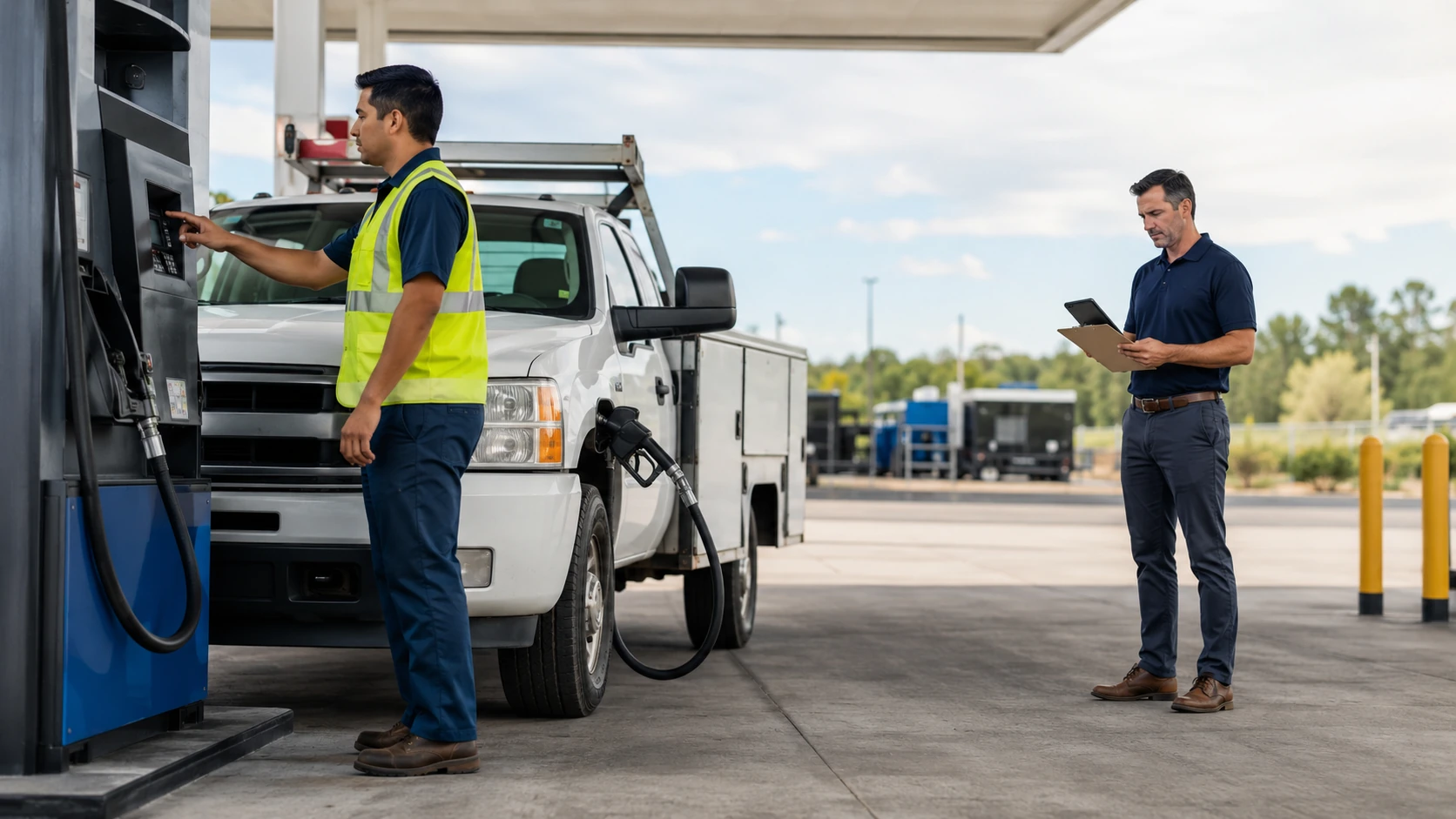
Fuel cards can ask for an odometer reading, but they cannot always prove the reading is accurate. Many systems only reject extreme outliers, such as an entry that jumps 50,000 miles overnight. Smaller mistakes often pass through and distort reports until someone compares them against maintenance records, telematics, or the vehicle history.
Odometer Source Conflicts (ECM vs. Dashboard vs. GPS)
A vehicle can have more than one mileage source. The dashboard display may show one number, the engine control module may store another, and GPS can calculate distance based on route movement. The Federal Highway Administration describes odometer, onboard diagnostic, and location based mileage as separate measurement approaches with different accuracy and reliability considerations in its mileage recording approaches.
For regulated records, choose one source of truth and document it consistently. Many fleets treat ECM mileage as the primary system record when dashboard and diagnostic data disagree, then confirm the policy with their compliance team. Tire size changes, engine rebuilds, sensor calibration issues, and replaced clusters can all create drift between sources.
Fuel Card Misassignment and Shared Cards
Fuel card assignment creates another common mismatch. If cards are assigned to drivers instead of vehicles, the purchase can follow the person while the mileage stays with the unit. That makes the MPG calculation look wrong even when the fuel purchase itself is legitimate.
Shared cards make the problem worse. When three vehicles use the same card, you can still track total spend, but you lose clean per vehicle reconciliation. This is where fleet user and driver management matters because driver accountability should support vehicle level records, not replace them.
Unauthorized Use, Diversion, or Theft
Unauthorized use deserves attention, but it should not be the first assumption. Entry errors create scattered spikes and dips, while diversion often creates a steadier pattern of poor MPG, off route fueling, odd transaction timing, or repeated volume exceptions. A mismatch becomes more suspicious when it repeats across the same driver, card, location, or unit.
The key is pattern recognition. If the same vehicle always shows gallons that exceed the miles driven, investigate the fuel record, not just the driver. You can also compare the pattern against fuel card exceptions to see whether the transaction behavior matches a normal correction or a recurring control issue.
How to Calculate and Flag a Fuel Odometer Mismatch
Use the second fill up to calculate fuel economy for the miles driven since the prior fill up. The formula is:
Actual MPG equals odometer at fill up B minus odometer at fill up A divided by gallons at fill up B.
Here is a simple example for a Ford F 250 expected to average 15 MPG:
| Item | Value |
|---|---|
| Odometer at prior fill up | 42,100 miles |
| Odometer at current fill up | 42,370 miles |
| Miles driven | 270 miles |
| Gallons at current fill up | 30 gallons |
| Actual MPG | 9 MPG |
| Expected MPG | 15 MPG |
| Variance | 40 percent below baseline |
A 10 percent drop below baseline warrants review. A 20 percent or greater drop should move to urgent investigation, especially if the vehicle has no known heavy load, route change, idling event, or maintenance concern. For context, the same logic helps identify fuel trends that signal a maintenance problem because bad MPG may come from mechanical drag, tire pressure, engine faults, or excessive idle time.
A Step by Step Investigation Workflow
Use the mismatch as a workflow trigger, not a guessing exercise. The goal is to isolate which record broke first.
Step 1: Cross Reference Data Sources
Start by comparing the fuel card odometer entry, telematics mileage, GPS trip distance, and the last maintenance odometer. If three sources cluster around one number and the pump entry sits far away, the pump entry is probably the outlier. If GPS distance and ECM mileage disagree every week, the issue may be calibration or source policy.

This is where trip mileage tracking and GPS tracking and telematics reduce manual review time. When mileage comes from a connected source, the system can flag a bad entry before it pollutes several reports. It also gives the manager a timeline to compare against the transaction.
Step 2: Check Transaction Details
Next, review the transaction details around the fuel purchase. Look at location, time, fuel type, gallons, unit number, and tank capacity. A 40 gallon fill on a vehicle with a 36 gallon tank should move straight to review.
Check these transaction signals before contacting anyone:
- Fuel volume above tank capacity
- Fuel type that does not match the unit
- Purchase location far from the assigned route
- Fill up time outside the vehicle's normal use window
- Repeated partial fills that distort MPG trends
A connected fleet fuel management software setup can centralize these details so managers do not need to compare card reports, spreadsheets, and vehicle files manually.
Step 3: Talk to the Driver
Talk to the driver after the data review, not before. Keep the conversation neutral because most mismatches come from entry errors, route changes, idling, or vehicle swaps. Ask what happened around the fill up and give the driver the transaction details so they can confirm or correct the record.
Useful questions include whether they used another vehicle, took a detour, idled at a jobsite, hauled a heavier load, or guessed the odometer. For service fleets, construction crews, and trucking and logistics fleet operations, those details often explain the difference between a normal MPG dip and a true control issue.
Step 4: Escalate or Resolve
Once you identify the cause, document the finding. If it was a bad entry, correct the odometer record and note why. If it was a vehicle assignment issue, fix the card mapping before the next fill up.
Escalate only when the pattern supports it. Repeated unexplained negative variance, abnormal locations, excess gallons, or the same issue across several transactions deserves a formal review. Otherwise, treat the mismatch as a process correction and use the finding to tighten data capture.
The Real Cost of Ignoring Fuel Odometer Gaps
A fuel odometer gap rarely stays in the fuel report. Wrong mileage can trigger missed preventive maintenance, premature service, inaccurate IFTA filings, and weak cost per mile budgeting. If a vehicle appears to drive fewer miles than it really does, maintenance may happen late. If it appears to drive more, the fleet may replace or service the unit too early.
The financial leak also compounds. Industry reports show fleets can lose about 2 to 5 percent of annual fuel spend to misuse or undetected waste, supported by reporting on fuel spend lost to misuse. For a fleet spending $500,000 per year, that equals $10,000 to $25,000.
Small daily anomalies add up the same way. A $40 per day mismatch left unchecked for 30 days becomes a $1,200 problem. Over several units, the budget impact can look like a fuel price issue when the real problem is bad reconciliation, missed exceptions, or the reporting gaps described in what fleet managers miss reviewing fuel reports.
How to Prevent Mismatches Before They Start
Prevention comes down to cleaner assignment, automated mileage, and faster review. Build controls around the exact points where the mismatch usually enters the system.
Assign Fuel Cards to Vehicles, Not Drivers
Assign every fuel card to one vehicle whenever possible. That keeps each fuel transaction tied to the unit that generated the miles. Driver accountability still matters, but the fuel record needs a stable vehicle identity first.
This one change makes MPG, tank capacity checks, and maintenance comparisons much cleaner. It also reduces the time managers spend untangling legitimate purchases from wrong unit records. If drivers operate multiple units, require the vehicle number at the time of purchase and validate it against dispatch records.
Automate Odometer Capture with Telematics
Automated odometer capture removes the manual entry step that creates many mismatches. GPS and OBD integrations can pull actual mileage and compare it against fuel card entries. When the numbers diverge, the system can flag the exception without waiting for a monthly review.
AUTOsist supports this type of workflow through fuel card integration, telematics odometer sync, automated alerts, and reporting dashboards. That matters because the best prevention system does not depend on a driver remembering the exact odometer reading at a busy pump.
Set Automated Alerts for Variance Thresholds
Set alerts around both MPG variance and odometer reasonableness. A single low MPG event should trigger review, while repeated variance should trigger escalation.

Alerts should also catch odometer entries that go backward, jump too far, or fall outside the expected mileage range since the last fill up.
Use these thresholds as a starting point:
- Review when MPG falls 10 percent below baseline
- Escalate when MPG falls 20 percent below baseline
- Flag any odometer entry lower than the prior record
- Flag gallons above known tank capacity
- Review repeated exceptions by vehicle, card, driver, or location
Dashboards make those patterns easier to spot, especially when managers compare fuel, mileage, maintenance, and location in one fleet reports dashboard.
Run Weekly (Not Monthly) Fuel Reconciliation
Monthly reconciliation lets a bad pattern run for 30 days before anyone sees it. Weekly review catches mismatches while the driver, route, and transaction details are still fresh. Real time alerts work even better for high fuel spend operations.
Tie weekly fuel review to maintenance planning. If mileage is wrong, service schedules can be wrong too, which makes fleet preventive maintenance schedules less reliable. Clean mileage keeps fuel reporting and maintenance timing aligned.
Fuel Odometer Accuracy as a Fleet Operations Habit
The mismatch itself is not the problem. It is the symptom that tells you one part of the fuel, mileage, assignment, or vehicle record has broken. When fleets treat that signal quickly, they protect MPG reporting, maintenance timing, IFTA records, and budget accuracy. The habit is simple: reconcile early, document the cause, and fix the data source before the next report depends on it.
Frequently Asked Questions
-
Why does my fuel report show lower MPG than expected?
Lower MPG can come from a wrong odometer entry, incorrect vehicle assignment, excess idling, route changes, mechanical issues, or fuel misuse. Start by checking whether the miles or gallons look wrong before assuming the vehicle actually burned more fuel. -
Should I use dashboard mileage or telematics mileage for fuel reconciliation?
Use one source consistently and document your policy. Many fleets prefer telematics or ECM based mileage because it reduces manual entry, but the best source is the one your team can verify across fuel, maintenance, and compliance records. -
How often should fuel and odometer records be reconciled?
Weekly reconciliation works well for most fleets because it catches issues while the data trail is still fresh. High volume fleets should use real time alerts for MPG drops, tank capacity exceptions, and unusual fueling locations. -
What is a normal MPG variance for fleet vehicles?
Some variance is normal because routes, payload, weather, terrain, and idling change fuel use. A drop of 10 percent from the vehicle's baseline deserves review, and a drop of 20 percent or more should be investigated quickly. -
Can a fuel odometer mismatch affect maintenance schedules?
Yes. If mileage is underreported, vehicles may miss service intervals and create avoidable repair risk. If mileage is overreported, the fleet may service vehicles too early and inflate maintenance costs.