 Miya Bholat
Jun 17, 2026
What Fuel Card Exceptions Reveal About Your Fleet?

Fuel card exceptions reveal far more than possible fraud. They show where driver habits, vehicle performance, route planning, and fuel policies differ from what your fleet expects. When managers connect exception data with mileage and maintenance records through a structured fleet fuel management system, each unusual transaction becomes an early signal that can help prevent waste, mechanical problems, and avoidable operating costs.
Key Takeaways
- A fuel card exception is any transaction that breaks a defined rule or expected pattern. Common triggers include unusual times, locations, quantities, grades, or transaction frequency.
- Exceptions can expose more than theft. They may reveal mechanical problems, excessive idling, inefficient routes, inaccurate odometer entries, or unclear fuel policies.
- Different exceptions require different responses. A tank capacity violation may demand an immediate investigation, while an MPG decline may require a vehicle inspection.
- Repeated patterns matter more than isolated events. One unusual purchase may have a reasonable explanation, but recurring exceptions often point to a process problem.
- Weekly reviews help fleets respond sooner. A consistent review process gives managers time to correct behavior and maintenance issues before costs accumulate.
What Are Fuel Card Exceptions (And Why They Matter More Than You Think)
A fuel card exception is any transaction that falls outside a preset rule or normal operating pattern. A fleet might flag purchases completed after approved working hours, outside assigned service areas, above a vehicle tank capacity, or using an unauthorized fuel grade.
Managers often review these transactions only to determine whether someone misused a card. That fraud check matters, but it captures only part of the value. Fuel card exceptions create a continuous record of how drivers, vehicles, and routes behave in actual operating conditions.
A purchase outside an approved location may indicate personal use, but it may also show that the assigned route forces drivers to search for fuel. Repeated premium fuel purchases may reflect carelessness, unclear instructions, or a card control that was never configured correctly. A steady MPG decline may be the first visible sign of an engine or tire problem.
Ignoring these patterns allows small losses to continue month after month. Establishing clear rules through practical fuel management best practices gives managers a consistent standard for deciding which transactions require investigation and which ones simply require better processes.
The Most Common Fuel Card Exceptions and What Each One Signals
The diagnostic value of an exception depends on what rule was broken and whether the same pattern appears across multiple transactions. Managers can use fleet fuel management software to organize fuel records, but the review still requires operational context.
This table summarizes the most common exceptions and their likely meaning.
| Fuel Card Exception | What It May Reveal | Recommended First Action |
|---|---|---|
| Purchase outside approved hours | Personal use, emergency work, side jobs, or fuel rules that do not match actual shifts | Compare the transaction with the driver schedule and assigned work |
| Purchase outside approved locations | Unauthorized detours, route changes, or limited access to approved stations | Review the planned route, actual vehicle location, and nearby fuel options |
| Fuel volume above tank capacity | Fuel placed in another vehicle or container, card sharing, or incorrect vehicle data | Verify tank capacity, receipt details, vehicle assignment, and previous fuel level |
| Wrong fuel grade or fuel type | Policy confusion, unnecessary fuel expense, card misuse, or a fueling mistake | Confirm the vehicle fuel requirement and discuss the transaction with the driver |
| Multiple fill ups within a short period | Card sharing, repeated partial fueling, or fuel transferred into another vehicle | Compare transaction times, gallons, locations, and assigned vehicles |
| MPG or odometer mismatch | Mechanical inefficiency, excessive idling, mileage errors, or unrecorded vehicle use | Validate the odometer and compare fuel economy with recent maintenance records |
Transactions Outside Approved Hours or Locations
Fuel purchases made late at night, on weekends, or far from an assigned route deserve context. They may indicate personal vehicle use, side jobs, unauthorized detours, or a shared card. They can also reveal that dispatch plans do not match where drivers actually work.
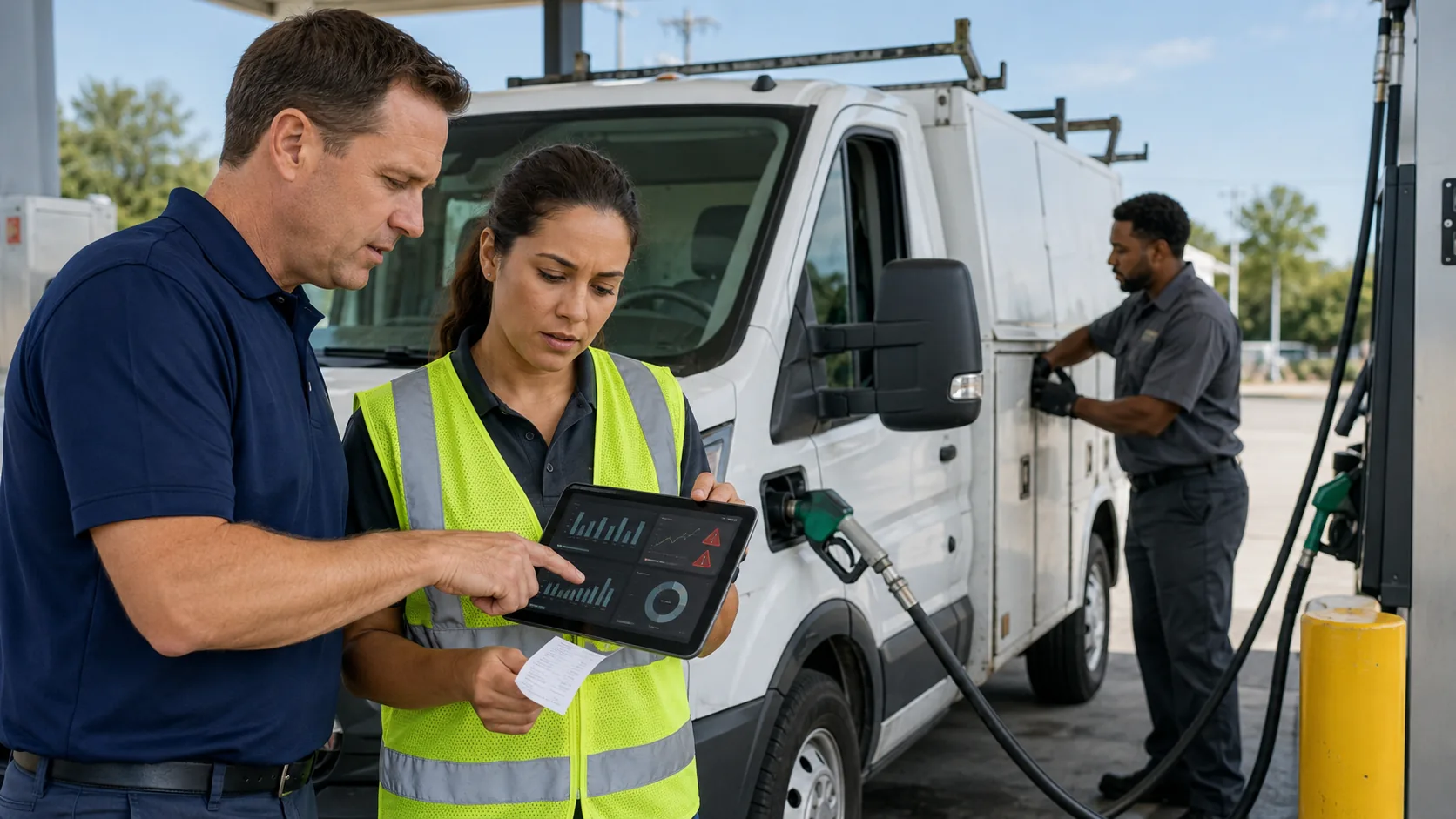
Start by comparing the transaction with the driver schedule, work order, route, and vehicle location. A legitimate emergency call should not receive the same response as repeated weekend fueling without an assignment.
Fuel Volume Exceeds Tank Capacity
A transaction for more fuel than the assigned vehicle can hold is one of the clearest high risk exceptions. The extra fuel may have gone into a portable container, another vehicle, or personal equipment. It can also result from an incorrect vehicle assignment or inaccurate tank capacity data.
Managers should verify the vehicle specification, previous fuel level, purchase receipt, and card assignment. Even when the transaction has a valid explanation, the supporting record should explain why the volume was possible.
Wrong Fuel Grade or Fuel Type
Buying premium fuel for a vehicle that requires regular fuel creates direct cost leakage. A diesel purchase on a gasoline vehicle card, or the reverse, may indicate card sharing, data errors, or a serious fueling mistake.
Repeated grade exceptions usually point to weak controls or unclear driver instructions. Configure approved fuel types wherever the card provider allows it, then reinforce the rule during driver onboarding.
Multiple Fill Ups in a Short Window
Two or more transactions within a few hours can suggest that the same card fueled multiple vehicles. Other explanations include topping off, split payment limits, incorrect pump authorization, or a driver returning after an incomplete fill.
Review transaction time, gallons, station location, and assigned vehicle. When several drivers share equipment, assign cards carefully enough that each purchase can still be connected to a responsible person and asset.
Miles Per Gallon and Odometer Mismatches
Fuel volume should make sense when compared with miles traveled. If a vehicle records a large fuel purchase after only a small mileage increase, the odometer may be wrong, the vehicle may have idled heavily, or fuel may have gone elsewhere.
Reliable trip and mileage tracking makes these comparisons easier. Review several fueling cycles rather than judging one transaction because entry mistakes and partial fills can temporarily distort MPG.
What Exceptions Reveal Beyond Fraud
The greatest value often comes from patterns that do not involve deliberate misuse. Fuel exceptions can reveal operating problems before they become visible in maintenance invoices, missed deliveries, or customer complaints.
Hidden Vehicle Maintenance Problems
A sudden MPG decline may point to low tire pressure, clogged filters, fuel system problems, alignment issues, or developing engine trouble. The vehicle may continue operating normally while consuming more fuel during every route.
Managers should compare the change with recent repairs, inspection findings, and scheduled service. Connecting the anomaly with fleet preventive maintenance schedules helps determine whether the vehicle is overdue for attention.
Driver Behavior and Habits
Aggressive acceleration, speeding, extended idling, and unnecessary detours increase fuel consumption without always creating a card rule violation. The first signal may simply be that one vehicle uses more fuel than comparable vehicles performing similar work.
Fuel data becomes more informative when combined with GPS tracking and telematics. Managers can then determine whether poor MPG comes from vehicle condition, route demands, or driving habits.
Route and Dispatch Inefficiencies
Repeated fueling outside assigned areas may indicate that drivers are not following routes, but it can also mean the route plan is unrealistic. The approved station may be too far away, unavailable during certain shifts, or difficult for larger vehicles to access.
This matters especially in trucking and logistics fleet operations, where route changes, loading delays, and delivery windows can make planned fueling locations impractical.
Gaps in Your Fuel Policy
A high exception count does not automatically mean a fleet has dishonest drivers. It may mean that limits are too strict, rules are poorly communicated, or managers apply them inconsistently.
Review whether approved hours reflect actual shifts, whether emergency fueling has a documented process, and whether drivers understand grade and receipt requirements. A useful fuel policy should prevent misuse without generating constant noise from legitimate transactions.
How to Calculate the True Cost of Unmanaged Exceptions
The cost of unmanaged exceptions includes direct fuel leakage, avoidable fuel consumption, staff review time, and maintenance problems that managers fail to catch early. A simple calculation can make the exposure easier to understand.
Consider a 25 vehicle service fleet with two unexplained gallons per vehicle each month and an assumed fuel price of $3.60 per gallon.
| Cost Category | Example Calculation | Estimated Annual Cost |
|---|---|---|
| Unexplained fuel use | 2 gallons per vehicle per month × 25 vehicles × $3.60 per gallon × 12 months | $2,160 |
| Administrative review time | 2 hours per week × $30 per hour × 52 weeks | $3,120 |
| Preventable maintenance issue | One missed MPG warning that results in a repair and vehicle downtime | $1,200 |
| Route and idling waste | $20 per vehicle per month × 25 vehicles × 12 months | $6,000 |
| Total estimated annual exposure | Combined fuel, labor, maintenance, and operating costs | $12,480 |
This example uses modest assumptions. The total increases quickly when the exception comes from idling, route waste, or a mechanical issue affecting fuel economy on every trip.
Managers working on controlling fleet fuel costs should track both direct exception dollars and the operational cost behind the exception. The same approach can support broader efforts to reduce fleet fuel costs without relying only on fuel price negotiations.
How to Build a Fuel Exception Review Process That Works
An effective process should help managers classify exceptions quickly, investigate them consistently, and record what happened. The goal is not to question every driver about every unusual purchase. The goal is to identify patterns that justify action.

Use this five step workflow:
- Capture the exception. Record the card, driver, vehicle, time, location, gallons, grade, odometer, and cost.
- Validate the data. Check for entry errors, vehicle assignment mistakes, partial fills, and incorrect tank information.
- Compare operational context. Review the route, job schedule, mileage, GPS activity, and service history.
- Classify the cause. Mark the exception as valid, data related, policy related, behavioral, mechanical, or suspected misuse.
- Assign and document action. Coach the driver, update the rule, inspect the vehicle, correct the data, or escalate the investigation.
Set Clear, Realistic Fuel Card Rules
Set limits for approved hours, locations, gallon volume, fuel grade, purchase frequency, and daily transaction value. Rules should reflect actual operating conditions, including night shifts, emergency calls, remote work areas, and seasonal changes.
Test new limits against recent transaction history before enforcing them. This reduces false alerts and helps managers focus on meaningful exceptions.
Review Exceptions on a Consistent Cadence
A weekly review usually works better than a quarterly cleanup. Managers can still remember the route, assignment, and operating conditions, while drivers can explain transactions accurately.
A brief weekly review also stops repeated leakage earlier. Waiting three months may turn a correctable behavior into a costly habit.
Connect Fuel Data to Maintenance Records
Compare abnormal fuel use with inspections, open work orders, and prior repairs. A vehicle with falling MPG and repeated tire complaints deserves a different response from a vehicle with one incorrect odometer entry.
A complete vehicle service history helps managers see whether an exception follows a repair, an overdue service, or a recurring component problem.
Coach Drivers Instead of Only Penalizing
Begin with evidence and questions. Ask what happened, confirm the assignment, and explain the cost or risk created by the transaction. Drivers may reveal route risk created by the transaction. Drivers may reveal route obstacles, unavailable stations, or unclear policies that managers could not see from the transaction alone.
Reserve disciplinary action for deliberate or repeated misuse. Coaching usually produces better long term behavior when the cause is misunderstanding, habit, or process friction.
Turning Fuel Exceptions Into a Fleet Health Dashboard
A useful dashboard should show more than the total number of alerts. It should show which vehicles, drivers, routes, and exception types create repeated risk.
The most useful dashboard measures include:
- Exception count by vehicle and driver
- Exception cost by category
- MPG change over time
- Repeat exceptions within 30 days
- Exceptions linked to maintenance findings
- Resolution time and corrective action
When fuel logs, mileage records, service history, and maintenance schedules live together, managers can move from transaction review to fleet diagnosis. AUTOsist can support this process by bringing fuel records and operating information into a fleet reports dashboard, allowing teams to compare fuel activity with mileage and maintenance patterns.
The objective is not to eliminate every exception. Some exceptions will always reflect valid operating needs. The objective is to understand why they occur, correct preventable causes, and use recurring patterns as an early warning system for the entire fleet.
Frequently Asked Questions
-
What is a fuel card exception?
A fuel card exception is a transaction that breaks a preset rule or expected pattern, such as an unusual time, location, amount, fuel type, or purchase frequency. -
What causes most fuel card exceptions?
Common causes include data entry errors, unclear fuel policies, route changes, card sharing, incorrect fuel grades, unusual driver behavior, and possible unauthorized purchases. -
How often should fuel card exceptions be reviewed?
Most small and midsize fleets should review exceptions weekly. High volume fleets or fleets with repeated problems may benefit from daily monitoring of serious exception types. -
Can fuel card exceptions indicate vehicle problems?
Yes. MPG declines and fuel volume mismatches can indicate low tire pressure, excessive idling, fuel system problems, engine inefficiency, or inaccurate odometer readings. -
How can a fleet reduce fuel card exceptions?
Set realistic card rules, maintain accurate vehicle and driver assignments, review exceptions consistently, connect fuel data with mileage and maintenance records, and coach drivers when patterns appear.