 Miya Bholat
Mar 26, 2026
Fuel Theft in Fleet Vehicles: How to Detect It and Stop It
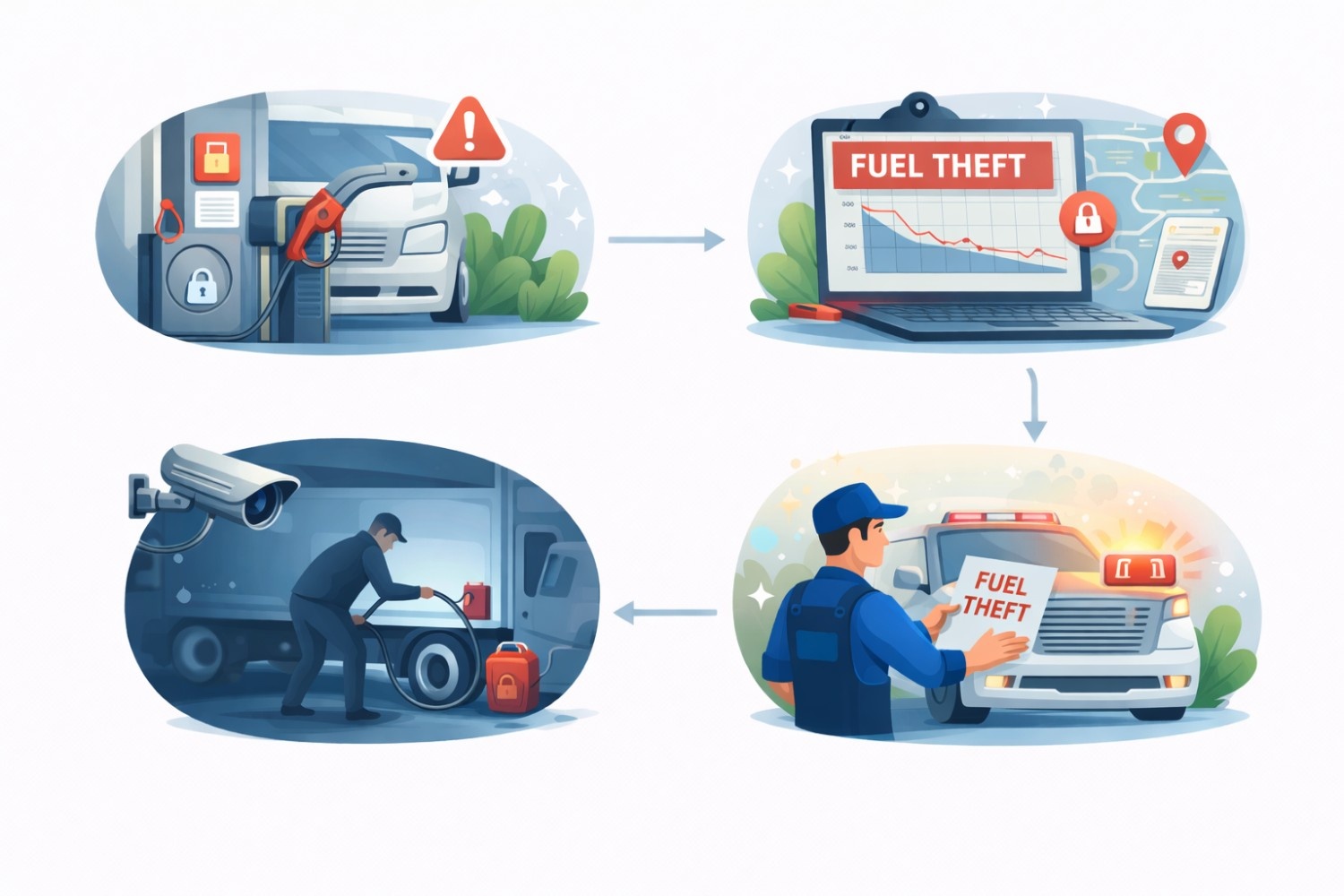
Key Takeaways: Protecting Your Fleet from Fuel Theft
- Fuel theft is a hidden cost multiplier — Even small, repeated losses can add up to tens of thousands annually across a fleet.
- Most theft happens through normal processes — Fuel cards, mileage logs, and weak oversight create opportunities that don't look suspicious at first.
- Data comparison is your strongest defense — Matching fuel usage with GPS, mileage, and route data exposes discrepancies quickly.
- Fuel card controls reduce risk significantly — PINs, limits, and transaction alerts make fraudulent activity harder to execute.
- Consistency beats complexity in monitoring — A simple, repeatable fuel tracking and reconciliation process is more effective than a complicated one.
- Accountability changes behavior — Clear policies combined with visible tracking systems reduce theft without creating friction.
The Real Cost of Fuel Theft in Fleet Operations
Fuel theft is one of those problems that quietly drains your budget until it becomes impossible to ignore. Industry estimates suggest fleets lose 5–10% of their fuel spend annually due to theft, fraud, or misuse. For a fleet spending $500,000 per year on fuel, that's up to $50,000 disappearing without a clear explanation.
What makes it worse is how these losses compound. A few gallons missing here and there doesn't raise alarms—but spread across dozens of vehicles over months, it becomes a serious operational issue.
Here's how fuel theft typically impacts fleets:
- Small, repeated losses that go unnoticed in daily operations
- Increased fuel cost per mile without clear operational cause
- Budget overruns that are hard to trace back to a single source
- Reduced visibility into actual vehicle efficiency and performance
- Difficulty forecasting fuel needs accurately
The key problem isn't just the loss—it's the lack of visibility. If you don't have systems in place to track and validate fuel usage, theft blends in with normal operations.
How Fuel Theft Actually Happens in Fleets
Fuel theft isn't always obvious. It often hides behind normal processes like fueling, mileage reporting, or expense tracking. Understanding how it happens is the first step to stopping it.
Driver-Side Theft
This is the most common and often the hardest to detect because it happens within normal workflows.
Typical driver-related fuel theft includes:
- Siphoning fuel directly from the vehicle tank
- Using fleet fuel cards for personal vehicles
- Inflating mileage logs to justify higher fuel consumption
- Performing "ghost fuel-ups" where no actual fuel is added
These behaviors don't always stand out immediately—especially if there's no system validating fuel against mileage or vehicle activity.
Third-Party and Vendor Theft
Fuel theft isn't always internal. External fraud is just as common, especially when fuel cards are involved.
Common third-party risks include:
- Fuel card skimming at compromised pumps
- Unauthorized transactions using stolen card details
- Collusion with fueling station staff to inflate transactions
- Duplicate or manipulated receipts
Without real-time monitoring, these transactions often get approved and paid without question.
Internal Process Gaps That Enable Theft
Sometimes, the issue isn't theft itself—it's the absence of controls that allow it to happen.
Look at these common gaps:
- No reconciliation between fuel purchases and mileage data
- Lack of centralized fuel tracking or reporting
- Inconsistent logging of odometer readings
- No accountability tied to specific drivers or vehicles
If your process doesn't verify fuel usage against real vehicle activity, theft becomes easy—and risk-free.
Warning Signs Your Fleet May Have a Fuel Theft Problem
Fuel theft rarely shows up as a single red flag. Instead, it appears as patterns and inconsistencies over time.
Here are some of the most reliable indicators to watch for:
- Sudden drops in MPG without mechanical explanation
- Increased fuel consumption without route or workload changes
- Frequent small fuel purchases instead of normal fill-ups
- Fuel card usage outside working hours or approved locations
- Mismatch between mileage driven and fuel consumed
Before jumping to conclusions, you need data to confirm these patterns. That's where tracking systems become critical. Many fleets use tools like fleet fuel management software to centralize fuel data and identify anomalies faster.
How to Use Telematics and GPS Data to Catch Fuel Theft
Fuel data alone doesn't tell the full story. When you combine it with GPS and telematics, discrepancies become much easier to spot.
With systems like GPS tracking & telematics, you can validate fuel events against actual vehicle behavior:
- Was the vehicle at a fuel station when the transaction occurred?
- Did the vehicle move after fueling, or remain idle?
- Does the route and distance justify the fuel consumed?
Here's a simple example:
- Vehicle averages 8 MPG
- Typical route = 200 miles/day
- Expected fuel use = 25 gallons
- If the system shows a 40-gallon fill-up, that's a clear discrepancy worth investigating.
Telematics also helps identify patterns like excessive idling, which can mask fuel misuse. When you combine location, engine data, and fuel logs, it becomes much harder for theft to go unnoticed.
Fuel Card Controls That Reduce Theft Risk
Fuel cards are convenient—but without controls, they're one of the biggest risk points for theft.
To reduce exposure, fleets need to treat fuel cards as controlled financial tools, not just payment methods.
Start by implementing these safeguards:
- Require PIN authentication for every transaction
- Assign cards to specific vehicles instead of drivers
- Set daily and per-transaction spending limits
- Restrict purchases to fuel-only categories
- Enable real-time alerts for unusual activity
Strong fuel card controls don't eliminate theft completely—but they make it significantly harder to execute and easier to detect.
Building a Fuel Monitoring and Reconciliation Process
The most effective way to prevent fuel theft is consistency. You don't need a complex system—you need a repeatable one.
A solid fuel monitoring process includes:
- Logging every fuel transaction with vehicle and driver details
- Recording odometer readings at each fill-up
- Comparing fuel usage against expected MPG benchmarks
- Reviewing exceptions regularly instead of waiting for monthly reports
Many fleets move away from spreadsheets and adopt centralized systems like trip mileage tracking to ensure accurate, real-time data collection.
What to Track and How Often
To build a reliable baseline, you need consistent data points.
Track the following for every fuel event:
- Odometer reading at time of purchase
- Total gallons purchased
- Cost per gallon and total transaction amount
- Location and time of fill-up
- Assigned vehicle and driver
Daily tracking works best for high-usage fleets, while smaller fleets may review weekly—but consistency is what matters most.
Setting Thresholds and Alerts
Once you have data, the next step is defining what "normal" looks like.
Set thresholds based on:
- Expected MPG ranges per vehicle type
- Typical route distances and fuel needs
- Standard fueling frequency
Then configure alerts for deviations such as:
- Fuel purchases exceeding expected tank capacity
- MPG dropping below acceptable limits
- Transactions occurring outside approved hours
These alerts turn fuel monitoring from reactive to proactive.
Driver Accountability: Policies and Culture That Deter Theft
Technology alone won't solve fuel theft. You also need clear expectations and accountability.
Start by setting a transparent fuel policy that every driver understands.
A strong policy should include:
- Acceptable use of fuel cards and vehicles
- Required logging procedures for fuel transactions
- Consequences for misuse or policy violations
- Acknowledgment forms signed by drivers
Just as important is how you communicate monitoring. When drivers know that fuel usage is tracked and reviewed—not just collected—they're far less likely to take advantage of gaps.
Fleets that pair clear policies with systems like fleet fuel management software often see immediate reductions in suspicious activity—not because of enforcement, but because of visibility.
Fuel theft doesn't require a major overhaul to fix—but it does require visibility, consistency, and control. Once you have those in place, the problem becomes much easier to detect—and much harder to repeat.