 Miya Bholat
Jul 22, 2026
GPS Reports Need More Than Vehicle Location
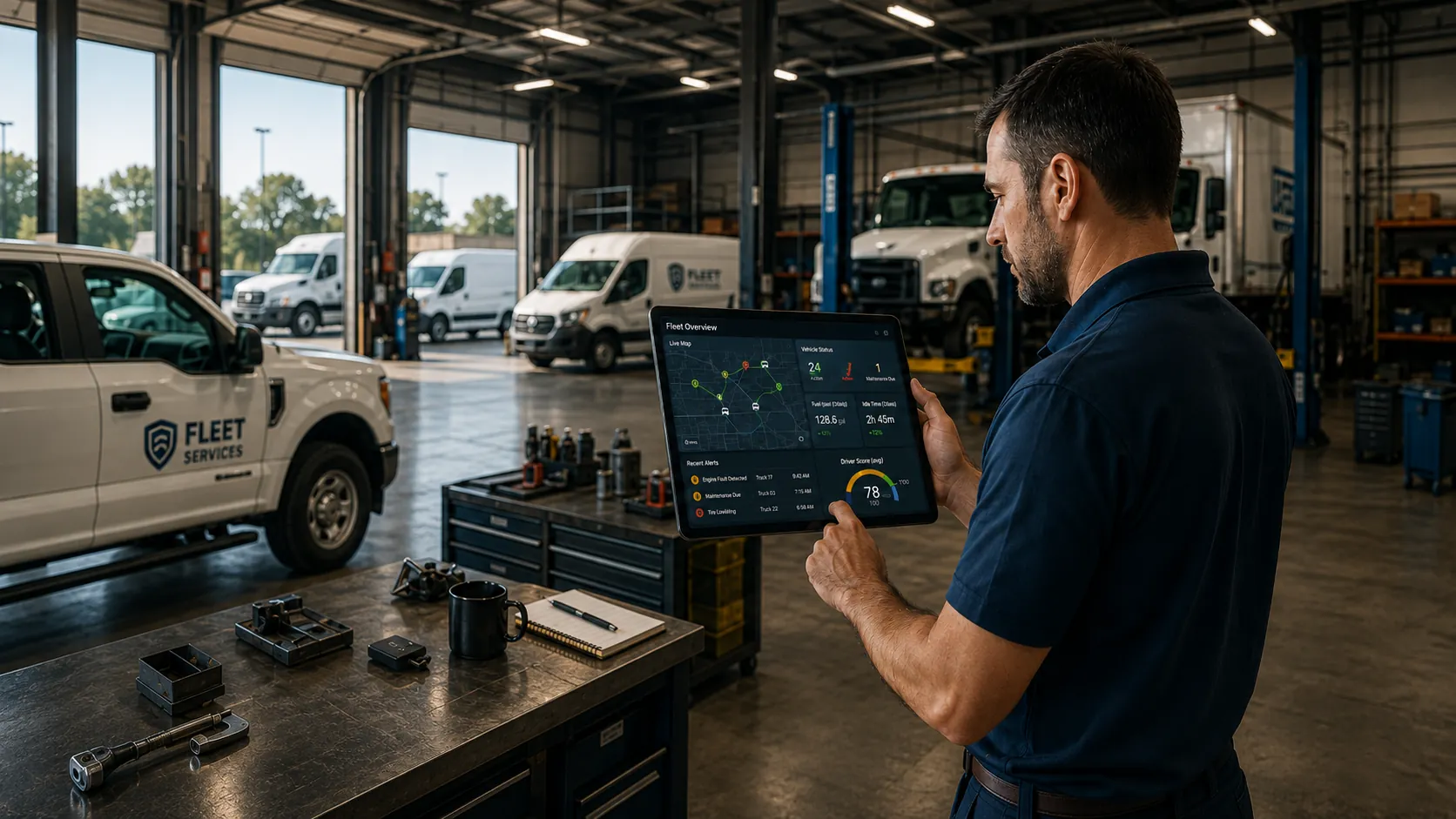
GPS reports need more than vehicle location because a map cannot explain vehicle condition, fuel waste, driver risk, or upcoming service needs. A useful fleet tracking and telematics system connects position and mileage with maintenance, fuel, safety, and compliance data so every report shows what happened, why it matters, and what action should follow.
Location is still valuable, but it should be the foundation for decisions rather than the final answer. When each trip connects to vehicle health, operating cost, driver behavior, and documentation, GPS reporting becomes a fleet management tool instead of a digital map.
Key Takeaways
- Location is context, not a complete report. Coordinates and route history show where a vehicle traveled but not whether the trip created maintenance, fuel, safety, or compliance risk.
- Mileage and fault data should trigger action. GPS reports should turn odometer updates, engine hours, and diagnostic trouble codes into maintenance alerts.
- Fuel reporting needs operational context. Idle time, route deviation, fuel transactions, and vehicle location must be reviewed together to identify waste or misuse.
- Driver behavior changes the meaning of a trip. Speeding, harsh braking, and rapid acceleration reveal risk that a route line cannot show.
- Connected reporting reduces administrative gaps. Strong workflows move GPS data into inspections, work orders, service schedules, and compliance records automatically.
The Problem with Location-Only GPS Reports
Fleet managers know the frustration. They open a report expecting an explanation and get colored dots, timestamps, and a route line. It confirms that Vehicle 18 visited three job sites, but it does not explain why fuel use increased, why service was missed, or whether the driver created unnecessary risk.
These are some of the most common fleet problems GPS location data cannot explain. The location record shows an outcome, but managers still need maintenance, fuel, driver, and utilization data to understand the cause.
GPS adoption is already mainstream. One enterprise benchmark reported 87 percent adoption, while Verizon's 2026 research found that 80 percent of fleet professionals use GPS tracking. Separate telematics research found that 43 percent of fleets were not using the technology to measure driver performance, showing the gap between collecting data and acting on it.
Location only reports usually contain a narrow set of fields:
- Latitude and longitude coordinates
- Date and time stamps
- Route and stop history
- Basic geofence activity
- Current or last known position
These fields are a starting point, not a solution. A useful fleet reports dashboard should connect movement with cost, condition, utilization, and exceptions. It should help a manager identify what needs attention rather than simply confirm that a vehicle moved.
What Fleet Managers Actually Need from GPS Reports
A better report combines location with data generated by the vehicle, driver, fuel process, and maintenance program. It should rank exceptions, show trends, and direct the manager toward a specific response. The goal is not to collect more data. The goal is to make the next decision faster and more accurate.
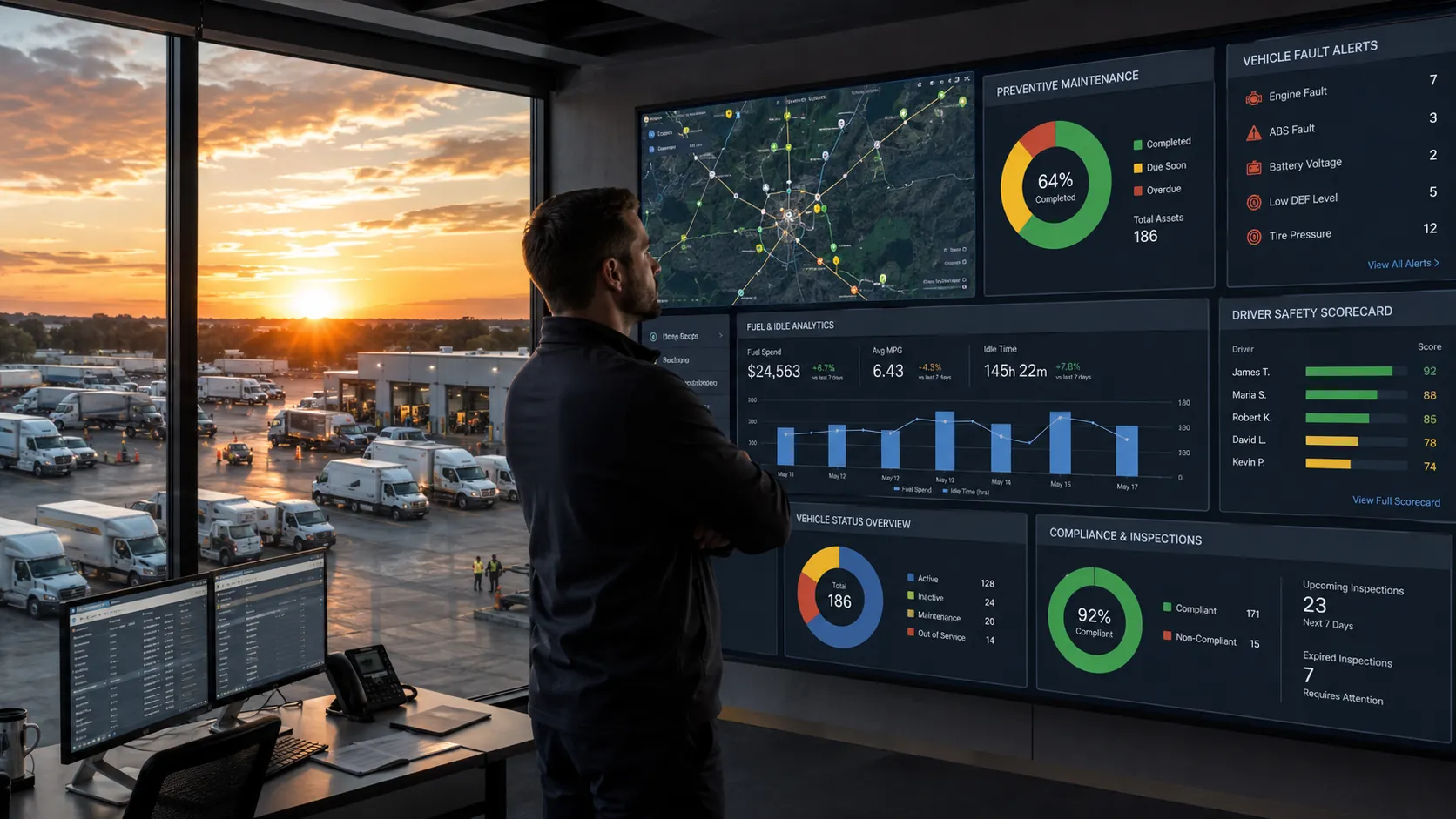
Maintenance Alerts and Vehicle Health Data
GPS reports should connect odometer readings, engine hours, diagnostic trouble codes, battery voltage, temperature, and other health indicators to each asset record. When mileage reaches a service threshold, the system should notify the maintenance team instead of waiting for someone to compare spreadsheets. Fleet preventive maintenance schedules become more reliable when actual vehicle use updates due dates automatically.
A maintenance focused GPS report should surface:
- Current mileage and engine hours
- Upcoming and overdue service
- Active diagnostic trouble codes
- Repeated fault patterns
- Vehicle availability and location
Without this connection, managers react to warning lights and roadside failures. Reliable vehicle mileage tracking gives maintenance teams a current operating baseline rather than an estimate.
Fuel Consumption and Idle Time Tracking
Fuel data becomes useful when a report shows where fuel was consumed and what the vehicle was doing. The U.S. Department of Energy idling estimate a default of 0.8 gallons per idle hour for a heavy diesel vehicle. At $4 per gallon, 30 minutes of avoidable idling across 260 workdays equals about $416 in direct fuel per vehicle before wear, labor, and lost productivity.
Some industry estimates cite roughly $3,200 in annual idle related cost per vehicle, but that figure requires longer idle duration or broader assumptions about labor and wear. Managers should calculate exposure from their own engine type, fuel price, idle hours, and operating cost.
Reports should flag combinations that deserve review:
- Fuel purchases far from the assigned route
- Transactions above expected tank capacity
- Fuel activity while the vehicle is off duty
- High idle time at repeat locations
- Falling fuel economy after a route or driver change
Cross referencing fuel card transactions with GPS records makes unauthorized use easier to detect. A fleet fuel management system can also separate price changes from operational waste.
Driver Behavior Scoring and Safety Metrics
Location tells you where a vehicle went. Behavior data tells you how it was driven and whether the trip increased accident, maintenance, or insurance risk. Useful reports score speeding, harsh braking, rapid acceleration, sharp cornering, seat belt use, and repeated events by driver and route.
Published telematics accident reduction benchmarks suggest behavior programs can reduce accidents by roughly 15 to 25 percent, so a 22 percent first year reduction is a reasonable target rather than a guaranteed result. The value comes from consistent coaching, clear thresholds, and trend review. Fleet dash camera data can add context when a score alone cannot explain an event.
Compliance and Regulatory Documentation
The same GPS layer can support electronic logging device records, hours of service documentation, driver vehicle inspection reports, and International Fuel Tax Agreement mileage. Each record should connect to the correct driver, vehicle, date, jurisdiction, and trip. This reduces manual entry and makes audits easier to support.
A digital vehicle inspection workflow should allow reported defects to follow the vehicle into maintenance. The inspection should not remain trapped in a separate application after the vehicle leaves the yard.
For trucking and logistics fleet operations, connected trip, driver, and service records matter because dispatch, safety, and maintenance teams often work in separate systems. A shared data layer reduces documentation gaps between those departments.
The Real Cost of Reports That Only Track Location
Location only reporting creates financial blind spots because it records movement without measuring the consequences. Consider a 50 vehicle fleet where five preventable breakdowns each remove a vehicle from service for eight hours. That equals 40 lost vehicle hours before towing, repair premiums, rentals, missed jobs, or customer penalties.
The table below shows how common blind spots turn into cost.
| Reporting blind spot | Operational consequence | Example financial effect |
|---|---|---|
| Missed maintenance threshold | Unplanned repair and downtime | 6 to 10 hours out of service per incident |
| Untracked idling and route deviation | Fuel and labor waste | 12 to 18 percent of fuel spend may remain exposed |
| Unmonitored driving behavior | Claims and insurance pressure | One collision can exceed years of software cost |
| Incomplete trip and inspection records | Audit risk and administrative rework | Fines, delayed claims, and time rebuilding records |
Recent research reports average cost decreases of 11 to 19 percent across fuel, accidents, labor, and maintenance for fleets using connected technology. Results vary, but the direction is clear. A report that confirms location without connecting exceptions to cost leaves managers paying for problems they could have identified earlier.
How Better GPS Reporting Connects to Fleet Maintenance
GPS and maintenance data should move through one continuous workflow. Mileage should update service schedules, diagnostic codes should create defect alerts, and vehicle location should confirm whether an asset is available for service. A strong fleet telematics and maintenance integration removes manual reading transfers.
An extractable workflow looks like this:
Siloed systems break this chain. A GPS platform may show that a vehicle crossed its service interval while the maintenance system still carries an old reading. AUTOsist can connect telematics data with fleet maintenance work orders so the alert becomes assigned work rather than another inbox notification.
What to Look for in a GPS Reporting Platform
Fleet managers should evaluate reporting depth before comparing map design or refresh speed. The platform must identify exceptions, assign responsibility, and document the result. Real time visibility matters, but historical analysis and workflow integration determine whether the data produces savings.
Ask each vendor these practical questions:
- Can reports combine location with mileage, engine hours, faults, fuel, and driver events?
- Can we customize thresholds by vehicle class, route, driver, or operating condition?
- Does the platform connect with maintenance schedules, inspections, and work orders?
- Can fuel reports separate idle waste, route deviation, misuse, and price changes?
- Do driver scorecards include coaching history and improvement trends?
- Can the system generate ELD, hours of service, IFTA, and inspection records?
- Can managers schedule reports and send relevant exceptions to each department?
Also ask how the platform handles asset identity. Incorrect device assignments can attach data to the wrong unit and make every downstream report unreliable. The system should maintain a clear relationship among the GPS device, vehicle record, driver, and service history.
From Tracking Vehicles to Managing Fleets
GPS tracking was built to answer one urgent question: where is my truck? Modern fleet operations need a broader answer: what is happening to the truck, how is the driver operating it, and what is the effect on the budget? Reports should turn those questions into prioritized decisions.
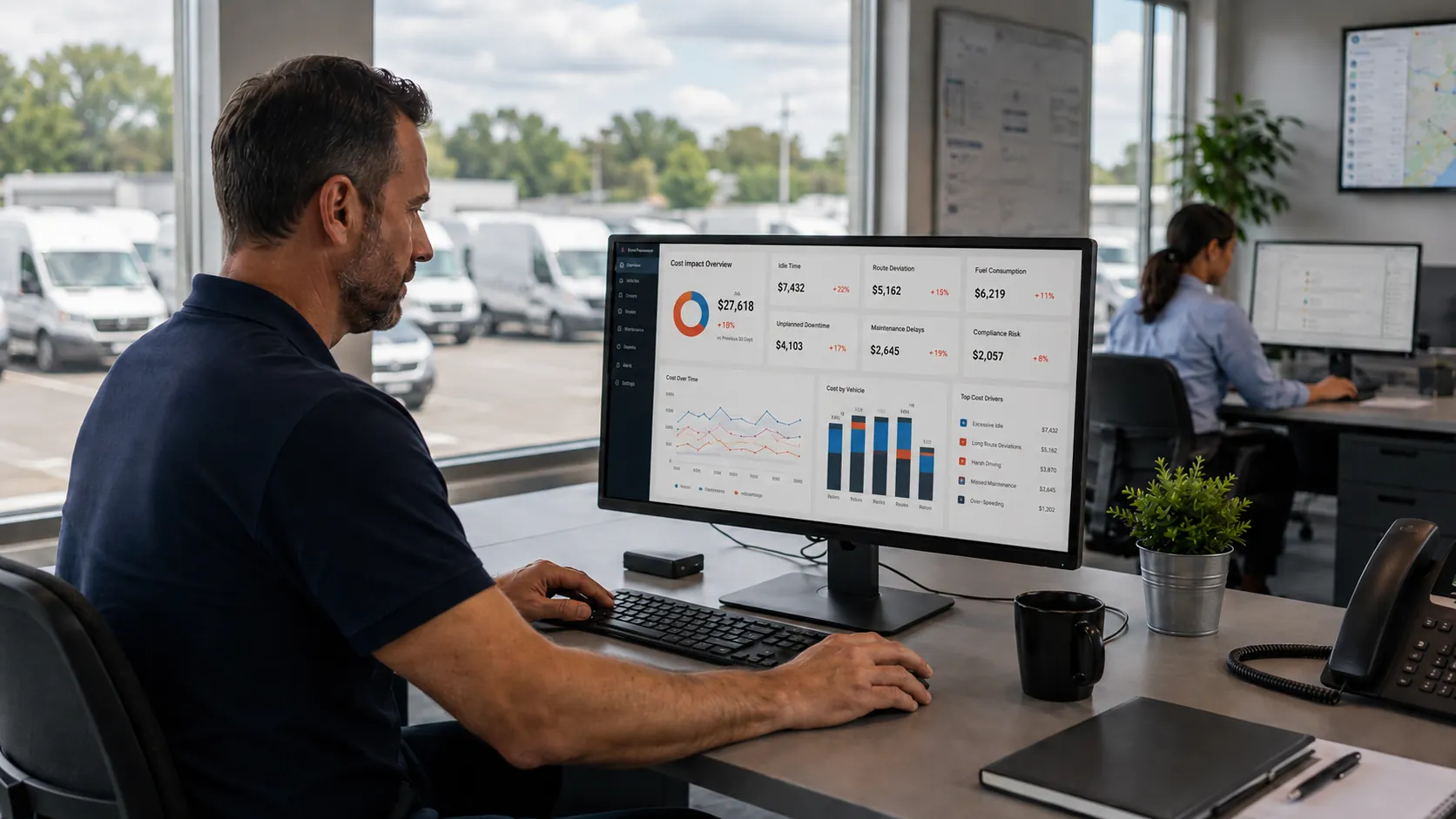
The strongest reports do not overwhelm managers with every available data point. They identify the vehicles, drivers, routes, and exceptions that require attention, then connect each finding to maintenance, safety, fuel, or compliance action. That shift turns GPS from a visibility tool into a management system.
Some 2026 industry benchmarks cite an average 3.5 times return within 12 months and a 27 percent reduction in total cost of ownership for unified fleet analytics ROI benchmarks. Treat those figures as benchmarks rather than promises because results depend on fleet size, baseline waste, implementation quality, and team follow through. Fleets that integrate GPS reporting with maintenance management create measurable return by preventing failures, reducing waste, documenting risk, and keeping vehicles available.
Frequently Asked Questions
-
What should a GPS fleet report include besides vehicle location?
It should include mileage, engine hours, diagnostic trouble codes, idle time, fuel activity, driver behavior events, inspection status, and compliance records. It should also identify the required action and owner. -
Can GPS data automatically trigger fleet maintenance?
Yes. Odometer readings, engine hours, and fault codes can update service schedules and trigger alerts or work orders when thresholds are reached. -
How can GPS reports help reduce fuel costs?
They can identify excessive idling, route deviation, unauthorized trips, and fuel purchases that do not match vehicle location. Managers can then separate price increases from controllable waste. -
Are driver scorecards part of GPS reporting?
They should be when the platform captures speeding, harsh braking, acceleration, cornering, and other safety events. Scorecards are most useful when managers review trends and document coaching. -
Why should GPS and maintenance systems be integrated?
Integration keeps mileage, fault, inspection, and availability data synchronized. It reduces missed service intervals, duplicate data entry, delayed repairs, and incomplete records.