 Miya Bholat
Nov 18, 2026
High Mileage Truck Maintenance After 200K Miles

High mileage truck maintenance after 200,000 miles requires more frequent condition checks, targeted component replacements, fluid analysis, and preventive maintenance schedules tailored to each truck's operating history. Fleet managers can use fleet maintenance software to track component wear, adjust service intervals, and identify developing mechanical problems before they cause unexpected breakdowns.
Unlike newer trucks, older vehicles require greater attention to how individual systems perform between scheduled services. Completing routine oil changes alone will not keep an aging truck reliable.
Key Takeaways
- Maintenance needs change with mileage. Accumulated mechanical wear requires closer monitoring of critical vehicle systems.
- Service intervals need individual adjustments. Operating conditions, component health, and repair history should influence maintenance frequency.
- Fluid analysis reveals hidden problems. Changes in fluid condition can indicate internal wear before noticeable symptoms appear.
- Inspections protect vehicle availability. Frequent checks help identify developing defects before they interrupt operations.
- Service history guides maintenance decisions. Detailed records help technicians diagnose recurring problems and avoid unnecessary repairs.
Why 200,000 Miles Is a Turning Point for Truck Maintenance
Reaching 200,000 miles represents a useful maintenance review milestone rather than a universal mechanical threshold. Repeated heat cycles, vibration, friction, and exposure to operating loads gradually reduce component reliability.
Several physical changes become increasingly relevant:
- Rubber seals and gaskets lose flexibility.
- Cooling system components deteriorate.
- Internal friction produces microscopic wear metals.
- Electrical connections become vulnerable to corrosion.
- Suspension components develop excessive movement.
According to the 2026 ATRI Analysis of the Operational Costs of Trucking, average truck operating costs reached $2.336 per mile in 2025, while repair and maintenance expenses increased by 8.6% compared with 2024.
These figures reflect broader trucking industry expenses rather than costs specifically associated with trucks exceeding 200,000 miles.
Mileage alone cannot explain why fleet vehicles age prematurely, particularly when trucks spend considerable time idling, towing heavy loads, or operating in demanding environments.
A highway truck and a construction truck with identical odometer readings may require entirely different maintenance schedules.
What Wears Out After 200K Miles: A System by System Breakdown
High mileage trucks require closer attention to mechanical, electrical, and safety systems. Fleet managers should prioritize components based on inspection findings, service history, and the operational consequences of failure.
| System | Common failure points after 200K | What to do |
|---|---|---|
| Engine | Seals, gaskets, injectors | Monitor oil consumption and performance |
| Cooling | Hoses, radiator, water pump | Check coolant condition and pressure |
| Transmission | Seals, bearings, internal wear | Inspect fluid and shifting behavior |
| Drivetrain | Universal joints, differential bearings | Check lubrication and movement |
| Brakes | Calipers, chambers, hoses, hardware | Measure wear and inspect operation |
| Suspension | Bushings, ball joints, shocks | Check movement and alignment |
| Electrical | Wiring, alternator, connectors | Test charging and connections |
| Emissions | EGR, DPF, NOx sensors | Monitor faults and regeneration |
Engine, Cooling, and Fuel System
Engines accumulate internal wear over thousands of operating hours. Increasing oil consumption, difficult starts, declining fuel efficiency, and coolant loss can indicate developing problems.
Technicians should monitor the following:
- Oil consumption between services.
- Coolant concentration, condition, and pH where applicable.
- Injector performance and fuel pressure.
- Oil pressure and engine operating temperature.
- Compression when symptoms justify testing.
Replace deteriorating belts, hoses, and overdue filters before they fail. Consider seal conditioning oil formulations only when they meet manufacturer specifications, and never treat them as substitutes for repairing damaged seals.
Ignoring persistent leaks or minor cooling problems often turns deferred fleet maintenance into more extensive engine repairs.
Transmission and Drivetrain
Transmission maintenance becomes particularly sensitive when a truck has an incomplete service history. Before changing the fluid, technicians should evaluate its condition, transmission behavior, and manufacturer service requirements.
For neglected units, avoid automatically recommending a transmission flush. A conventional drain and refill with filter replacement, where appropriate, may be preferable if the manufacturer permits it. Existing slipping or shifting problems require diagnosis before fluid service.
Inspect universal joints, differential seals, driveshaft connections, and transfer cases where applicable. Vibrations during acceleration or unusual noises during turns deserve immediate investigation.
Brakes, Suspension, and Steering
Aging brake and suspension components directly affect stopping performance, vehicle stability, and inspection readiness.
According to the 2026 CVSA International Roadcheck results, brake related defects represented 39.1% of all vehicle out of service violations.
Technicians should pay particular attention to:
- Brake pads, drums, rotors, and chambers.
- Brake hoses and air system leaks.
- Wheel bearings and hub seals.
- Ball joints and steering connections.
- Suspension bushings and shock absorbers.
Uneven tire wear can also indicate underlying steering, alignment, or suspension problems rather than an isolated tire issue.
Electrical, Sensors, and Emissions
Electrical faults can strand an otherwise mechanically sound truck. Heat, vibration, moisture, and corrosion gradually affect wiring harnesses, grounding points, and electrical connectors.
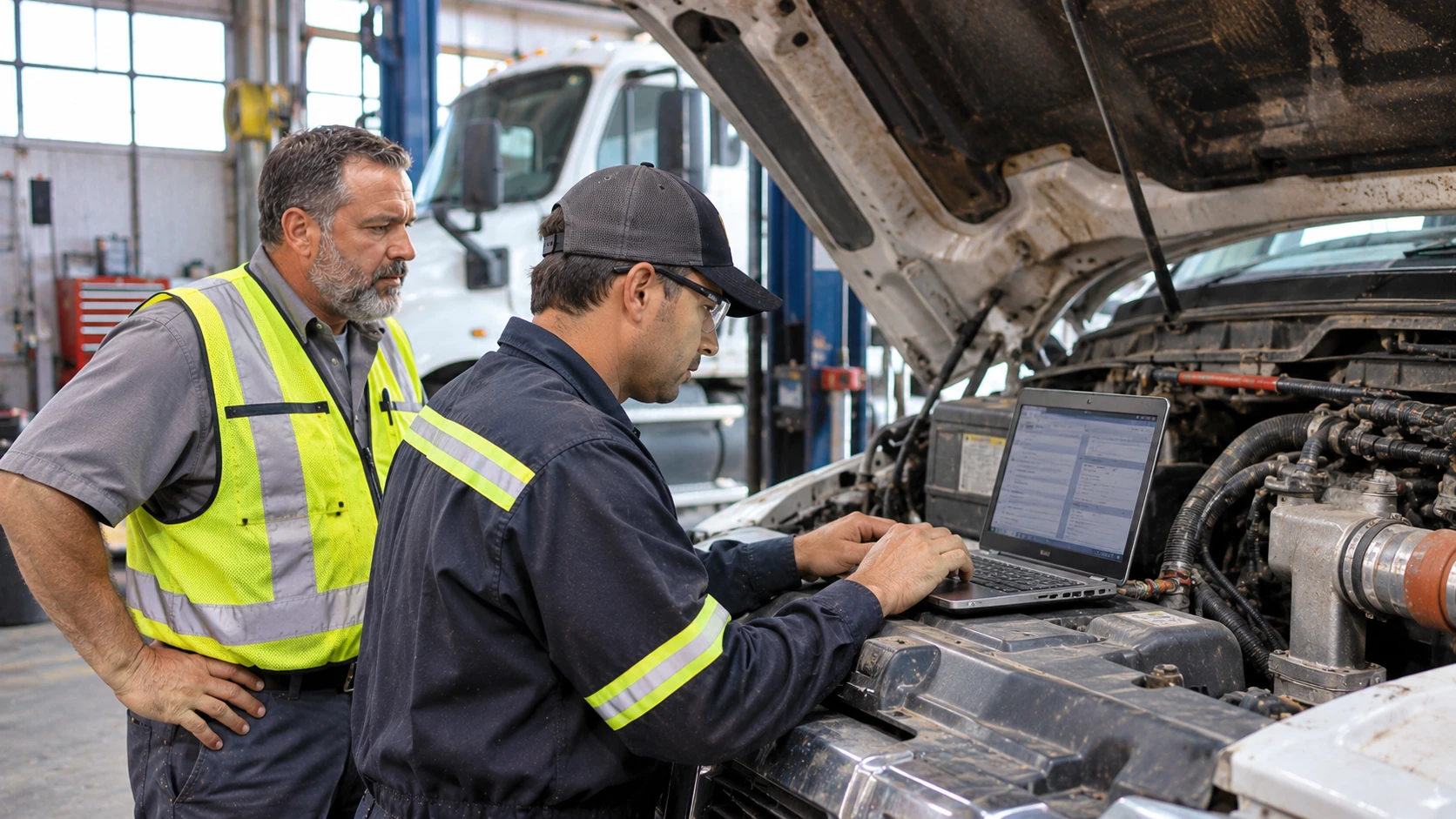
For diesel trucks, recurring emissions faults may indicate problems with the exhaust gas recirculation system, diesel particulate filter, or NOx sensors.
Monitor regeneration frequency, charging voltage, recurring diagnostic codes, and battery performance. Investigate the underlying cause instead of repeatedly clearing fault codes.
How to Tighten Your PM Schedule After 200K Miles
Fleet managers should reassess preventive maintenance schedules at 200,000 miles by combining manufacturer recommendations with actual component condition, operating history, and duty cycle.
The original OEM maintenance schedule remains the foundation. However, older trucks may benefit from additional inspections and shorter intervals where operating conditions or maintenance findings justify them.
Follow these six steps to establish a revised maintenance program.
- Pull the complete service history. Review past repairs, overdue services, component replacements, and recurring defects.
- Conduct a comprehensive baseline inspection. Evaluate all major mechanical, electrical, and safety systems.
- Adjust maintenance intervals by system. Increase inspection frequency for components showing deterioration or exposed to demanding operating conditions.
- Introduce routine oil analysis. Monitor wear metals, contamination, viscosity changes, and other developing engine problems.
- Set revised maintenance reminders. Establish service triggers based on mileage, elapsed time, or engine hours.
- Review the program quarterly. Compare inspection findings, breakdowns, and repair patterns to determine whether further adjustments are necessary.
For example, a pickup truck previously receiving oil changes every 7,500 miles may benefit from a 5,000 mile interval under demanding operating conditions, provided its manufacturer supports that adjustment.
Fleet managers can configure preventive maintenance reminders around individual vehicle requirements instead of applying identical intervals across the entire fleet.
Trucks used for towing, snowplowing, construction, or prolonged idling may also require engine hour based maintenance triggers because mileage does not fully capture their workload.
The Inspection and Data Routine That Catches Failures Early
An effective inspection routine combines daily driver observations, scheduled technician inspections, and historical maintenance data to identify mechanical deterioration before a breakdown occurs.

Drivers should check tires, brakes, lights, fluid leaks, and warning indicators before operating their trucks. Using digital vehicle inspection checklists helps maintenance teams receive and document reported defects without waiting for paper inspection forms.
Fleet managers should also track these maintenance indicators:
- Maintenance cost per mile.
- Unplanned downtime per vehicle.
- Oil consumption between services.
- Recurring fault codes.
- Repeat repairs within the same system.
- Preventive maintenance completion rates.
Maintenance cost per mile = Total maintenance expenses ÷ Total miles traveled
Compare these indicators against each vehicle's previous performance and other trucks performing similar work.
With fleet maintenance reporting dashboards, maintenance teams can identify vehicles whose repair frequency or operating costs are gradually increasing.
A consistent upward trend often provides a stronger warning than a single expensive repair.
Repair or Replace: When a 200K-Mile Truck Stops Earning Its Keep
A truck exceeding 200,000 miles should remain operational as long as it can perform its assigned work safely, reliably, and economically.
Repeated failures within the same system, increasing unplanned downtime, and repair estimates approaching the truck's resale value should trigger a formal vehicle repair versus replacement evaluation.
Avoid making replacement decisions based solely on mileage or a single repair invoice. A recently rebuilt engine or transmission may have considerable remaining service life.
Understanding fleet costs that change with vehicle age helps distinguish manageable maintenance requirements from a vehicle entering an expensive repair cycle.
Why Documented Service History Matters More After 200K Miles
Documented service history becomes increasingly valuable as trucks age because it helps maintenance teams understand which components have already received attention, which problems keep returning, and what service the vehicle needs next.

A complete maintenance record should contain:
- Service dates and odometer readings.
- Parts replacements and repair descriptions.
- Inspection findings and corrective actions.
- Labor and replacement component costs.
- Fluid analysis and diagnostic results.
Maintaining these records also supports applicable FMCSA inspection and maintenance requirements under 49 CFR Part 396.
AUTOsist allows maintenance teams to maintain centralized vehicle service history records, making previous repairs, supporting documents, and maintenance expenses easier to retrieve.
Complete records can also support resale negotiations, eligible component warranty claims, manufacturer goodwill requests, and faster mechanical diagnosis. The better you understand a truck's maintenance history, the less you need to rely on guesswork to keep it running.
Frequently Asked Questions
-
Is a truck with 200,000 miles worth maintaining?
Yes. A truck with 200,000 miles can remain worth maintaining if its engine, transmission, chassis, and safety systems remain in good condition. Evaluate its repair frequency, maintenance expenses, structural condition, and downtime before deciding whether continued operation makes financial sense. -
How often should you change oil after 200K miles?
Some pickup trucks may benefit from oil changes every 5,000 to 7,500 miles, depending on manufacturer specifications and operating conditions. Heavy commercial trucks require different intervals. Oil analysis, engine hours, and consumption trends can help determine the appropriate frequency. -
What should be replaced on a truck at 200,000 miles?
Inspect belts, hoses, filters, suspension bushings, universal joints, brake components, and cooling system parts. Replace components that show excessive wear or have reached their scheduled replacement interval. Mileage alone does not justify replacing every component. -
How long can a well maintained truck last?
Many well maintained pickup trucks can reach 200,000 to 300,000 miles, while certain heavy commercial trucks can operate considerably longer. Actual service life depends on vehicle design, operating conditions, maintenance quality, component replacements, and structural condition. -
Do high mileage trucks need different engine oil?
Not necessarily. High mileage trucks should continue using engine oil that meets manufacturer viscosity and performance specifications. Compatible high mileage formulations may help address minor seal seepage, but excessive oil consumption or persistent leaks require mechanical diagnosis.